giovedì 11 ottobre 2007

Churches for Middle East Peace: Halt Israel’s land confiscation

CMEP’s executive director and board chair faxed a letter yesterday to U.S. Ambassador Richard Jones in Tel Aviv in response to news reports that the Israeli army has ordered the seizure of Palestinian land near East Jerusalem. Copies of the letter were also faxed to key officials at the State Department and National Security Council.


October 10, 2007

Ambassador Richard Jones
United States Embassy to Israel
Tel Aviv, Israel

Dear Ambassador Jones,

Churches for Middle East Peace is alarmed by news reports that Israel has ordered confiscation of land from four Arab villages between East Jerusalem and the Jewish settlement of Ma’aleh Adumin. This project undermines U.S. diplomatic efforts to reinvigorate the Israeli-Palestinian peace process and restore hope that the conflict can be resolved with a viable contiguous Palestinian state established alongside Israel. We urge you to impress upon Israel that this project must halt.

The long-held policy of the United States that the status of Jerusalem must be determined by a negotiated agreement and that neither party should take actions that would prejudge the outcome of negotiations must be strongly and consistently asserted by U.S. officials.

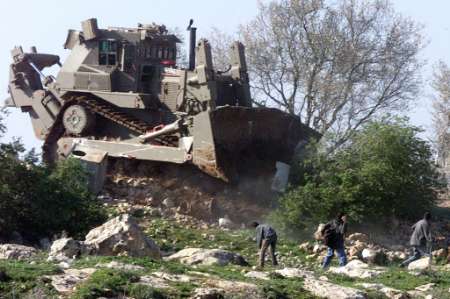
While the stated purpose of this land confiscation is for the construction of a modern road to Jericho for Palestinians, it is widely understood that this would set the stage for settlement expansion in the E-1 area. United States objections to the E-1 plan of building 3,500 apartments and an industrial park has thus far prevented Israel from building on this parcel of land (other than the empty police station). We urge the United States to maintain their objection to Israeli use of the E-1 land and to assure Palestinians that this vacant land will remain open and available for development by East Jerusalem’s Palestinian population as part of the future state of Palestine.

We are heartened by your diligent work towards a peaceful resolution of this conflict through diplomacy and commend the Administration for convening an international meeting this fall in Annapolis for that purpose. We join you in prayers for the day when the people of Israel and Palestine live as neighbors, both secure and thriving.

Sincerely,

Maureen Shea
Chair of the Board

Corinne Whitlatch
Executive Director


Formed in 1984, Churches for Middle East Peace is a Washington-based program of the Alliance of Baptists, American Friends Service Committee, Antiochian Orthodox Archdiocese of America, Armenian Orthodox Church, Catholic Conference of Major Superiors of Men's Institutes, Christian Church (Disciples of Christ), Church of the Brethren, Church World Service, Episcopal Church, Evangelical Lutheran Church in America, Franciscan Friars OFM (English Speaking Conference, JPIC Council), Friends Committee on National Legislation, Greek Orthodox Archdiocese of America, Maryknoll Missioners, Mennonite Central Committee, Moravian Church in America, National Council of Churches, Presbyterian Church (USA), Reformed Church in America, Unitarian Universalist Association, United Church of Christ, and the United Methodist Church (GBCS & GBGM).

GAZA HUMANITARIAN SITUATION REPORT, October 9,2007

OCHA Report
Summary Points


1. On 19 September, the Israeli security cabinet voted to declare the Gaza Strip “hostile territory,” approving among other things the restriction of commercial supplies to Gaza, in response to the ongoing Qassam rocket fire at Israeli communities. A large reduction has been reported in the number of truckloads entering Gaza through the Sufa and Kerem Shalom crossings. The average of 106 truckloads per day that was recorded between 10 June and 13 September has dropped to approximately 50 truckloads per day since mid-September. This trend is giving rise to growing concerns among aid agencies about shortages of certain food supplies.
2. Food prices remain inflated; according to World Food Programme (WFP), this is especially the case for vegetable oil, flour, and fresh and frozen meat. Drip flow of items into Gaza implies that there are no additional stocks available and that any closures will have a direct impact on availability and prices.
3. In September, there has been a significant reduction in the number of patients crossing into Israel/West Bank for medical treatment: fewer than five patients crossed each day compared to an average of 40 patients per day in July.
4. Due to increasing restrictions on access, aid agencies continue to face difficulties on a daily basis to implement programs and respond to humanitarian needs in the Gaza Strip.
5. Sufa and Kerem Shalom crossings still lack the appropriate infrastructure to handle food and medical supplies. Concerns over the way supplies are being processed are increasing, especially with the rainy season approaching.
6. An escalation in IDF activity was reported in northern Gaza between 26 September and 2 October, resulting in an increase of Palestinian casualties (15 deaths and 32 injuries).
7. Up to 87 Palestinians were reported to have re-entered Gaza from Egypt via an opening in the Egypt-Gaza border wall on 30 September. However, more than 1,000 Gazans remain stranded in Egypt.

For more information please contact Khulood Badawi 0544484632

United Nations Office for the
Coordination of Humanitarian Affairs (OCHA)
Mac House
P.O.Box 38712
Jerusalem
Tel:++ 972-2-5829962/5853
Fax:++972-2-5825841
email:ochaopt@un.org
www.ochaopt.org

IL PARLAMENTO EUROPEO CHIEDE LA FINE DELL’EMBARGO A GAZA E LIBERTA’ DI MOVIMENTO NEI TERRITORI OCCUPATI

Luisa Morgantini, Vice Presidente del Parlamento Europeo, 11.10.07. Con una risoluzione votata oggi dal Parlamento UE, gli eurodeputati hanno chiesto al Governo Israeliano di porre fine all’embargo che soffoca la Striscia di Gaza e di adempiere agli obblighi internazionali sottoscritti con la Convenzione di Ginevra per garantire l’accesso di aiuti umanitari, assistenza e servizi essenziali, come elettricità e carburante. Luisa Morgantini, Vice Presidente del Parlamento Europeo, che di recente è stata in Delegazione Parlamentare a Gaza, ha sottolineato nel suo intervento la necessità di abolire l’embargo imposto a merci e persone e di mettere fine all’occupazione militare.
“Sono stata recentemente a Gaza – ha dichiarato Luisa Morgantini - e ho visto come la Striscia stia soffocando in una grave crisi umanitaria dovuta alle incursioni e alle chiusure imposte dall’esercito israeliano: la sempre più massiccia devastazione dei servizi pubblici e delle abitazioni private, la distruzione di ospedali, cliniche e scuole, l’accesso negato a acqua potabile, cibo e elettricità e la distruzione della terra coltivabile, provocano una vera catastrofe per la popolazione civile. Inoltre, l’impossibilità di movimento paralizza l’economia e contribuisce ad aumentare il tasso di disoccupazione. Mentre il sistema sanitario è sotto pressione e una significativa fetta della popolazione soffre della mancanza di cure mediche urgenti e necessarie, si impedisce al personale di molte ONG e organizzazioni umanitarie di muoversi liberamente e di avere accesso alle risorse.
L’Unione Europea deve chiedere con forza al Governo Israeliano il rispetto dei diritti umani e il diritto umanitario internazionale nell’intera regione, mettendo fine alla prolungata situazione di emergenza della Striscia di Gaza ma anche all’occupazione militare in Cisgiordania, dove l’appropriazione della terra palestinese continua, senza essere condannata. Nonostante gli incontri tra Olmert e Abbas, Israele cambia di fatto la situazione sul terreno, sollevando il dubbio che desideri davvero la pace e lasciando credere al contrario che stia solo prendendo tempo per guadagnare più terra: ne è un esempio la recente decisione dell’IDF (l’Esercito di Difesa Israeliano) di espropriare 272 acri di terra a 4 villaggi arabi per costruire – come dichiarato dalle autorità israeliane – una nuova strada palestinese che collegherebbe Gerusalemme Est a Gerico. Tale decisione libererebbe l’area E1 esistente tra Gerusalemme e Ma’aleh Adunim, consentendo la costruzione di un nuovo insediamento israeliano composto da 3.500 appartamenti e un parco industriale, costruzione interrotta da una protesta internazionale nel 2004, che metteva in evidenza il rischio di tagliare in due la Cisgiordania, separando Gerusalemme Est dal resto della West Bank. Questa politica illegale e unilaterale portata avanti dalle Autorità Israeliane deve immediatamente finire.
L’Unione Europea deve assumersi la piena responsabilità del rispetto della legalità, prima di tutto attraverso il rafforzamento degli esistenti accordi tra UE e Israele sulla libertà di movimento e di accesso, ma anche imponendo al Governo israeliano di rispettare il diritto internazionale sui diritti umani, mettendo fine all’occupazione militare nella West Bank e alle chiusure imposte a Gaza e in Cisgiordania: anche se è in atto una tragedia umanitaria, la sua soluzione è politica. Questo è il solo mezzo per raggiungere una pace giusta e durevole e per dare credibilità alla Conferenza internazionale di pace di novembre, rafforzando il negoziato sulla base delle risoluzioni ONU e del diritto di Palestinesi e Israeliani a vivere in due Stati, in pace e sicurezza.”

Per info Luisa Morgantini 0039 348 39 21 465 o Francesca Cutarelli 0039 340 56 49 335

Luisa.morgantini@europarl.europa.eu www.luisamorgantini.net

MEPs express "deepest concern" about the humanitarian crisis in Gaza

Humanitarian aid - 11-10-2007 - 13:11
In adopting a joint resolution on the humanitarian situation in Gaza, MEPs express their deepest concern about the humanitarian crisis in the Gaza Strip and its possible grave consequences. Parliament stresses that human rights and international humanitarian law must be fully respected in the area. The European Parliament reiterates its call on all sides to renounce violence.

The House calls on Israel to fulfil its international obligations under the Geneva Conventions to guarantee the flow of humanitarian aid, humanitarian assistance and essential services, such as electricity and fuel, to the Gaza Strip.

International Peace Conference - secure and recognised borders

Parliament expresses its wish that the efforts to convene an international peace conference should contribute to achieving a just and lasting peace between Israelis and Palestinians, based on the relevant United Nations Security Council resolutions, the right of the State of Israel to live within secure and recognised borders, and the right to a viable state for Palestinians.

The European Parliament calls for the lifting of the blockade of the Gaza Strip and calls on Israel to ensure the movement of people and goods at Rafah, in compliance with the Agreement on Movement and Access and the EU Border Assistance Mission, as well as the movement of goods at Karni.

MEPs call on the Council, the High Representative for the Common Foreign and Security Policy and the Commission to face up to their full responsibility on the implementation of this Agreement.

Parliament calls on Israel to guarantee the flow of financial assets to the Gaza Strip, which has been suspended since 25 September 2007, and considers that the lack of access to any financial assets has a serious impact on the economic, social and daily life of the Palestinian people.

Parliament calls on the Palestinian Authority and Hamas to facilitate, despite the political deadlock, the functioning of the public institutions providing essential services and the operations of international humanitarian offices, agencies and organisations seeking to improve the living conditions of all Palestinians living in the area.

MEPs call on the Council and the Commission to continue to guarantee, together with the international community, essential humanitarian aid for the Palestinian population, with special regard to the specific needs of particularly vulnerable groups.

Finally, the House urges the Council and the Commission to ensure, in compliance with the Association Agreements with Israel and with the Palestinian National Authority, that international humanitarian law and human rights are fully respected in the area, including by non-state actors, in order to preserve the necessary humanitarian space.


REF.: 20071008IPR11354
Contact:
Thomas DUDRAP
E-mail address :
Telephone number in Brussels : (32) 2 28 44524 (BXL)

Richard FREEDMAN
E-mail address :
Telephone number in Brussels : (32-2) 28 41448 (BXL)
Telephone number in Strasbourg : (33-3) 881 73785 (STR)
Mobile number : (+32) 498 98 32 39

Parlamento Europeo: Gaza: abolire il blocco per far fronte alla crisi umanitaria

Aiuti umanitari - 11-10-2007 - 13:11
La crisi umanitaria a Gaza ha raggiunto dimensioni catastrofiche. E' quanto afferma il Parlamento chiedendo a Israele di garantire l'accesso degli aiuti umanitari, dell'assistenza umanitaria e dei servizi essenziali, nonché di riaprire la circolazione di beni e persone ai valichi di Rafah e Karni. L'autorità palestinese è invece sollecitata a agevolare il lavoro degli operatori umanitari. All'UE è poi chiesto di garantire il rispetto dei diritti umani.

Adottando una risoluzione sostenuta da tutti i gruppi politici eccetto IND/DEM e ITS, il Parlamento esprime la propria viva preoccupazione per la crisi umanitaria di «dimensioni catastrofiche» nella Striscia di Gaza e «per le gravi conseguenze che essa potrebbe generare». Sottolinea inoltre che i diritti umani e il diritto umanitario internazionale «devono essere pienamente rispettati in tale area e ribadisce il proprio invito a tutte le parti affinché rinuncino alla violenza».

Chiede quindi a Israele di garantire l'accesso degli aiuti umanitari, dell'assistenza umanitaria e dei servizi essenziali, come l'elettricità e il carburante, alla Striscia di Gaza. L'invita inoltre ad abolire il blocco della striscia di Gaza e a permettere la circolazione delle persone e dei beni a Rafah ed a Karni. Il Parlamento chiede poi a Israele di permettere l'accesso di risorse finanziarie alla Striscia di Gaza, sospeso dal 25 settembre 2007, poiché ritiene che tale sospensione «comporti un grave impatto sulla vita economica, sociale e quotidiana dei palestinesi».

D'altra parte, il Parlamento invita l'Autorità palestinese e Hamas ad agevolare, «nonostante lo stallo politico», il funzionamento delle istituzioni pubbliche che forniscono i servizi di base, nonché le operazioni di uffici, agenzie, organizzazioni umanitarie internazionali, allo scopo di migliorare le condizioni di vita di tutti i palestinesi che vivono in tale area.

Il Consiglio e la Commissione sono invece invitati a continuare ad assicurare, insieme alla comunità internazionale, la fornitura di aiuti umanitari essenziali per la popolazione palestinese. Dovrebbero inoltre assicurare che il diritto umanitario internazionale e i diritti umani siano pienamente rispettati nell'area, «anche dagli attori non statali», al fine di proteggere il necessario spazio umanitario.

Il Parlamento europeo, infine, auspica che gli sforzi intesi a convocare una conferenza di pace internazionale «contribuiscano a instaurare una pace giusta e duratura fra israeliani e palestinesi». Una pace, è precisato, che dev'essere basata sulle pertinenti risoluzioni del Consiglio di sicurezza delle Nazioni Unite, sul diritto dello Stato di Israele a vivere all'interno di frontiere sicure e riconosciute e sul diritto dei palestinesi a uno Stato capace di esistenza autonoma.


10/10/2007
Risoluzione sulla situazione umanitaria a Gaza
Procedura: Risoluzione
Dibattito: 10.10.2007
Votazione: 11.10.2007

10/10/2007
Risoluzione sulla situazione umanitaria a Gaza
Procedura: Risoluzione
Dibattito: 10.10.2007
Votazione: 11.10.2007


RIF.: 20071008IPR11354
Contattare:
Federico ROSSETTO
Indirizzo e-mail :
Numero di telefono A Bruxelles : (32-2) 28 40955 (BXL)
Numero di telefono A Strasburgo : (33-3) 881 74133 (STR)
Numero di cellulare : (+32) 498 98 33 23

Per ulteriori informazioni:Risoluzione del Parlamento europeo del 12 luglio 2007 sul Medio Oriente (pag. 140)

Le forze di occupazione israeliane hanno invaso diverse aree della Striscia di Gaza. Attacco aereo notturno provoca diversi feriti

Gaza - Infopal, 11.10.07. Questa mattina, oltre 20 carri militari israeliani hanno invaso la zona di frontiera fino ad est di Deir al-Balah e hanno sparato all’impazzata distruggendo i terreni agricoli.

Le forze di occupazione hanno sparato in direzione dei cittadini e hanno ferito al collo Mohammad Abdelrauf al-Masri, 22 anni, che è stato ricoverato in ospedale.

Decine di altri carrarmati israeliani sono penetrati a est della cittadina Beit Hanoun, a nord della Striscia di Gaza dopo che, nella notte, si erano ritirati, e hanno distrutto altri terreni.

All’alba di oggi, l’aviazione israeliana ha bombardato con tre missili un gruppo delle Brigate al-Quds, ala militare del Jihad Islamico, e hanno ferito tre militanti che sono stati trasferiti all’ospedale Kamal Odwan, a Beit Hanoun.

Un portavoce dell’esercito di occupazione ha confermato che l’attacco aereo aveva come obiettivo il gruppo di resistenti che aveva lanciato una granata verso i territori e le cittadine israeliane.

Israeli Occupation Forces (IOF) Continue Systematic Attacks on Palestinian Civilians and Property in the Occupied Palestinian Territory (OPT)


The suffering of Palestinian civilians
at Israeli military
checkpoints.


PCHR Weekly Report on Israeli Human Rights Violations in the Occupied Palestinian Territory, 04-10.10.07

  • A Palestinian was killed by IOF in the Gaza Strip.
  • A Palestinian died from a wound he had sustained during an extra-judicial execution attempt carried out by IOF.
  • 17 Palestinians, including 8 children, were wounded by IOF.
  • IOF carried out 2 extra-judicial executions against Palestinians in the Gaza Strip, but they failed.
  • IOF conducted 21 incursions into Palestinian communities in the West Bank and 3 ones into the Gaza Strip.
  • IOF arrested 34 Palestinian civilians in the West Bank.
  • IOF razed at least 100 donums [1 donum is equal to 1000 square meters] of agricultural land and destroyed a number of civilian facilities in the northern Gaza Strip town of Beit Hanoun.
  • IOF have continued to impose a total siege on the OPT.
  • IOF have isolated the Gaza Strip from the outside world and a humanitarian crisis has emerged.
  • Palestinian civilians from the West Bank and the Gaza Strip have been denied access to the al-Aqsa Mosque in Jerusalem.
  • IOF troops arrested 4 Palestinian civilians, including a child, at checkpoints in the West Bank.
  • IOF confiscated at least 1,130 donums of Palestinian land in East Jerusalem to construct new sections of the Annexation Wall.
  • IOF have continued settlement activities in the West Bank and Israeli settlers have continued to attacks Palestinian civilians and property.
  • IOF started to establish a road for settlers inside Palestinian communities in the north of Jerusalem.
Summary

Shooting: During the reporting period, IOF killed a Palestinian in the Gaza Strip, while another one died from a previous wound n the West Bank. In addition, they wounded 17 Palestinians, including 8 children.

In the Gaza Strip, on Friday morning, 5 October 2007, IOF killed a Palestinian near the border between the Gaza Strip and Israel to the east of al-Maghazi refugee camp. The victim was carrying a knife. During the reporting period, 7 Palestinian civilians were wounded in the Gaza Strip. On Sunday, 7 October 2007, IOF troops wounded 2 Palestinian children in the east of Gaza City. Moreover, 5 Palestinian civilians, including a child, were wounded in 2 failed execution attempts carried out by IOF.

In the West Bank, on Sunday morning, 7 October 2007, a Palestinian from Jenin refugee camp died from a wound he had sustained on 25 August 2007, when IOF extra-judicially executed 2 Palestinians and wounded 3 others, including this victim.

On 4 October 2007, 2 Palestinian children were wounded by IOF during incursions into Palestinian communities in the West Bank, and 3 civilians were wounded on 5 October 2007 when IOF used force to disperse a peaceful demonstration organized by Palestinian civilians and international and Israeli human rights defenders in protest to the construction of the Annexation Wall in Bal’ein village, west of Ramallah. On 10 October 2007, 3 Palestinian school children were wounded by IOF in Qalqilya. Additionally, 2 Palestinian civilians were wounded when IOF troops opened fire at a vehicle that was transporting a number of workers.

Incursions: During the reporting period, IOF conducted at least 21 military incursions into Palestinian communities in the West Bank. During those incursions, IOF arrested 34 Palestinian civilians. Thus, the number of Palestinians arrested by IOF in the West Bank since the beginning of this year has mounted to 2,091.

In the Gaza Strip, IOF conducted 3 incursions into Rafah, Khan Yunis and Beit Hanoun towns on 10 October 2007. During these incursions, IOF transformed a number of houses into military sites. They also razed at least 100 donums of agricultural land and destroyed some civilian facilitations.

Annexation Wall: During the reporting period, IOF issued a military order confiscating at least 1,130 donums of land in the Abu Dis and al-Sawahra villages, east of Jerusalem, for the purpose of the construction of the eastern section of the Wall around East Jerusalem. IOF gave the owner 21 days to appeal against the order. The construction of this section of the Wall would cut off Jerusalem from the rest of the West Bank and undermine the possibility of establishing a viable Palestinian state. The construction of the Wall to the south, north and east of Jerusalem is a part of a settlement project known as “Jerusalem Ring,” whose length is nearly 50 kilometers.

Restrictions on Movement: Since Wednesday morning, 26 September 2007, IOF have imposed a total siege on the OPT. IOF have continued to impose a tightened siege on the OPT and imposed severe restrictions on the movement of Palestinian civilians in the Gaza Strip and the West Bank, including occupied East Jerusalem.

Gaza Strip

IOF have imposed a strict siege on the Gaza Strip. They have closed its border crossings as a form of collective punishment against Palestinian civilians.

IOF have closed Rafah International Crossing Point, even though they do not directly control it. They have prevented European observers working at the crossing point form reaching it. IOF had already closed Rafah International Crossing Point following an armed attack against an IOF military post in Kerem Shalom area, southeast of Rafah, on 25 June 2006. The crossing point had been partially reopened for short, sporadic periods to allow few numbers of Palestinian to travel through it. The crossing point has been completely closed since Hamas’ takeover of the Gaza Strip and the withdrawal of Palestinian security forces from the crossing point. There are approximately 6,000 Palestinians held at the Egyptian side of the border awaiting to return to their homes in the Gaza Strip. Most of them have run out of money and are living on assistance. In addition, 19 of them have died in Egypt. The bodies were returned to Gaza through the Karm Abu Salem (Kerem Shalom) crossing. In addition, thousands of travelers were allowed to return to the Gaza Strip through al-Ojah crossing, 8 kilometers southeast of Rafah. From there, they were transported to Erez Checkpoint to enter the Gaza Strip. IOF have also closed commercial crossings, especially al-Mentar (Karni) crossing. IOF have continued to close Erez crossing in the northern Gaza Strip. Hundreds of thousands of Palestinians from the Gaza Strip have been prevented from traveling through this crossing.

West Bank

IOF have continued to impose severe restrictions on the movement of Palestinian civilians to and from Jerusalem. Thousands of Palestinian civilians from the West Bank and the Gaza Strip have been denied access to the city. IOF have established many checkpoints around and inside the city. Restrictions of the movement of Palestinian civilians often escalate on Fridays to prevent them from praying at the al-Aqsa Mosque. IOF often violently beat Palestinian civilians who attempt to bypass checkpoints and enter the city. IOF have imposed additional restrictions on the movement of Palestinian civilians in the city since the beginning of the holy Ramadan Month on Thursday, 13 September 2007. Although IOF claimed that they would ease the restrictions on access to holy sites in the city during the Ramadan Month, but they reinforced their presence at various checkpoints on the roads leading to the city.

IOF have tightened the siege imposed on Palestinian communities in the West Bank. They have isolated Jerusalem from the rest of the West Bank. IOF positioned at various checkpoints in the West Bank have continued to impose severe restrictions on the movement of Palestinian civilians. IOF also erected more checkpoints on the main roads and intersections in the West Bank. During the reporting period, IOF arrested 4 Palestinian civilians, including a child, at checkpoints in the West Bank.

Settlement Activities: Israeli settlers living in the OPT in violation of international humanitarian law have continued to attack Palestinian civilians and property. IOF have continued to establish a settler road linking “Pisgat Ze’ev” settlement, which was established on the lands of Beit Hanina and Shu’fat suburbs, and “Ramot” settlement, which was established on the lands of Lifta and Beit Eksa villages. The road also links the two settlements with the highway leading to Tel Aviv inside Israel. For the purpose of the project, IOF have leveled large areas of land and have demolished many houses and public buildings, including two colleges and a school. The establishment of this road will lead to the closure of a number of roads used by Palestinian civilians. It will cut off a church near Hazma village with its housing compound, which consists of 6 apartment buildings, where 36 Palestinian families live.

Israeli Violations Documented during the Reporting Period (4 – 10 October 2007)

Politics of fear


American Task Force on Palestine President Ziad Asali congratulates US Secretary of State Condoleezza Rice after her speech at the ATFP's inaugural gala, October 2006. (ATFP)

T
he Palestinians, frankly, are a ragtag people, many who barely speak English. And whatever they say is often offensive and then used against them.
- Dr. Ziad Asali, President and founder of the American Task Force on Palestine, 1 August 2007


Osamah Khalil, The Electronic Intifada, Oct 8, 2007.
Employing the politics of fear, the ATFP contends that any critics of the current Palestinian leadership will find themselves stranded on the roadside of both the American and Palestinian political systems. This strategy might be effective if the ATFP had any credibility and if their version of advocacy wasn't centered on the polo grounds, vineyards, and expensive black-tie galas where they honor their own members and are hailed by Abbas. Tickets for the Inaugural Gala "Towards Peace and Prosperity" were $200 per person. (http://www.americantaskforce.org/gala/) Tickets for this year's gala, "Choosing Peace, Embracing Hope" are $250. According to the invitation, "A portion of Gala proceeds will be donated to the American Charities for Palestine." (http://www.americantaskforce.org/gala2007/) In this country club atmosphere, Palestine and the Palestinian experience is used as a prop, much like the expensive Washington, D.C. address and view of the White House that figures prominently on the ATFP's webpage. That their approach will only appeal to the denizens of the "Palestinian Green Zone" in Ramallah -- an area comprised of the Muqataa and the nearby bars and restaurants frequented by the oligarchs and officials associated with the PA -- but will find little support elsewhere is immaterial.

Osamah Khalil is a Palestinian-American doctoral candidate in US and Middle East History at the University of California at Berkeley, focusing on US foreign policy in the Middle East. He can be reached at okhalil@berkeley.edu.

Dossier 2007 sui minorenni palestinesi detenuti in Israele

Giuristi Democratici, 17.09.07. Nonostante aderisca alla maggior parte delle convenzioni internazionali che regolano l’arresto, il processo e la detenzione dei minori, Israele rimane gravemente inadempiente nei confronti dei minori palestinesi che vivono nei territori occupati, i quali sono tuttora sottoposti alla sua giurisdizione a causa dell’occupazione militare.
Il dossier, che pubblichiamo in allegato, redatto tenendo conto dei rapporti redatti da varie ONG, dalle commissioni sui diritti umani dell’ONU, dalle delegazioni internazionali di giuristi, si sofferma sulle principali violazioni dei diritti dei minori palestinesi, a partire dalle norme razziste e discriminatorie che considerano maggiorenne un palestinese alla sola età di 16 anni, in spregio alla Convenzione Internazionale sui diritti del Fanciullo. Vengono pure analizzate la detenzione, durante la quale i minori vengono sottoposti a torture fisiche e psicologiche, il processo, che si tiene sempre davanti a Tribunali Militari, l’istruzione, che non viene garantita ai detenuti, le drammatiche condizioni igieniche delle carceri.

I territori occupati palestinesi hanno una speciale importanza per il futuro dei diritti umani nel mondo. Non ci sono altri casi di regimi occidentali che negano il diritto all’autodeterminazione ed ai diritti umani ad un popolo in via di sviluppo e che lo fanno per così tanto tempo. Questo spiega perché i Territori Occupati sono diventati un test per l’Occidente. Se l’Occidente, che è assurto a guida nella promozione dei diritti umani nel mondo, non dimostrerà un reale impegno per i diritti umani palestinesi, l’intero movimento internazionale per i diritti umani, che può rivendicare grandi successi nella comunità internazionale negli ultimi 60 anni, sarà messo in pericolo.

John Dugard, Commissario speciale dell’ONU sulla situazione dei diritti umani in Palestina, rapporto all’Assemblea Generale dell’ONU del 29/1/07


File allegato
(433.5 kB)

Rimandiamo anche al dossier redatto nel 2003 sempre dall'avv. Dario Rossi e pubblicato in questa sezione con il titolo "I minorenni palestinesi detenuti in Israele".

mercoledì 10 ottobre 2007

Happy Eid to all ...

Heba, Contemplating from Gaza, 09.10.07. It’s the Eid coming- so happy eid al fiter to all Muslims. I have been doing some shopping lately for the eid, it seems many have as the shops were crowded with little diversity of goods because of the closure. This helped many local sewing factories (the ones that had basic production material) to market their goods which is at least good for them. Big famous shops for children’s clothes were almost empty. However, people managed to shop for the eid anyways- and I managed to buy my daughters two beautiful dresses ( the same dress exactly to avoid conflict).

During Ramadan and now that the eid is coming, Gaza is so crowded, restaurants, shops, banks as many of the laborers got emergent cash assistance form the government in Ramallah. Everybody acts as if all is normal. When one gets engaged in the least complicated official procedure that involves contact with the government, the deep problems surface. I have been working on a couple of project documents the last couple of weeks and was saddened by all the limitations and obstacles the execution confronts because of the inexistence of construction material and the difficulty in liaison with the government. If we contact the one in West Bank, the decisions are difficult to put in action since not approved by Gaza government. If vice versa, it is considered illegal and illegitimate. All the formal channels are blocked. I know that there is no cohesion in my sentences. It almost feels like babbling but I think my mind is chaotic. So till logical and organized in thoughts and expression, write you after the eid.

Betlemme, i cristiani del villaggio intrappolato dal muro

Salviamo Nu'man. Appello con video

Umberto De Giovannangeli, l'Unità, 10.09.07. IL «MURO» ha trasformato la loro vita in un incubo. È la realtà angosciante che segna la quotidianità dei 200 abitanti del villaggio di Al-Nu’eman, un piccolo villaggio palestinese situato tra Gerusalemme e Betlemme. Quell’area vede la presenza di una forte comunità palestinese di fede cristiana. Nel 1967 Israele ne ha annesso il territorio alla municipalità di Gerusalemme, mentre ha mantenuto i suoi abitanti la residenza in Cisgiordania. Da quando la Barriera di separazione è stata eretta nel 2004, questa forzatura unilaterale da parte israeliana ha trasformato la vita degli abitanti di Al-Nu’eman in un incubo. Gli abitanti sono intrappolati tra Gerusalemme, nella quale non possono entrare in quanto residenti della Cisgiordania, e il «Muro» che li separa dalla Cisgiordania stessa (in quanto le loro case sono state annesse a Gerusalemme). L’unico collegamento tra il villaggio e il mondo esterno è un posto di blocco in Cisgiordania sul limite del suo territorio, attraverso cui solo i residenti di Al-Nu’eman possono entrare o uscire: «Siamo chiusi in una prigione, è una condizione disperata», afferma Ahmed, 72 anni, uno degli anziani di Al-Nu’eman. Per andare a scuola, al lavoro, a comprare il cibo, gli abitanti dipendono dai «capricci» dei soldati al ceckpoint. A nessuno - conferma l’anziano Ahmed - è permesso di oltrepassarlo tranne agli abitanti del villaggio: nessun nipote può far visita ai nonni, il medico non può assistere i malati, nessuna coppia appena sposata può mettere su casa nel villaggio della sua famiglia. Al-Nu’eman sta diventando una prigione a cielo aperto. Allo stesso tempo, l’espansione dell’insediamento ebraico di Har Homa e l’anello stradale previsto attorno a Gerusalemme costeggeranno il villaggio da ovest a est, demolendo ulteriori abitazioni.
La municipalità di Gerusalemme non offre servizi al villaggio, e nessun fornitore di servizi dalla Cisgiordania ha il permesso di entrare, lasciando il villaggio in una situazione di assoluta precarietà in cui perfino i servizi di base quali gas, elettricità e acqua corrente sono minacciati. In tali condizioni, il villaggio non sopravviverà. E verrà meno la straordinaria esperienza di una comunità solidale, nella quale convivono pacificamente palestinesi musulmani e palestinesi cristiani. «È lo spirito di Betlemme», sospira Ahmed. A fianco degli abitanti di Al-Neuman si sono schierate le associazioni per i diritti umani palestinesi e israeliane. Come Betselem, la più importante associazione umanitaria dello Stato ebraico. Gli abitanti hanno fatto tutto quello che potevano per contrastare l’imprigionamento del loro villaggio. Hanno disperatamente bisogno del supporto della Comunità internazionale. Negarlo vorrebbe dire essere complici di coloro che sembrano non volersi fermare davanti a niente per liberarsi di questo villaggio palestinese non voluto. Questa è la storia di Al-Nu’eman, dei suoi 200 abitanti, musulmani e cristiani.
Storia di villaggi spaccati dal «Muro», di terre requisite. Le autorità israeliane hanno ordinato di recente la confisca di terre a ridosso della popolosa colonia ebraica di Maaleh Adumim, nella zona compresa fra Gerusalemme e il mar Morto. La notizia, di fonte palestinese, è stata confermata da un portavoce militare israeliano secondo cui il provvedimento è legato alla costruzione in corso della barriera di sicurezza nella zona di Maaleh Adumim e alla necessità di mettere a disposizione alla popolazione palestinese di una nuova arteria che colleghi il traffico proveniente da Betlemme con la zona di Gerico e della Valle del Giordano. Fonti palestinesi precisano che in totale saranno confiscati 110 ettari di terre nelle zone di Abu Dis (Gerusalemme est), al Sawarhe e Nabi Mussa (Gerico). Sulle terre confiscate, afferma Hassan Abed Rabbo, dirigente del ministero palestinese per le Amministrazioni locali, sarà creato un blocco di insediamenti, che ingloberà Maaleh Adumim, Mishor Adumim e Kedar. Questo «impedirà la continuità dei territori palestinesi» tra la Cisgiordania e la Valle del Giordano, denuncia Abed Rabbo. Una denuncia che trova riscontro da quanto pubblicato dal quotidiano israeliano Haaretz, secondo cui sulle terre confiscate «verranno costruiti 3.500 appartamenti e un insediamento industriale». «Condanniamo la decisione israeliana di confiscare terre palestinesi proprio mentre stiamo tentando di rilanciare il processo di pace», afferma il negoziatore palestinese Saeb Erekat, «l'espansione degli insediamenti, specialmente nella zona di Gerusalemme, comprometterà e distruggerà questi sforzi. Chiediamo che la decisione sia revocata per dare alla pace una possibilità».

What Israel Wants, Israel Gets

Joharah Baker, MIFTAH, 10.10.07. Israel is continuing its plan to expand the Jewish areas of Jerusalem while pushing out as many Palestinians as possible. Jewish settlements on occupied Palestinian land are deemed illegitimate by international law, partially because they are built on illegally expropriated Palestinian land. Still, Israel has succeeded in turning these settlements into a bargaining chip for final negotiations. The Ma’aleh Adumim settlement is the largest settlement bloc in the territories and one which Israel has made clear it will not relinquish in any final settlement. Now [wth the the confiscation of 1,100 dunams of land from east Jerusalem villages], not only has Ma’aleh Adumim been made a permanent dot on the map, there are plans to expand this already monstrous colony by 3,500 housing units and an industrial park.

It is no secret that Israel is not interested in dividing Jerusalem or allowing the Palestinians to claim any part of it as their future capital. However, east Jerusalem remains occupied territory and Israel’s unilateral annexation of it has yet to be officially recognized by the world community. In order for any agreement to be a win-win situation for Israel, over the years it has taken unilateral steps in the city – settlement expansion and constructing the wall around Jerusalem – to ensure that Jerusalem remains in its hands in any final settlement, even if some areas – unimportant to Israel – are returned to the Palestinians.

Hence, according to this logic, it is no coincidence that just days before US Secretary of State Condeleezza Rice arrives in the area and a mere month before the long-awaited Washington peace summit, Israel announced the confiscation of 1,100 dunams of land from east Jerusalem villages. The land was supposedly confiscated to construct a road connecting Jerusalem to Jericho for the Palestinians. However, the real intention of the confiscation is to grab more Palestinian land in Jerusalem to build even more houses in the already mammoth settlement of Ma’aleh Adumim. Lo and behold, more unilateral facts on the ground.

So, let us debunk some of Israel’s most common arguments. The 100-day plan to quell “Palestinian violence” has turned into years, the separation wall constructed for “security purposes” has become a de facto border and in Jerusalem, there are more unilateral and expansionist measures than in any other area of Palestine.

Perhaps when the parties involved in peace efforts begin to look at the conflict in this light, the demand for an end to the Israeli occupation over all occupied Palestinian territory will present itself as the only solution.

Joharah Baker is a Writer for the Media and Information Programme at the Palestinian Initiative for the Promotion of Global Dialogue and Democracy (MIFTAH). She can be contacted at mip@miftah.org.

L’autorité d’occupation ordonne la confiscation de terres palestiniennes près de Jérusalem

Al-Oufok, 10.10.07. L’autorité d’occupation a ordonné la confiscation de 110 hectares de terres près de Jérusalem, faisant craindre aux Palestiniens une relance d’un projet destiné à relier la colonie de Maalé Adoumim à la ville sainte, ont indiqué mardi des sources palestiniennes et israéliennes.

Les ordres de confiscation émis fin septembre portent sur 110 hectares répartis sur les localités palestiniennes d’Abou Dis, Al-Sawahreh Al-Sharqiyeh, Nabi Moussa et Al-Khan Al-Ahmar, a indiqué Hassan Abed Rabbo, directeur général pour la région de Jérusalem au ministère palestinien des Collectivités locales.

Selon lui, ces confiscations visent à "créer un bloc de colonies" regroupant Maalé Adoumim et les implantations proches de Mishor Adoumim et de Kedar "et empêcher toute continuité territoriale palestinienne avec la vallée du Jourdain".

"Ils usurpent des dizaines d’hectares de terres de la Cisjordanie au profit de leur projet de colonisation dit du Grand Jérusalem qui comprend Maalé Adoumim", a-t-il ajouté.

Dans les ordres remis aux propriétaires des terres, et dont l’AFP a obtenu une copie, l’armée d’occupation invoque pour justifier ces confiscations "des fins militaires" et "des mesures destinées à empêcher des actes terroristes".

Selon Haaretz, les terres confisquées devraient servir à la construction d’une nouvelle route reliant Jérusalem à Jéricho.

"Cette nouvelle route permettra de dégager la zone dite E-1, par laquelle passe l’actuelle route Jérusalem-Jéricho, au profit d’un projet juif de longue date consistant à construire 3.500 logements et un parc industriel", affirme le journal.

"Nous condamnons cette décision israélienne de confisquer des terres palestiniennes au moment où nous tentons de relancer le processus de paix", a déclaré le négociateur palestinien Saëb Erakat.

"L’expansion de colonies, notamment dans la région de Jérusalem, va saper, voire anéantir, ces efforts. Nous appelons le gouvernement israélien à renoncer à cette décision pour donner une chance à la paix", a-t-il ajouté.

Israël confisque 110 hectares

Michel Paul, rfi, 09.10.07. Israël a ordonné la confiscation de terres palestiniennes près de Jérusalem. Officiellement, il s'agit de créer une route entre Jérusalem et Jéricho. Les Palestiniens eux, craignent une relance de projet de colonies destinées à relier la ville sainte à la colonie de Maalé Adoumin. Une initiative qui ne risque pas d'arranger les discussions entre Israliens et Palestiniens sur un document conjoint censé servir de base à des négociations sur le statut définitif des Territoires palestiniens. Il s’agit d’environ 110 hectares de terres, près de Jérusalem, qui seront confisqués et c’est, semble-t-il, un vieux projet qui est sur le point d’être relancé : relier la ville de Maalé Adoumim, la plus grande colonie de peuplement en Cisjordanie, à Jérusalem. De l’avis général, la publication de cette information risque de rendre plus compliquée encore l’élaboration par les Israéliens et par les Palestiniens d’un document conjoint, à la veille de la réunion aux Etats-Unis de la Conférence internationale sur le Proche-Orient.

Selon une révélation du quotidien Haaretz, les ordres d’expropriation ont été émis à la fin du mois dernier. Ils touchent plusieurs localités palestiniennes de la périphérie de Jérusalem, notamment Abou Dis et Nabi Moussa.

L’armée israélienne invoque, pour justifier ces confiscations, des fins militaires. Mais selon le quotidien israélien, les terres confisquées devraient servir en fin de compte à la construction d’une nouvelle route reliant Jérusalem à Jéricho, et dégager la zone dite « E-1 » au profit d’un projet de longue date, consistant à construire 3 500 logements et également un parc industriel.

Pour l’instant, aucune réaction à la présidence israélienne du Conseil. Le mouvement pacifiste, « La paix maintenant », rappelle qu’Israël s’était engagé, en 2005, auprès des Etats-Unis à geler ce vaste projet. Les Palestiniens avaient vivement dénoncé le projet parce qu’il coupe pratiquement en deux la Cisjordanie.


The US, European, Mexican children who train to fight in Israel. Israel's toy soldiers

Marva Tsadi Gimel Summer 2005 (PART1)

Matthew Holehouse, New Statesman, 03.09.07. Every summer hundreds of Jewish teenagers from Europe, Mexico and America pay to spend nine weeks saluting, marching, firing guns and otherwise pretending to be soldiers. If these were British Muslim 19 year-olds firing machine guns and running assault courses in Pakistan or Yemen, would we not have them all arrested at the airport?

Marva, run by the Educational and Youth Corps of the Israel Defence Force and conducted entirely in Hebrew, simulates the basic training of Israeli conscripts for 18-28 year old members of the Diaspora. Dressed in boots and olive fatigues, and obliged to carry an M16 assault rifle at all times, school leavers on gap years do push ups in the dust, perform night marches with laden stretchers, maintain civil defence shelters, fire machine guns at paper figures and simulate military manoeuvres, as well as taking classes in Jewish identity and the history and values of the IDF. Karaoke and dance-offs also feature.With the security situation improving, increasing numbers of British Jews, through youth groups such as RSY Netzer and Federation of Zionist Youth, are signing up to one of the four 120-strong sessions held every year.

Related video links
http://uk.youtube.com/watch?v=k_aatIlgcmI
http://uk.youtube.com/watch?v=VM7tDiIzIHk
http://uk.youtube.com/watch?v=909xamDTsz4

Chris Hedges, Press TV, 06.10.07. The Marva program, part summer camp part indoctrination, was launched in Israel in 1981. It allows participants, who must be Jewish and between the ages of 18 and 28, to fire weapons, live in military barracks in the Negev desert and saunter around in an Israeli military uniform saluting and taking long hikes with military packs. The Youth and Education Corps of the Israel Defense Forces run four 120-strong training sessions a year.

“Upon arrival, the participants experience an abrupt change into army life: wearing uniforms, accepting army discipline, and learning the programs and lessons integral to the program,” the Let Israelis Show You Israel Web site reads. “The program includes military content such as: navigation, field training, weapons training, shooting ranges, marches and more, as well as educational content such as: Zionism, Jewish Identity, history and knowledge of the land of Israel. All of this is taught in Hebrew in an intensive eight weeks.”

“The participants finish the program after completing a short, intensive, exhilarating military experience that allows them to taste Israel in a way that they never could before-as part of the Israel Defense Forces,” the site reads. “They leave the program with a feeling of belonging and a strong connection to Israel, and many return to Israel to continue the connection that was created in the framework of the Marva course.”

There are great Israeli institutions, from the newspaper Haaretz to the courageous Israeli human rights organization B'Tselem to Peace Now. A summer working for them, rather than wearing an army uniform, unleashing bursts of automatic fire in the desert and singing Israeli patriotic songs, might actually help.

Chris Hedges, who graduated from Harvard Divinity School and was for nearly two decades a foreign correspondent for The New York Times, is the author of American Fascists: The Christian Right and the War on America.