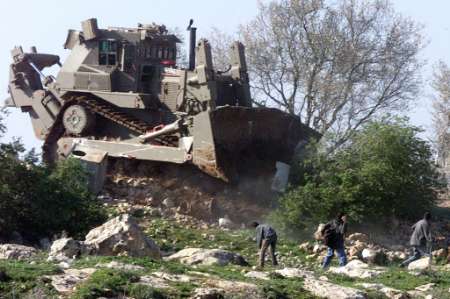
Ghassan Bannoura ghassanb at imemc dot org - IMEMC News, 6.11.07 09:59. Palestinian sources reported that the Israeli army invaded the northern West Bank cities of Nablus and Qalqilia on Tuesday morning, kidnapping at least nine civilians. In Nablus, several army jeeps and one bulldozer invaded the downtown area. During as subsequent search of homes, Israeli troops kidnapped seven civilians.
The kidnapped were later identified as Ahmad Abu al-Iesh, 17, Maher al-Kharaz, 50, Ghaith Awawdah, 23, Mohamed Abu Saleh, 19, Jalal Halboni, Mohamed Kalponah, 23, and Ala Ghaneem, 25.
Elsewhere Israeli soldiers stormed the city of Qalqilia, searched homes and kidnapped two civilians. The men were later identified as Ibaraheem Miskawi, 30, and Nour Jo'adi, 25.
Visualizzazione post con etichetta Nablus invasion. Mostra tutti i post
Visualizzazione post con etichetta Nablus invasion. Mostra tutti i post
martedì 6 novembre 2007


Israeli military abducts senior West Bank Hamas leader
Ameen Abu Warda nisreen at imemc dot org - IMEMC News. 6.11.07 08:54. Israeli forces abducted a senior Hamas leader from the northern West Bank city of Nablus in the early hours of Tuesday morning. The man, al-Sheikh Maher al-Kharaz, 55, was kidnapped after Israeli forces invaded the old city area of Nablus and stormed his house. Al-Kharaz was transferred to an undisclosed detention center. Al-Kharaz is considered one of the most prominent Hamas leaders in the West Bank, and was among those 400 leaders and activists of Hamas that were deported to Marj al-Zuhoor in 1993. He has been abducted on many different occasions, with the last culminating in 6months detention in the notorious Negev prison.
Translated by Nisreen Qumsieh - IMEMC News.
Translated by Nisreen Qumsieh - IMEMC News.
sabato 3 novembre 2007
Nablus, la testa del serpente
BoccheScucite quindicinale Voci dalla Palestina Occupata Pax Christi n. 43 - 1.11.07. Siamo a Nablus e non serve una lunga esperienza nei territori occupati per capire che l`aria di qui e` pesante. Cerchiamo negli occhi della gente i sorrisi di Ramallah, Betlemme e Aboud, trovando soprattutto severita` e rabbia, riflesso di questa citta` assediata e stretta nella morsa militare israeliana, che vorrebbe cosi` schiacciare la Testa del Serpente. E` in questo modo che i giornali di Tel Aviv definiscono Nablus, ex capitale economica della Cisgiordania, importante centro culturale, divenuta gioco forza la culla della resistenza palestinese. Dopo due notti nella Testa del Serpente, ci convinciamo che il veleno e` frutto dell`occupazione, che stritola migliaia di esistenze, corrodendo l`economia, ostacolando gli spostamenti e alimentando la tensione nelle strade. Altrettanto disarmante l`ottimismo di alcuni, se non molti, convinti che la Palestina ce la fara`: "basta non lasciare le nostre terre e continuare a vivere ogni giorno senza fuggire. Questa e` la nostra resistenza!". Parola di Majdi.
Scendiamo dal taxi che si e` gia` fatto buio, pochi passi nel suq e saliamo sull`ambulanza del Medical Relief, guidata da Firas, giungendo in pochi minuti in prossimita` del nostro alloggio, al decimo piano di una grigia palazzina arrocata lungo i fianchi della collina, a debita distanza dai vicoli del centro e dai tre campi profughi: Balata, Askar e Alian. Qui i militari israeliani giungono quasi ogni notte con i loro mezzi corazzati, per arrestare o uccidere dei combattenti palestinesi, o presunti tali.
Dopo cena usciamo sul terrazzo e la nostra attenzione scende subito a valle, tra gli edifici fatiscenti del centro, illuminati dalla luce giallognola delle strade, dove regna una calma apparente. E` in questi istanti che Nablus ritrova la propria vita, l`energia che le ha permesso di resistere a centinaia di attacchi avvenuti negli ultimi 6 anni. A partire dal 2002, con la massiccia invasione dell`esercito israeliano, giunto con decine di carri armati, i Markava tank, affiancati dai buldozzer necessari per squarciare gli stretti vicoli della citta` vecchia, demolendo interi edifici con famiglie all`interno, molte delle quali scomparse tra le macerie. Poi i soldati e i cecchini con i fucili di precisione, asserragliati nei palazzi piu` alti, per vigilare sul coprifuoco totale di quei giorni, e "sparare su ogni cosa in movimento", come ci racconta Firas. Oggi come allora, Firas e` un volontario del Medical Relief che guida l`ambulanza tra gli spari e le esplosioni per prestare soccorso ai feriti o raccogliere i cadaveri, spesso dopo delicate trattative con i militari tutt'altro che disposti a consentire il passaggio. Ci racconta come qualche settimana fa, durante una breve occupazione militare nel campo di Balata (25 mila persone in 1 chilometro quadrato), una donna sia stata colpita da un cecchino mentre si affacciava alla finestra. Il proiettile le ha attraversato il torace, passando a pochi centimetri dal cuore. Dopo il ricovero in ospedale, i militari hanno riconosciuto il loro sbaglio concedendo fosse trasferita in una clinica di Tel Aviv dove e` tuttora sotto osservazione, in condizioni critiche, a spese dei familiari. Impressionante ascoltare la descrizione delle tecniche di incursione dei soldati, i quali, per raggiungere il centro del campo sono soliti aprire dei fori nei muri con il martello o usando cariche esplosive, infilandosi poi nelle case per uscirne dall`altra parte, giungendo ad un nuovo muro da forare.. e cosi` via, sfasciando anche 30 abitazioni in una sola incursione. Tattica usata per sottrarsi alle sassaiole dei giovani, abituati a difendersi in questo modo dalle aggressioni, spesso a costo della vita. E` quasi un paradosso, uno dei piu` potenti eserciti della terra, munito di armi sofisticate e mezzi corazzati, messo in crisi da bande di ragazzi senza un futuro, armati di sassi e fionde.
"Negli ultimi 6 anni sono morte 975 persone a Nablus - spiega il Dottor Ghassan del Medical Relief, incontrato in mattinata -, oltre a 7000 feriti, 1000 dei quali hanno riportato disabilita` permanenti, anche molto gravi". Ascoltiamo con attenzione le sue parole e non possiamo che essere sdegnati, scoprendo come la crescente pressione militare in Nablus, sia stata accompagnata dall`uso di nuove armi, una sorta di bombe di precisione che lasciano ferite terribili, a causa di "particolari schegge mai viste prima, di un materiale quasi polveroso, in grado di spappolare gli organi interni e non rintracciabile ai raggi x".
Lasciata la clinica del centro entriamo a Balata, il piu` grande campo profughi della Cisgiordania settentrionale, dove centinaia di famiglie si ammassano in palazzi fatiscenti, distrutti e ricostruiti piu` volte, in seguito alle incursioni israeliane. Dopo una breve visita al centro giovanile, ci inoltriamo nel cuore del campo, percorrendo stretti viottoli che in alcuni casi non superano i 50 centimetri. Qui troviamo un groviglio di tubi, rifiuti e calcinacci, l`aria e` spesso irrespirabile per la costante mancanza di aerazione e sole, causa di svariate patologie che colpiscono soprattutto chi vive al pian terreno, nella semioscurita`.
Dopo due notti nella Testa del Serpente, ci convinciamo che il veleno e` frutto dell`occupazione, che stritola migliaia di esistenze, corrodendo l`economia, ostacolando gli spostamenti e alimentando la tensione nelle strade. Altrettanto disarmante l`ottimismo di alcuni, se non molti, convinti che la Palestina ce la fara`: "basta non lasciare le nostre terre e continuare a vivere ogni giorno senza fuggire. Questa e` la nostra resistenza!". Parola di Majdi.
Dopo cena usciamo sul terrazzo e la nostra attenzione scende subito a valle, tra gli edifici fatiscenti del centro, illuminati dalla luce giallognola delle strade, dove regna una calma apparente. E` in questi istanti che Nablus ritrova la propria vita, l`energia che le ha permesso di resistere a centinaia di attacchi avvenuti negli ultimi 6 anni. A partire dal 2002, con la massiccia invasione dell`esercito israeliano, giunto con decine di carri armati, i Markava tank, affiancati dai buldozzer necessari per squarciare gli stretti vicoli della citta` vecchia, demolendo interi edifici con famiglie all`interno, molte delle quali scomparse tra le macerie. Poi i soldati e i cecchini con i fucili di precisione, asserragliati nei palazzi piu` alti, per vigilare sul coprifuoco totale di quei giorni, e "sparare su ogni cosa in movimento", come ci racconta Firas. Oggi come allora, Firas e` un volontario del Medical Relief che guida l`ambulanza tra gli spari e le esplosioni per prestare soccorso ai feriti o raccogliere i cadaveri, spesso dopo delicate trattative con i militari tutt'altro che disposti a consentire il passaggio. Ci racconta come qualche settimana fa, durante una breve occupazione militare nel campo di Balata (25 mila persone in 1 chilometro quadrato), una donna sia stata colpita da un cecchino mentre si affacciava alla finestra. Il proiettile le ha attraversato il torace, passando a pochi centimetri dal cuore. Dopo il ricovero in ospedale, i militari hanno riconosciuto il loro sbaglio concedendo fosse trasferita in una clinica di Tel Aviv dove e` tuttora sotto osservazione, in condizioni critiche, a spese dei familiari. Impressionante ascoltare la descrizione delle tecniche di incursione dei soldati, i quali, per raggiungere il centro del campo sono soliti aprire dei fori nei muri con il martello o usando cariche esplosive, infilandosi poi nelle case per uscirne dall`altra parte, giungendo ad un nuovo muro da forare.. e cosi` via, sfasciando anche 30 abitazioni in una sola incursione. Tattica usata per sottrarsi alle sassaiole dei giovani, abituati a difendersi in questo modo dalle aggressioni, spesso a costo della vita. E` quasi un paradosso, uno dei piu` potenti eserciti della terra, munito di armi sofisticate e mezzi corazzati, messo in crisi da bande di ragazzi senza un futuro, armati di sassi e fionde.
"Negli ultimi 6 anni sono morte 975 persone a Nablus - spiega il Dottor Ghassan del Medical Relief, incontrato in mattinata -, oltre a 7000 feriti, 1000 dei quali hanno riportato disabilita` permanenti, anche molto gravi". Ascoltiamo con attenzione le sue parole e non possiamo che essere sdegnati, scoprendo come la crescente pressione militare in Nablus, sia stata accompagnata dall`uso di nuove armi, una sorta di bombe di precisione che lasciano ferite terribili, a causa di "particolari schegge mai viste prima, di un materiale quasi polveroso, in grado di spappolare gli organi interni e non rintracciabile ai raggi x".
Lasciata la clinica del centro entriamo a Balata, il piu` grande campo profughi della Cisgiordania settentrionale, dove centinaia di famiglie si ammassano in palazzi fatiscenti, distrutti e ricostruiti piu` volte, in seguito alle incursioni israeliane. Dopo una breve visita al centro giovanile, ci inoltriamo nel cuore del campo, percorrendo stretti viottoli che in alcuni casi non superano i 50 centimetri. Qui troviamo un groviglio di tubi, rifiuti e calcinacci, l`aria e` spesso irrespirabile per la costante mancanza di aerazione e sole, causa di svariate patologie che colpiscono soprattutto chi vive al pian terreno, nella semioscurita`.
Dopo due notti nella Testa del Serpente, ci convinciamo che il veleno e` frutto dell`occupazione, che stritola migliaia di esistenze, corrodendo l`economia, ostacolando gli spostamenti e alimentando la tensione nelle strade. Altrettanto disarmante l`ottimismo di alcuni, se non molti, convinti che la Palestina ce la fara`: "basta non lasciare le nostre terre e continuare a vivere ogni giorno senza fuggire. Questa e` la nostra resistenza!". Parola di Majdi.
martedì 16 ottobre 2007
Sale journée à Naplouse!
Nadia Ben Dhifallah, assawra, 15.10.07Il etait 2h du matin quand l'armee israelienne est entree dans Naplouse, dans le quartier de Ras El Ain.
Bilan:
2 personnes ont ete tuees.
Abed Shaker El Wazir, age de 73 ans, qui se rendait a la mosquee pour la priere du matin,
Basel Abu Saryeh, age de 35 ans, recherche depuis 4 ans par l'armee israelienne qui se cachait dans une maison abandonnee avec 2 autres jeunes hommes.
Ses 2 compagnons sont blesses, Mohamed Abdallah Shinawih, les jambes quasi arrachees par les tirs des soldats et Alem Ibrahim Elraai, brule.
A l'heure ou je vous ecris, les soldats sont toujours a Naplouse et s'approchent petit a petit de la vieille ville. Le quartier de Ras el Ain est totalement occupe par les soldats, les maisons sont fouillees une a une, les familles sorties dans la rue et mises apres la fouille dans une maison requisitionnee. Arrestations massives de jeunes hommes...
La nuit fut courte pour les Naboulsis, une fois de plus, impossible de fermer l'oeil entre les bruits de tirs, les ambulances, la voix qui emane des mosquees pour annoncer la mort du 1er martyre puis du 2eme.
La vieille ville est fermee et peu de gens dans les rues.
Je viens d'apprendre qu'un jeune garcon de 13 ans est mort avant-hier dans son sommeil, c'est son petit frere qui en allant le reveiller s'est rendu compte que son corps etait froid et grisatre.
Il est mort d'une crise cardiaque. C'est la enieme personne, jeune, qui meurt d'une crise cardiaque...
C'est encore une sale journee qui commence a Naplouse!
Nadia
giovedì 27 settembre 2007
Israeli forces invade Nablus and Al Bireh cities
Nisreen Qumsieh, IMEMC, 27/09/07. Israeli military forces invaded the northern West Bank city of Nablus and the refugee camps of Balata, el-Ein and Askar Al Jadeed in the early hours of Thursday morning.
Security sources told WAFA that Israeli forces, backed by large number of military vehicles, invaded the area from several directions using heavy fire.
The military spread itself into several neighborhoods of the city and around the refugee camps. Soldiers besieged several buildings, forcing residents from their homes, ransacking them and taking away items of property. No injuries or abductions were reported.
In a separate operation, Israeli forces invaded several neighborhoods in the West Bank city of Al Bireh, near Ramallah, in the early hours of Thursday morning.
Security sources said that scores of Israeli military vehicles entered the Um Al Sharayet, Al Shurfa and Samerames neighborhoods.
Troops launched house-to-house searches in the Um Al Sharayet district. They confiscated property and caused damage to residential buildings. No Abductions were reported.
Security sources told WAFA that Israeli forces, backed by large number of military vehicles, invaded the area from several directions using heavy fire.

The military spread itself into several neighborhoods of the city and around the refugee camps. Soldiers besieged several buildings, forcing residents from their homes, ransacking them and taking away items of property. No injuries or abductions were reported.
In a separate operation, Israeli forces invaded several neighborhoods in the West Bank city of Al Bireh, near Ramallah, in the early hours of Thursday morning.
Security sources said that scores of Israeli military vehicles entered the Um Al Sharayet, Al Shurfa and Samerames neighborhoods.
Troops launched house-to-house searches in the Um Al Sharayet district. They confiscated property and caused damage to residential buildings. No Abductions were reported.
mercoledì 26 settembre 2007
ISRAEL-OPT: Israeli incursion into West Bank [Abbas-Fayyad Israeli ricognised State of Palestine] refugee camp causes destruction, fear

Photo: Shabtai Gold/IRIN
A Palestinian apartment blown up during an Israeli military incursion
EIN BEIT ALMA, 26 September 2007 (IRIN) - Residents of the Ein Beit Alma refugee camp began to pick up the pieces after an intense Israeli military incursion last week left dozens homeless, and many very frightened, especially children. The fighting with Palestinian militants also caused damage to sewer systems, residents said.
Muhammed Msaimi, aged 26, hid for over a day with his wife and three children in the bathroom because of gunfights which took place outside their apartment. However, the bullets found their way into that room as well, and they crawled behind a thick wall, Msaimi, a registered refugee, said.
"Then the soldiers came and told us to leave. They said we should cover our ears. They blew up the floor above us. No one lives there," he told IRIN. The explosion knocked out the entire upper floor and caused structural damage to the rest of the building. Msaimi now lives with his in-laws.
The Israeli military said the purpose of the three-day operation was to "prevent the execution of terror attacks into the Israeli home front", and that information obtained from arrested alleged militants, 49 in all, had led them to an explosive belt which had been smuggled into Tel Aviv.
Fear
However, the effect on the civilian population was considerable, residents said.
My children are afraid to come back here," said Msaimi, adding that they were staying at a friend's home nearby.
 Photo: Shabtai Gold/IRIN  |
| A Palestinian girl attending a UNRWA school side-steps the rubble of a damaged home |
"The effects of these military operations at such close quarters have an incalculable impact on the well-being of the young," said Christopher Gunness from UNRWA, the UN agency for Palestinian refugees.
The agency runs psycho-social programmes and has counsellors at its two camp schools.
"The children are not studying now, they are frightened. They go to school and draw, colour and read stories," said Samia Abu Salah, whose children attend UNRWA schools and are taking part in a programme which tries to help the children express their feelings.
Her home was invaded by the military: "We heard noises from below our bedroom. It was the Jews underneath," she recounted, referring to the Israeli soldiers. "We all moved away, into the stairwell. Then we saw them coming out of the floor, from below," Abu Salah said. The soldiers had blown up the apartment below, knocking a hole in the ceiling and were climbing upwards.
Gunness said UNRWA can offer limited financial support for those who lost their homes or suffered damage.
“Through walls” tactic
According to the residents in other homes a similar tactic, known as "through walls", was used. Soldiers go through neighbours' homes, destroying joint walls, to reach targets without being exposed in the narrow streets.
The building next to Abu Salah, four stories high, was totally demolished by Israeli bulldozers, leaving dozens homeless. Personal belongings like furniture, video tapes and clothes stick out of the rubble. The soldiers, searching for and fighting militants, did not give the residents time to get their possessions out, residents said.
 Photo: Shabtai Gold/IRIN |
| "The noises during the fighting hurt my ears so much. The windows are broken. I hope they fix it before winter. It's getting cold now at night." |
| Aisha, 74 |
Several people said the soldiers used three locals as human shields, a practice deemed illegal by Israel's High Court. The Israeli military said it was "not aware of any such incident".
In other areas, people were cordoned off while soldiers used their homes as observation points, residents said.
"My brother had 71 people in his house - the women in one room and the men in another - for two days," said Ghassan, a school teacher. "They used all their food in one day but received bread from the Palestinian Medical Relief on the second.”
"The noises during the fighting hurt my ears so much," said Aisha, aged 74, as she sat on the floor preparing soup from UNRWA food aid.
Sewage pipes damaged during the fighting overflow outside her small home, spreading a foul smell in the air.
"The windows are broken. I hope they fix it before winter. It's getting cold now at night," she said.
domenica 23 settembre 2007
Nablus: Result of three days of invasion in the Abbas-Fayyad Israeli recognised State of Palestine (6).
 Photo: http://www.flickr.com/photos/8606171@N08/
Email From: Human Supporters [mailto:wajdiyaeesh@gmail.com]. After occupying Ale'n camp three days and four nights, the soldiers left this morning leaving everything destroyed.
I went there this morning to record a film about the destruction. What I sow and I recorded was really horrible, the violence used by soldiers against the people and against the camp itself is without limit.
During the invasion we sow how soldiers occupied houses, arrested people, we sow their reaction and their violence. But compare with what we sow today, I realise that we sow nothing during the invasion!
No one single house in the camp has not been occupied. I entered in some houses, the destruction is total. They destroyed everythings in the houses, electric machine, sofas, wardrobes, and it looks for me that they use to enjoy the kitchen, they use to mix the sugar with rice with every things. All the materials of the kitchen specially which made by glass they use to enjoy destroying it. Its not only the houses even the streets, by bulldozer they destroy it, in each corner that i pass i find something destroyed.
One building of three flours was completely destroyed. They begin to destroy it by bulldozer, then they left it. It was already not usable at all but they decided that was not enough... so they finish it by bomb. Seventy people used to live there, now they are homeless. Why ? Because this building included the house of one of the fighters of the camp.
One family told me what's happened to them: they were arrested in one room in their house, one of the soldier who was occupying their house came to the room where they were enclosed and asked them "you don't want to cook, we know that it's Ramadan and you are fasting", so the women say: "ya i want make something for the kids at least, they ate nothing and they are not fasting even", so she went to the kitchen, she prepared some food, she brought it for every body. When they were up to start to eat, one of the soldiers arrived, he took the food plate by plate and he throw each one in the flour in front of the people who were fasting, in front of the kids who needed it.
Finally the invasion finished, the result is two martyrs, 49 prisoners, 70 injured.
sabato 22 settembre 2007
La jeune épouse française in the Abbas-Fayyad Israeli recognised State of Palestine (5)
Phalestine, Naplouse, 20/09/07. "Imagine, Phalestine, à Naplouse nous sommes 200 000 habitants, imagine que juste 50 000 d'entre nous sortions, imagine les gens des villages nous rejoignant, imagine à chaque ville que nous traverserons les gens qui se joindront à nous. Ils ne pourront pas tous nous tuer, ils tueront seulement les premières lignes. Je serai devant, parce que ce jour là je pourrai mourir en paix, ce jour là ils ne pourront plus nous arrêter, nous serons libres. Nous serons devant Phalestine".
Pour commencer cet email, je dois faire quelques précisions. Ces rapports que j'écris jours après jours, ne sont pas une caméra, et les émotions que je tente de retransmettre passent elles par mes yeux , par mes tripes plus exactement. Je ne prétend pas être journaliste, je ne rapporte que ce que moi, venue d'un autre monde, je perçois. En me lisant vous êtes en moi. Complètement, mais rien d'autre.
Aujourd'hui j'ai rencontré mes limites, ce qui fait la différence entre un Palestinien et une Française. Est-ce l'excuse que je me donne ? Elle est si facile.
Aujourd'hui est un jour de défaite personnelle à bien des niveaux.
Ce matin, à 10 heures une marche de solidarité aux habitants d'El Ain est organisée par les Naplousi.
J'ai veillé trop tard hier, je décide une nuit blanche mais le sommeil m'a pris vers huit heures. Wajdi tente de me réveiller pour y aller. Je n'en suis pas capable. Ce n'est pas le sommeil que je ne réussis pas à vaincre, c'est la peur. Je pressens un massacre. Un mouvement de foule effraiera les soldats, ils tireront sans hésiter. Femmes, enfants, vieillards, ils ne feront pas de différence. Ils voudront sûrement donner un exemple aussi, nous dire "ne revenez pas".
C'est un cri : je veux vivre, je veux que Wajdi vive, je veux continuer nos rêves.
Wajdi fait mine de prendre sa veste de secouriste pour rejoindre les ambulances. Si vous connaissez Wajdi, vous savez déjà qu'il était en première ligne de la manifestation. Quand je l'apprends, je sais que je n'ai pas voulu le comprendre plus tôt et le sentiment d'avoir trahis nos serments me prends. Il n'a pas été blessé "grâce à Dieu seulement" me dit-il. Je suis folle de colère: contre lui d'avoir pris ce risque, contre moi qui n'ai pas été à la hauteur, contre le monde qui ne saura jamais.
"Sur le chemin, je volais, entouré des 500 personnes qui partaient ensembles, unis, c'était comme un orgasme" me dit Wajdi. Le plus grand rêve de Wajdi est une marche de tous les palestiniens à travers la Palestine : "imagine, Phalestine, à Naplouse nous sommes 200 000 habitants, imagine que juste 50 000 d'entre nous sortions, imagine les gens des villages nous rejoignant, imagine à chaque ville que nous traverserons les gens qui se joindront à nous. Ils ne pourront pas tous nous tuer, ils tueront seulement les premières lignes. Je serai devant, parce que ce jour là je pourrai mourir en paix, ce jour là ils ne pourront plus nous arrêter, nous serons libres. Nous serons devant Phalestine."
C'est pour ça que je ne peux pas dire à Wajdi que je suis en colère qu'il soit parti à cette manifestation. C'est pour ça que je ne peux pas lui dire, non, je veux que nous vivions. Vivre droit ou ne pas vivre, Wajdi est comme ça. Je fais mon possible pour l'atteindre, disons que c'est pas gagné.
Comme je l'appréhendais, les soldats n'ont pas hésité une seconde, en moins d'une minutes la foule était dispersée par le gaz, tirs à balles réelles et plastiques. Impossible de vraiment savoir combien de personnes ont été blessées. Pour cette unique minute le chauffeur d'une des ambulances m'a expliqué avoir transporté à l'hôpital quatre personnes.
Il est environ 15 heures lorsque nous arrivons devant le camp d'El Ain. Je suis à nouveau glacée par ma sueur. Les larmes immergent mon visage, ce n'est pas l'émotion mais le gaz lacrymogène. Une vieille dame tente de traverser la rue, je passe mon bras sur son dos pour la couvrir. Je ne veux pas me permettre de familiarité qui pourrait l'offusquer, mais elle prend mon bras, elle serre ma main.
Tout parait plus ordonné qu'hier : les jeunes qui lancent des pierres, les jeunes qui tentent d'apporter de la nourriture dans le camp. Les soldats surtout sont mieux organisés : une équipe de premier secours vient de se faire arrêter, un journaliste qui tentait de filmer la destruction d'une maison a pris une balle, la plupart des volontaires se voient refuser formellement l'entrée.
Nous apprenons que 20 familles sont enfermées dans une maison, cela signifie environ 200 personnes. Quelques soient les réserves qui étaient dans la maison, elles sont épuisées. Aiché (confère les textes précédents) a réussi à y apporter quelques vivres, mais pas assez.
Wajdi et moi avons apporté des médicaments laissés le mois dernier par un groupe de l'association Génération Palestine. Nous commençons à les "éplucher" avec un médecin de l'équipe, je traduis les indications et nous trions ceux qui correspondent aux besoins des habitants du camp. Hors de question de prendre le risque de donner un médicament qui ne corresponde pas, nous hésitons. Finalement nous prenons tous les efferalgants, aspirines, spasfon et nous laissons les autres dans le centre de secours installé à devant le camp. Nous prenons également de la nourriture autant qu'il nous est possible et avec un britannique, Jacob, et trois autres Palestiniens nous partons.
Nous sommes sur le seuil lorsque 3 soldats surgissent. Ils contrôlent nos papier d'identité, enfin pas les miens, la couleur de mon passeport suffit. Malheureusement elle ne suffit pas à protéger l'un des volontaire. Sous mes yeux, ils attrapent ce jeune, devant mes pieds ils l'obligent à s'agenouiller. Le viseur de l'arme qui s'abat sur son crane a un diamètre qui avoisine les 10 centimètres, ils l'attrapent par les cheveux, l'insultent, puis ils lui bandent les yeux et le jettent dans leur fourgon. Je ne peux rien faire, encore. Ils en ont rien à foutre des témoins, nous ne sommes même pas gênants.
Nous reprenons nos sacs de pains, de mortadelle, de médicaments et nous commençons à grimper les interminables marches de la colline. Comme hier nous voulons entrer par le haut. Il fait chaud, j'ai soif, l'estomac vide du jeune, la crève, la hantise d'une balle qui peut nous atteindre à tout moment. Je crois que je vais m'évanouir. Finalement non, j'arrive en haut et l'adrénaline qui monte à la vue du barrage militaire me remet très vite sur pied.
L'un d'entre eux me braque, il se fout de ma gueule ce connard, un autre baisse son arme. "Nous apportons de la nourriture et des médicaments pour les habitants, ils en ont besoin". Les ordres sont formels : "dégagez". Rien n'y fait, pas même les petites blagues d'usage. L'autre retrouve son sourire en me braquant à nouveau.
Nous faisons mine de partir et entrons dans une maison quelques mètres plus loin. Ces personnes qui nous reçoivent sont plus qu'accueillantes. Leur jardin donne accès à un autre jardin qui lui même donne sur le camp. D'autres équipes médicales sont déjà passées par là, elles guettaient notre arrivée pour nous indiquer le passage. Nous leur proposons un peu de nourriture, elles refusent : "ceux qui sont à l'intérieur en ont plus besoin".
Une explosion plus violente et plus longue que les autres tonne, une montgolfière de poussière s'envole. Nous accélérons, s'il y a des blessés nous devons les secourir. En ouvrant la grille Wajdi se retrouve nez à nez avec un soldat. Comme nous ne déguerpissons pas assez vite, une bombe sonore nous frôle, les coups de feux partent. Nous nous baissons et nous courrons.
Mon cher Wajdi est toujours plein de ressources : le voilà qui lance les paquets de nourriture aux habitants par les fenêtres. Un premier paquet de pain, un second, un poulet, ah non... pas de poulet, celui-ci n'est pas arrivé à destination. Les gens nous demandent de l'eau, nous restons sans voix: de l'eau.
Les soldats ont repéré notre "manège", nous détalons presto.
Il est 6 heures, nous entendons l'éden qui signale la fin du jeune, la tombée de la nuit aussi. Une ambulance nous attrape au vol. Je trouve une bouteille d'eau à l'intérieur, elle est chaude et pas très claire, je lui trouve pourtant une saveur d'hydromel.
Nous arrivons à la maison, de l'eau, des jus de fruits, du sucre, du silence. Je veux me sentir en sécurité.
Wajdi m'annonce que nous repartons dans une demie-heure. Je traîne, m'attarde sur mes emails, finis par sortir un "tu est sur que c'est vraiment utile ?" puis un "ils ne nous laisserons jamais entrer". Wajdi se laisse convaincre.
Il est temps de parler. En quelques secondes j'avoue tout: mon angoisse face à ce cauchemar, ma rencontre avec mes limites et surtout cette défaite. Aujourd'hui je n'ai pas été à la hauteur de mes engagements. Je ne veux pas vivre comme ça.
Il est environ 20 heures, nous rejoignons les équipes médicales. Au passage Wajdi propose à d'autres jeunes de nous emboîter le pas, la réponse de l'un d'entre-eux est "quand tu seras martyre, je viendrai chercher ton corps". Je ne suis pas certaine qu'il fut une bonne idée de la part de mon cher et tendre de me traduire cet encouragement.
Une lumière bleue descend la butte sur laquelle est basée le camp. Des lumières jaunes, sortes de feux d'artifices traversent le ciel, nous entendons des coups de feux, des explosions et un hélicoptère que je n'arrive pas à voir.
Il est trop tard, les soldats ont fermés la base médicale. Néanmoins Jacob et deux autres internationales ont étés autorisés à rejoindre la maison où les 20 familles sont retenues en otage, ils y sont toujours. Ils ont relâché le volontaire de Medical Relief près d'Howara (un des check point de Naplouse), il est transporté à l'hôpital parce qu'il est couvert de contusions. Je me risque à demander un stupide : pourquoi ? Parce que sur sa carte d'identité il est indiqué qu'il habite le camp d'El Ain.
C'est le moment du bilan. Beaucoup de blessés pendants la journée, de personnes "arrêtées", de nombreuses maisons ont été détruites de l'intérieur ou littéralement, très peu de nourriture est entrée dans le camp et les soldats ne partent pas.
Les véhicules militaires passent et repassent devant nous, il ne faut plus tarder.
Plutôt que cet exposé de complaintes douteuses de ma part j'aurais voulu décrire dans cet email ce que ressentent les personnes enfermées en ce moment. Mais comment ? Je n'ai pas pu entrer. Est-ce que je me rends compte moi même qu'ils nous demandaient de l'eau.
J'ai lu aujourd'hui Conte sous couvre feu écrit par les enfants d'El Ain avec l'aide de Darna (maison des associations de Naplouse). J'aimerai être à leur place pour ne pas savoir qu'ils y sont.
Aujourd'hui j'ai rencontré mes limites, ce qui fait la différence entre un Palestinien et une Française. Est-ce l'excuse que je me donne ? Elle est si facile.
Aujourd'hui est un jour de défaite personnelle à bien des niveaux.
Ce matin, à 10 heures une marche de solidarité aux habitants d'El Ain est organisée par les Naplousi.
J'ai veillé trop tard hier, je décide une nuit blanche mais le sommeil m'a pris vers huit heures. Wajdi tente de me réveiller pour y aller. Je n'en suis pas capable. Ce n'est pas le sommeil que je ne réussis pas à vaincre, c'est la peur. Je pressens un massacre. Un mouvement de foule effraiera les soldats, ils tireront sans hésiter. Femmes, enfants, vieillards, ils ne feront pas de différence. Ils voudront sûrement donner un exemple aussi, nous dire "ne revenez pas".
C'est un cri : je veux vivre, je veux que Wajdi vive, je veux continuer nos rêves.
Wajdi fait mine de prendre sa veste de secouriste pour rejoindre les ambulances. Si vous connaissez Wajdi, vous savez déjà qu'il était en première ligne de la manifestation. Quand je l'apprends, je sais que je n'ai pas voulu le comprendre plus tôt et le sentiment d'avoir trahis nos serments me prends. Il n'a pas été blessé "grâce à Dieu seulement" me dit-il. Je suis folle de colère: contre lui d'avoir pris ce risque, contre moi qui n'ai pas été à la hauteur, contre le monde qui ne saura jamais.
"Sur le chemin, je volais, entouré des 500 personnes qui partaient ensembles, unis, c'était comme un orgasme" me dit Wajdi. Le plus grand rêve de Wajdi est une marche de tous les palestiniens à travers la Palestine : "imagine, Phalestine, à Naplouse nous sommes 200 000 habitants, imagine que juste 50 000 d'entre nous sortions, imagine les gens des villages nous rejoignant, imagine à chaque ville que nous traverserons les gens qui se joindront à nous. Ils ne pourront pas tous nous tuer, ils tueront seulement les premières lignes. Je serai devant, parce que ce jour là je pourrai mourir en paix, ce jour là ils ne pourront plus nous arrêter, nous serons libres. Nous serons devant Phalestine."
C'est pour ça que je ne peux pas dire à Wajdi que je suis en colère qu'il soit parti à cette manifestation. C'est pour ça que je ne peux pas lui dire, non, je veux que nous vivions. Vivre droit ou ne pas vivre, Wajdi est comme ça. Je fais mon possible pour l'atteindre, disons que c'est pas gagné.
Comme je l'appréhendais, les soldats n'ont pas hésité une seconde, en moins d'une minutes la foule était dispersée par le gaz, tirs à balles réelles et plastiques. Impossible de vraiment savoir combien de personnes ont été blessées. Pour cette unique minute le chauffeur d'une des ambulances m'a expliqué avoir transporté à l'hôpital quatre personnes.
Il est environ 15 heures lorsque nous arrivons devant le camp d'El Ain. Je suis à nouveau glacée par ma sueur. Les larmes immergent mon visage, ce n'est pas l'émotion mais le gaz lacrymogène. Une vieille dame tente de traverser la rue, je passe mon bras sur son dos pour la couvrir. Je ne veux pas me permettre de familiarité qui pourrait l'offusquer, mais elle prend mon bras, elle serre ma main.
Tout parait plus ordonné qu'hier : les jeunes qui lancent des pierres, les jeunes qui tentent d'apporter de la nourriture dans le camp. Les soldats surtout sont mieux organisés : une équipe de premier secours vient de se faire arrêter, un journaliste qui tentait de filmer la destruction d'une maison a pris une balle, la plupart des volontaires se voient refuser formellement l'entrée.
Nous apprenons que 20 familles sont enfermées dans une maison, cela signifie environ 200 personnes. Quelques soient les réserves qui étaient dans la maison, elles sont épuisées. Aiché (confère les textes précédents) a réussi à y apporter quelques vivres, mais pas assez.
Wajdi et moi avons apporté des médicaments laissés le mois dernier par un groupe de l'association Génération Palestine. Nous commençons à les "éplucher" avec un médecin de l'équipe, je traduis les indications et nous trions ceux qui correspondent aux besoins des habitants du camp. Hors de question de prendre le risque de donner un médicament qui ne corresponde pas, nous hésitons. Finalement nous prenons tous les efferalgants, aspirines, spasfon et nous laissons les autres dans le centre de secours installé à devant le camp. Nous prenons également de la nourriture autant qu'il nous est possible et avec un britannique, Jacob, et trois autres Palestiniens nous partons.
Nous sommes sur le seuil lorsque 3 soldats surgissent. Ils contrôlent nos papier d'identité, enfin pas les miens, la couleur de mon passeport suffit. Malheureusement elle ne suffit pas à protéger l'un des volontaire. Sous mes yeux, ils attrapent ce jeune, devant mes pieds ils l'obligent à s'agenouiller. Le viseur de l'arme qui s'abat sur son crane a un diamètre qui avoisine les 10 centimètres, ils l'attrapent par les cheveux, l'insultent, puis ils lui bandent les yeux et le jettent dans leur fourgon. Je ne peux rien faire, encore. Ils en ont rien à foutre des témoins, nous ne sommes même pas gênants.
Nous reprenons nos sacs de pains, de mortadelle, de médicaments et nous commençons à grimper les interminables marches de la colline. Comme hier nous voulons entrer par le haut. Il fait chaud, j'ai soif, l'estomac vide du jeune, la crève, la hantise d'une balle qui peut nous atteindre à tout moment. Je crois que je vais m'évanouir. Finalement non, j'arrive en haut et l'adrénaline qui monte à la vue du barrage militaire me remet très vite sur pied.
L'un d'entre eux me braque, il se fout de ma gueule ce connard, un autre baisse son arme. "Nous apportons de la nourriture et des médicaments pour les habitants, ils en ont besoin". Les ordres sont formels : "dégagez". Rien n'y fait, pas même les petites blagues d'usage. L'autre retrouve son sourire en me braquant à nouveau.
Nous faisons mine de partir et entrons dans une maison quelques mètres plus loin. Ces personnes qui nous reçoivent sont plus qu'accueillantes. Leur jardin donne accès à un autre jardin qui lui même donne sur le camp. D'autres équipes médicales sont déjà passées par là, elles guettaient notre arrivée pour nous indiquer le passage. Nous leur proposons un peu de nourriture, elles refusent : "ceux qui sont à l'intérieur en ont plus besoin".
Une explosion plus violente et plus longue que les autres tonne, une montgolfière de poussière s'envole. Nous accélérons, s'il y a des blessés nous devons les secourir. En ouvrant la grille Wajdi se retrouve nez à nez avec un soldat. Comme nous ne déguerpissons pas assez vite, une bombe sonore nous frôle, les coups de feux partent. Nous nous baissons et nous courrons.
Mon cher Wajdi est toujours plein de ressources : le voilà qui lance les paquets de nourriture aux habitants par les fenêtres. Un premier paquet de pain, un second, un poulet, ah non... pas de poulet, celui-ci n'est pas arrivé à destination. Les gens nous demandent de l'eau, nous restons sans voix: de l'eau.
Les soldats ont repéré notre "manège", nous détalons presto.
Il est 6 heures, nous entendons l'éden qui signale la fin du jeune, la tombée de la nuit aussi. Une ambulance nous attrape au vol. Je trouve une bouteille d'eau à l'intérieur, elle est chaude et pas très claire, je lui trouve pourtant une saveur d'hydromel.
Nous arrivons à la maison, de l'eau, des jus de fruits, du sucre, du silence. Je veux me sentir en sécurité.
Wajdi m'annonce que nous repartons dans une demie-heure. Je traîne, m'attarde sur mes emails, finis par sortir un "tu est sur que c'est vraiment utile ?" puis un "ils ne nous laisserons jamais entrer". Wajdi se laisse convaincre.
Il est temps de parler. En quelques secondes j'avoue tout: mon angoisse face à ce cauchemar, ma rencontre avec mes limites et surtout cette défaite. Aujourd'hui je n'ai pas été à la hauteur de mes engagements. Je ne veux pas vivre comme ça.
Il est environ 20 heures, nous rejoignons les équipes médicales. Au passage Wajdi propose à d'autres jeunes de nous emboîter le pas, la réponse de l'un d'entre-eux est "quand tu seras martyre, je viendrai chercher ton corps". Je ne suis pas certaine qu'il fut une bonne idée de la part de mon cher et tendre de me traduire cet encouragement.
Une lumière bleue descend la butte sur laquelle est basée le camp. Des lumières jaunes, sortes de feux d'artifices traversent le ciel, nous entendons des coups de feux, des explosions et un hélicoptère que je n'arrive pas à voir.
Il est trop tard, les soldats ont fermés la base médicale. Néanmoins Jacob et deux autres internationales ont étés autorisés à rejoindre la maison où les 20 familles sont retenues en otage, ils y sont toujours. Ils ont relâché le volontaire de Medical Relief près d'Howara (un des check point de Naplouse), il est transporté à l'hôpital parce qu'il est couvert de contusions. Je me risque à demander un stupide : pourquoi ? Parce que sur sa carte d'identité il est indiqué qu'il habite le camp d'El Ain.
C'est le moment du bilan. Beaucoup de blessés pendants la journée, de personnes "arrêtées", de nombreuses maisons ont été détruites de l'intérieur ou littéralement, très peu de nourriture est entrée dans le camp et les soldats ne partent pas.
Les véhicules militaires passent et repassent devant nous, il ne faut plus tarder.
Plutôt que cet exposé de complaintes douteuses de ma part j'aurais voulu décrire dans cet email ce que ressentent les personnes enfermées en ce moment. Mais comment ? Je n'ai pas pu entrer. Est-ce que je me rends compte moi même qu'ils nous demandaient de l'eau.
J'ai lu aujourd'hui Conte sous couvre feu écrit par les enfants d'El Ain avec l'aide de Darna (maison des associations de Naplouse). J'aimerai être à leur place pour ne pas savoir qu'ils y sont.
Army Incursion in Al Ayn refugee camp, Nablus - the Abbas-Fayyad Israeli recognised State of Palestine
International Solidarity Movement, 21/09/07.
Tuesday, September 18th, Israeli occupation forces (IOF) assaulted Al Ayn refugee camp in Nablus. The IOF attacked the camp and were met with fierce resistance from inside the camp. One soldier and one resistance fighter was killed.
The camp was closed off and a curfew was put in place. A road block of earth was set up to stop people and vehicles from entering the camp. Ambulances gathered on Jamal Abdel Nasser street, the main entrance to the camp. They then dropped tear gas upwind of the ambulances, causing the crews to leave the area or seek shelter in their vehicles.
An injured 17 year old was taken to the roadblock and put into an ambulance. The soldiers took the keys out of the ignition, forcing the ambulance to wait until an army medic had declared ‘whether he was dead or not’. The family of the gunshot victim were forcibly removed from the ambulance. Nervous soldiers were very aggressive with the press throughout.
Palestinian Medical Relief worker is arrested and blindfolded for trying to access the wounded. Three medical workers were arrested during the invasion.

An ISM Human Rights Worker (HRW) was filming an army jeep when the soldier in the back of the jeep attempted to throw a tear gas grenade at the HRW. He set it off in the back of his own jeep instead. Soldiers piled out of the jeep choking on their own tear gas. It seemed they threw a sound bomb at the HRW and ambulance crews who had witnessed the mistake out of embarrassment.
Excessive repression was carried out all day against youths throwing rocks at army jeeps, humvees and bulldozers. HRWs and Palestinian ambulance crews repeatedly tried to enter the camp. Urgently needed water, bread and medical supplies were not allowed in by the army. All negotiations with the IOF failed, both with the soldiers on the ground and the local DCO “humanitarian office”.
———————–
Smoke rises from Israeli army activity in the besieged camp.

Wednesday, September 19th:
The lock down of Al Ayn refugee camp continued. After two nights of curfew and no medical teams entering, ambulance crews were anxious to get in and tend to the wounded. The IOF responded to the requests of the medics by firing rubber coated steel bullets at them. The ambulances were hit repeatedly, and after sustaining damage to windscreens and the vehicle bodies, were made to leave the area. At 10:20am ambulance crews and two ISM HRWs tried to gain access to the medical clinic but were forced back by concussion grenades and rubber coated steel bullets.
At mid-day a large, colourful, non-violent protest march approached the camp. There were around 200 Palestinians waving flags and chanting songs. The army fired tear gas at the back of the procession, into a large group of women. They then fired tear gas and rubber bullets into the rest of the protesters. In the ensuing chaos people were hit by grenades and rubber bullets. The army fired indiscriminately into the crowd to create as much pain and havoc as possible.
One HRW and an ambulance crew bravely broke the curfew. They ran past soldiers taking desperately needed medical supplies into the camp. They stayed for the rest of the evening giving out food and medicine to the trapped occupants of the camp. At around 6pm one ambulance with medicines supplied by an ISM HRW was allowed into the camp, bringing much needed relief to families trapped in the nightmare of the IOF invasion. During the curfew on this day, a 38 year old handicapped man in a wheelchair was shot while he was looking out his window. The situation continues with ambulance crews and HRWs on stand-by all through the night waiting for the next opportunity to gain access to the terrified inhabitants of the camp.
————
Local Palestinians are arrested while demonstrating non-violently against the invasion.

Thursday, September 20th:
ISM HRWs came to the camp at 8:30am and saw the UN and the Red Cross among other NGOs on the scene for the first time.
A couple of ambulances were allowed into the camp at 9:00am to bring much needed relief and aid to the camp inhabitants. At around 10:30am two people were arrested and taken from the mosque in handcuffs, into an armoured personnel carrier. One medic was arrested from the clinic on Jammal Abdel Nasser street. The IOF entered the clinic and checked everyone’s IDs. The medic was released late in the evening after being badly beaten with sticks during his incarceration.
A peaceful demonstration was held in solidarity with the besieged camp. After speeches were made in the centre of Nablus the march began at 11:10am. There were colourful banners waved as the city’s people showed their support for the inhabitants on the streets for the second day running. As the marcher approached the camp, they were subjected to a hail of sound grenades and tear gas. The tear gas turned the crowd of peaceful demonstrators into a scene of fear and chaos.
A building that was called home by fifty children and their families is destroyed, they were given minutes notice.

Along with a Palestinian medical crew three ISM HRWs gained access to the inside of the camp. After sneaking over rough ground, the group stopped when faced with an IOF jeep standing in their way. The group gathered their courage and had the internationals in the front as they walked past the jeep. Around the corner were three or four more IOF vehicles forcing the medics and HRWs to dash down an alley and into the camp.
Urgently needed medical supplies were distributed to the grateful residents in their homes. Danger was always wearing a uniform as the medics moved around the camp. HRWs led the way calling out ‘volunteer’ so any trigger-happy soldiers knew they were a medical crew. A student from Tulkarem had been trapped in the camp since Tuesday morning. One HRW gave her his high-visibility jacket so she could leave with the team and return home. While exiting the camp the medics and activists were attacked by the IOF with sound bombs. All they wanted was to bring more supplies in to the needy people but were threatened with being shot by soldiers.
At 5pm a building which housed around fifty children, recently visited by the medics and activists in the camp, was blown up by the IOF. This illegal act of collective punishment was because a cousin of one of the residents was wanted by the Israeli Army. Later in the evening the IOF set off a series of large explosions in the camp. The explosions lasted for around 20 minutes and many homes were destroyed. The city shuddered as the IOF continued its operations in Al Ayn refugee camp.
———–
Medical workers must go through extensive searches and ID checks while attempting to deliver food and medicine to the camp under curfew.

Friday, September 21st:
After a three day siege of Al-Ain Refugee camp, IOF left the camp around 5am this morning. Residents were able to leave their homes for the first time since it began. At least two Palestinians were killed and an unknown number of people are injured. 49 residents of the camp were also arrested. Many homes in the camp showed signs of extensive damage.
The IOF blew many doors off their hinges and bullets and tear gas canisters could be found on the ground in many places throughout the camp. At least one house, which had been the residence of fifty children, was completely destroyed by explosives. Several other houses had gaping holes in walls and showed signs of attempted demolition. Today, children sat in the rubble where their house once stood.
International activists spoke with several residents of the camp, who described experiences of being without food, water and medicine. One woman spoke of being beaten by IOF soldiers outside of her home. A member of a Palestinian relief organization told activists that three medics had been arrested over the course of the invasion, with one still being held captive.
The bodies of the two Palestinians killed during the invasion were carried through the streets by hundreds of mourners who remembered with rage the brutal treatment they have endured by the IOF.
Palestinian and international HRWs walk along the destroyed route the Israeli army took through the camp.

Link to us


venerdì 21 settembre 2007
Un homme, sa jeune épouse française, sa famille, in the Abbas-Fayyad Israeli recognised State of Palestine (4)
Dear friends,
As for yesterday, I forward you the daily report of my wife.
Salam, peace,
Wajdi
On 9/20/07, *AC Yaeesh* < acyaeesh@gmail.com
Invasion d'El Ain camp, 2ème jour.
Degré supérieur de violence, la présence militaire a doublé, il y a
un nouveau martyre. Je ne connais ni son nom, ni son âge, je sais
juste qu'il était jeune et à demi-paralysé. Il était chez lui
lorsqu'il a reçu une balle dans la nuque. Les ambulances n'ont pas
été autorisées à venir le chercher, alors il s'est vidé de son sang
et il est mort.
Degré supérieur de tension, même l'air que nous respirons semble
branché sur haute tension. A l'entrée principale du camp forme une
sorte de croix, il y a le camp sur notre droite, la rue principale
en bas de celui-ci et un chemin perpendiculaire. Sur les routes, des
dizaines de véhicules militaires en tous genres: jeep bien sur,
fourgonnettes, bulldozer,marteau-piqueurs... J'en dénombre 17 au
départ, quelques minutes plus tard 13. Ils viennent et ils vont
parce qu'aux extrémités de nombreux hommes lancent des pierres, les
plus jeunes ont peut être 8 ans, les plus vieux la vingtaine.
Des pneus brûlent, le gaz lacrymogène se répand.
Et au milieu de tout ça, il y a nous, volontaires en tous genres.
J'essaye de tout mémoriser, tout photographier dans ma mémoire parce
que je sens bien que personne n'apprécierais une photo souvenir.
D'ailleurs il n'y a plus de journalistes quand j'arrive, enfin si
un, plus loin. Est-ce que c'est parce que c'est trop dangereux ? Ou
est-ce parce que la nouvelle ne fait déjà plus sensation ?
Nous ne sommes pas très organisés et c'est ce qui nous permet à
Wajdi moi de nous éclipser et de pénétrer par le haut de la colline
à l'intérieur du camp, accompagné d'un autre volontaire qui accepte
de nous suivre. Il semble que le chemin que nous empruntons pour
détourner le camp soit le dortoir des soldats, la plupart font la
sieste. Nous ne demandons pas notre reste, nous avançons.
Degré supérieur de folie à l'intérieur, tableau d'un chaos.
Sur le chemin ce n'est plus merci que nous entendons, mais "apportez
nous à manger", "apportez nous des médicaments", "pourquoi apportez
vous à manger à cette famille et pas à nous ? nous le méritons moins ?"
Ce schéma je le reconnais parce que je l'ai vécu il y a peu : au
traumatisme succède la haine qui n'a plus de raison, qui n'est plus
raisonnable. Je comprends ces gens, parce que nous sommes leur seul
exutoire. Alors si pour voir la lumière de la sortie, ils ont besoin
de ne pas voir que nous risquons nos vies, je m'en fous. A défaut
d'apporter du pain à tous, j'apporte au moins une sorte d'espoir.
Le sol est boueux, des canalisations ont sautées, on trouve des
morceaux de verres, de fils de bombes, des morceaux de chat.
Je ne me formalise même plus des lumières rouges des viseurs et
j'attaque de mon plus beau sourire (oui oui, je n'en démords pas
c'est une arme redoutable) et de ma voix la plus angélique, tous les
soldats que je croise.
Un soldat appelle Wajdi de son prénom, nous reconnaissons notre
"soldat porte-parole" de la veille. J'ai l'impression qu'il a de la
compassion, en tous cas il nous parle humainement, il semble presque
rassuré de nous reconnaître. Je le plains parce que s'il a encore de
l'humanité, sa place est celle que je choisirai après l'enfer.
Nous retournons chercher des denrées.
Sans doute rassurés dans leur supériorité, les soldats autorisent
deux volontaires à retourner dans le camp, ce n'est pas nous. Nous
attendons en vain, la nuit tombe, nous rentrons.
Dans un premier temps Wajdi est déçu de la réaction des habitants,
mais il a à peine bu son verre de jus de fruit pour rompre le jeune
qu'il comprend. Au levé du jour, si les soldats sont toujours dans
El Ain nous y retournerons, inchAllah.
J'ai attrapé un sévère rhume parce que la peur m'a fait dégouliner
de sueur. Sur le chemin du camp, en ce début d'après-midi, je crois
qu'une bonne moitié de moi aurait préféré se prostituer plutôt que
d'y aller.
As for yesterday, I forward you the daily report of my wife.
Salam, peace,
Wajdi
On 9/20/07, *AC Yaeesh* < acyaeesh@gmail.com
Invasion d'El Ain camp, 2ème jour.
Degré supérieur de violence, la présence militaire a doublé, il y a
un nouveau martyre. Je ne connais ni son nom, ni son âge, je sais
juste qu'il était jeune et à demi-paralysé. Il était chez lui
lorsqu'il a reçu une balle dans la nuque. Les ambulances n'ont pas
été autorisées à venir le chercher, alors il s'est vidé de son sang
et il est mort.
Degré supérieur de tension, même l'air que nous respirons semble
branché sur haute tension. A l'entrée principale du camp forme une
sorte de croix, il y a le camp sur notre droite, la rue principale
en bas de celui-ci et un chemin perpendiculaire. Sur les routes, des
dizaines de véhicules militaires en tous genres: jeep bien sur,
fourgonnettes, bulldozer,marteau-piqueurs... J'en dénombre 17 au
départ, quelques minutes plus tard 13. Ils viennent et ils vont
parce qu'aux extrémités de nombreux hommes lancent des pierres, les
plus jeunes ont peut être 8 ans, les plus vieux la vingtaine.
Des pneus brûlent, le gaz lacrymogène se répand.
Et au milieu de tout ça, il y a nous, volontaires en tous genres.
J'essaye de tout mémoriser, tout photographier dans ma mémoire parce
que je sens bien que personne n'apprécierais une photo souvenir.
D'ailleurs il n'y a plus de journalistes quand j'arrive, enfin si
un, plus loin. Est-ce que c'est parce que c'est trop dangereux ? Ou
est-ce parce que la nouvelle ne fait déjà plus sensation ?
Nous ne sommes pas très organisés et c'est ce qui nous permet à
Wajdi moi de nous éclipser et de pénétrer par le haut de la colline
à l'intérieur du camp, accompagné d'un autre volontaire qui accepte
de nous suivre. Il semble que le chemin que nous empruntons pour
détourner le camp soit le dortoir des soldats, la plupart font la
sieste. Nous ne demandons pas notre reste, nous avançons.
Degré supérieur de folie à l'intérieur, tableau d'un chaos.
Sur le chemin ce n'est plus merci que nous entendons, mais "apportez
nous à manger", "apportez nous des médicaments", "pourquoi apportez
vous à manger à cette famille et pas à nous ? nous le méritons moins ?"
Ce schéma je le reconnais parce que je l'ai vécu il y a peu : au
traumatisme succède la haine qui n'a plus de raison, qui n'est plus
raisonnable. Je comprends ces gens, parce que nous sommes leur seul
exutoire. Alors si pour voir la lumière de la sortie, ils ont besoin
de ne pas voir que nous risquons nos vies, je m'en fous. A défaut
d'apporter du pain à tous, j'apporte au moins une sorte d'espoir.
Le sol est boueux, des canalisations ont sautées, on trouve des
morceaux de verres, de fils de bombes, des morceaux de chat.
Je ne me formalise même plus des lumières rouges des viseurs et
j'attaque de mon plus beau sourire (oui oui, je n'en démords pas
c'est une arme redoutable) et de ma voix la plus angélique, tous les
soldats que je croise.
Un soldat appelle Wajdi de son prénom, nous reconnaissons notre
"soldat porte-parole" de la veille. J'ai l'impression qu'il a de la
compassion, en tous cas il nous parle humainement, il semble presque
rassuré de nous reconnaître. Je le plains parce que s'il a encore de
l'humanité, sa place est celle que je choisirai après l'enfer.
Nous retournons chercher des denrées.
Sans doute rassurés dans leur supériorité, les soldats autorisent
deux volontaires à retourner dans le camp, ce n'est pas nous. Nous
attendons en vain, la nuit tombe, nous rentrons.
Dans un premier temps Wajdi est déçu de la réaction des habitants,
mais il a à peine bu son verre de jus de fruit pour rompre le jeune
qu'il comprend. Au levé du jour, si les soldats sont toujours dans
El Ain nous y retournerons, inchAllah.
J'ai attrapé un sévère rhume parce que la peur m'a fait dégouliner
de sueur. Sur le chemin du camp, en ce début d'après-midi, je crois
qu'une bonne moitié de moi aurait préféré se prostituer plutôt que
d'y aller.
Phalastine
Naplouse sous occupation
Naplouse sous occupation
mercoledì 19 settembre 2007
For the second day the army continues to attack Nablus, killing one

Ameen Abu Wardah & Ghassan Bannoura & Nisreen Qumsieh ghassanb at imemc dot org, IMEMC, 19/09/07. Israeli forces continued, on Wednesday, the military operation in El-Ein Beit Al Ma refugee camp in the northern West Bank city of Nablus for the second consecutive day. Israeli soldiers shot and killed a disabled Palestinian man in his home during the early hours of Wednesday morning. The man, Adeeb Al Damouny, received serious injuries to his head and neck.
Eyewitnesses reported that he was shot at 7am and died of his wounds half an hour later. Al Damouny
see also: B'tselem: Qalqiliya, Extensive destruction of houses and gross humiliation of residents, Demolition for alleged Military Purpose
is thought to be the second Palestinian killed by the Israeli army in its continuing operation against the El –Ein Beit Al Ma refugee camp. Witnesses added that the military is still bringing in reinforcements through the Beit Iba and Huwarra checkpoints. According to Israeli sources, this military offensive is intended to target a group of resistance men who were planning attacks against Israeli targets.
The military offensive started on Tuesday at dawn, after storming the camp, Israeli troops commandeered several residential buildings, using their roofs as military outposts, and moved from house-to-house by destroying the walls dividing separate homes. Eyewitnesses stated that armed clashes broke out between Palestinian resistance fighters and Israeli forces as the troops besieged several homes in the camp.
Dr. Ghassan Hamdan, Director of the Palestinian Medical Relief Services in Nablus, told IMEMC on Tuesday that one young Palestinian man was killed when, after being shot, soldiers refused to allow ambulances to enter the camp. The man subsequently bled to death. Dr. Hamdan added that Israel soldiers opened fire on and injured a member of the medical services as he transported the wounded from the area.
Witnesses to the invasion on Tuesday also told IMEMC that the military used several Palestinian youths as human shields during the operation, a practice deemed illegal under international and Israeli law. Um Ahmad spoke to IMEMC.
"The army surrounded the camp entirely, and then invaded through people's homes, either demolishing them with bulldozers or breaking in. Soldiers forced local civilians to act as human shields. While families in the camp were not allowed to open their own doors to leave their homes, the army ordered the human shields to do so."
Troops continued today to commandeer several homes, using the rooftops as military outposts, and moving from house-to-house by destroying dividing walls.

Nablus: Cruel Deleuzian Approach Used by the IOF
Local sources in the camp expressed their fear that the violent attacks by the Israeli forces were a response to the death of an Israeli soldier on Tuesday. The soldier was killed during the Israeli raid on the camp on Tuesday, as Palestinian resistance fighters clashed with invading Israeli force Israeli forces.
At least seven Palestinian from several parts of El Ein Beit Al Ma refugee camp were kidnapped so far by the military, local sources confermened that the operation is till going.
venerdì 7 settembre 2007
Un homme, sa jeune épouse française, sa famille, in the Abbas-Fayyad Israeli recognised State of Palestine (2)
Cette nuit à 1h30 les soldats sont venus à la maison, ils sont
repartis un peu avant 5h.
Nous les avons entendus arriver, mais je ne les voyais pas par la
fenêtre. Ils ont commencé à taper à la porte du bas comme des
forcenés.
Wajdi et son père son partis ouvrir. Entre temps, le voisin, sa femme
et sa fille d'1an nous ont rejoins par peur.
Je tremblais quand Wajdi est descendu pour leur ouvrir, je ne me
souviens pas si j'étais assise ou debout quand ils ont franchi le
seuil.
C'est drôle comme ils m'ont paru grand, je me demandais si c'était la
situation, leurs bottes ou une sélection à l'examen d'entrée.
Je n'ai plus tremblé après, mon cerveau m'a déconnecté, j'étais comme
dans un rêve, cela n'existait pas, cela n'a jamais existé.
Nous nous sommes assis sur le canapé, silencieux. La mère de Wajdi
récitait à voix basse des versets du Coran, nous avons tous allumé une
cigarette, puis deux. Wajdi a demandé de l'eau pour nous. Ils ont
demandé à Wajdi de fermer les fenêtres, Wajdi leur a dit "are you
affraid to close it by yourself".
Un des soldats nous "gardait", debout, son arme visant nos genoux, au
cas où. Nous avons échangés nos places pour que Wajdi vienne s'asseoir à
côté de moi. Chacun de nos mouvement était doux, au moindre mouvement
brusque les coups pouvaient partir. Nous ne le devinions pas, nous le
sentions.
Mon sourire est ma plus grande force, la pire de mes insultes, alors
j'ai souri, caressé le visage de Wajdi, croqué bruyamment mes bonbons,
ri abondamment aux mots d'humour de Wajdi. Ils n'existaient pas.
Nous entendions leurs vas et viens, les meubles qui bougeaient,
appréhendions le vol de nos affaires. Pas très adroite comme toujours,
j'avais planqué mon ordi et mes bijoux dans l'armoire, comme me l'a
dit Wajdi j'aurai mieux fait de les laisser là où ils étaient !!!
Le père de Wajdi a demandé à aller aux toilettes, ils ont refusé
d'abord. Wajdi a commencé à s'énerver, la tension est monté, puis ils
l'ont autorisé. Moi je me suis retenue, je n'en pouvais plus mais j'ai
remercié les challenges que je faisais à mes parents petite "non je ne
suis pas une pisseuse, je peux me retenir des heures".
En repartant, ils ont utilisé Wajdi comme bouclier humain, j'avais
peur pour Wajdi. Peur qu'il se prenne une balle, peur qu'ils l'arrêtent.
J'attendais en haut de l'escalier, Wajdi est remonté, j'ai remercié du
fond du coeur ses parents de m'avoir laissé ce moment pour moi toute
seule, le voir remonter, le serrer dans mes bras.
Ils ont relevés les noms et les numéros d'immatriculation des cartes
d'identités des hommes. Pas un seul coup de feu n'a été tiré de toute
la nuit, c'est la première fois depuis que je suis à Naplouse. Ils vont
revenir, ils ont aimés notre appartement, puis c'est sur ils
envahiront la ville.
Nous n'en avons pas parlé hier. J'ai découvert ma chambre sans dessus
dessous, ils avaient marché partout, sur le lit, les coussins, les
meubles étaient complètement retournés.
Difficile d'affronter cette journée. Pas envie de continuer à faire
semblant. Wajdi m'a convaincu de parler avec lui, il avait besoin de
parler lui aussi. Lui aussi il faisait semblant. Il m'a raconté
comment ils lui ont demandé de se déshabiller lorsqu'il leur a ouvert
la porte de l'immeuble. Il m'a raconté comment lorsqu'il a fermé les fenêtres
des chambres il s'est mis à quatre pattes pour éviter les tirs des
militants. L'un des soldats l'a provoqué, alors de rage il s'est levé,
il n'en avait plus rien à foutre de se prendre une balle.
Lorsqu'il est descendu, l'un des soldats à voulu l'arrêter et l'emmener,
le chef l'en a empêché. Nous savons que ce sera pour l'utiliser plus
tard. En parlant avec Wajdi j'ai réalisé que plus tard signifiait peut-être
ce soir.
Il a mal de ne pas avoir répondu plus violemment, moi je l'admire.
Chacune des questions qu'ils nous ont posé portait un peu plus profond
le couteau sous notre gorge "pourquoi une balle est venue se loger
dans l'armoire de ses parents, pourquoi Wajdi à téléphoné à notre voisin
lorsque les soldats sont arrivés, pourquoi le téléphone de la maison
s'est mis à sonner à 4h du mat..." Je n'aurai pas eu la moitié des
réponses qu'il a donné.
Je vais aller manger, Wajdi m'attend. Ce n'est pas facile pour moi, je
ne veux pas en rajouter. Si je montre trop à Wajdi le choc que cela à
représenté pour moi il se sentira encore plus impuissant, quand je lui
ai dit que pour moi ils n'étaient pas là il m'a répondu "ils étaient
assis sur mon coeur".
Phalastine
Un homme, sa jeune épouse française, sa famille, in the Abbas-Fayyad Israeli recognised State of Palestine (1)
simona

How are you, i hope this mail will find you all well.
Sorry for my silence, i never forget one of you, you are always in my
mind, but this last period I was very busy because of my wedding in
nablus and even for my return back to nablus . I had a lot of
happiness time with my wife, family and friends, also i got a lot of work in the
association which was some of it resolving problems that a french lady
did against me and Human supporters association, and of course the
second part of the problems is the occupation, here a piece of it:

I returned back to nablus in the end of July, until now i don't remember
for once that the Israeli soldiers didn't occupy nablus at least
during the night.
So every night they come to the city they occupy houses, shoot,
explode sound bomb as usual.
Three days ago they reached the building where i live with my wife and
my parents. They knocked the main door of the building in crazy way, i went
downstairs to open the door for them, my father follow me because he
was afraid for me from them. So as soon as we reach the door, we were
already late because they just destroyed it and they immediately entered.
They asked me to take my clothes away, they used me and my father as
human shields until we reached the third floor, then they entered in our
flat. It was 1:30 AM

They obliged all of us to stay in one room plus one of the neighbour
with his wife and his daughter (as soon as the soldiers knocked the main
door of the building they came to join us in our flat because they were
afraid from the soldiers). They obliged me to close all the windows of
the flat and to switch off all the lights, then they controlled all the
flat. They asked me about all the neighbours, they registered my name
and my identity number and they did the same for my neighbours who was
with me in the flat. They had some machine which can be used for
control mobile calls or something like that, they transformed my bedroom as a
sniper place after destroying it...

We were not allowed to move from our seats, after some difficulty we got
some water to drink, i went to bring it and one of the soldiers followed
me to the kitchen. As we were all stressed, most of us were smoking, so
one of the soldiers say to my father in English "you smoke a lot", as my
father doesn't understand English i answered the soldier : "do you  care
for his health??" he said "maybe" i said "that's not true. if you did, you
will not come to his house disturbing him and forbidding him to go to toilet
when he asked for it" then he says the famous sentence of the soldiers "YOU
DON'T KNOW WHY I'M HERE AND ANYWAY ITS NOT MY PLEASURE TO BE HERE!!" i said
"i hope so" he said "if you don't know why I'm here don't speak then"
i said "you should reflect about it..."

It happened between me and them this kind of discussion while they
were occupying our flat, until they told me that they were leaving but that
I had to come with them. So they obliged me to go with them until the
street as human shield where they reached their jeeps and they became in
safety. One of the soldiers who didn't like the conversation that i
had with him in the flat wanted to arrest me but the captain didn't
agree.

This is the second time that they occupied the building where i live
since i return to nablus...
This is the Palestinian life as we all know, that's become something
more than normal (but in another explanation its not normal)...

I'm sending this text to all of you friends, as i don't know what, I'm
not sending it to inform you about whats going on because i believe we
all know about that since long time!!
By the way the soldiers are in this moment in the street down, as
every night!


Friends!! Enjoy each moment of your life we never know what will
happen tomorrow!!

have a good night
Wajdi

--
Wajdi Yaeesh
Human Supporters Association
wajdi@humansupporters.org
Skype: wajdi_pal_nab
www.humansupporters.org
mobile: 00972 (0) 599.388.399
Nablus - Palestine (The Occupied Territories)
martedì 4 settembre 2007
Israeli invasion of Nablus leaves four injured and child in critical condition
04/09/07. Nablus – Ma'an – Four Palestinians, including a child, were injured during an Israeli military incursion into Nablus on Tuesday morning. The child is in a critical condition. Ma'an's correspondent in Nablus reported that over thirty Israeli military vehicles invaded Nablus in the early hours of Tuesday morning. The soldiers besieged several buildings in southern Nablus and declared the area a closed military zone. Fierce clashes erupted between Palestinian resistance fighters and Israeli troops.
Head of Palestinian medial relief in Nablus, Dr. Ghassan Hamdan, told Ma'an that 8-year-old Rami Marwan Al-Aklik, received a rubber bullet to his head and is in a critical condition.
Another bullet struck the shoulder of 15-year-old Hasan Al-Askar and Ahmadn Qattani, aged 14, received a bullet to his hand.
The three injured youths were evacuated to Rafidia Hospital in Nablus. Another Palestinian was treated for his injuries on location, where he was shot.
The operation lasted for several hours and resulted in the abduction of one Hamas member, Ahmad Awwad, aged 30.
Hamas sources said that Awwad is one of Hamas' most eminent leaders in Nablus and that he was also 'wanted' by the Palestinian security services.
Head of Palestinian medial relief in Nablus, Dr. Ghassan Hamdan, told Ma'an that 8-year-old Rami Marwan Al-Aklik, received a rubber bullet to his head and is in a critical condition.
Another bullet struck the shoulder of 15-year-old Hasan Al-Askar and Ahmadn Qattani, aged 14, received a bullet to his hand.
The three injured youths were evacuated to Rafidia Hospital in Nablus. Another Palestinian was treated for his injuries on location, where he was shot.
The operation lasted for several hours and resulted in the abduction of one Hamas member, Ahmad Awwad, aged 30.
Hamas sources said that Awwad is one of Hamas' most eminent leaders in Nablus and that he was also 'wanted' by the Palestinian security services.
Iscriviti a:
Post (Atom)