Visualizzazione post con etichetta Jerusalem land expropriation. Mostra tutti i post

giovedì 11 ottobre 2007

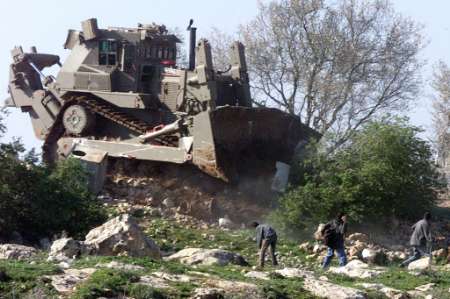
Churches for Middle East Peace: Halt Israel’s land confiscation

CMEP’s executive director and board chair faxed a letter yesterday to U.S. Ambassador Richard Jones in Tel Aviv in response to news reports that the Israeli army has ordered the seizure of Palestinian land near East Jerusalem. Copies of the letter were also faxed to key officials at the State Department and National Security Council.


October 10, 2007

Ambassador Richard Jones
United States Embassy to Israel
Tel Aviv, Israel

Dear Ambassador Jones,

Churches for Middle East Peace is alarmed by news reports that Israel has ordered confiscation of land from four Arab villages between East Jerusalem and the Jewish settlement of Ma’aleh Adumin. This project undermines U.S. diplomatic efforts to reinvigorate the Israeli-Palestinian peace process and restore hope that the conflict can be resolved with a viable contiguous Palestinian state established alongside Israel. We urge you to impress upon Israel that this project must halt.

The long-held policy of the United States that the status of Jerusalem must be determined by a negotiated agreement and that neither party should take actions that would prejudge the outcome of negotiations must be strongly and consistently asserted by U.S. officials.

While the stated purpose of this land confiscation is for the construction of a modern road to Jericho for Palestinians, it is widely understood that this would set the stage for settlement expansion in the E-1 area. United States objections to the E-1 plan of building 3,500 apartments and an industrial park has thus far prevented Israel from building on this parcel of land (other than the empty police station). We urge the United States to maintain their objection to Israeli use of the E-1 land and to assure Palestinians that this vacant land will remain open and available for development by East Jerusalem’s Palestinian population as part of the future state of Palestine.

We are heartened by your diligent work towards a peaceful resolution of this conflict through diplomacy and commend the Administration for convening an international meeting this fall in Annapolis for that purpose. We join you in prayers for the day when the people of Israel and Palestine live as neighbors, both secure and thriving.

Sincerely,

Maureen Shea
Chair of the Board

Corinne Whitlatch
Executive Director


Formed in 1984, Churches for Middle East Peace is a Washington-based program of the Alliance of Baptists, American Friends Service Committee, Antiochian Orthodox Archdiocese of America, Armenian Orthodox Church, Catholic Conference of Major Superiors of Men's Institutes, Christian Church (Disciples of Christ), Church of the Brethren, Church World Service, Episcopal Church, Evangelical Lutheran Church in America, Franciscan Friars OFM (English Speaking Conference, JPIC Council), Friends Committee on National Legislation, Greek Orthodox Archdiocese of America, Maryknoll Missioners, Mennonite Central Committee, Moravian Church in America, National Council of Churches, Presbyterian Church (USA), Reformed Church in America, Unitarian Universalist Association, United Church of Christ, and the United Methodist Church (GBCS & GBGM).

mercoledì 10 ottobre 2007

Betlemme, i cristiani del villaggio intrappolato dal muro

Salviamo Nu'man. Appello con video

Umberto De Giovannangeli, l'Unità, 10.09.07. IL «MURO» ha trasformato la loro vita in un incubo. È la realtà angosciante che segna la quotidianità dei 200 abitanti del villaggio di Al-Nu’eman, un piccolo villaggio palestinese situato tra Gerusalemme e Betlemme. Quell’area vede la presenza di una forte comunità palestinese di fede cristiana. Nel 1967 Israele ne ha annesso il territorio alla municipalità di Gerusalemme, mentre ha mantenuto i suoi abitanti la residenza in Cisgiordania. Da quando la Barriera di separazione è stata eretta nel 2004, questa forzatura unilaterale da parte israeliana ha trasformato la vita degli abitanti di Al-Nu’eman in un incubo. Gli abitanti sono intrappolati tra Gerusalemme, nella quale non possono entrare in quanto residenti della Cisgiordania, e il «Muro» che li separa dalla Cisgiordania stessa (in quanto le loro case sono state annesse a Gerusalemme). L’unico collegamento tra il villaggio e il mondo esterno è un posto di blocco in Cisgiordania sul limite del suo territorio, attraverso cui solo i residenti di Al-Nu’eman possono entrare o uscire: «Siamo chiusi in una prigione, è una condizione disperata», afferma Ahmed, 72 anni, uno degli anziani di Al-Nu’eman. Per andare a scuola, al lavoro, a comprare il cibo, gli abitanti dipendono dai «capricci» dei soldati al ceckpoint. A nessuno - conferma l’anziano Ahmed - è permesso di oltrepassarlo tranne agli abitanti del villaggio: nessun nipote può far visita ai nonni, il medico non può assistere i malati, nessuna coppia appena sposata può mettere su casa nel villaggio della sua famiglia. Al-Nu’eman sta diventando una prigione a cielo aperto. Allo stesso tempo, l’espansione dell’insediamento ebraico di Har Homa e l’anello stradale previsto attorno a Gerusalemme costeggeranno il villaggio da ovest a est, demolendo ulteriori abitazioni.
La municipalità di Gerusalemme non offre servizi al villaggio, e nessun fornitore di servizi dalla Cisgiordania ha il permesso di entrare, lasciando il villaggio in una situazione di assoluta precarietà in cui perfino i servizi di base quali gas, elettricità e acqua corrente sono minacciati. In tali condizioni, il villaggio non sopravviverà. E verrà meno la straordinaria esperienza di una comunità solidale, nella quale convivono pacificamente palestinesi musulmani e palestinesi cristiani. «È lo spirito di Betlemme», sospira Ahmed. A fianco degli abitanti di Al-Neuman si sono schierate le associazioni per i diritti umani palestinesi e israeliane. Come Betselem, la più importante associazione umanitaria dello Stato ebraico. Gli abitanti hanno fatto tutto quello che potevano per contrastare l’imprigionamento del loro villaggio. Hanno disperatamente bisogno del supporto della Comunità internazionale. Negarlo vorrebbe dire essere complici di coloro che sembrano non volersi fermare davanti a niente per liberarsi di questo villaggio palestinese non voluto. Questa è la storia di Al-Nu’eman, dei suoi 200 abitanti, musulmani e cristiani.
Storia di villaggi spaccati dal «Muro», di terre requisite. Le autorità israeliane hanno ordinato di recente la confisca di terre a ridosso della popolosa colonia ebraica di Maaleh Adumim, nella zona compresa fra Gerusalemme e il mar Morto. La notizia, di fonte palestinese, è stata confermata da un portavoce militare israeliano secondo cui il provvedimento è legato alla costruzione in corso della barriera di sicurezza nella zona di Maaleh Adumim e alla necessità di mettere a disposizione alla popolazione palestinese di una nuova arteria che colleghi il traffico proveniente da Betlemme con la zona di Gerico e della Valle del Giordano. Fonti palestinesi precisano che in totale saranno confiscati 110 ettari di terre nelle zone di Abu Dis (Gerusalemme est), al Sawarhe e Nabi Mussa (Gerico). Sulle terre confiscate, afferma Hassan Abed Rabbo, dirigente del ministero palestinese per le Amministrazioni locali, sarà creato un blocco di insediamenti, che ingloberà Maaleh Adumim, Mishor Adumim e Kedar. Questo «impedirà la continuità dei territori palestinesi» tra la Cisgiordania e la Valle del Giordano, denuncia Abed Rabbo. Una denuncia che trova riscontro da quanto pubblicato dal quotidiano israeliano Haaretz, secondo cui sulle terre confiscate «verranno costruiti 3.500 appartamenti e un insediamento industriale». «Condanniamo la decisione israeliana di confiscare terre palestinesi proprio mentre stiamo tentando di rilanciare il processo di pace», afferma il negoziatore palestinese Saeb Erekat, «l'espansione degli insediamenti, specialmente nella zona di Gerusalemme, comprometterà e distruggerà questi sforzi. Chiediamo che la decisione sia revocata per dare alla pace una possibilità».

What Israel Wants, Israel Gets

Joharah Baker, MIFTAH, 10.10.07. Israel is continuing its plan to expand the Jewish areas of Jerusalem while pushing out as many Palestinians as possible. Jewish settlements on occupied Palestinian land are deemed illegitimate by international law, partially because they are built on illegally expropriated Palestinian land. Still, Israel has succeeded in turning these settlements into a bargaining chip for final negotiations. The Ma’aleh Adumim settlement is the largest settlement bloc in the territories and one which Israel has made clear it will not relinquish in any final settlement. Now [wth the the confiscation of 1,100 dunams of land from east Jerusalem villages], not only has Ma’aleh Adumim been made a permanent dot on the map, there are plans to expand this already monstrous colony by 3,500 housing units and an industrial park.

It is no secret that Israel is not interested in dividing Jerusalem or allowing the Palestinians to claim any part of it as their future capital. However, east Jerusalem remains occupied territory and Israel’s unilateral annexation of it has yet to be officially recognized by the world community. In order for any agreement to be a win-win situation for Israel, over the years it has taken unilateral steps in the city – settlement expansion and constructing the wall around Jerusalem – to ensure that Jerusalem remains in its hands in any final settlement, even if some areas – unimportant to Israel – are returned to the Palestinians.

Hence, according to this logic, it is no coincidence that just days before US Secretary of State Condeleezza Rice arrives in the area and a mere month before the long-awaited Washington peace summit, Israel announced the confiscation of 1,100 dunams of land from east Jerusalem villages. The land was supposedly confiscated to construct a road connecting Jerusalem to Jericho for the Palestinians. However, the real intention of the confiscation is to grab more Palestinian land in Jerusalem to build even more houses in the already mammoth settlement of Ma’aleh Adumim. Lo and behold, more unilateral facts on the ground.

So, let us debunk some of Israel’s most common arguments. The 100-day plan to quell “Palestinian violence” has turned into years, the separation wall constructed for “security purposes” has become a de facto border and in Jerusalem, there are more unilateral and expansionist measures than in any other area of Palestine.

Perhaps when the parties involved in peace efforts begin to look at the conflict in this light, the demand for an end to the Israeli occupation over all occupied Palestinian territory will present itself as the only solution.

Joharah Baker is a Writer for the Media and Information Programme at the Palestinian Initiative for the Promotion of Global Dialogue and Democracy (MIFTAH). She can be contacted at mip@miftah.org.

L’autorité d’occupation ordonne la confiscation de terres palestiniennes près de Jérusalem

Al-Oufok, 10.10.07. L’autorité d’occupation a ordonné la confiscation de 110 hectares de terres près de Jérusalem, faisant craindre aux Palestiniens une relance d’un projet destiné à relier la colonie de Maalé Adoumim à la ville sainte, ont indiqué mardi des sources palestiniennes et israéliennes.

Les ordres de confiscation émis fin septembre portent sur 110 hectares répartis sur les localités palestiniennes d’Abou Dis, Al-Sawahreh Al-Sharqiyeh, Nabi Moussa et Al-Khan Al-Ahmar, a indiqué Hassan Abed Rabbo, directeur général pour la région de Jérusalem au ministère palestinien des Collectivités locales.

Selon lui, ces confiscations visent à "créer un bloc de colonies" regroupant Maalé Adoumim et les implantations proches de Mishor Adoumim et de Kedar "et empêcher toute continuité territoriale palestinienne avec la vallée du Jourdain".

"Ils usurpent des dizaines d’hectares de terres de la Cisjordanie au profit de leur projet de colonisation dit du Grand Jérusalem qui comprend Maalé Adoumim", a-t-il ajouté.

Dans les ordres remis aux propriétaires des terres, et dont l’AFP a obtenu une copie, l’armée d’occupation invoque pour justifier ces confiscations "des fins militaires" et "des mesures destinées à empêcher des actes terroristes".

Selon Haaretz, les terres confisquées devraient servir à la construction d’une nouvelle route reliant Jérusalem à Jéricho.

"Cette nouvelle route permettra de dégager la zone dite E-1, par laquelle passe l’actuelle route Jérusalem-Jéricho, au profit d’un projet juif de longue date consistant à construire 3.500 logements et un parc industriel", affirme le journal.

"Nous condamnons cette décision israélienne de confisquer des terres palestiniennes au moment où nous tentons de relancer le processus de paix", a déclaré le négociateur palestinien Saëb Erakat.

"L’expansion de colonies, notamment dans la région de Jérusalem, va saper, voire anéantir, ces efforts. Nous appelons le gouvernement israélien à renoncer à cette décision pour donner une chance à la paix", a-t-il ajouté.

Israël confisque 110 hectares

Michel Paul, rfi, 09.10.07. Israël a ordonné la confiscation de terres palestiniennes près de Jérusalem. Officiellement, il s'agit de créer une route entre Jérusalem et Jéricho. Les Palestiniens eux, craignent une relance de projet de colonies destinées à relier la ville sainte à la colonie de Maalé Adoumin. Une initiative qui ne risque pas d'arranger les discussions entre Israliens et Palestiniens sur un document conjoint censé servir de base à des négociations sur le statut définitif des Territoires palestiniens. Il s’agit d’environ 110 hectares de terres, près de Jérusalem, qui seront confisqués et c’est, semble-t-il, un vieux projet qui est sur le point d’être relancé : relier la ville de Maalé Adoumim, la plus grande colonie de peuplement en Cisjordanie, à Jérusalem. De l’avis général, la publication de cette information risque de rendre plus compliquée encore l’élaboration par les Israéliens et par les Palestiniens d’un document conjoint, à la veille de la réunion aux Etats-Unis de la Conférence internationale sur le Proche-Orient.

Selon une révélation du quotidien Haaretz, les ordres d’expropriation ont été émis à la fin du mois dernier. Ils touchent plusieurs localités palestiniennes de la périphérie de Jérusalem, notamment Abou Dis et Nabi Moussa.

L’armée israélienne invoque, pour justifier ces confiscations, des fins militaires. Mais selon le quotidien israélien, les terres confisquées devraient servir en fin de compte à la construction d’une nouvelle route reliant Jérusalem à Jéricho, et dégager la zone dite « E-1 » au profit d’un projet de longue date, consistant à construire 3 500 logements et également un parc industriel.

Pour l’instant, aucune réaction à la présidence israélienne du Conseil. Le mouvement pacifiste, « La paix maintenant », rappelle qu’Israël s’était engagé, en 2005, auprès des Etats-Unis à geler ce vaste projet. Les Palestiniens avaient vivement dénoncé le projet parce qu’il coupe pratiquement en deux la Cisjordanie.


martedì 9 ottobre 2007

IDF orders the expropriation of Arab land near East Jerusalem.

Akiva Eldar, Haaretz, 09.10.07. The Israel Defense Forces recently issued an order expropriating over 1,100 dunams of land from four Arab villages located between East Jerusalem and the West Bank settlement of Ma'aleh Adumim.
T
he plan also noted that the proposed housing development in E-1 would create an uninterrupted urban expanse between Jerusalem and Ma'aleh Adumim. Such an expanse [a Jewish development consisting of 3,500 apartments and an industrial park] would effectively sever the territorial contiguity between the northern and southern West Bank.

Tom Segev, Haaretz, 09.10.07. Israeli rule in East Jerusalem is visible mainly in a wave of construction for Jews, not in the granting of equal rights to the Arab inhabitants, not in providing equal services to the two parts of the city. Former mayor Ehud Olmert initiated the physical division of the city using a giant concrete wall that leaves some 50,000 Arabs on the other side.