Visualizzazione post con etichetta electricity. Mostra tutti i post

venerdì 14 settembre 2007

New UN report highlights conflict over resources in West Bank


HEBRON HILLS, WEST BANK, 11 September 2007 (IRIN) - Israeli settlements in the West Bank are having a severe humanitarian impact on rural Palestinian areas, according to a report by the UN Office for the Coordination of Humanitarian Affairs (OCHA) on 30 August.

Photo: Shabtai Gold/IRIN

A Palestinian girl returns home to Um al Khir from school. Many students study by the light of the neighbouring settlement as they lack electricity. The Palestinians were not allowed to install the network which would allow the electricity to be distributed to their homes.


The settlements disconnect Palestinians from agricultural land and limit their movement, restricting access to markets and water resources, the report, entitled The Humanitarian Impact of Israeli Infrastructure in the West Bank, said.

In the southern Hebron Hills area a conflict between Israeli settlers and Palestinians over land and water resources is apparent. Palestinian residents in interviews with IRIN described the harsh impact the settlements have on their daily lives.

Water

In the small village of Um al Khir, near the Carmel settlement, the residents receive water through an old military above-ground network of thin pipes which, they say, does not meet their needs and which they cannot refurbish. They supplement this with expensive water brought in by tankers. The Israeli settlers are connected to the mains network. "The settlers' chicken huts have running water and electricity," Sheikh Khalil Hathallia, a resident, told IRIN.

According to the Oslo Accords between the Palestine Liberation Organization and Israel, the latter received nearly six times more aquifer water than was allocated for the Palestinians, OCHA said.

Furthermore, the report states, West Bank Palestinian water consumption per person is considerably lower than standards set by the World Health Organization.

Shlomo Dror, a spokesman for the Israeli Ministry of Defence, said that according to the Oslo Accords, Israel was required to increase the amount of water allocated to the Palestinians by three percent each year.

"In fact, in the last year, for example, we increased the allocation by eight percent," he said.

He also said the Palestinians needed to invest in water purification systems to maximize the use of the water they do have.

Slow shrinking of grazing areas

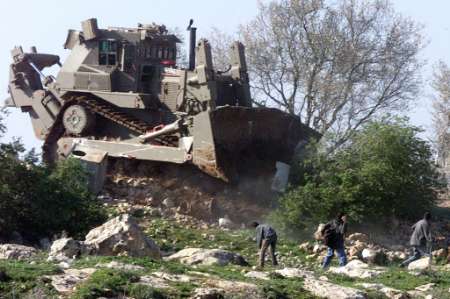
However, for the villagers in Um al Khir, the fight over resources has led to house demolitions and a slow shrinking of grazing and agricultural areas.
"Now it costs us much more. We need to buy fodder instead of grazing our animals," said Hathallia, noting the growing size of the Israeli settlement.

His neighbour and fellow tribesman, Sliman Hathallia, said his land had been taken in recent years by settlers. He pointed out their new homes. "By 2006, they had totally grabbed all the [my] land," he said.

He said there were also violent confrontations with the settlers as well as with soldiers.

"My wife was injured by the army while they demolished homes here last February," he said, producing medical documents appearing to indicate she now suffered from heart problems and had had a nervous breakdown due to the stress caused.

The homes were destroyed for not having permits from the Israeli Civil Administration.

Similarly, the UN Development Programme (UNDP) set up generators in the village, but the Palestinians were not allowed to install the network which would allow the electricity to be distributed to their homes.

"I won't leave here. If they want me to move, I'll do it, but only if I can go back to Tel Arad," Sliman said, referring to the village where he was born in what is now Israel.

All of the residents of Um al Khir are refugees from the 1948 war, registered with UNRWA, the UN agency for Palestinian refugees.

Susya village

A similar situation exists in Susya, a small Palestinian village further south.

All the residents are internally displaced persons (IDPs). In 1985, the Israeli authorities declared their land an archaeological zone, and they had to move to nearby land. They now say settlers are trying to squeeze them out of their new village.

"We had to buy back our water from the [Israeli] settlement. We can't access our land near the settlements. Then the settlers come and work the land. They are trying to take it over and the army doesn't stop them." Muhammed Nawaja from Susya

I
n the new Susya they are not allowed to build houses, so they live in tents and other temporary structures.

Water here becomes a precious commodity between the months of July and October, when the cisterns, filled by rainwater, run low. Residents say settler security forces keep them from accessing many of their wells and then use the water for themselves.

"We had to buy back our water from the [Israeli] settlement," Muhammed Nawaja, a resident, said with a sigh.

"We can't access our land near the settlements. Then the settlers come and work the land. They are trying to take it over and the army doesn't stop them."

Dror, who admits there is an ongoing conflict over land, said Israel cracks down on illegal acts by settlers and does not distinguish between Jews and Palestinians. "And the Palestinians always have the option of going to the Israeli High Court to contest land claims," he said.

Recently, the court ordered the state to dismantle an 80cm-high wall in the area which had prevented Palestinians from accessing grazing land.

"That whole story, which we said was illegal, led to a waste of about US$20 million," said a UN aid worker who preferred anonymity, noting how that money could have helped poor Palestinians.

Israel, as opposed to the international community, does not view its settlements as a violation of the Fourth Geneva Convention as it maintains the West Bank is not occupied land.

venerdì 24 agosto 2007

Gaza, l´Ue torna a pagare l´energia

Marco Ansaldo, la Repubblica, 22.08.07. GERUSALEMME - Al buio da giorni. Con le provviste in frigo ormai scadute, e il latte per i bambini andato a male. Ma da oggi la corrente elettrica ritorna. A Gaza l´hanno chiamata «la guerra della luce». Per alcune notti ha lasciato un milione e mezzo di persone a brancolare nelle tenebre, con il ritorno dei lumi a petrolio nelle case e le strade illuminate da riverberi sempre più fiochi.
Ma ieri l´Unione europea ha deciso di cedere nel braccio di ferro che la opponeva ad Hamas, il movimento leader della Striscia, scegliendo di riprendere le forniture di gasolio per la centrale elettrica locale. Marcia indietro, dunque. Anche se il sospetto che una parte delle entrate provenienti dal pagamento delle bollette finisca nelle tasche di Hamas rimane. A Gerusalemme un portavoce della Commissione europea ha annunciato che l´erogazione ripartirà «in maniera provvisoria». Bruxelles vuole infatti attendere i risultati dei controlli contabili, per capire dove finiscono i soldi raccolti nella Striscia governata dal giugno scorso con la forza dal movimento islamico che ha cacciato le forze palestinesi fedeli al presidente Abu Mazen.
Hamas si dice soddisfatta del provvedimento. «La Ue - ha dichiarato il suo portavoce Fawzi Barhum - ha capito adesso che non abbiamo nessuna colpa». E il primo ministro Ismail Haniyeh ha detto di accogliere «con piacere una commissione di inchiesta indipendente, per accertare che Hamas non è coinvolta in affari riguardanti l´energia elettrica». Ma è soprattutto la gente a tirare un respiro di sollievo. Da domenica scorsa in tutta la Striscia il black-out era pressochè totale. C´era chi, come nei negozi, poteva far funzionare i generatori privati per impedire il deperimento degli alimenti. Il resto della popolazione doveva però far ricorso a torce con le pile, lampade a gas e a petrolio.
Il tutto nell´ennesima giornata di sangue, con duri scontri fra le milizie palestinesi e l´esercito israeliano. A Beit Hanun una cannonata sparata dai militari dello Stato ebraico, e finita fuori bersaglio, ha ucciso due bambini. Secondo un portavoce delle Forze armate il colpo d´artiglieria era stato esploso contro un´unità di miliziani, forse della Jihad islamica, che avevano appena lanciato razzi Qassam sulla città israeliana di Sderot, situata poco oltre il confine. «Chiunque si trovi nei pressi di uomini armati - ha detto il militare rispondendo alla domanda perché fossero rimasti uccisi degli innocenti - è in pericolo». La cannonata ha quindi centrato per errore il gruppo di bambini intenti a giocare. A morire sono stati due cugini: Abed Ashur di 12 anni e Fadil Mansour di 10. I giornalisti hanno potuto vedere all´ospedale di Jabaliya i loro corpi, sventrati dai proiettili d´artiglieria.
Uno degli ordigni lanciati dalla Striscia aveva centrato un asilo di Sderot, città dove la tensione psicologica di una popolazione da anni sottoposta agli attacchi dal cielo è messa a durissima prova. Per fortuna l´edificio, in questa stagione di vacanze estive, era vuoto, e nello scoppio è rimasta lievemente ferita solo una donna che abita vicino. Un secondo razzo era caduto sulla strada nazionale, esplodendo poco lontano da un distributore di carburante e sfiorando quindi una strage.
Nei giorni scorsi le autorità di Sderot non sono riuscite a convincere il governo a rafforzare la protezione esterna delle scuole, ora che l´anno scolastico ha inizio. Molti genitori hanno espresso una profonda preoccupazione in previsione di lasciare i propri figli in aree per loro non difese a sufficienza. «Prima o poi questi razzi uccideranno qualcuno - denuncia il sindaco - è esattamente questo lo scopo per cui ci vengono tirati addosso».
All´interno della Striscia, mentre si trovavano a soli 600 metri dalla rete metallica che delimita la frontiera, ieri mattina in un raid aereo erano stati uccisi altri tre miliziani della Jihad Islamica, dopo i tre eliminati lunedì mentre erano a bordo di un´auto. Per l´esercito, in tutti e due i casi, gli uomini erano armati con fucili di precisione e «si preparavano a colpire obiettivi israeliani».

giovedì 23 agosto 2007

Now.. what ! Back to the electricity problem!

Heba from Gaza, 19/07/07. Back to the electricity problem! A year ago almost in October we had the major electricity power plant in Gaza shelled by F16. Then we suffered living with scheduled electricity for about 4 months. We used to have it for 8 hrs and then not have it for another 8 hrs. Our life was on hold. Bathing the kid, house chores, university assignments, exams studying, watching any TV at all and all other things that you can imagine were scheduled. I used to feel bitter and sad about the lack of electricity. I did not even have the “power” to feel angry. Of course this electricity problem started immediately before Ramdan , the month in which we fast all day and then have our meal by sunset . So we used to eat at the light of candles, how romantic!!. A year later and almost before Ramdan (what a coincidence), the problem arises again because the European Union will not fund the fuel for the major and only Gaza power plant. Mr. Abbas government says that it is the fault of Hamas and the EU says it’s temporary. This time it is not even scheduled as last year. Yesterday we had it for only 4 hrs in the 24 hrs, when I was at work. So again, collective punishment is imposed on Gazans because of political agendas. People are paying the price. My husband drove aimlessly in dark, gloomy, and full of smelly waste streets last night. It almost felt gothic to me. What can we say to the world and our leaders other than have mercy on us; the ill, the elderly and those, who like myself, feel that Gaza has become difficult to cope with.