Visualizzazione post con etichetta Al Mezan. Mostra tutti i post

lunedì 12 novembre 2007

Al Mezan Condemns Increased Killings in Gaza; Calls for Investigations in the Murder of Two People

Al Mezan Center for HUman Rights, 7.11.07. The Gaza Strip has witnessed increasing number of victims of criminal acts that caused losses of life and property. Two Palestinians; including a policeman, have been killed and eleven others injured in recent clashes, while explosives targeted a restaurant and a café. Armed men broke into a journalist's house and seized his laptop and mobile phone. Masked armed man also seized a jeep owned by a director of the Ministry of Local Government while political arrests continued to occur. Al Mezan Center for Human Rights expresses its deep concern by the increased number of the victims of internal violence in Gaza. The above mentioned incidents manifest a steady return to the state of insecurity in Gaza; especially as many of these incidents go unchecked. The Center strongly condemns the breach of journalists privacy. It calls for a serious investigation into these incidents, particularly those involving murder. The Center asserts the necessity to ensure the observance of the legal process by all law enforcement personnel, particularly as far as the use of force is involved.

© 2004 Al Mezan Center fot Human Rights, Palestine - Gaza Strip,
Contact us
Jabalia office Tel: 972-(0)8-2453555, Fax: 972-(0)8-2453554 / Gaza office Telefax: 972-(0)8-2820447/ Rafah office Telefax: 972-(0)8-2137120

lunedì 29 ottobre 2007

IOF Kills Three Palestinian and Start Fuel Cuts in Gaza


The Israeli Occupation Forces (IOF) launched its eighth incursion into the Gaza Strip in eight days today, Monday 29 October 2007. IOF penetrated the towns of Beit Hanoun and Rafah and killed three Palestinians; of whom one is disabled. Nine others were injured and one school bombarded. This military escalation coincides with IOF's commencement of reducing fuel supplies to the Strip.

According to field investigations by Al Mezan, at approximately 5.30am on 29 October 2007, eight Israeli armored vehicles penetrated Ashobaki area north Beit Hanoun town and took positions under helicopters cover. They opened arbitrary fire as a special force sneaked into the Agricultural College of Al Azhar University in the north of the town. The force took positions inside the College and opened fire killing a 44-year-old disabled man; Farid Ibrhim Abu Udeh. The victim was killed from a live bullet to the head while he was inside his home, which is located near the nearby Agricultural Secondary School. A 15-yar-old schoolboy, Ahmed Atta Az-Za'anin, was also shot in the chest near his school north of the town. Medical sources reported his injuries as critical.

At approximately 8.45am the IOF opened machinegun FIRE at a nearby residential area injuring 44-year-old Adnan Mahmoud Yousif, who was near his house in An-Nada neighborhood, northwest Beit Hanoun. At approximately 9.20am an Israeli helicopter gunship fired a missile that landed in the western entrance of Beit Hanoun Girls Preparatory School, which is located in Al Qaraman Street. 28-year-old Muhammad Yousif Hamad was killed and five others injured, of whom three critically, in this raid. Israeli tanks fired two artillery shells that landed in an open area near the Agricultural College; however no injuries were reported. Additionally, IOF wounded a child and a woman just before they withdrew at approximately 11am. Dozens of civilian houses, the Agricultural College, the Agricultural Secondary School, and Beit Hanoun Girls Preparatory School sustained damages in this incursion. It was reported that UNRWA's five schools and clinic in the town evacuated during the incursion.

In the same context, at approximately 1.30am on 29 October 2007, eight Israeli armored vehicles entered as deep as 1.5 kilometers into the Karem Abu Mu'aammar area east of the southern Gaza town of Rafah. The IOF opened heavy fire killing 22-year-old Ahmad Ibrahim Abu Tahoun. According to medical sources, IOF restricted the ambulances' access to the area. An ambulance managed to access to Abu Tahoun's body and collect it at approximately 6.30am, only after the IOF withdrew from the area.

According to Al Mezan's fieldworker, at approximately 1am on Sunday 28 October 2007, ten Israeli armored vehicles entered 500 meters deep west the borderline in Wadi As-Salqa village in the east of middle-Gaza town of Deir Al Balah. IOF broke into a three-story house owned by 53-year-old Hussein Ibrahim Abu Mghissib and used it as a military post. At approximately 8.30am the IOF opened fire injuring 22-year-old Ahmad Awad Al Amour with shrapnel to his chest, and 45-year-old Thurayya Muhammad Abu Mghissib with live bullets to her leg and her left arm. IOF withdrew from this area at approximately 5pm on the same day.

In addition, IOF commenced the implementation of the decision reducing fuel supplies to Gaza Strip. Al Mezan's fieldworkers reported the quantities of fuel allowed to flow into Gaza on 28 October 2007 as follows:

- 258,000 liters of fuel used for the operation of the power plant;

- 213,000 liters of diesel;

- 90,000 liters of benzene (for two days);

- 240,000 tons of cooking gas.

This represents a 50% cut in cooking gas and about 30%, cut in fuel compared with the quantities allowed into Gaza before. The same applies to the fuel used for the operation of the power plant. Al Mezan fieldworker reported that gas supply was allowed to flow in today. It is expected that Gaza will experience longer electricity cuts and more shortage in the diesel, which is necessary to operate small electric generators to compensate electricity shortage.

Al Mezan Center for Human Rights reiterates its condemnation of the Israeli military escalation against civilians in Gaza. It also asserts that the reduction of fuel supplies represents a flagrant violation of the rules of the International Humanitarian Law, particularly the Fourth Geneva Convention Relative to the Protection of Civilian Persons in Time of War, that will infringe upon the population's life quickly. Therefore, Al Mezan calls on that the international community, particularly the High Contracting Parties to the Fourth Geneva Convention, to uphold its moral and legal responsibilities and intervene to immediately stop the Israeli grave breaches of the Convention and provide protection for civilians. Under rapidly increasing punitive measures Gaza faces the threat of imminent worsening of the humanitarian crisis it lives. Therefore, these measures must not be allowed to materialize.

giovedì 25 ottobre 2007

The routine Israel killing of Palestinians - and 'Good Men' do Nothing


Joharah Baker for MIFTAH, 24.10.07.
The 535 wardens who participated in the raid used something called “crowd dispersal sachets”, basically a bag full of metal pellets, which Israel claims are “non-lethal”. Israeli prison authorities maintain that the wardens shot the sachets at the prisoners’ legs according to standard procedure, but that Al Ashqar was “bending down” when he was hit in the head. For Israel, killing Palestinians, whether armed members of military groups or unarmed civilians, has become more or less, run-of-the-mill. The world hardly blinks an eye when a Palestinian is killed by Israeli soldiers, settlers or in this case, prison wardens. Perhaps this is partly because the Palestinians are on such unfortunate standing these days with the international community, that in some twisted way, their lives are deemed less valuable than others. But mostly, this imbalance in the sanctity and value of human life – especially between an Israeli and a Palestinian one – is due to the complex and intricate web of deception Israel has weaved around the definition of Palestinian.

With the help of others, especially the United States and various other western allies, Israel, regardless of the magnitude of the atrocity it perpetrates, is always able to absolve itself of any wrongdoing. They make themselves out, like the common Arabic saying, “like a hair pulled from a ball of dough” – completely clean.

But the fact that it happens so often does not make it any more justifiable. Take this incident. Israel killed Al Ashqar, who is married with one son, hours before Israeli troops stormed Jenin and killed Al Quds Brigades commander Khaled Hussein and his assistant Mohammed Jawabri. Mubarak Hasanat was also killed that day when his car was hit by an Israeli missile on the Gaza coastal road.

Israel does not even bother itself with offering credible justifications for killing Palestinian activists. As long as they are so-called “terrorists plotting to kill innocent Israelis”, the Israeli state has given itself every right to shoot and kill whenever it deems appropriate. Never mind that these charges were never made in a court of law or that this sort of thing isn’t supposed to happen in so-called “civilized and democratic countries”. Apparently, the rules that apply to other countries don’t seem to apply to Israel, at least when it comes to the Palestinians. Assumedly, if the riots happened in a prison where Israeli prisoners were held, the outcome would have been different, including legal action taken against the prison authorities. No one in Israel would tolerate such brutality against its citizens, and rightly so.

But if one thing can be learned from this lack of balance between Israel and the Palestinians, is that the latter is usually left to defend itself. Today, for example, demonstrations have broken out throughout the Palestinian territories in protest of Al Asqhar’s death. Furthermore, the prisoners’ movement – over 10,000 political prisoners in Israeli jails – declared a one-day hunger strike in protest of yesterday’s events in the desert detention facility. The Palestinian Authority and all Palestinian factions have strongly condemned the assault on prisoners, calling for the protection of those behind Israeli bars.

Israel says it will open an investigation into the incident, but we all know where Israel’s “investigations” into Palestinian deaths lead: nowhere. Or in the worst case scenario, the investigation will conclude that it was primarily the Palestinians’ fault that its authorities had to use extensive force to quell the riot and additional restrictions placed on the prisoners in order to avoid any future disturbances.

This is certainly not the first time a Palestinian prisoner has died in an Israeli jail. Since the start of the Aqsa Intifada in September 2000, there have been 17 prisoner deaths, according to the Prisoners’ Club. After each death, the Palestinians rise up on anger, condemning the injustice and calling on international organizations to step in and protect the prisoners. And while organizations such as the International Committee for the Red Cross facilitate in matters such as family visits and securing clothes to the men and women behind bars, they are rendered ineffective when Israel orders a shut down. After Monday’s riots at Ketziot, Israeli prison authorities canceled all family visits to the prison.

So basically, the Palestinians, whether inside prison or not, are all at the mercy of Israel’s oppressive policies and Israel, regardless of its actions, is almost always exonerated in the eyes of the international community under the pretext of its “security” and “self-defense.”

Since the Palestinians do not have all the means to persecute Israel for their actions, this responsibility should fall on those people (or countries) of conscience who do. In the words of English philosopher Edmund Burke, “All that is necessary for the triumph of evil is that good men do nothing.”

Joharah Baker is a Writer for the Media and Information Programme at the Palestinian Initiative for the Promotion of Global Dialogue and Democracy (MIFTAH). She can be contacted at mip@miftah.org.

martedì 23 ottobre 2007

Palestinian Detainee Killed and over 250 Injured in Ketziot; Israel Cancels Lawyers and Family Visits to the Detention Centers

Israel has arrested about 650,000 Palestinians since 1967. Of those some 11,000 are still in 28 prisons and detention centers; the majority of which are inside Israel. Prisoners suffer from degrading treatment, lack proper health services and medicines, malnutrition and torture.
Al Mezan, 23.10.07. I
OF attacked hundreds of protesting Palestinian prisoners in Ketziot Detention Center in the Negev desert, killing one detainee and injuring over 250 others on Monday 22 October 2007. About 2,300 Palestinians are detained in this detention Center. They were protesting against their detention under inhuman conditions.According to the initial information available to Al Mezan, at approximately 1am on 22 October 2007, the Ketziot security personnel attacked G1 and G2 sections in the detention center. They used tear gas and live bullets heavily. The attack resulted in killing Muhammed Al Ashqar and injuring over 250 others. It was also reported that soldiers torched tents where detainees are kept.
Al Askaqer died at Soroka Hospital in Bier Shiva at approximately 11pm from a live bullet to his head. He had been sentenced to two years in prison and was due to be released in 45 days. The victim is married and has a child.

Following the protest, the Israeli Prison Authority announced emergency in all the prisons and detention centers, imposed more restrictive measures on prisoners, and prohibited lawyers' meetings with prisoners. Today, 23 October 2007, Israel cancelled scheduled family visits.

In solidarity with the Kitziot detainees, Palestinian prisoners and detainees in Israeli prisons started a hunger strike. Prisoners' sources said the strike was also intended to protest suppression and frequent use of violence against them by prisons' administrations.

Israel has arrested about 650,000 Palestinians since 1967. Of those some 11,000 are still in 28 prisons and detention centers; the majority of which are inside Israel. Prisoners suffer from degrading treatment, lack proper health services and medicines, malnutrition and torture.

Al Mezan Center for Human Rights expresses solidarity with the Palestinian and Arab prisoners and detainees in Israel and condemns the IOF attacks against them. The employment of this scale of violence poses serious threat to their life and wellbeing. Al Mezan asserts that Israel, represented by the Israeli Prison Authority in this case, must be held accountable for the protection of the prisoners and detainees under its custody according to the rules of the international law.

Al Mezan calls the international community to intervene and exert pressure on Israel to provide protection for Palestinian prisoners and the guarantee that they are treated in accord with the minimum requirement of international humanitarian law and the human rights standards. Israel must stop the employing violent and humiliating measures against Palestinians prisoners.

mercoledì 17 ottobre 2007

Al Mezan Condemns the Escalation of Siege of Gaza and Collective Punishment by the IOF


Al Mezan, 17.10.07. Israel has continued to tighten its siege of the Gaza Strip and to employ Hamas' control over the Strip as a pretext to justify collective punishment and other crimes against civilians. This situation continues under full complicit silence from the part of the international community. Besieging Gaza has influenced all aspects of civilian life. More than 6,000 of those who entered Gaza before 9 June 2007 have been unable to leave, in a violation to their right to free movement. Restrictions on the movement of the population have been expanded impacting the enjoyment of many other basic rights. Students who joined, or in the process of joining, universities outside the Gaza Strip have been deprived from free access to education owing to the prolonged closure of the Rafah Crossing since early June 2007. Al Mezan calls the international community to uphold its legal and moral responsibilities towards the civilian population of the OPT, and to take effective steps to halt the violations of human rights in OPT. In particular, the international community is called upon to exert pressure on Israel to lift the unjustified siege of the OPT; and especially the Gaza Strip, and provide protection for civilians.

The full closure started just after the commencement of summer vacation, when hundreds of students came to the Gaza Strip to spend the holiday with their families. Moreover, the 2007 secondary school graduates who registered in universities outside the Gaza could not join to their universities.

The closure has separated thousands of families who came to the Gaza Strip to visit their relatives and/or apply for ID to their children. The closure of Rafah and Erez Crossings deprived those from joining their families. In addition, many are threatened loosing their residency and employment abroad; especially as many countries impose severe restrictions on the Palestinians' entry to their territory. Additionally, many schoolchildren are threatened by missing the school year where they are supposed to live.

The Israeli Occupation Forces (IOF) closed Rafah Crossing since 26 June 2006 allowing for limited numbers of Gazans to pass it in a sporadic way. Since 9 June 2007, which marks the start of clashes that ended with Hamas' control over Gaza, the IOF has imposed a complete closure of the Crossing. As an alternative, Israel allowed a few thousand Palestinians, who were then stranded in Egypt, to enter Gaza through Al Ouja Crossing via Erez. A few hundreds were also allowed to leave from the same route; however, on a highly sporadic way. This mechanism has been halted recently.

Al Mezan Center for Human Rights strongly condemns the escalation of the siege imposed on the Gaza Strip by the IOF. It reasserts that this siege represents a severe form of the collective punishment that recklessly violates the rules of the International Humanitarian Law (IHL) and the principle of human rights.

The Center also condemns the silence of the international community and the absence of serious and affective action to halt the violations of human rights in the Occupied Palestinian Territories (OPT) and to provide the protection for the civilian population; which lies at the heart of the obligations of the international community under the provisions of the IHL and Human Rights Law. Al Mezan emphasizes that IOF bears responsibilities that extend beyond ensuring civilians' life and welfare to include ensuring the enjoyment of their basic rights, including the right to movement and access.

Al Mezan calls the international community to uphold its legal and moral responsibilities towards the civilian population of the OPT, and to take effective steps to halt the violations of human rights in OPT. In particular, the international community is called upon to exert pressure on Israel to lift the unjustified siege of the OPT; and especially the Gaza Strip, and provide protection for civilians.

related:
Envoy says UN should consider leaving Quartet


martedì 16 ottobre 2007

Envoy says UN should consider leaving Quartet

Ian Black, Middle East editor, The Guardian, 16.10.07. "Every time I visit, the situation seems to have worsened," John Dugard, the UN's special rapporteur on the rights of the Palestinians, said in a BBC Radio interview. "This time, I was very struck by the sense of hopelessness among the Palestinian people." Mr Dugard attributed this to "the crushing effect of human rights violations", and to Israeli restrictions on Palestinians' freedom of movement. Israel did face a security threat but "its response is very disproportionate". He said the purpose of some of the hundreds of Israeli checkpoints or barriers in the West Bank was to break it up "into a number of cantons and make the life of Palestinians as miserable as possible".

Mr Dugard suggested the UN should leave the Quartet unless it adopted a more proactive approach to protecting Palestinian rights. The grouping is composed of the UN, US, EU and Russia. The UN "does itself little good by remaining a member of the Quartet". It is "not playing the role of an objective mediator that behoves it".

Mr Dugard's comments echoed a complaint by a former UN envoy, Álvaro de Soto, in a report leaked to the Guardian in June. At the heart of the issue is whether the international community should be boycotting the Palestinian Islamist movement Hamas, which won free elections in 2006 and took over the Gaza Strip this June, effectively splitting the occupied Palestinian territories in half and vastly complicating already difficult efforts to revive the peace process.

The Quartet, now represented by Tony Blair, is backing the government of Mr Abbas, the Fatah leader, and his prime minister, Salam Fayyad. The Quartet position is that Hamas is a terrorist organisation which will remain off limits unless it renounces violence, recognises Israel and accepts existing peace agreements. Critics say boycotting Hamas is collective punishment that is causing untold suffering in Gaza and ignoring the free will of the Palestinians who voted for the movement.

The UN "should be playing the role of the mediator", Mr Dugard said. "Instead the international community has given its support almost completely to one faction - to Fatah," he added.

mercoledì 3 ottobre 2007

Al Mezan Lawyers Visit Al Mashtal Detention Center

On Monday 1 October 2007, Al Mezan's lawyers visited Al Mashtal detention center, which is located west of Gaza City. They met with members of the Executive Force (EF), who briefed them about the conditions of detention and interrogation.

The lawyers also met with an officer in charge of interrogation and with the legal advisor at the detention center. Both briefed them on the types of cases they handle at the detention center and the process of interrogation. They also spoke about the problems faced by the EF and their role in maintaining law and order in the Gaza Strip. They held that the EF observes the due process in all the stages of arrest and investigation.

According to the information available to Al Mezan the Al Mashtal detention center was run by the Al Qassam Brigades, the military wing of Hamas, since it took control over the Gaza Strip in mid-June 2007. A prisoner, Walid Abu Dalfeh, died under interrogation inside this center. The center was transferred to the control of the EF, which was created by the deposed government in 2006.

This visit comes in line with Al Mezan's efforts to monitor the respect of human rights; especially the rights of citizens under the custody of the EF and Al Qassam Brigades, and ensure that they are detained and interrogated in accord with a process of law that preserves their dignity, safety and rights. It also aimed to learn about the mechanisms and procedures followed by the EF when it deals with citizens' complaints and ensure that such procedures are in consistency with the Palestinian law and human rights standards.

Al Mezan's lawyers were welcomed in the detention center. Their tour was made smooth the EF. They were allowed to enter detention and interrogation rooms and interview some of the detained people, who provided information about the conditions of interrogation and detention. They made a number of comments and reservations to the EF. In principle, Al Mashtal is not legally considered a detention center under the Palestinian law. They also briefed EF officers on the relevant human rights standards that any law enforcement personnel must observe as far as procedures of arrest, detention and interrogation are involved.

Al Mezan Center for Human Rights commends the commitments made by the EF to ensure respect of the law and to rectify the illegal conducts that Al Mezan had strongly criticized in the past. Al Mezan appreciates the EF’s cooperation during this visit. Nevertheless, Al Mezan asserts that the EF must comply with the rules of Palestinian law and human rights standards, particularly the Palestinian Penal Law No. 3 Year 2000, and respect the rights of all persons under their custody both before and after trial.

Al Mezan Condemns IOF's Aggression and Closure against Gaza, Calls for International Protection


Gaza. Al Mezan. 03.10.07

The Israeli Occupation Forces (IOF) has escalated its aggression against the Gaza Strip, killing two Palestinians and injuring three others. This escalation occurred as the IOF tightened the closure imposed on the Strip, depriving the Gazans of their right to movement and access. The closure includes the prohibition and/or restriction of the flow of goods into the Strip, which has resulted in shortages and unprecedented increase in prices.

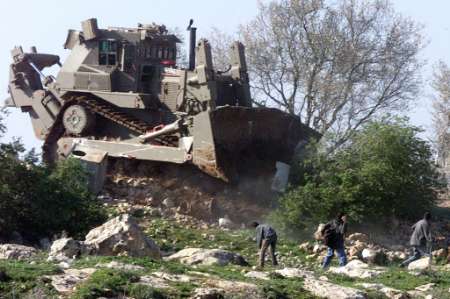
According to field investigations by Al Mezan, at approximately 3.30am on Wednesday 3 October 2007, five Israeli tanks and an armored bulldozer penetrated the Sufa Crossing area, through the borderline east of Khan Younis town. IOF soldiers broke into homes as the bulldozer razed agricultural lands in the area. Moreover, the IOF opened fire arbitrarily, killing 22-year-old Said Al Amour. The victim died from a live bullet to his head at approximately 9.10am. IOF have still been in the area at the time of issuing the press release.

Earlier at approximately 1am, an Israeli warplane fired a missile at a crowd near Khaled Ibn Al Waleed Mosque, in As-Slam neighborhood in Rafah town. The attack resulted in killing 25-year-old Muhammad Bassam Hassan, who died an hour after being admitted in Abou Yousif An-Najjar Hospital, from critical wounds in the head. 25-yaer-old Muhammad Juma'a Abu Sha'ar was also wounded in this raid. Medical sources have reported his injuries as moderate.

On 2 October 2007, and for the second time, IOF opened fire from Erez Creossing at a crowd of people who gathered around Erez to receive the prisoners who were released from Israeli prisons. At approximately 12.30am, the journalist Muhammad Jadullah Salem was wounded from a live bullet to his left leg. Salem was covering the events and was shot when the prisoners' families approached the checkpoint gate when they saw the released prisoners.

The families had waited at Erez Crossing the day before, but the IOF delayed the release of the prisoners. At approximately 1.30pm on Monday 1 October 2007, 4-year-old Ibrahim Muhammad Al Madhon was shot in the left arm by the IOF while he was waiting with his family at the Crossing before Israel's announcement that the release was postponed till the next day.

This escalation comes as IOF expanded the tight closure on the Gaza Strip, where the civilian population has been deprived of their right to free movement. About 1000 Palestinians have been stranded at the Egyptian side of the Rafah Crossing since June 2007. At the same time there have been about 5000 Gazans who have not been allowed to leave the Gaza strip for health, education, employment and other urgent reasons.

Gazans' suffering has been aggravated by the limitation of the goods that are allowed to flow into the Gaza Strip to basic food stuffs and humanitarian aid. Many basic goods have started to run out from the markets and their prices have seriously increased. This includes meats, canned food and clothes. This has added to the already devastating humanitarian and economic crisis.

Al Mezan Center for Human Rights strongly condemns the acts of killing and the excessive, indiscriminate use of force by IOF. The Center also condemns the escalation of collective punishment by the IOF against Gazans. The Center asserts that such illegal conducts by IOF represent serious and systematic violations of the International Humanitarian Law, particularly, the Fourth Geneva Convention Relative to the Protection of Civilian Persons in Time of War (FGC). Al mezan therefore calls on the High Contracting Parties to the Convention to intervene immediately and ensure Israel's compliance by its provisions under all circumstances.

Al Mezan renews its calls to the international community to intervene to stop the Israeli conducts and provide international protection for civilians in the Occupied Palestinian Territories (OPT), and to prevent the employment of collective punishment and other breaches of international law.

lunedì 1 ottobre 2007

Al Mezan Commends Hanniyeh's Instructions to Security Personnel in Gaza; Calls for Enforcing Them

30.09.07. Al Mezan received a copy of a decision issued on 26 September 2007 by the deposed Prime Minister and acting Minister of Interior, Mr. Ismail Hanniyeh. The decision includes instructions directed to the commanders of the 'Internal Security Forces'. Notwithstanding the positive content of this decision, the information retrieved by Al Mezan from the field shows that many of the illegal conducts that preceded its issuance have continued. The Executive Force (EF), Hamas' policing body, carried out dozens of arrests in the towns of Khan Younis and Rafah, south of the Gaza Strip, in which the EF's members did not observe the due process in terms of the arrest procedures, the conditions and places of detention, the rights of the detained people or the limitations on the interrogation procedures.

Al Mezan welcomes this decision, which instructs the internal security under the command of the deposed government to respect the rule of law, respect and protect freedoms, political activism and peaceful assembly. It also instructs them to respect and follow the due process as far as arrest and detention are involved, and to respect the rights of all individuals under their custody; including informing them of the reasons of their detention and the places where they are detained. The decision states that arrest warranties can only be issued by a legally authorized body, and that persons under detention must be allowed access to a legal counsel.

Al Mezan asserts the significance of issuing these instructions which, if implemented, could produce positive impacts on human rights in Gaza. Al Mezan therefore calls for creating adequate mechanisms to ensure full implantation on the ground of these instructions. Effective tools for monitoring and accountability for non-abidance by these instructions are crucial for ensuring their effective implementation.

Notwithstanding the positive content of this decision, the information retrieved by Al Mezan from the field shows that many of the illegal conducts that preceded its issuance have continued. The Executive Force (EF), Hamas' policing body, carried out dozens of arrests in the towns of Khan Younis and Rafah, south of the Gaza Strip, in which the EF's members did not observe the due process in terms of the arrest procedures, the conditions and places of detention, the rights of the detained people or the limitations on the interrogation procedures.

According to field sources, at approximately 7pm on Saturday 29 September 2007, confrontations broke out between prayers and members of the EF, when the EF arrived at the scene to defuse a dispute between prayers supporting Fatah and others supporting Hamas in a mosque near Nasser Hospital in Khan Younis. Over 20 people were injured and 14 others arrested; of whom seven were released after being subjected to torture and degrading treatment. The other seven have been kept under the EF's custody. Members of the EF also broke into four homes in the neighborhood without observing the relevant legal procedures as stipulated in the Palestinian Penal Law and the Basic Law. This despite that the above-mentioned decision asserts the full respect of both laws.

In the town of Rafah, the EF arrested eight persons. The arrests occurred at approximately 11.05pm on Thursday 27 September 2007, after a grenade had been thrown at Raja'i and Mahmoud Hussein and injured them. At approximately 1am, on the next day, the EF prevented their family from visiting them at Abu Yousif An-Najar Hospital on the pretext that they were affiliated with Fatah. A dispute started between the family members and the EF. According to eyewitnesses, an EF's member opened fire at 23-year-old Mousa Hussein, who was injured in left leg. Further, the EF beat seven members of the family. Medical sources reported that the condition of one of them; Imad Ad-Din Hussein, was critical as he sustained fractures in the skull and right arm.

Al Mezan Center for Human Rights views with much concern the excessive and disproportionate use of force, as well as other illegal conducts, that have been carried out by the EF. Many of these conducts have occurred after the issuance of the above-mentioned decision; a fact that necessitates the creation of adequate mechanisms to monitor its implementation and hold accountable those who do not observe its full respect on the ground.

Al Mezan renews its commendation of Mr. Hanniyeh's decision, and views it as a step in the right direction. However, Al Mezan believes this step will fall short the expectations without adequate implementation, monitoring and accountability mechanisms that ensure its respect and implementation on the ground to guarantee respect of the rule of law.

giovedì 6 settembre 2007

Al Mezan calls president Abbas to revoke his decision issuing a new election law; calls PLC to perform its legislative role

05/09/07. On 2 September 2007, president Mahmoud Abbas issued a law-making decision (hereinafter Decision); the law it makes being without a serial number. The Decision annuls the Palestinian General Elections Law No. 9/2005 and its amendments. The new law includes 121 articles distributed on 13 chapters. Its preamble invokes the provisions of the Amended Palestinian Basic Law (temporary constitution); and particularly its article 43.

Al Mezan Center for Human Rights views with much concern the issuance of this Decision, which comes in the context of continued escalation of the internal political crisis in the Occupied Palestinian Territories (OPT) which threatens the very social and political textile in OPT.

Al Mezan is also concerned by the frequent issuance of law-making decisions by the president since June 2007 without justified necessity. This will only contribute undermining the foundations of the Palestinian political regime. It seriously threatens the principle of the rule of law of separation of powers; which is gravely affected by the increasing marginalization of the Palestinian Legislative Council (PLC).

Al Mezan considers that some of the presidential decrees and decisions as a part from the power struggle and not linked to an objective urgency that necessitate the interference of the president in legislation, for the exigencies of the situation do not require such a level of interference. Moreover, the Center realizes that the current internal struggle over power in the OPT is essentially political.

This said, Al Mezan finds it necessary to clarify its position regarding this development, which is essentially founded on the provisions and limitations of the Palestinian law. The Center sums up its remarks on this Decision as follows:

1. The Palestinian Basic Law authorizes the president of the Palestinian National Authority (PNA) to issue law-making decisions; as stipulated in article 43 of the Amended Palestinian Law, of 2005. However, this power is limited to exceptional situation. Article 43 provides that the president of the PNA shall have the right, in situations of urgency that cannot bear delays when the PLC is not in a regular legislative period, to issue decisions that have the force of the law. These decisions, the same article continues, shall be presented before the PLC at its first convention after the issuance of the decisions. Otherwise, it asserts, these decisions will cease to have the force of the law. Should such decisions be presented before the PLC in the manner mentioned above, and not approved by the PLC, they shall cease to have the force of the law.

2. The Palestinian Basic Law limits the exercise of legislative powers by the president only in exceptionally urgent cases that cannot bear delay. It is Al Mezan's view that this condition is not met in the case at hand. It disputes that there exists a justifiable emergency necessitating the Decision on general elections. It bases this judgment on two reasons:

a. The Basic Law assumes that an emergency which cannot bear delay means an unexpected development or crisis which requires an immediate resolution. Apparently, this is not the case as far as the Decision is concerned with future elections.

b. It has been acknowledged by many of the president's aides that there was no intention to hold early elections currently soon. This is also affirmed by article 2 in the new law, which states that the president shall issue a decree calling for presidential and legislative elections at least three months before the end of the president's period in office or the PLC's period. This decree shall determine a date for elections and shall be published in the Palestine Chronicle. This is indicative of the fact that an emergency necessitating the issuance of such a Decision does not exist.

3. As mentioned above, Article 43 of the Palestinian Amended Basic Law authorizes the president to issue decisions that have the power of law. Nonetheless, this authority is restricted by the condition that such a decision is issued only when the PLC is not in its legislative period, be it regular or irregular. Given that the PLC is in a legislative period now, despite its failure to convene its session for various reasons, this condition is not duly met.

4. The PLC's current failure to convene its sessions or to perform its tasks requires that the two dominant parliamentary blocks; Hamas' Change and Reform Block and Fatah's Martyr Yasser Arafat Block, take practical steps to preserve their legislative powers as mandated by their constituencies and by the law. They should start the legislative and monitoring tasks instead of withdrawing and leaving the space for the executive to confiscate the legislative powers at its convenience by invoking the aforementioned Article 43.

5. The excessive appeal to Article 43, which authorizes transfer of legislative powers to the executive represented by the President in this case, constitutes an inadequate practice and is contrary to the purposes pursuit by it; dealing with a strictly urgent situation. It produces an unbalanced relationship between the powers where a dominant executive excessively seizes the powers of the legislature and judiciary, and confiscates fundamental freedoms. This situation is contrary to the purposes of the Basic Law, which explicitly sets the separation of powers and the rule of law as central principles of the PNA's government.

6. The 2007 decision fluctuates with General Elections Law No. 9/2005 and its amendment, which is already in force, by adopting a full proportional representation system with OPT as one constituency, as opposed to the mixed system according to which the last election was organized in January 2006. The Decision and its new law also deviate from the Law No. 9/2005 regarding the definition of residents, the candidacy conditions and other electoral processes and procedures.

7. Articles 36(5) and 46(6) add new criteria for the conditions of candidacy for the President and PLC offices. According to the new decision, candidates have to "commit to the Palestine Liberation Organization as the sole legitimate representative of the Palestinian people, and to the Declaration of Independence as well as the provisions of the Basic Law". Al Mezan finds these new conditions contrary to the Basic Law for the following reasons:

a. The conditions constitute unjustifiable, unnecessary constraints that deviate from accepted procedures in democratic electoral laws;

b. They contravene with Article (9) of the Amended Basic Law, which assert that "Palestinians are equal before the law and the judiciary without any form of discrimination on the basis of ethnicity, gender, color, religion, political opinion of disability".

c. They are also in breach of Article (19) of the Amended Basic Law which renders any infringement upon or restriction of the freedom of opinion and expression illegal as long as such a restriction is not provided for by the law.

d. They moreover breach Article 3(26) of the Amended Basic Law, which establish the right of every Palestinian citizen to participate in political life, whether individually or collectively with others, and in particular throughout voting and candidacy for offices in order to choose their representative by public election in accordance with the law.

Based on these observations Al Mezan Center reiterates its calls for Palestinian-Palestinian political dialogue as the only way to draw to a close the internal disparity. Otherwise, such matters of law must be decided by courts.

Al Mezan calls on president Mahmoud Abbas to revoke this Decision, which introduces a new elections law. Instead, the president should pressure the parliamentary blocks in the PLC to allow for its convention and to practice its legislative role as set out by the law. Al Mezan also asserts the necessity of national reconciliation and harmony as far as national elections are involved.

giovedì 30 agosto 2007

Al Mezan condemns Israel's denial of ID for 100,000 Palestinians

Over 100,000 Palestinians who live in Gaza and the West Bank, but do not hold ID cards produced by Israel, have been stripped from their civil and political rights. This situation has continued since those returned to the Occupied Palestinian Territories (OPT) after the signing of Oslo Accord and the establishment of the Palestinian National Authority (PNA) in 1994. Deprivation from their civil-political rights has led to serious violations of their economic, social and cultural ESC rights as well.

Israel, which maintains full control over OPT's borders as well as the civil registry, refuses to grant IDs for this group of Palestinians. Without an ID card, Palestinians' movement between Gaza and the West Bank, or leaving either, is impossible. The origins of the problem go back to the 1948 war and the expulsion of Palestinian refugees. Those who were registered as absentees after the war have been denied the right to ID. A similar problem occurred in 1967 when tens of thousands of Palestinians fled OPT. After 1994, many have returned after obtaining permits from the Israeli authorities. And many have stayed. A significant number of those have later been born in Gaza and the West Bank, yet were denied ID.

Thousands of families have been deprived from family unification or visits after returning to OPT. In 2000, Israel has almost completely halted issuance of permits, thus prohibiting those who entered from any chance to meet with their families, or travel for education, work or healthcare. The problem is exacerbated by the fact that the health and education services in OPT cannot support all the needs of the population, thus rendering it dependent on travelling to seek them.

Furthermore, the restrictions on their movement by Israel extend to include their non-Palestinian wives. Many wives have not been able to return to the OPT and join their families despite that Israel compelled them to leave the territory. The same applies to their offspring.

The suffering of these families has aggravated under giving a blind eye and the silence from the part of the international community. Under mounting suffering of these families, Al Mezan Center for Human Rights calls:

- The international community and the international human rights organizations to intervene and exert pressure on Israel to stop the violation of this group's human rights without delay;

- The PNA, represented by the President Mahmoud Abbas, to deal with their as a priority and to find a fair solution to it;

- The international, Arab, Israeli and Palestinian human rights organizations to promote the case of these people and help them obtain their full rights as equals to all humans.