Visualizzazione post con etichetta Olmert Har Homa Annapolis. Mostra tutti i post
Visualizzazione post con etichetta Olmert Har Homa Annapolis. Mostra tutti i post
giovedì 13 dicembre 2007
Los asentamientos, otra vez
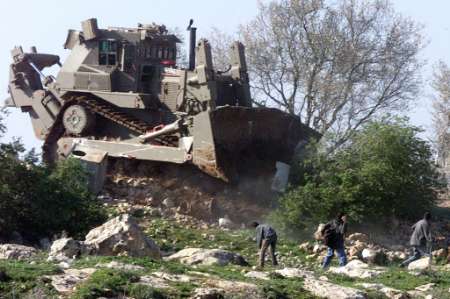
JUAN MIGUEL MUÑOZ, El Pais, 13.12.07. Nadie puede excusarse con el pretexto del efecto sorpresa. Ariel Sharon, ya dijo en 1973: "Haremos un sándwich de pastrami con los palestinos. Insertaremos una franja de asentamientos judíos en medio de los palestinos, y otra franja de colonias a través de Cisjordania, y así en 25 años, ni Naciones Unidas, ni Estados Unidos, nadie, podrá destrozarlos". No ha sorprendido que a las primeras de cambio, sólo dos semanas después de la conferencia en la base naval de Maryland, brotara el escollo inaugural a las negociaciones que comenzaron ayer. El Ejecutivo hebreo ha anunciado la construcción de 307 viviendas en la colonia de Har Homa, en Jerusalén Este, ocupado en 1967. La historia se repite. En 1997, cuando se había forjado un acuerdo para transferir a la Autoridad Palestina gran parte de la ciudad de Hebrón, el Gobierno de Benjamin Netanyahu -con el apoyo del alcalde Olmert- decidió alzar esta colonia de Har Homa en una colina coronada por un bosque. Todo se fue al traste. Hoy, se ven las grúas desde Belén. Y el general al mando en Cisjordania advirtió el martes que los permisos para construir cientos de casas más en este territorio ya están aprobados. "Es un asunto interno. Har Homa se halla en el término municipal de Jerusalén", aducen los funcionarios israelíes. "Son argumentos ridículos. Nadie en el mundo acepta la anexión de Jerusalén Este", replicaba el editorial del diario Haaretz.


lunedì 10 dicembre 2007
The Har Homa test Building in E. J'lem undermines spirit of Annapolis
 In February, 1997, a few weeks after it signed the Hebron agreement, the Netanyahu government decided to erect 6,500 housing units on the southern border of East Jerusalem, about one-third of them on private land owned by Palestinians. And what will happen to the spirit of Annapolis? The same thing that happened to the spirit of Hebron. The Prime Minister at the time, Benyamin Netanyahu, and the Jerusalem Mayor at the time, Ehud Olmert, in a press conference, explaining the planned building in Har Homa
Akiva Eldar, Haaretz, 10.12.07. It is difficult to think of a place more suitable than Har Homa for holding the first test in the spirit of Annapolis. The comparison between Har Homa Crisis No. 2 and the development of Har Homa Crisis No. 1 can teach us whether the Israeli-Palestinian peace process has indeed started a new track or whether all the players are stuck on the old line.
Does Ehud Olmert, who pressed for the establishment of the new neighborhood in East Jerusalem, really see something different from the Prime Minister's Bureau than what he saw from the office of the mayor of Jerusalem? Will President George W. Bush pay lip service and eventually have to eat his words, just as Bill Clinton did 10 years ago?
Meanwhile, it is difficult to find the differences. Har Homa Crisis No. 1 also broke out a short while after an American attempt to revive the peace process. In February, 1997, a few weeks after it signed the Hebron agreement, the Netanyahu government decided to erect 6,500 housing units on the southern border of East Jerusalem, about one-third of them on private land owned by Palestinians. In the Palestinian Authority (and the Israeli peace camp) this plan was seen as another step in a scheme to cut off their capital from the West Bank. Yasser Arafat threatened to declare the establishment of an independent state and the Palestinian Legislative Council announced a general strike in the territories.
On the other side were the settlers and the activists from the right. They were flanked by then-mayor Olmert, who a short while earlier had pushed Netanyahu into the Western Wall tunnel - an adventure that ended with the death of 16 Israeli soldiers and dozens of Palestinians. Olmert declared that Har Homa was "the most substantive test of the government's ability to withstand pressure and demonstrate leadership." Work at the site began four days later. The U.S. secretary of state, Madeleine Albright, called U.S. Ambassador Martin Indyk at 5:30 A.M. and instructed him to go to Netanyahu with a firm message stating that the United States saw the establishment of the new neighborhood as "a step that undermines everything that we are trying to do."
The ambassador made his protest, the Arabs demonstrated, the UN Security Council met, the United States cast a veto - and Har Homa was taken off the international agenda. Arafat licked another wound and Hamas threw more salt on it.
The new neighborhood - or, from one point of view, the "settlement" - which arose on the southern hills of Jerusalem became a mark of Cain on the forehead of the Oslo camp in Ramallah. Ed Abington, who was then American consul general in Jerusalem, said later, "Arafat understood that we do not understand, or do not want to understand, the enormity of the troubles that the settlements cause him at home. Arafat understood that he was left alone in the campaign."
Netanyahu identified the weakness of the international community and continued to nurture the settlers. The response today of spokesmen for the Olmert government gives rise to the fear that the Annapolis conference did not change the situation on the Israeli side. They claim that "the neighborhood is within the area of the municipal boundaries of Jerusalem, over which Israeli law is binding, and therefore there is no prohibition to building there, just as there is no obstacle to building in any other part of Israel."
We have already forgotten that the prime minister agreed that everything would be open to negotiation, including Jerusalem. Is this the way to build a wall to fortify the status of PA President Mahmoud Abbas? And what will "the world" do - all those people who were in attendance at Annapolis - if Olmert decides to hide behind "pressures from the coalition" and approves the new construction?
U.S. Secretary of State Condoleezza Rice said over the weekend that new construction in the territories does not contribute to building mutual trust. She also stressed the special importance of refraining from moves that could have influence a final status agreement. The UN secretary general, Ban Ki-Moon, said that the decision to expand the neighborhood "is not helpful."
So the gentiles say these things - and thousands of Jewish residents laugh all the way to Har Homa. And what will happen to the spirit of Annapolis? The same thing that happened to the spirit of Hebron.
Iscriviti a:
Post (Atom)