Visualizzazione post con etichetta Gaza closure. Mostra tutti i post

martedì 20 novembre 2007

Gaza Strip Closure: Palestinian Child Dies as a result of Delay in Allowing Entry to Israeli Hospital


20.11.07. This brings to 10 the number of Gaza patients who died since last August as a result of denying them their medical rights. The victims include 2 women and an infant. PCHR strongly condemns Israeli Occupation Forces (IOF) for violating Palestinians’ rights to health, and depriving them of treatment in medical facilities outside the Gaza Strip. Restricting movement of patients to hospitals in the West Bank and Israel effectively puts them in a struggle against death. Most recently, a Palestinian child died after delaying his entry to Ichilov hospital inside Israel.

The Center’s preliminary investigation indicates that the child Amir Shaher Abdallah El-Yazji (8) from Sheikh Radwan Quarter in Gaza City died on Monday 19 November 2007. The child’s death came after IOF delayed his entry through Beit Hanoun (Erez) checkpoint to Ichilov hospital in Israel despite having the necessary permits to enter. The child’s father, Shaher El-Yazji, stated that on Sunday, 18 November 2007, he obtained a permit for his child to enter through Erez and head to Ichilov hospital for an MRI. He attempted to take his son through the crossing 4 times during the day. However, IOF prevented their entry, citing objection to the medical personnel charged with delivering the child to the Israeli ambulance on the other side of the checkpoint. At about 16:45, IOF informed the father that the child should be taken across in 15 minutes. However, it was not possible at the time to do so as the child’s condition deteriorated, and he was in the intensive care unit in Naser Pediatric hospital in Gaza City.

Physicians in Naser hospital indicated that the child was unconscious, and was suffering from an undiagnosed condition in the brain and high blood pressure. They suspected that the child was suffering from a brain tumor. The child died yesterday morning after efforts to transfer him to the Israeli hospital failed. This brings to 10 the number of Gaza patients who died since last August as a result of denying them their medical rights. The victims include 2 women and an infant.

PCHR condemns denying the child Amir El-Yazji the right to medical treatment, and:

  1. Calls upon the High Contracting Parties of the Fourth Geneva Convention to pressure IOF to respect International Humanitarian Law, and to cease their policy of collective punishment against eh civilian population in the Gaza Strip.
  1. Calls upon these Parties to work to ensure that Palestinian patients have free and timely access to healthcare facilities outside the Gaza Strip.
  2. Calls upon international organizations working in the Occupied Palestinian Territory to act against this policy of collective punishment of the civilian population of the Gaza Strip, and to act to stop the deterioration of the humanitarian and health situation by ensuring the safe and timely passage of food and medicine so as to protect the lives of the civilian population of the Strip.

Public Document

**************************************

For more information please call PCHR office in Gaza, Gaza Strip, on +972 8 2824776 - 2825893

PCHR, 29 Omer El Mukhtar St., El Remal, PO Box 1328 Gaza, Gaza Strip. E-mail: pchr@pchrgaza.org, Webpage http://www.pchrgaza.org

-----------------------------------

If you got this forwarded and you want to subscribe, send mail to request@pchrgaza.org

and write "subscribe" in the subject line.
For assistance: info@pchrgaza.org

mercoledì 7 novembre 2007

Where have all the trucks gone?

Jesse Rosenfeld writing from Ramallah, Occupied West Bank, The Electronic Intifada, 5.11.07. Karni has traditionally been a major goods crossing for Gaza, but hitchhiking in the car of an Associated Press journalist we are stopped by military jeeps two kilometers before the crossing and told that it is closed. We get out of the car and walk back towards a dusty lot three kilometers away where 10 trucks are resting. The only vehicles heading in the direction of Karni are a few cars taking the exit road for the nearby kibbutz, military vehicles, and fuel trucks going to the military base 500 meters from where we were stopped. "We take chickens and cows in, nothing comes out," a truck driver says. "We take our cargo to the crossing and Palestinians pick it up on the other side. Only food gets through." He says that Karni is a livestock crossing and that only Israeli drivers can deliver cargo. When the truck gets near the crossing the cargo is dumped, checked by the military and put on a track over to Gaza. However, no livestock trucks are leaving for the crossing. In an e-mail correspondence with the Atfaluna Society for Deaf Children in Gaza, they inform me that their hearing aids and hearing aid batteries have been blocked by the military since June. The organization provides hearing aids, hearing aid equipment and schooling for deaf children in Gaza. We get picked up on the side of the road by an Israeli woman who has lived in the area since 1979. She says she's not busy and kindly offers to drive us to both of the crossings. Despite only living kilometers from the Gaza crossing she seems oblivious to the impact of the blockade on Gaza and the severe shortages people are experiencing. ufa is supposed to be the new major crossing which Israel claims is seeing between 100 and 120 trucks daily. However, the crossing looks more like a giant sand pit filled with tanks and there's a military base in the distance. The road running through the sand comes to an abrupt end with three large cement cubes blocking further travel, but before we even get there the soldiers call out from their parked tank to stop. Perplexedly they jump out and jog towards the car, machine guns at their side, and after a short conversation in Hebrew with the driver they tell us in English that we can't go any further. There isn't a transport truck in sight, despite this supposedly being the new main goods transport route, and even if there were it is impossible to see how the trucks would proceed through the cement blocks towards Gaza. Gaza hospitals were reporting to have run out anasthetics just two days before. By 6 October the Palestinian Medical Relief Society was warning of a pending health crisis because the blockade was making it extremely difficult to administer medical attention. At the time, they reported that people receiving kidney dialysis three times weekly had their treatment cut to twice weekly because of equipment shortages. Kerem Shalom is a central three-way border for goods between Israel, Gaza and Egypt, and like the other two crossings it's completely deserted apart from sniper and watchtowers. It's 5:00pm and the only trucks we see are Israeli trucks using the crossing area as a shortcut to transport goods from local Israeli farms to other parts of Israel. The only thing that is definitely getting into Gaza is 20-year-old kids, armed to the teeth, crossing the border at night, and Israel wants to keep this too as quiet as possible.

Jesse Rosenfeld is a freelance journalist based in Ramallah. This article was originally published by Palestine Monitor and is republished with permission. All photos by Palestine Monitor.

Closure of crossings traps students in Gaza

· Hundreds studying abroad unable to continue
· Israeli supreme court petitioned on right to travel

Rory McCarthy in GazaCity, The Guardian, 6.11.07. Khaled al-Mudallal expected to spend this autumn sitting in lectures and writing papers for his final year in business and management studies in Bradford, the town he has lived in for six years. But when Mr Mudallal, 22, went home to visit his wife and family in Gaza this summer he found himself trapped. Within a few days of his return Hamas, the Islamist movement which won Palestinian elections last year, seized control of the Gaza Strip. Israel closed the crossings out of Gaza and six weeks ago declared the small stretch of land a "hostile entity". He is one of 670 Palestinian students in Gaza with places on university courses abroad who are unable to return to their studies. Supported by an Israeli human rights group, Gisha, the students have brought a second petition to Israel's supreme court demanding the right to travel after a first petition was rejected. A response is expected today.

"This is my final year, it counts for 70% of my degree. It's the most important year of my life," said Mr Mudallal. "I feel I've been denied my right to education, my right of movement."

He moved to Bradford as a teenager to join his father, who was studying at the city's university. He went to school and then on to the university's school of management. He returned to Gaza last December to marry and came back again this summer to bring his wife, Dua'a, to Bradford for his final year.

He has a visa for Britain that runs until 2010. However, because the crossings were closed he had to cancel a one-year paid placement at a Bradford charity that was part of his course and is still paying £300 a month rent on his flat in the city. "We're living in limbo," he said.

The Israeli government has allowed a limited number of Palestinians to leave Gaza through the Erez border crossing, which leads into Israel, and from there on to Tel Aviv airport or overland into Jordan. In August, Israel began taking students out through Erez and driving them by bus to the Nitzana crossing, which leads into Egypt. However the bus ran only four times, allowing fewer than 550 people to leave, of whom about 80 were students. It has not run since early September.

Mr Mudallal's first petition to the supreme court, on September 17, was rejected because the court was told the bus service would resume. It did not. There are now 6,400 Palestinians waiting to leave Gaza and Mr Mudallal is number 4,845 on the waiting list.

Mark Regev, Israel's foreign ministry spokesman, said: "We are working to find an expeditious solution. We want them to go and study and help build a better future for the Palestinians."

Many others fear losing their university places. Mona Bkheet, 26, won a scholarship for a PhD on civil engineering at Southern Illinois University, in Carbondale. When she came home to Gaza for the summer, she too found herself trapped.

Hassan el-Nabih, 46, who won a place at Boston College, in Boston, Massachusetts, to study a PhD in linguistics under a US government scholarship for Palestinian university academics has a US visa that runs until June 2010 and a permit to cross through Israel from Gaza, but was twice turned back when trying to leave.

sabato 3 novembre 2007

Israele non fischia l'inizio Stop alle calciatrici di Gaza


l'Unità, 2.11.07. Dovevano arrivare a Roma venerdì, le ragazze della squadra di calcio dell’Università Al Aqsa di Gaza invitata a partecipare alla manifestazione Sport sotto assedio. Ma da due giorni, le calciatrici sono bloccate al valico di Erez: Israele non concede il permesso di uscire dal paese.

Una piccola storia che racconta perfettamente le condizioni di vita nella Striscia di Gaza, dove, tra l’altro, da cinque giorni il governo israeliano ha tagliato l’elettricità. Le ragazze dovrebbero prendere parte alla carovana che dal 3 al 28 novembre toccherà numerose città italiane, tra cui Bergamo, Milano, Brescia, Pisa, Reggio Calabria e Roma. Sport sotto l’assedio è una manifestazione giunta ormai alla sua quarta edizione che si propone di sostenere l’attività sportiva in Palestina e soprattutto di raccontare in Italia le condizioni del popolo palestinese, proprio a partire dalle storie delle sportive che hanno affrontato scelte di vita coraggiose.

È andata meglio alle colleghe della squadra di basket, l’IBDAA Cultural Center del campo profughi di Deheishe, vicino Betlemme, che invece sono già riuscite a raggiungere la Giordania e sono in volo per l’Italia. Le ragazze incontreranno i rappresentanti ministeriali e delle istituzioni locali, gli studenti e le studentesse delle scuole superiori e delle università e si confronteranno in incontri sportivi con squadre italiane.

Sembra incomprensibile il divieto di oltrepassare la frontiera imposto da Israele: le ragazze di Gaza hanno tutti i documenti in regola, oltre all’invito ufficiale del Ministero degli Affari Esteri italiano. Restano ventiquattrore di tempo per dare il loro contributo ai «percorsi di educazione allo sport come strumento di dialogo e di convivenza».

Intanto, si è giocata a Roma, in piazza del Campidoglio una partita simbolica per protestare contro le autorità israeliane. E per chiedere al sindaco Veltroni di «concedere alle atlete la cittadinanza onoraria perché loro sono le vere ambasciatrici di pace e libertà».

giovedì 1 novembre 2007

Palestine blame Israel, want to re-schedule Singapore match

the star Malaysia. 31.10.07. GAZA CITY: The Palestine football federation urged FIFA on Monday to re-schedule their qualifier with Singapore for the 2010 World Cup explaining their no-show on the pitch because Israel denied them travel permits.

The match was scheduled for Singapore on Sunday, but the Palestinian team failed to show, provoking Singapore coach Raddy Avramovic into slamming his opponents as unprofessional and for FIFA to award the match to Singapore. “We are asking FIFA to re-timetable the match and help us get Israeli permits,” said Jamal Zaqut, an official from the Palestinian federation. The Palestinian team, he said, were due to arrive in Singapore on Oct 23 but were not given the necessary Israeli permits to leave the Gaza Strip.

mercoledì 31 ottobre 2007

Sourani Meets H.E. Benita Ferrero-Waldner the European Commissioner for External Relations

It is noted that this is the first time in 7 years that Israeli forces allow Sourani to leave Gaza through Erez. The permission came after European intervention. Nonetheless, Sourani was forced to wait for several hours at the crossing before passing through. He was allowed to pass under the precondition that he travel in an official European vehicle in company of Roy Dickinson, and to return in the same manner. Due to the delay at the crossing Sourani missed the initial appointment with Ferrero-Waldner. However, she delayed her departure in order to meet him; and he thanked her for that.

mercoledì 3 ottobre 2007

Al Mezan Condemns IOF's Aggression and Closure against Gaza, Calls for International Protection


Gaza. Al Mezan. 03.10.07

The Israeli Occupation Forces (IOF) has escalated its aggression against the Gaza Strip, killing two Palestinians and injuring three others. This escalation occurred as the IOF tightened the closure imposed on the Strip, depriving the Gazans of their right to movement and access. The closure includes the prohibition and/or restriction of the flow of goods into the Strip, which has resulted in shortages and unprecedented increase in prices.

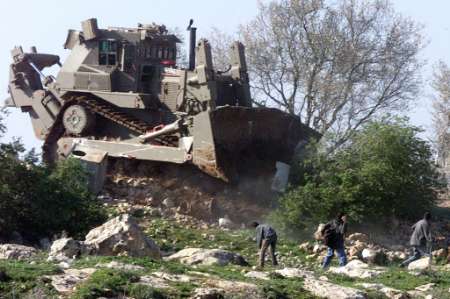
According to field investigations by Al Mezan, at approximately 3.30am on Wednesday 3 October 2007, five Israeli tanks and an armored bulldozer penetrated the Sufa Crossing area, through the borderline east of Khan Younis town. IOF soldiers broke into homes as the bulldozer razed agricultural lands in the area. Moreover, the IOF opened fire arbitrarily, killing 22-year-old Said Al Amour. The victim died from a live bullet to his head at approximately 9.10am. IOF have still been in the area at the time of issuing the press release.

Earlier at approximately 1am, an Israeli warplane fired a missile at a crowd near Khaled Ibn Al Waleed Mosque, in As-Slam neighborhood in Rafah town. The attack resulted in killing 25-year-old Muhammad Bassam Hassan, who died an hour after being admitted in Abou Yousif An-Najjar Hospital, from critical wounds in the head. 25-yaer-old Muhammad Juma'a Abu Sha'ar was also wounded in this raid. Medical sources have reported his injuries as moderate.

On 2 October 2007, and for the second time, IOF opened fire from Erez Creossing at a crowd of people who gathered around Erez to receive the prisoners who were released from Israeli prisons. At approximately 12.30am, the journalist Muhammad Jadullah Salem was wounded from a live bullet to his left leg. Salem was covering the events and was shot when the prisoners' families approached the checkpoint gate when they saw the released prisoners.

The families had waited at Erez Crossing the day before, but the IOF delayed the release of the prisoners. At approximately 1.30pm on Monday 1 October 2007, 4-year-old Ibrahim Muhammad Al Madhon was shot in the left arm by the IOF while he was waiting with his family at the Crossing before Israel's announcement that the release was postponed till the next day.

This escalation comes as IOF expanded the tight closure on the Gaza Strip, where the civilian population has been deprived of their right to free movement. About 1000 Palestinians have been stranded at the Egyptian side of the Rafah Crossing since June 2007. At the same time there have been about 5000 Gazans who have not been allowed to leave the Gaza strip for health, education, employment and other urgent reasons.

Gazans' suffering has been aggravated by the limitation of the goods that are allowed to flow into the Gaza Strip to basic food stuffs and humanitarian aid. Many basic goods have started to run out from the markets and their prices have seriously increased. This includes meats, canned food and clothes. This has added to the already devastating humanitarian and economic crisis.

Al Mezan Center for Human Rights strongly condemns the acts of killing and the excessive, indiscriminate use of force by IOF. The Center also condemns the escalation of collective punishment by the IOF against Gazans. The Center asserts that such illegal conducts by IOF represent serious and systematic violations of the International Humanitarian Law, particularly, the Fourth Geneva Convention Relative to the Protection of Civilian Persons in Time of War (FGC). Al mezan therefore calls on the High Contracting Parties to the Convention to intervene immediately and ensure Israel's compliance by its provisions under all circumstances.

Al Mezan renews its calls to the international community to intervene to stop the Israeli conducts and provide international protection for civilians in the Occupied Palestinian Territories (OPT), and to prevent the employment of collective punishment and other breaches of international law.