Al Mezan Center for Human Rights condemns with the strongest terms the Israeli collective punishment measures against the Gaza Strip. Those measures are baseless morally and legally. Intentional targeting of civilians is absolutely prohibited under international law and cannot be justified on any grounds.
Visualizzazione post con etichetta Geneva Convention. Mostra tutti i post
Visualizzazione post con etichetta Geneva Convention. Mostra tutti i post
giovedì 20 settembre 2007
Al Mezan condemns Israel's new collective punishment measures against Gaza, calls the international community to protect civilians
In its meeting yesterday, 19 September 2007, the Israeli security cabinet unanimously adopted decisions declaring the Gaza Strip a 'hostile territory' and employing new collective punishment measures against it. The decision was allegedly provoked by that the Strip is ruled by Hamas since 15 June 2007 and that rockets continue to be fired at Israel


mercoledì 19 settembre 2007
Israeli High Court allows the construction of the Segregation Wall on Lands of Um Salamuna village
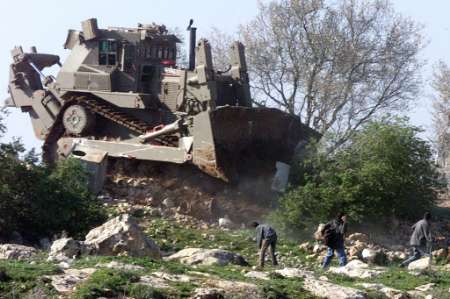
The Applied Research Institute of Jerusalem, 05/09/07. On August 2, 2007, the Israeli Supreme Court rejected the petition filed by the Palestinian residents of Um Salamouna village southwest Bethlehem Governorate, regarding the building of the Israeli Apartheid Wall which stretches across the village’s lands, isolating approximately 500 dunums which constitutes 41.5 % from the total village area (1200 dunums). The Israeli court rejected the petition filed by the local resident of the village using the common Israeli pretext 'vital to the security of Israel.'
The Palestinian residents of Um Salamouna village filed the petition in January 25, 2007 to the Israeli Supreme Court under file number 07/834, after the Israeli Army started construction work to build the Israeli Apartheid Wall on their lands, causing severe damages to their agricultural areas. The filed petition specifically was put against the Israeli military order number 69/06/T, issued by the Israeli Army in September 5, 2006, in which 152 dunums of the village lands were declared confiscated to construct the planned Israeli terminal on the western entrance of Um Salamouna village and to resume the construction of the Israeli Apartheid Wall at the same area. See Map 1
Um Salamouna, Location & Population
Um Salamouna is a Palestinian village located 7.8 km south of Bethlehem Governorate. It has a population of 807 residents (PCBS 2006). The village is bordered by Marah M’allah village and Za’tara bypass road from its north and the under construction Israeli commercial terminal from its northwest, the Israeli Apartheid Segregation Wall from its western side, and to the eastern side is Al Halqum village, and Marah Rabah village at its south side.
The Israeli Tightening on Um Salamouna
Um Salamuna village became a target of the Israeli Army when it was decided to rip the village apart by building the Apartheid Wall and a terminal on the agricultural lands at the northwestern entrance of the village, cutting off the residents from their traditional link to surrounding areas for commercial or social activities.
More over, The Israeli plan for Um Salamouna terminal comes to serve the Israeli policy to tighten the grip on the Palestinian residents and their movement and access to their agricultural lands, but more than that, it will serve as a commercial terminal leading to alternative route for the Palestinian trucks or any other form of Palestinian transportation on bypass road # 60, which will be restricted Israeli settlers use, another form of Israel’s apartheid system in the occupied Palestinian territory. For more clarification refer to the previously written case study (Israeli Military Orders to demolish Six Palestinian Houses in Um Salamouna Village South of Bethlehem City. May 8, 2007).
To Conclude
Um Salamouna village, as well as most of the Palestinian villages and cities, is facing an endless suffering because of the Israeli colonization practices against their lands and properties, and the Israeli Segregation Wall is one of the Israeli employed tools to loot and steal as much as possible of the Palestinian lands under the pretext of 'security.'
Under the International law rules and conventions, Israel is prohibited from destroying or/ and seizing Palestinians' lands and properties, unless such acts constitute a military necessary and as long it is carried out on temporary bases.
- Article 147 of the Fourth Geneva Convention indicated that: Extensive destruction and appropriation of property not justified by military necessity and carried out unlawfully and wantonly, is a grave breach of the Convention.
- Article 23 of the Hague Convention of 1907 also provides: In addition to the prohibitions provided by special Conventions, it is especially forbidden to destroy or seize the enemy's property, unless such destruction or seizure be imperatively demanded by the necessities of war;
Iscriviti a:
Post (Atom)