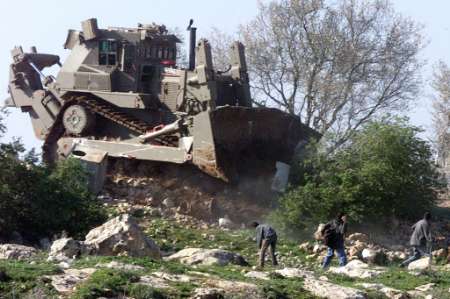
Mahdi Abdul Hadi*, Terrasanta.net, 24.11.07. Chi può far davvero la differenza sono i Paesi europei. Vista da questa parte del mondo, l'Europa sembra essersi appiattita sulle posizioni degli Stati Uniti, prima con la guerra in Iraq e le prigioni della Cia in Europa, e ora con il pressing sull'Iran. Così facendo, di fatto appoggia l'occupazione israeliana: basti pensare che l'Unione europea non ha mai chiesto un euro di risarcimento per tutte le opere che erano state costruite con i fondi Ue per i palestinesi e che sono state rase al suolo dagli israeliani. Qual è dunque l'identità europea? Quel che è andato storto finora fra i palestinesi e l'Europa è che gli europei non ci hanno trattato come partner. Hanno adottato il rapporto di sudditanza che c'è fra donatori e beneficiari: con il paternalismo dei finanziatori che danno fondi senza preoccuparsi eccessivamente di formare degli esperti che diventino autonomi. Oggi tutto questo può cambiare: ci vorrà molto tempo, ma ci aspettiamo che l'Europa possa aiutare i palestinesi ad aiutare se stessi nel realizzare quei valori che hanno fatto grande la storia europea: libertà, solidarietà, uguaglianza, indipendenza, democrazia, formazione, Stato di diritto.
*Mahdi Abdul Hadi, fondatore e direttore della Palestinian Academic Society for the Study of International Affairs (Passia)
Visualizzazione post con etichetta European Union. Mostra tutti i post
Visualizzazione post con etichetta European Union. Mostra tutti i post
sabato 24 novembre 2007


venerdì 27 luglio 2007
MIDEAST: Dubious EU Support to U.S. Challenged
David Cronin, Inter Press Service. BRUSSELS, Jul 25 (IPS) - The European Union's foreign policy supremo Javier Solana this week declared himself "fully behind" the call for an international conference on the Middle East made recently by U.S. President George W. Bush. But is it time for the EU to cease being guided on the Israeli-Palestinian question by the United States, which as the main supplier of weapons to the Israeli military is partisan by definition?
Nathalie Tocci from the Centre for European Policy Studies in Brussels contends that the EU is "working on the margins of U.S.-dictated policies" in the Middle East and that this has proven counterproductive.
The influence of Washington in shaping Europe's stance has been especially marked in the Union's refusal to deal directly with Hamas. Even though that party won a democratic election in 2006, the EU has refused to have direct contacts with its representatives, as Hamas has been placed on the official lists of proscribed organisations in both Brussels and Washington.
Some EU governments -- such as France and Ireland -- are known to have queried if it is wise to shun Hamas completely. Yet the Union's ban on direct contacts has so far remained intact.
The EU has stated that Hamas must fulfil three conditions if dialogue is to take place: that it recognises Israel; accepts previously signed peace accords; and that it renounces violence.
According to Tocci, these criteria -- with the exception of renouncing violence -- are "legally dubious".
"The conditionality on Israel's recognition has no legal grounding in so far as only states and not political parties can recognise other states," she said.
Other commentators have noted how Hamas' participation in Palestinian Authority elections is tantamount to an acceptance of the 1993 Oslo accords, that led to the authority's foundation.
Nathalie Tocci from the Centre for European Policy Studies in Brussels contends that the EU is "working on the margins of U.S.-dictated policies" in the Middle East and that this has proven counterproductive.
The influence of Washington in shaping Europe's stance has been especially marked in the Union's refusal to deal directly with Hamas. Even though that party won a democratic election in 2006, the EU has refused to have direct contacts with its representatives, as Hamas has been placed on the official lists of proscribed organisations in both Brussels and Washington.
Some EU governments -- such as France and Ireland -- are known to have queried if it is wise to shun Hamas completely. Yet the Union's ban on direct contacts has so far remained intact.
The EU has stated that Hamas must fulfil three conditions if dialogue is to take place: that it recognises Israel; accepts previously signed peace accords; and that it renounces violence.
According to Tocci, these criteria -- with the exception of renouncing violence -- are "legally dubious".
"The conditionality on Israel's recognition has no legal grounding in so far as only states and not political parties can recognise other states," she said.
Other commentators have noted how Hamas' participation in Palestinian Authority elections is tantamount to an acceptance of the 1993 Oslo accords, that led to the authority's foundation.
mercoledì 18 luglio 2007
Behind Closed Borders: One Month of Slowly Dying at the Egypt-Gaza Border
 Rafah Today. 17/07/07
“I feel like our lives don’t matter to the European Union observers and Israel—they never care. Aren’t we human beings like them?”
An impossibly crowded area. Chaos. A slow, imprisoned death. This, briefly, is the appalling life—though it is hard to term it living—at the Rafah border.
Terrible food, sparse water, poor hygiene, and inadequate shelter. The conditions are ripe for tragedy. Seriously ill people face preventable deaths as, despite their desperate need of medical care, the Rafah border remains closed, preventing passage to medical facilities and to safety back home. For Gazans, it is the equivalent of shutting down Los Angeles airports and banning all other transportation while F-16s, helicopters, and warplanes hover over the static population of the city, ensuring no one can make it back home.
For over one month, at both the Palestinian and Egyptian sides, people have been waiting at the Rafah border –without medicine, with little to no food or water, shelter-less and blistering under the searing Gazan summer sun. All are waiting for the first of 7 consecutive gates to be opened, which will allow the stranded thousands to cross into Gaza or out to seek medical help.
The Rafah border is strictly controlled by Israel, closely monitored by video-cameras. Israel is not allowing the border to open, despite previous agreements to keep the crossing open for 24 hours. Slighting that agreement, Israel hasn’t opened it lately. So, each day ordinary citizens are paying the price, one which comes at the cost of health and life! At least 28 have died as a result of the strict denial of passage to and from Gaza at the Rafah crossing, completely closed since June 10, where nearly 6,000 Palestinians wait without adequate food, water, or shelter in the intense sweltering heat of summer. Even those with severe medical emergencies are being denied passage.
Patients have the right to medicine, children to drinking water, and people to respect—at the very least respect as humans, not to mention as Palestinians, Muslims, or Arabs. Frequently I wonder, how can anyone allow human beings to suffer like this, to be kept waiting even though many are only a tantalizing half an hour away from home. Yet their proximity to home has no impact on their reality: they are stuck, trapped, in another country without the basic services of citizens. Where is the international outrage and action?
It is impossible to fathom that ambulances should be held back with suffering people in critical need of medical care following operations in hospitals in Egypt and other Arab countries. Additional salt in their many wounds comes with the loss of nearly 6000 people’s suitcases.
Over phone, 25 year old Mohammed Abu el Karash, with an injured backbone and who has returned from Nasser hospital in Cairo, explained how he was kept waiting inside the ambulance for 13 hours before he gave up and went back to the Cairo hospital: “I have tasted death many times. I can’t move at all, even to go to the restroom—I’m waiting for the international community to let us back to our homes, immediately, to end our undue and extended suffering at the border,” he said.
Added to the border troubles are the deaths and injuries from repeated Israeli invasions in the last weeks. A July 5 invasion of Al Boreij refugee camp in central Gaza left 11 dead, including 3 civilians, and over 30 injured, including many children. In the same incursion, a clearly unarmed Palestinian cameraman was shot repeatedly in both legs, resulting in their amputation, by Israeli Occupation Forces (IOF) soldiers, in the latest of many attacks on journalists.
“I feel like our lives don’t matter to the European Union observers and Israel—they never care. Aren’t we human beings like them?” he asked.
Israel is currently carrying out a new military incursion in southern Gaza, particularly the Rafah area close to the very border where many of the thousands of civilians are stranded. Heavy shelling from tanks has injured many civilians and caused severe damage to numerous homes.
http://rafah.virtualactivism.net/news/todaymain.htm
http://rafah.virtualactivism.net/news/todaymain.htm
Iscriviti a:
Post (Atom)