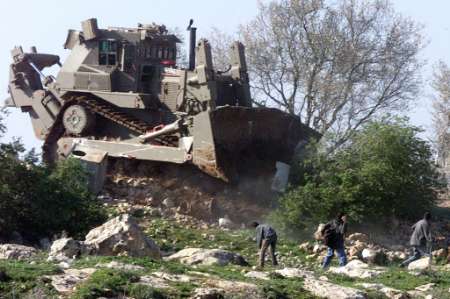
Michele Giorgio, il manifesto, 04/09/07. Pressato dai vertici del suo partito, che lo accusavano di non aver preso una posizione ferma sullo scontro in atto con Hamas, Marwan Barghuti, il leader più popolare di Fatah e «comandante dell'Intifada», dalla prigione israeliana dove sconta una condanna a cinque ergastoli, domenica sera è uscito allo scoperto condannando la presa del potere di Hamas a Gaza, e aggiungendo di temere che «la pugnalata alle spalle» inferta dal movimento islamico, possa ripetersi in Cisgiordania ["By building a network of settlements and a network of 'bypass' roads around all the Palestinian towns and villages, Israel has ensured effective control of the entire [area] – and of the lives of more than two million Palestinians who live there.". Amnesty International]. Barghuti peraltro ha dovuto dare pieno sostegno all'idea di elezioni anticipate nei Territori occupati, quale unica strada per uscire dalla crisi, proprio nel giorno in cui il presidente Abu Mazen ha annunciato una nuova legge elettorale volta a favorire il suo partito, il Fatah, che impone a ogni candidato di «rispettare il programma dell'Olp», organizzazione di cui non fa parte Hamas. Si tratta di una legge anti-democratica, perché vuole escludere una forza politica che gode di ampio consenso non solo a Gaza ma anche in Cisgiordania. Il gruppo dirigente di Fatah sogna il voto anticipato ma vuole esser sicuro di vincere e così la futura legge elettorale stabilisce che i cittadini saranno chiamati a esprimere la loro preferenza soltanto per le liste nazionali dei partiti e che sarà abolito il voto distrettuale. Tuttavia solo il Parlamento ha l'autorità di emendare la legge elettorale e visto che l'assemblea palestinese è dominata dai deputati della lista islamica, Abu Mazen non potrà che far uso continuo di decreti, compiendo abusi e violazioni della legalità.
Hamas non resta a guardare. A Gaza ormai è in atto quella che viene chiamata «la guerra della preghiera» e il movimento islamico ha deciso di vietare i riti all'aperto, dopo che per due venerdì consecutivi manifestanti di Fatah si sono riuniti per pregare all'esterno delle moschee - ufficialmente per non ascoltare i sermoni anti-Abu Mazen pronunciati dagli imam di Hamas - prima di dar vita a proteste, subito represse dalla Forza esecutiva di Hamas (venerdì scorso ci sono stati oltre venti feriti e decine di arresti). «Le preghiere pubbliche volute da Fatah non sono serie, comprendono un comportamento ridicolo da parte dei fedeli che non vengono per pregare ma per compiere disordini e violare la legge», ha spiegato Hamas in un comunicato. Salta all'occhio però il dato non secondario che proprio un movimento islamico ha vietato la libertà di preghiera in qualsiasi luogo che l'Islam garantisce al musulmano.
Intanto ieri sera a Ramallah, prima tappa del tour che lo porterà oggi in Egitto e domani in Israele, il ministro degli esteri Massimo D'Alema ha espresso il sostegno del governo italiano a quello che ha descritto come «lo sforzo che si va compiendo per aprire nuove prospettive di pace». D'Alema pur affermando la ricostituzione su «basi giuste» dell'unità nazionale palestinese, è stato chiaro nell'affermare che la sua visita è di aperto sostegno ad Abu Mazen e ha chiarito che la politica italiana verso Hamas non cambia, resta ancorata a quella europea e alle condizioni poste dal Quartetto, nonostante le timide aperture fatte nelle scorse settimane al movimento islamico dal Presidente del Consiglio Prodi.
Visualizzazione post con etichetta Fayyad. Mostra tutti i post
Visualizzazione post con etichetta Fayyad. Mostra tutti i post
mercoledì 5 settembre 2007


PCHR Position on the Presidential Decree on the Election Law
04/09/07. PCHR is concerned over the Presidential Decision with the Force of Law on Presidential and Legislative Elections issued by President Mahmoud Abbas yesterday. The Centre views this decision as a continuation in the undermining of the legislative branch and usurping its authority by the executive branch since the events of last June.
In the introduction to the decision, it was stated that the decision “was issued in accordance with the rules of the Amended Basic Law for the year 2003 and its amendments, specifically Article 43…” This constitutional article states that “The President of the National Authority at times of necessity that cannot be delayed during times of when the Palestinian Legislative Council (PLC) is not convened can issue decisions with the force of law that must be presented to the PLC in its first sessions after these decisions; otherwise these decisions lose their authority as law….”
Yesterday’s decision replaces Elections Law No. 9 for the Year 2005 that was passed by the PLC and signed by President Abbas on 13 August 2005.
Most notable in the decision was the adoption of a complete proportional representation system in PLC elections that considers the Occupied Palestinian Territory (OPT) as one electoral unit. This electoral system is different from mixed system in Elections Law No. 9 that governed the PLC elections in January 2006, won decisively by Hamas. The mixed system divided the PLC election seats into two groups: 50% elected by proportional representation taking the OPT as one district and 50% by the majoritarian system in different districts.
The third article in the President’s decision states “Elections for the post of President are conducted by direct, free, and secret ballot. The winner is the candidate who receives an absolute majority of correct votes. If no candidate gets an absolute majority, the top two candidates compete in a second round held after 15 days. The winner is the person that gets the highest votes in the second round.
Article 36 of the decision stipulates that any candidate to the Presidential or PLC elections must “commit to the PLO as the sole legitimate representative of the Palestinian people, to the Declaration of Independence, and to the Basic Law.”
In light of this decision, PCHR points to the following observations:
-
Despite full support of a full proportional representation system for the elections, PCHR rejects the mechanism if issuing this new law through the President and not through the specialized authority of the PLC as stipulated by the Basic Law.
-
The President’s authority to pass decisions with the force of law during times that the PLC is not convened does not apply to this situation since the decision was issued to cancel an effective law. In addition, the decision was not issued to fill a legal vacuum; noting that the law determined that the PLC is the authority empowered with canceling or amending legislation. Thus, this article (43) should not be employed to usurp the powers of the legislature by the executive under the pretext that the PLC is not convened. PCHR views this action as undermining the results of the recent legislative elections in the OPT, and an undermining of the PLC that was elected in free elections indicative of the will of the Palestinian people.
-
PCHR is extremely concerned by the systematic destruction of the Palestinian political system during the ongoing crisis between Fatah and Hamas, and the resulting split in the executive branch that has affected the judicial and legislative branches. In essence, this means destroying the political system of the PNA and paralyzing its main functions.
-
The democratic process in the OPT, including the last PLC elections, were undermined by Israel starting with the detention of more than 40 PLC members from the majority party. After that, the work of the PLC was repeatedly hindered with responsibility for that falling on the two main parties: Fatah and Hamas.
-
Any call for elections during the current circumstances without national consensus is an unrealistic call that will not succeed without a political agreement between all parties, especially Fatah and Hamas. The Centre warns against any attempt to hold elections in the West Bank only if no agreement is reached. This step will only deepen the separation between the West Bank and Gaza Strip.
-
The Centre renews its position that the current crisis between Fatah and Hamas is a political crisis that necessitates a dialogue leading to a consensus based on effective political participation by all parties. The Centre does not envision the approval of any new elections law without agreement by the main political parties in the OPT.
-
PCHR sees the positive aspects of the President’s decision, especially with regards to a full proportional representation electoral system instead of the mixed system that governed the last PLC elections, as well as establishing a mechanism to decide presidential elections among a number of candidates if none achieved an absolute majority.
-
The Centre affirms its full support for the full proportional representation system, which was expressed before and after the last elections. The Centre views this system as the most suitable system to express political plurality and to enhance political participation in a strong multi-party system. The Centre reminds that the full proportional representation system was a demand for most Palestinian civil society and political parties.
-
The last PLC elections proved the failure of the mixed system in expressing political weight compared to the number of votes, and stressed the need for adopting a full proportional representation system.
-
Adopting a mixed system in Elections Law No. 9 for the Year 2005 was a compromise to calls for full proportional representation system and others calling for the majoritarian system established in Elections Law No. 13 for the Year 1995, which government the first PLC elections in January 1996. It is evident that Fatah’s majority in the outgoing PLC passed the mixed system; and it is believed that many persons who approved the mixed system had personal motives to improve their chances of re-election as independents, which is not possible under a full proportional representation system.
Il premier Fayyad avverte Roma "Con Hamas non si può negoziare"
Marco Ansaldo, la Repubblica.it, 04/09/07. Il primo ministro dell'Anp replica alle aperture di D'Alema e Prodi: "Sbagliano". "Portare avanti il dialogo solo con il governo palestinese legittimamente eletto"
Ramallah - "Prodi e D'Alema sbagliano. Non si può negoziare con Hamas. Perché l'interlocutore per un dialogo è solo il governo legittimamente eletto in Palestina. E quello siamo noi, e non altri".
Salam Fayyad è nuovo negli uffici governativi di Ramallah, ma la sua voce si fa già sentire.
Il primo ministro dell'Autorità nazionale palestinese (Anp) è a capo di un esecutivo di emergenza, non è un politico di professione. Ma la sua formazione di tecnocrate - Fayyad è un economista laureato all'Università americana di Beirut - gli consente anzi di guardare altrove, alzando la polvere che giace da anni sotto i tappeti della Muqata, il palazzo presidenziale un tempo abitato da Yasser Arafat, per spulciare nientemeno le carte finanziarie del raìs. E se un giorno si scopriranno alcuni retroscena del tesoro di Arafat, sarà grazie a questo serio signore con i capelli bianchi e gli occhiali dalla montatura leggera, capace di leggere i numeri come nessun altro ha mai fatto qui.
Signor primo ministro, lei ha appena incontrato il ministro degli Esteri italiano Massimo D'Alema, che oggi ha ribadito l'appoggio a Fatah ma nelle scorse settimane si era anche detto favorevole a un dialogo con Hamas. È d'accordo con questa posizione?
"Ho sentito anche le dichiarazioni fatte alcune settimane fa dal presidente del Consiglio, Romano Prodi. E devo dire che la mia posizione in questo senso è netta. Chi vuole impostare un negoziato con Hamas è in errore".
Perché?
"Perché il dialogo deve essere portato avanti con una parte sola, e questa siamo noi: il governo palestinese legittimamente eletto".
L'Italia sostiene però che per arrivare alla pace occorre un patto tra Fatah e Hamas, e che non si può trovare un accordo solo con metà dei palestinesi.
"Io sostengo che Hamas deve innanzitutto far cessare quello che accade ogni giorno a Gaza. Nella Striscia c'è una situazione orribile e pericolosa. Se qualcuno ha un'idea diversa sono pronto a discutere, ma a condizione di far terminare le difficoltà in quell'area. Per parlare bisogna prima rispettarsi a vicenda".
E lei che considerazione ha di chi oggi governa la Striscia?
"La mia intenzione più forte in questo momento è quella di contrastarli. Vadano al diavolo, noi non siamo come loro! Per esempio, chi dice che dovremmo sottoscrivere un messaggio di odio che viene dalle moschee? Eppure anch'io sono un musulmano. Ma non accetto che questa sia la faccia che tutto il mondo vede degli islamici".
Voi che cosa offrite in alternativa?
"Noi abbiamo un'alternativa. Offriamo una visione piena e integrata della questione palestinese, e sono fiducioso che Gaza verrà reintegrata con la Cisgiordania".
In pratica che cosa propone?
"Di eliminare, al meglio e al più presto, i danni sofferti dalla Palestina negli ultimi due anni, sia a livello finanziario sia istituzionale".
E il negoziato con Israele?
"I piccoli miglioramenti in corso non devono nascondere la realtà: noi dobbiamo ottenere la nostra libertà. E da sola, l'economia non può fare tutto".
Che cosa vuol dire?
"Che il mio governo ha avuto successo nel far terminare le restrizioni bancarie e la difficile situazione economica degli ultimi anni. Tutti i salari di tutti gli impiegati sono stati pagati. Ma non basta. La questione con Israele è politica. Ci sono quasi 600 posti di blocco in tutto il paese. È possibile giustificare ogni provvedimento solo con ragioni di sicurezza? A questi checkpoint si percepisce tutta l'umiliazione a cui è sottoposto il nostro popolo".
Che cosa può fare in questo senso l'Anp?
"Il mio è un governo di emergenza. Ma il presidente Abu Mazen mi ha chiesto di continuare a esercitare l'azione che stiamo portando avanti a più livelli. Questa amministrazione incontra i favori della maggioranza del popolo palestinese, come dicono tutti i sondaggi e gli studi fatti di recente. Hamas non deve dunque guardare all'Anp come a un partito: perché invece è la casa di tutti i palestinesi".
(4 settembre 2007)
Ramallah - "Prodi e D'Alema sbagliano. Non si può negoziare con Hamas. Perché l'interlocutore per un dialogo è solo il governo legittimamente eletto in Palestina. E quello siamo noi, e non altri".
Salam Fayyad è nuovo negli uffici governativi di Ramallah, ma la sua voce si fa già sentire.
Il primo ministro dell'Autorità nazionale palestinese (Anp) è a capo di un esecutivo di emergenza, non è un politico di professione. Ma la sua formazione di tecnocrate - Fayyad è un economista laureato all'Università americana di Beirut - gli consente anzi di guardare altrove, alzando la polvere che giace da anni sotto i tappeti della Muqata, il palazzo presidenziale un tempo abitato da Yasser Arafat, per spulciare nientemeno le carte finanziarie del raìs. E se un giorno si scopriranno alcuni retroscena del tesoro di Arafat, sarà grazie a questo serio signore con i capelli bianchi e gli occhiali dalla montatura leggera, capace di leggere i numeri come nessun altro ha mai fatto qui.
Signor primo ministro, lei ha appena incontrato il ministro degli Esteri italiano Massimo D'Alema, che oggi ha ribadito l'appoggio a Fatah ma nelle scorse settimane si era anche detto favorevole a un dialogo con Hamas. È d'accordo con questa posizione?
"Ho sentito anche le dichiarazioni fatte alcune settimane fa dal presidente del Consiglio, Romano Prodi. E devo dire che la mia posizione in questo senso è netta. Chi vuole impostare un negoziato con Hamas è in errore".
Perché?
"Perché il dialogo deve essere portato avanti con una parte sola, e questa siamo noi: il governo palestinese legittimamente eletto".
L'Italia sostiene però che per arrivare alla pace occorre un patto tra Fatah e Hamas, e che non si può trovare un accordo solo con metà dei palestinesi.
"Io sostengo che Hamas deve innanzitutto far cessare quello che accade ogni giorno a Gaza. Nella Striscia c'è una situazione orribile e pericolosa. Se qualcuno ha un'idea diversa sono pronto a discutere, ma a condizione di far terminare le difficoltà in quell'area. Per parlare bisogna prima rispettarsi a vicenda".
E lei che considerazione ha di chi oggi governa la Striscia?
"La mia intenzione più forte in questo momento è quella di contrastarli. Vadano al diavolo, noi non siamo come loro! Per esempio, chi dice che dovremmo sottoscrivere un messaggio di odio che viene dalle moschee? Eppure anch'io sono un musulmano. Ma non accetto che questa sia la faccia che tutto il mondo vede degli islamici".
Voi che cosa offrite in alternativa?
"Noi abbiamo un'alternativa. Offriamo una visione piena e integrata della questione palestinese, e sono fiducioso che Gaza verrà reintegrata con la Cisgiordania".
In pratica che cosa propone?
"Di eliminare, al meglio e al più presto, i danni sofferti dalla Palestina negli ultimi due anni, sia a livello finanziario sia istituzionale".
E il negoziato con Israele?
"I piccoli miglioramenti in corso non devono nascondere la realtà: noi dobbiamo ottenere la nostra libertà. E da sola, l'economia non può fare tutto".
Che cosa vuol dire?
"Che il mio governo ha avuto successo nel far terminare le restrizioni bancarie e la difficile situazione economica degli ultimi anni. Tutti i salari di tutti gli impiegati sono stati pagati. Ma non basta. La questione con Israele è politica. Ci sono quasi 600 posti di blocco in tutto il paese. È possibile giustificare ogni provvedimento solo con ragioni di sicurezza? A questi checkpoint si percepisce tutta l'umiliazione a cui è sottoposto il nostro popolo".
Che cosa può fare in questo senso l'Anp?
"Il mio è un governo di emergenza. Ma il presidente Abu Mazen mi ha chiesto di continuare a esercitare l'azione che stiamo portando avanti a più livelli. Questa amministrazione incontra i favori della maggioranza del popolo palestinese, come dicono tutti i sondaggi e gli studi fatti di recente. Hamas non deve dunque guardare all'Anp come a un partito: perché invece è la casa di tutti i palestinesi".
(4 settembre 2007)
giovedì 30 agosto 2007
L'économie gazaouie paralysée par le blocus israélien
Benjamin Barhe, Le Monde, 28/08/07. Des centaines de palettes de bouteilles de boissons gazeuses sont entreposées sous l'immense hangar de l'usine Pepsi Cola, à Jabaliya, dans le nord de la bande de Gaza. En temps normal, ces stocks sont écoulés en quelques heures auprès des épiceries du mince territoire palestinien. Mais depuis deux mois et demi, aucun camion de livraison n'est sorti du hangar, car les bouteilles sont vides. Le blocus de la bande de Gaza imposé par l'armée israélienne à la suite du coup de force du Hamas, le 14 juin, a en effet épuisé les réserves de l'usine en dioxyde de carbone (CO2). Faute de ce gaz nécessaire à la confection de toute boisson à bulles, les bouteilles n'ont pas pu être remplies.
J'ai le sucre, les étiquettes, les bouteilles, les composants chimiques, les bouchons et les cartons, fulmine Mohamed Yazegi, le patron de cette entreprise familiale, ouverte en 1960. L'armée israélienne sait très bien qu'avec un seul container de CO2, je pourrais me remettre à travailler pendant deux semaines. Mais parce que les dirigeants israéliens sont décidés à mettre le Hamas à genoux, ils refusent de laisser rentrer mon gaz. J'ai dû licencier 200 de mes employés."
J'ai le sucre, les étiquettes, les bouteilles, les composants chimiques, les bouchons et les cartons, fulmine Mohamed Yazegi, le patron de cette entreprise familiale, ouverte en 1960. L'armée israélienne sait très bien qu'avec un seul container de CO2, je pourrais me remettre à travailler pendant deux semaines. Mais parce que les dirigeants israéliens sont décidés à mettre le Hamas à genoux, ils refusent de laisser rentrer mon gaz. J'ai dû licencier 200 de mes employés."
"PUNITION COLLECTIVE"
Le patron de Pepsi Cola n'est pas le seul dans ce cas-là. Du fait de la fermeture du terminal de Karni, l'épine dorsale de l'économie gazaouie par où transitent en temps normal les importations et les exportations palestiniennes, près de 85 % des entreprises ont cessé de fonctionner. Selon l'agence de promotion du commerce Paltrade, 70 000 Palestiniens ont perdu leur emploi, qui faisait vivre plus d'un tiers de million d'habitants.
Soucieux d'éviter les contrecoups médiatiques d'une pénurie alimentaire, le gouvernement israélien laisse passer à intervalles réguliers des convois de nourriture et de produits de première nécessité par le point de passage de Sufa, au sud de Karni. En revanche, toute exportation demeure impossible, de même que l'importation de matières premières et de marchandises à usage industriel.
Le premier ministre israélien, Ehoud Olmert, justifie cette politique par la fuite des forces de sécurité et des employés affectés à Karni, dans la foulée de la victoire militaire du Hamas. En leur absence et compte tenu du fait qu'Israël refuse tout contact avec les islamistes, le terminal, dixit la version officielle, est condamné à rester fermé. Mais selon l'organisation israélienne de défense des droits de l'homme Gisha, l'Etat juif est tenu d'assurer le bien-être de la population de Gaza dans la mesure où le droit international considère toujours qu'il "occupe" ce territoire. "Israël veut atteindre des objectifs politiques, à savoir le renversement du Hamas, en exerçant une pression sur 1,4 million d'hommes, de femmes et d'enfants, explique Sari Bashi, le directeur de Gisha. Il s'agit d'une punition collective, qui viole le droit humanitaire international et contredit les intérêts d'Israël."
L'un des secteurs les plus touchés est le BTP. Privé de gravier et de ciment, tous les chantiers en cours ont été gelés. "Le premier mois, j'ai payé mes ouvriers ; le deuxième, je les ai mis en vacances ; le troisième, je les ai licenciés, explique Rafiq Hassouna, l'entrepreneur numéro un de la bande de Gaza. Il ne me reste qu'une secrétaire et un planton pour me faire le café." Parmi ses contrats arrêtés figurent la rénovation de la route Salaheddin, l'axe principal de la bande de Gaza, ainsi qu'un hôpital pour la réhabilitation des handicapés.
A demi-mot, certains hommes d'affaires palestiniens accusent le président palestinien Mahmoud Abbas d'appuyer le bouclage israélien pour forcer le Hamas à lui rendre le pouvoir. "Il est clair que le Fatah ne fait pas tout ce qu'il peut pour résoudre la crise, dit M. Hassouna. Avec toutes les connexions qu'il a en Israël, Salam Fayad (le premier ministre palestinien) pourrait nous aider davantage."
Une thèse démentie par un conseiller du président Abbas. "Nous ne sommes même pas capables d'obtenir la levée d'un simple check-point en Cisjordanie, dit-il. Comment pourrions-nous obliger Israël à rouvrir la bande de Gaza ?" Pour débloquer la situation, diverses propositions sont à l'étude, destinées à confier le contrôle de Karni côté palestinien à une agence de sécurité privée étrangère.
Pour Mohamed Yazegi, l'urgence n'est pas seulement économique. "Les ouvriers que j'ai licenciés sont des proies faciles pour tous les extrémistes. Le Hamas a déjà proposé à certains d'entre eux de nettoyer les rues pour 100 dollars (73 euros) par mois. Bientôt, à la place d'un balai, il leur donnera un kalachnikov."
Benjamin Barthe
Article paru dans l'édition du 28.08.07.
mercoledì 29 agosto 2007
Israel did not keep one promise, said Fayyad
'Not everything reported in the media actually takes place,' Palestinian prime minister says, detailing series of violations by Jewish state. According to Fayyad, 'There is a big difference between the talks on cooperation and ease of restrictions and what happens in practice'
Israel did not carry out even one move it committed to, Palestinian Prime Minister Salam Fayyad charged on Wednesday, a day after the meeting between Prime Minister Ehud Olmert and Palestinian President Mahmoud Abbas in Jerusalem.
| Published: | 08.29.07, 09:48 / Israel News |
In an interview with the Jordanian newspaper al-Dustour, Fayyad was asked what he thought about Israel's ongoing activity in the West Bank and assassinations in the Gaza Strip.
his proves that there is a big difference between the talks on cooperation and ease of restriction and what happens in practice. This is one of the reasons for failure, and we are taking this seriously and following it on all levels," he replied. "Israel did not carry out even one move it committed to in terms of the removal of checkpoints, the humiliation of our people at those checkpoints, not to mention the raids, assassinations and settlements." Olmert and Abbas meeting, Tuesday (Photo: Amos Ben-Gershom) Palestinian media stressed that for the first time the leader discussed the "core issues" of the conflict, including – according to the report - the transfer of east Jerusalem neighborhoods to the Palestinian Authority's control. The media also stressed Abbas' promise to hold a referendum on any future agreement, with the goal being to reach a declaration of principles before the US-sponsored Middle East conference in November.
The Arab media on Wednesday morning preoccupied itself with an analysis of Tuesday's summit. The Palestinian newspaper al-Ayam quoted Abbas in its headline as saying, "We do not want peace at any cost."

lunedì 30 luglio 2007
Wakseh: il tracollo del nazionalismo palestinese
Ronny Shaked. ISRAELE.net. 30/07/07. Abu Mazen continua a ripetere gli stessi mantra: uno stato palestinese indipendente con Gerusalemme capitale, il diritto al ritorno, la rimozione degli insediamenti. In realtà, non è molto più che il governatore della Muqata, il palazzo presidenziale a Ramallah. Il governo designato da Abu Mazen abbonda di ministri del turismo, dei trasporti, dell’agricoltura e altri importanti dicasteri. Ma è tutto virtuale. I palestinesi nei territori chiamano quello di Salem Fayyad “il governo degli stipendi”. In effetti il Tesoro palestinese ha abbastanza soldi per pagare gli stipendi per molti mesi a venire. Il mondo occidentale, che vede il nemico nell’estremismo islamico, segue ciecamente le dichiarazioni di Abu Mazen e continua a passare grosse somme di denaro. E Abu Mazen manda soldi a Gaza, contribuendo a stabilizzare la situazione sotto Hamas.
Muhammad, di Jabaliya, ci dice che non gli importa chi paga il suo stipendio, se Abu Mazen, Hamas, l’Iran o Israele. Per lui, l’unica cosa che conta è che i soldi arrivino e gli permettano di comprare da mangiare ai suoi figli.
Intanto il potere di Hamas a Gaza si stabilizza, in parte grazie ai soldi che Israele ha trasferito ad Abu Mazen che a sua volta versa soldi a più di 100.000 abitanti di Gaza sotto forma di stipendi mensili. Hamas si sta muovendo con accortezza. Legge e ordine tendono a imporsi, non si vedono più tutte quelle armi per le strade a parte quelle in mano alle forze “governative”, e non si vedono faide di clan. Persino le bancarelle del mercato in Piazza Palestina sono state rimosse e il traffico fluisce. L’introduzione dell’islam da parte del regime viene attuata in modo graduale, ma costante e con determinazione. Anche Hamas non manca di mezzi finanziari, e riempie le tasche dei suoi nuovi sostenitori con assistenza e aiuti.
Gli abitanti di Gaza si sono abituati a Hamas e non sentono la mancanza dei corrotti funzionari di Fatah. Più di ogni altra nazione, i palestinesi sono capaci di adattarsi rapidamente a mutate circostanze. Uno dei leader della generazione di transizione di ciò che resta di Fatah, e che preferisce restare anonimo, ci dice con grande tristezza: “La Wakseh ci ha ributtato indietro di cinquant’anni. La speranza nazionale è perduta. Questi sono giorni di lutto”.
Muhammad, di Jabaliya, ci dice che non gli importa chi paga il suo stipendio, se Abu Mazen, Hamas, l’Iran o Israele. Per lui, l’unica cosa che conta è che i soldi arrivino e gli permettano di comprare da mangiare ai suoi figli.
Intanto il potere di Hamas a Gaza si stabilizza, in parte grazie ai soldi che Israele ha trasferito ad Abu Mazen che a sua volta versa soldi a più di 100.000 abitanti di Gaza sotto forma di stipendi mensili. Hamas si sta muovendo con accortezza. Legge e ordine tendono a imporsi, non si vedono più tutte quelle armi per le strade a parte quelle in mano alle forze “governative”, e non si vedono faide di clan. Persino le bancarelle del mercato in Piazza Palestina sono state rimosse e il traffico fluisce. L’introduzione dell’islam da parte del regime viene attuata in modo graduale, ma costante e con determinazione. Anche Hamas non manca di mezzi finanziari, e riempie le tasche dei suoi nuovi sostenitori con assistenza e aiuti.
Gli abitanti di Gaza si sono abituati a Hamas e non sentono la mancanza dei corrotti funzionari di Fatah. Più di ogni altra nazione, i palestinesi sono capaci di adattarsi rapidamente a mutate circostanze. Uno dei leader della generazione di transizione di ciò che resta di Fatah, e che preferisce restare anonimo, ci dice con grande tristezza: “La Wakseh ci ha ributtato indietro di cinquant’anni. La speranza nazionale è perduta. Questi sono giorni di lutto”.
testo integrale (Da: YnetNews, 27.07.07)
Iscriviti a:
Post (Atom)