Visualizzazione post con etichetta Amnesty International. Mostra tutti i post

venerdì 26 ottobre 2007

Territori Occupati Palestinesi, rapporto Amnesty: gli scontri tra le fazioni alimentano le violazioni dei diritti umani

Amnesty International Italia. 24.10.07. Amnesty International ha pubblicato oggi un rapporto in cui segnala che gli scontri tra i gruppi palestinesi Hamas e Fatah nella Striscia di Gaza hanno gia’ causato, quest’anno, 350 morti e hanno provocato gravi violazioni dei diritti umani, non solo a Gaza ma anche in Cisgiordania. Il rapporto, di 57 pagine, accusa Hamas di aver fatto sempre maggiore ricorso alla detenzione arbitraria e alla tortura, da quando a giugno ha assunto il potere nella Striscia di Gaza. Hamas ha inoltre autorizzato le proprie forze ad attaccare e aggredire manifestanti pacifici e giornalisti che seguivano le proteste. Per quanto riguarda la Cisgiordania, Amnesty International accusa le forze fedeli al presidente palestinese Mahmoud Abbas di aver arrestato arbitrariamente centinaia di sostenitori di Hamas e di non aver intrapreso alcuna azione nei confronti dei militanti di Fatah responsabili di rapimenti, incendi e altri attacchi. Nell’ultimo anno, la violenza tra le fazioni palestinesi nella Striscia di Gaza ha raggiunto un livello senza precedenti fino al culmine del giugno di quest’anno, quando Hamas ha assunto il controllo delle forze di sicurezza dell’Autorita’ palestinese. Secondo Amnesty International, i gruppi armati e le forze di sicurezza di entrambi i gruppi hanno mostrato un flagrante disprezzo per la popolazione civile, lanciando attacchi indiscriminati e dando vita a scontri a fuoco all’interno di zone residenziali. Gli abitanti di Gaza sono rimasti praticamente prigionieri  nelle proprie abitazioni e numerose decine di persone che non prendevano parte ai combattimenti, bambini compresi, sono state uccise. 
‘I dirigenti di Hamas e Fatah devono prendere provvedimenti immediati per spezzare il ciclo dell’impunita’ che continua ad alimentare le violazioni dei diritti umani, tra cui detenzioni arbitrarie, rapimenti, torture e maltrattamenti’ – ha dichiarato Malcolm Smart, direttore del Programma Medio Oriente di Amnesty International. ‘La perdurante lotta tra le due fazioni sta avendo un effetto devastante sulla popolazione palestinese, specialmente nella Striscia di Gaza, acuendo la crisi umanitaria e dei diritti umani provocata dalle azioni militari e dai blocchi ordinati da Israele’.

Nel suo rapporto, Amnesty International chiede l’istituzione di una commissione di esperti indipendenti che indaghi sulle violazioni dei diritti umani commesse da Hamas e Fatah dall’inizio del 2006; l’organizzazione chiede inoltre ai dirigenti di entrambe le parti di impegnarsi ad attuare le raccomandazioni della commissione.

Il rapporto di Amnesty International contiene atroci testimonianze di vittime di violazioni dei diritti umani, appartenenti a entrambe le fazioni, e di persone che sono rimaste comunque direttamente coinvolte negli scontri armati nella Striscia di Gaza.

Le forze di sicurezza rivali, che avrebbero dovuto proteggere la popolazione e rafforzare il rispetto della legge, hanno tradito il proprio compito attraverso una condotta faziosa. Insieme ai gruppi armati che fungono come loro miliziani, hanno loro stesse violato la legge e commesso gravi violazioni dei diritti umani nella totale impunita’.

La decisione del presidente Abbas di sospendere le attivita’ delle forze di sicurezza e delle istituzioni giudiziarie dell’Autorita’ palestinese nella Striscia di Gaza, conseguente alla presa del potere da parte di Hamas, ha creato un vuoto legale e istituzionale, favorendo la creazione, da parte di Hamas, di un sistema parallelo di forze dell’ordine e di sicurezza che, secondo Amnesty International, manca di formazione e di meccanismi di garanzia e non e’ chiamato a rispondere del proprio operato.

Il risultato e’ che ora a Gaza gli arresti arbitrari e la tortura nei confronti dei detenuti sono una pratica diffusa, cosi’ come gli attacchi contro i manifestanti e i giornalisti che seguono le proteste. L’iniziale miglioramento delle condizioni di sicurezza, seguito alla presa del potere da parte di Hamas, si sta velocemente erodendo.

In Cisgiordania, le violazioni dei diritti umani da parte delle forze di sicurezza dell’Autorita’ palestinese sono a loro volta massicce, anche se meno conosciute. La comunita’ internazionale pare intenzionata a non prendere una posizione forte, alla vigilia della conferenza promossa dagli Usa per tentare di resuscitare gli accordi di pace tra il governo israeliano e il governo di emergenza dell’Autorita’ palestinese.

Centinaia di sostenitori o presunti simpatizzanti di Hamas sono stati imprigionati arbitrariamente dalle forze di sicurezza dell’Autorita’ palestinese; le violazioni delle procedure detentive sono all’ordine del giorno e le denunce di maltrattamenti e torture si fanno sempre piu’ frequenti. Le persone arrestate sono tenute in luoghi non autorizzati dalla legge e le forze di sicurezza spesso ignorano le ordinanze dei giudici di rilasciare i prigionieri nei confronti dei quali non vi sono prove.

Il governo di emergenza dell’Autorita’ palestinese non ha preso provvedimenti nei confronti degli uomini armati appartenenti a Fatah, che hanno sequestrato sostenitori di Hamas e incendiato abitazioni, uffici commerciali e sedi di organismi umanitari, nonostante gli autori di questi episodi siano spesso persone ben note e le forze di sicurezza fossero al corrente del loro operato.

L’arresto e l’imprigionamento di oltre 1000 presunti sostenitori di Hamas, molti dei quali non sono accusati di alcun crimine, si pone in netto contrasto con il mancato arresto, da parte dell’Autorita’ palestinese, dei membri delle Brigate dei martiri di al-Aqsa, il braccio armato di Fatah, responsabile di uccisioni sommarie, catture di ostaggi, incendi e altri attacchi contro persone e proprieta’.

‘L’assenza di legge che negli ultimi anni ha predominato in Cisgiordania e nella Striscia di Gaza, culminata negli scontri tra fazioni di giugno, e’ in gran parte il risultato del fallimento, prolungato e sistematico, dell’Autorita’ palestinese di mantenere e rafforzare la legge’ – ha commentato Smart.

Il rapporto di Amnesty International chiede alla comunita’ internazionale di porre fine alla vendita e al trasferimento di armi a entrambe le parti, fino a quando non vi saranno esplicite garanzie che non verranno usate per violare i diritti umani.

‘La comunita’ internazionale deve ottenere da tutte le parti palestinesi il rispetto dei medesimi standard internazionali sui diritti umani’ – ha concluso Smart. ‘Deve inoltre garantire che la popolazione della Striscia di Gaza non sia punita per le posizioni e i comportamenti dell’amministrazione di Hamas e assicurare che l’assistenza di emergenza essenziale per proteggere i diritti umani fondamentali non sia mai usata come uno strumento di ricatto per perseguire obiettivi politici’.

FINE DEL COMUNICATO
Roma, 24 ottobre 2007

Il rapporto Occupied Palestinian Territories: torn apart by factional
strife e’ disponibile in lingua inglese all’indirizzo:
http://web.amnesty.org/library/Index/ENGMDE210202007

Per ulteriori informazioni, approfondimenti e interviste:
Amnesty International Italia – Ufficio stampa
Tel. 06 4490224 - cell. 348-6974361, e-mail: press@amnesty.it

mercoledì 17 ottobre 2007

Palestinian refugees suffer in Lebanon

Amnesty International, 17.10.07. Palestinian refugees in Lebanon face discrimination in employment and a lack of access to adequate education and housing. A new Amnesty International report: Exiled and Suffering: Palestinian refugees in Lebanon, examines the wide range of restrictions that continue to impact on the lives of hundreds of thousands of Palestinian refugees. More than half of the 300,000 Palestinian refugees residing in Lebanon live in 12 official Palestinian refugee camps. The area of land allocated for these camps has remained largely unchanged since 1948 despite significant population growth. In some households, families of 10 share a single room.

They continue to be denied the right to adequate housing, due to unacceptable levels of habitability and restrictions on property ownership.

In camps in the south of Lebanon, unreasonable restrictions have been imposed on refugees' right to repair or improve their homes. Some refugees have been intimidated, fined and detained simply for seeking to build a brick wall to protect their home from the elements.

Palestinians continue to suffer discrimination and marginalization in the labour market, contributing to high levels of unemployment, low wages and poor working conditions.

The Lebanese authorities recently lifted a ban on 50 of the 70 jobs - - around 20 still are - not permitted to Palestinians, but refugees continue to face obstacles finding employment in such jobs.

This lack of employment prospects has led to a high drop-out rate for Palestinian schoolchildren, who also have limited access to public secondary education (they are generally denied recognition of educational achievement in Lebanese secondary schools as all students require identification documents – conspicuously lacking for non-ID Palestinian refugees – to sit the Lebanese state exams, which in turn give access to higher levels of education). The resultant poverty is exacerbated by restrictions placed on their access to social services.

The Lebanese government must take concrete steps to end all forms of discrimination against Palestinian refugees and to fully protect and uphold their human rights.

The international community must also attempt to find a durable solution for refugees that fully respects and protects their human rights, including their right of return. This may involve providing financial and technical assistance to Lebanon, helping it provide the best possible human rights protection to its Palestinian refugee population.

Read more:
Lebanon: End discrimination against Palestinian refugees (Press Release, October 17 2007)
Lebanon: Exiled and suffering: Palestinian refugees in Lebanon (Report, October 17 2007)
Palestinian refugees in Lebanon: Six decades of exile and suffering (Focus Sheet, October 17 2007) (PDF version, 2 pages, 89 KB)

giovedì 20 settembre 2007

ISRAEL-OPT: Aid groups, UN protest Israeli sanctions move on Gaza


Ahmed, 14, and Amjad, 12, during a power cut in Tal Zaatar, Gaza. The Israeli cabinet decision would allow the state to cut fuel and electricity supplies to Gaza Strip.

JERUSALEM, 20 September 2007 (IRIN) - An Israeli cabinet decision on 19 September, which declared the Gaza Strip a "hostile entity" and which would allow the state to cut fuel and electricity supplies to the enclave, has been immediately condemned by aid and human rights organisations.

UN Secretary-General Ban Ki-moon said he was concerned "such a step would be contrary to Israel's obligations towards the civilian population under international humanitarian and human rights law".

The people of Gaza are "already suffering from the impact of prolonged closure" and they should not be punished for the "unacceptable" actions of militants who fire rockets into Israel, Ban said.

The Israeli cabinet announced it would further restrict the passage of goods into Gaza and reduce power supplies. "Restrictions will also be placed on the movement of people to and from the Gaza Strip." However, there is "the intention to avoid a humanitarian crisis".

The decision, which has not yet been implemented, came a week after an Israeli military base was hit by Gazan rockets, leaving around 60 soldiers wounded.
''...such a step would be contrary to Israel's obligations towards the civilian population under international humanitarian and human rights law.''

The decision was harshly condemned by the Palestinian caretaker government of Prime Minister Salam Fayyad and President Mahmoud Abbas, as well as by Hamas in Gaza, which described it as a "declaration of war".

Two rockets hit southern Israel shortly after the cabinet decision was announced.

What the decision could mean

Currently, only food and medical supplies are generally allowed in and all exports are banned. Construction materials are blocked, while it took several weeks and international pressure to allow paper for printing school books to arrive.

Movement of civilians is also already severely limited, and Gaza's Rafah Crossing to Egypt, has been closed since June. Further restrictions would likely ban even limited access to Israel.

Humanitarian concern

Israel's Foreign Minister Tzipi Livni said the decision is in line with international law and "it's not going to affect the humanitarian needs of the population in the Gaza Strip."

However, Oxfam International disagreed.

Photo: Tom Spender/IRIN
Palestinians wait in a queue at Beit Iba checkpoint in Gaza

"Reducing the fuel supplies to a bare minimum [will] only increase the suffering of one and a half million people in Gaza, and constitutes collective punishment," said Jeremy Hobbs, the group's executive director, adding it would be "immoral and contrary to the Geneva Conventions".

Cutting power, legal experts said, would not distinguish between civilians and militants.

Israel maintains it has very limited responsibility for the Gaza Strip since its 2005 redeployment of troops and settlers from the territory. Amnesty International, however, believes the Jewish state, is "ultimately responsible for ensuring the welfare of the… Palestinians who live in the Gaza Strip", since it "retains effective control" over the area.

The Israeli human rights group Gisha said the decision was "dangerous, because operating rooms, emergency services, sewage pumps and water wells cannot run without electricity".

domenica 26 agosto 2007

Palestine since Gaza 'disengagement'

Jake Hess, ZNet, 24/08/07. This month marks the two-year anniversary of Israel's 'disengagement' from the Gaza Strip. Professor Alan Dershowitz of Harvard Law School wrote the following in September, 2005: "Israel's successful evacuation of the Gaza Strip demonstrates the desire and ability of the Israeli government to make and implement tough decisions necessary for a pragmatic peace based on a two-state solution."[1]

Dershowitz is right. Although his article misrepresents the Israeli government's intentions as benign, the Gaza 'disengagement' can only be understood as the first step in Israel's long-term objective of imposing what they call a 'two-state solution' on the Palestinians. Many analysts sympathetic to the Palestinian cause have written, correctly, that the Gaza withdrawal has coincided with settlement expansion in the West Bank. Few, however, define the political endgame Israel is moving toward.

The purpose of this article is to outline, briefly, the long-term objectives of the 'disengagement', to show how they've been implemented in the West Bank during last couple of years, and to describe current conditions in Gaza. Doing so can help provide a framework for interpreting the recent and upcoming diplomatic summits in the region, including the renewed talk of moving toward a final settlement.[2]

Ephraim Sneh, a member of the Israeli Labor Party who has held several senior posts in the Israeli military and government, has summarized the purposes of the 'disengagement' plan. "The goal is to perpetuate Israeli control in most of the West Bank, and to repel any internal or external pressure for a different political solution," he writes. When the construction projects are complete, "The Palestinians will be left with seven enclaves connected by special highways for their use", and Israel will be left in control of eighty percent of historic Palestine.[3] The enclaves created by the Wall and settlements will, if the Sharonists have their way, form the basis of a Palestinian "state".

Sneh's calculations jibe with Sharon's past announcements that he would tolerate a Palestinian "state" on 42% of the West Bank.[4] (The 42% figure is most likely based on the percentage of land Palestinians were given full or partial control over during the Oslo years). In December 2004, Zalman Shoval, then a senior advisor to Sharon, told The Boston Globe that "Sharon wants to wait until the [West Bank Wall] is completed" before negotiations on Palestinian independence can begin. "That way, [the Wall] would be more or less a line of reference for negotiations on the final border" of a Palestinian state, consisting of half the West Bank.[5]

Ehud Olmert, the current Israeli Prime Minister, has said that he is committed to the same goals as his predecessor, including use of the Wall to designate Israel's "final borders."[6] If the government views the borders as permanent for Israel, of course, then they must also be permanent for their Palestinian neighbors and any future "state".

This is a useful backdrop against which to interpret current Israeli activities in the West Bank.

Presently, some 450,000 Israeli settlers live in the West Bank.[7] Since the Gaza 'disengagement', their overall population has continued to expand some three times as fast as that of cities in Israel proper.[8] In the first half of 2005, the year the 'disengagement' was carried out, "there was a twenty-eight percent increase in settlement housing starts compared to the same period in 2004", according to the Israeli Central Bureau of Statistics.[9] The leading Israeli newspaper, Ha'aretz, recently reported on a "population boom" in non-East Jerusalem settlements, resulting in a 5.45% growth rate for the colonies in 2006.[10] Currently, three thousand new housing units are under construction in the West Bank.[11]

The two major documents driving Likud/Kadima settlement policy, to which Olmert is an heir, have historically been the Drobless Plan and the Sharon Plan. Both define the objective of settlements as to incorporate Palestinian land into Israel and to defeat the possibility of viable Palestinian statehood by fragmenting the West Bank into isolated chunks. According to the Drobless Plan, "The best and most effective way to remove any shred of doubt regarding [Israel's] intention to hold Judea and Samaria [i.e., the West Bank] forever is a rapid settlement drive in these areas."[12]

As Minister of Agriculture in the first Likud government, in 1977, Ariel Sharon said of the settlements: "We have to physically dominate the entire West Bank….We have to establish wedges of Israeli/Jewish settlement between centers of concentrations of Arabs on either side of the green line [i.e., the border between the West Bank and Israel]... And we have to make physically impossible the creation of any territorial contiguity on the part of the Palestinians."[13]

In a recent report, Amnesty International writes: "By building a network of settlements and a network of 'bypass' roads around all the Palestinian towns and villages, Israel has removed the possibility of Palestinian territorial contiguity in the West Bank…and ensured effective control of the entire [area] – and of the lives of more than two million Palestinians who live there." This is part of what they describe as "Israel's policy of dividing the Occupied Palestinian Territories into disconnected and non-viable fragments", which "continues to be implemented at a growing pace."[14]

In a major May 2002 report on Israeli settlement policy, "Land Grab", the Israeli human rights organization B'Tselem writes: "The drastic change that Israel has made in the map of the West Bank prevents any real possibility for the establishment of an independent, viable Palestinian state as part of the Palestinians' right to self-determination" (p.133).

Perhaps the most dangerous aspect of the Wall, from the standpoint of Palestinian survival, is its path around greater Jerusalem. Under the projected route, Human Rights Watch argues, the last remaining land corridor connecting the northern and southern West Bank – an area known as "E-1" – will be surrounded and effectively annexed to Israel, thus cutting the West Bank into two pieces.[15] East Jerusalem – the historic center of Palestinian economic, cultural, and social life – will be isolated and virtually inaccessible from the rest of the West Bank, resulting in immeasurable hardship for Palestinians as a result.[16]

The Israeli settlement monitoring organization Peace Now has also strongly argued against building settlements in E-1, for similar reasons. They agree that doing so would cut the West Bank in half, and "sever access to East Jerusalem for Palestinians in the West Bank, and sever access to the West Bank for Palestinian residents of East Jerusalem." "Both of these situations", they write, "are antithetical to the achievement of any real, durable peace agreement and the establishment of a viable, contiguous Palestinian state". They assert that "No serious analyst would support" the assumption that "Israeli-Palestinian peace and a two-state solution are possible without East Jerusalem being contiguous with and part of a Palestinian state."[17] Although the Israeli government has not yet begun construction of settlements in E-1, they certainly intend to surround the area with the Wall,[18] so the effects will be the same.

B'Tselem contends: "The construction of the Separation Barrier is the final step in the almost-completely isolation of East Jerusalem. It finalizes the division of the West Bank into easily controlled portions, and renders social, commercial and family life untenable for Palestinians in Jerusalem and its environs", dealing a "further blow to any chance of resolving the conflict through negotiations and agreement."[19]

Israel is currently building a road which is said to ensure territorial contiguity for Palestinian after completion of the Wall. Yet, even Martin Indyk – a former AIPAC employee and one-time senior advisor to the Clinton administration – argues that Israel should give E-1 to the Palestinians. "E-1 is a critical issue in maintaining the territorial integrity and contiguity of the West Bank with East Jerusalem – it's the only place where it's possible to do that", he recently told the New York Times.[20]

Meanwhile, two years after the 'disengagement', Gaza is "under the effective control of Israel" as a "sealed-off, imprisoned, and occupied territory", in the words of the UN's Special Rapporteur on human rights in Palestine.[21]

According to the Israeli human rights group B'Tselem, Israel controls Gaza's "air and sea space, movement between Gaza and the West Bank (also via neighboring countries), the population registry, family unification, and the crossing of goods to and from Gaza…Also, residents of Gaza rely solely on Israel for its supply of fuel, electricity, and gas."[22]

Gisha: Legal Center for Freedom of Movement, an Israeli organization, asserts that "Israeli control over the lives of Gaza residents remains constant", including the ability to control all imports and exports by virtue of its ability to "close all crossings into Gaza".[23] Put simply, Gaza is still occupied, and Israel therefore retains obligations to its residents under the Hague Regulations and Fourth Geneva Convention, Gisha says. Human Rights Watch agrees: "Under international humanitarian law, Gaza remains occupied, and Israel retains its responsibilities for the welfare of Gaza residents."[24]

Given these facts, it's tempting to say that nothing's changed in Gaza since the 'disengagement'. Yet, things have changed; by many indicators, the humanitarian situation there is worse than it has ever been. The disaster has emerged as a consequence of Israel's withholding of tax revenues to the PA, the boycott of the same institution by international governments, and the imposition of increased movement restrictions in the occupied territories.

Human Rights Watch writes that, in 2006, "The closure of Gaza was more complete than at any time since the outbreak of the intifada in 2000, with the Rafah international border, Erez crossing, and other crossings into Israel designed for the transport of goods closed entirely or opened only irregularly, with disastrous effects on Gazan exports and imports."[25]

Amnesty International writes: "The extent of the blockade imposed on the Gaza Strip for most of 2006 has been unprecedented…the long blockade of [Karni commercial crossing] halted the export of Palestinian goods, causing waste of perishable agricultural exports and a loss of markets for these and other exports. The blockade resulted in the closure of 920 small factories, which in December 2005 employed 25,500 workers, as they were no longer able to export their products."[26]

According to Gisha, Israel's "administrative control of civilian life has intensified since the completion of Israel's disengagement plan", and "Israeli actions since September 2005…have contributed to an economic and humanitarian crisis in Gaza not seen in the 38 years of Israeli control that preceded the withdrawal of permanent ground troops."[27]

The UN refugee agency working in Occupied Palestine, UNRWA, describes Gaza as "locked down and imprisoned", as "closure of the crossing points for commercial and construction goods…has reached unprecedented levels." The "conditions of siege imposed on Gaza and the ongoing fragmentation of the West Bank are destroying the fabric of Palestinian society". As a result, "Living conditions in Palestinian areas are now deplorable, slumping to levels unseen since 1967. Every aspect of life has been affected; the entire Palestinian population is suffering. The majority are now dependent on food and cash handouts."[28]

Recently, a senior official of the UNRWA warned that, as a consequence of Israeli-imposed closures, "Gaza risks becoming a virtually one hundred percent aid dependent, closed down and isolated community within a matter of months, or even weeks, if the present regime of closure continues",[29] while the World Bank has warned that the territory is in danger of an "irreversible" economic collapse.[30]

As a consequence of what B'Tselem has called a "protracted economic siege that forces on Gazans a life of poverty and want", [31] eighty percent of Gaza's factories have closed down, while the territory's "local private sector, identified by international mediators as the well-spring of Palestinian economic recovery and thereby hopes for peace, faces terminal decline", the Financial Times reports.[32]

Oxfam writes that, as a consequence of the financial boycott of the PA, "the number of Palestinians living in poverty has jumped by 30%, essential services are facing meltdown, and previously unknown levels of factional violence plague Palestinian streets." The number of Palestinians living in deep poverty, on less than 50 cents a day, "nearly doubled in 2006 to 1 million".[33] According to the UNRWA, 87.7% of households in Gaza, and 55.6% in the West Bank, live in poverty.[34] The UN has reported that half the Palestinians in the Occupied Territories are starving, or in danger of starving.[35]

Israeli military attacks, like the siege off Gaza, have intensified since 'disengagement'. "Both air and artillery shelling increased throughout the year after the withdrawal," according to the Palestinian human rights group Al-Haq.[36] The UNRWA has reported "daily shelling, ground incursions and air operations" into Gaza as part of the "Summer Rains" operation, "causing widespread damage and leading to high numbers of civilian casualties."[37] Following 'disengagement', B'Tselem writes, "Israel increased its attacks on armed Palestinian activists, killing many bystanders in the process."[38]

These killings are part of what Physicians for Human Rights (Israel) describes as "Israel's policy of terrorizing the civilian population" of Gaza, including "the deliberate and conscious killing of civilians."[39]

Israel and its apologists defend these attacks on "security" grounds. Yet, according to Human Rights Watch, there were fewer Palestinian suicide attacks in 2006 than any year since the al-Aqsa intifada began in September 2000. Two Israelis died from the much-publicized qassam missiles launched from Gaza.[40] And although the number of Israelis killed by Palestinians diminished by half, the number of Palestinians killed by Israel tripled, according to Amnesty International.[41] In all, according to B'Tselem, Israel killed 660 Palestinians, and Palestinians killed 23 Israelis, in 2006.[42]

So, two years after the Gaza 'disengagement', this is the tragic reality in Occupied Palestine. Although the Israeli government is attempting to move toward some kind of a 'two state solution', the "pragmatic peace" envisioned by Dershowitz is a long way off.

Jake Hess is a graduate student at Brown University. He welcomes feedback at JakeRHess@gmail.com

Sources

[1] Alan Dershowitz, "This time, peace may be the real thing", Chicago Tribune, September 09, 2005.

[2] See, for example, Samuel Sockol, "Olmert, Abbas, Hold 'Promising' Talks Ahead of Proposed Summit", Washington Post, August 07, 2007.

[3] Ephraim Sneh, "Sharon's plan will perpetuate war", Ha'aretz, October 11, 2004.

[4] Ari Shavit, "Sharon is Sharon is Sharon", Ha'aretz, April 12, 2001.

[5] Dan Ephron and Farah Stockman, "Bush camp cautious on post-Arafat support", The Boston Globe, December 19, 2004 .

[6] Greg Myre, "Olmert Outlines Plans for Israel's Borders", The New York Times, March 10, 2006 .

[7] Amnesty International, "Israel and the Occupied Territories", annual report 2007.

[8] John Dugard, "Report of the Special Rapporteur on the situation of human rights in the Palestinian territories occupied since 1967", UN Office for the Coordination of Humanitarian Affairs, January 29, 2007, para. 32.

[9] Cited by Human Rights Watch in "Israel: Expanding Settlements in the Occupied Palestinian Territories", December 27, 2005.

[10] Nadav Shragai, "Ultra-Orthodox Jews deliver a population boom to the West Bank", Ha'aretz online, August 14, 2007 . See also Peace Now, "Summary- Peace Now Settlement/Outpost Report 2006", February 21 2007. Neither report deals with settlements in East Jerusalem.

[11] Tovah Lazaroff, "Peace Now: Israel is building 3,000 new homes in West Bank", The Jerusalem Post, February 22, 2007.

[12] Quoted by B'Tselem in "Land Grab: Israel's Settlement Policy in the West Bank", May 2002, p. 14. B'Tselem cites: Matitiyahu Drobless, "The Settlement in Judea and Samaria – Strategy, Policy and Program" (in Hebrew), World Zionist Organization, September 1980.

[13] Quoted by Geoffrey Aronson (Director of Research and Publications at the renowned Foundation for Middle East Peace, as well as Editor of its indispensable "Report on Israeli Settlements in the Occupied Territories"), " Sharon's New Map", FMEP, June 19, 2002.

[14] Amnesty International, "Enduring Occupation: Palestinians under siege in the West Bank", June 2007, pgs. 20 and 32.

[15] Human Rights Watch, "Israel/Occupied Palestinian Territories", annual report 2006.

[16] See UN Office for the Coordination of Humanitarian Affairs, "Three Years Later: The Humanitarian Impact of the Barrier Since the International Court of Justice Opinion", July 09, 2007; UNOCHA, "The Humanitarian Impact of the West Bank Barrier on Palestinian Communities: East Jerusalem", June 2007; Human Rights Watch, "Israel: Expanding Settlements in the Occupied Palestinian Territories", December 27, 2005; and Chris McGreal, "Secret British document accuses Israel; FO paper says international laws are being violated and peace jeopardized", The Guardian, November 25, 2005.

[17] Peace Now, "Settlement in Focus: What is E-1?", May 2005.

[18] Maps of the Wall around Jerusalem are available here: (go to page 9) and here:

[19] B'Tselem, "A Wall in Jerusalem: Obstacles to Human Rights in the Holy City", Summer 2006, pgs. 29, 31.

[20] Steven Erlanger, "A Segregated Road in an Already Divided land", The New York Times, August 11, 2007.

[21] Dugard, ibid.

[22] B'Tselem, "The Gaza Strip after disengagement."

[23] Gisha, "Disengaged Occupiers: The Legal Status of Gaza", January 2007. Also see Amnesty International, "Enduring Occupation: Palestinians under siege in the West Bank", June 2007, pg. 31.

[24] Human Rights Watch, "Israel/Occupied Palestinian Territories", annual report 2006. Also see HRW's 2007 annual report entry on "Israel/Occupied Palestinian Territories" (January 2007).

[25] Human Rights Watch, annual report, January 2007.

[26] Amnesty International, "Israel and the Occupied Territories: Road to Nowhere", December 2006.

[27] Gisha, ibid.

[28] UNRWA, "Emergency Appeal 2007".

[29] UNRWA, "Press Statement by Filippio Grandi, Deputy Commissioner General, UNRWA", Gaza City , August 09, 2007.

[30] "World Bank: Gaza Strip may face 'irreversible' economic collapse", Reuters/Ha'aretz, July 12, 2007.

[31] B'Tselem, "The siege on the Gaza Strip", July 26, 2007.

[32] Harvey Morris, "Industry in Gaza Strip near collapse", Financial Times, August 03, 2007.

[33] Oxfam, "Poverty in Palestine: the human cost of the financial boycott", April 13, 2007, pgs. 1, 3.

[34] UNRWA, "Emergency Appeal 2007", p. 8.

[35] Donald Macintyre, "Half of Palestinians in West Bank and Gaza malnourished", The Independent, February 22, 2007 .

[36] Al-Haq, "One Year after the 'Disengagement': Gaza still Occupied and under Attack", p. 2.

[37] UNRWA, "Emergency Appeal 2007", p. 11.

[38] B'Tselem, "The Gaza Strip after disengagement".

[39] PHR-Israel, "Report: Harm to Children in Gaza", November 08, 2006, pgs. 2, 3.

[40] Human Rights Watch, annual report, 2007, p. 5.

[41] Amnesty International, "Israel and The Occupied Territories", Report 2007.

[42] B'Tselem, "683 people killed in the conflict in 2006", December 28, 2006.

domenica 5 agosto 2007

Amnesty International. Palestinian villagers' homes under threat

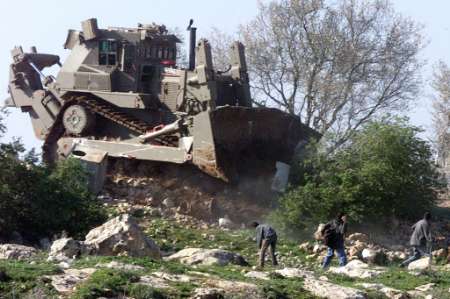
Amnesty International. The Israeli army is threatening to destroy the homes of Palestinian villagers in the Jordan Valley region of the West Bank. The villagers are facing increasing pressures as the army restricts their movement and their access to water.

In Humsa and Hadidiya, two hamlets in the north-east of the West Bank, the Israeli army is increasing its efforts to force more than 100 villagers, most of them children, out of the area.

The inhabitants of Hadidiya were forced to move from Hadidiya to Humsa, about one kilometre away, last April, after the Israeli army threatened to destroy their homes and animal pens. They are now, once again, being threatened with the destruction of their homes and further displacement, as on 29 May 2007 the Israeli army issued another order for them to leave the area "with immediate effect".

Since then, they live in fear that the army's bulldozers may come at any time and destroy their tents, shacks and animal pens. In the meantime they continue to be harassed by Israeli forces. They are denied access to water and their movements are increasingly restricted by military checkpoints and blockades that prevent them from using the main roads in the area.

The Israeli army has declared most of the Jordan Valley a "closed military area" from which the local Palestinian population is barred. However, Israeli settlements -- established in violation of international law -- continue to expand and Israeli settlers are allowed to move freely and use vast quantities of water.

While in Humsa and Hadidiya every single home is slated for destruction and the Palestinian villagers have to bring water for their basic needs from 20 kilometres away, Israeli settlements only a few hundreds of meters away, have well-watered gardens and swimming pools.

In a visit to the area in July 2007, an Amnesty International researcher witnessed the extremely difficult conditions in which the Palestinian villagers are forced to live, with no running water or electricity and no longer able to cultivate their land because they have no water to irrigate their crops. By contrast, in the Israeli settlements nearby sprinklers were wastefully watering the fields in the afternoon sun.

venerdì 20 luglio 2007

Power like the king of England

Amira Hass. Haaretz. 19/07/07. The Palestinians cannot forget that thousands of Israeli commanders and soldiers who killed women and children, broke hands and feet and defended the robbery of lands with their weapons, are walking around free. Had Olmert sincerely wanted to strengthen Abbas, he would at least have agreed to the request that Fatah representatives have been making for years: Demonstrate some degree of equality, release all those who were imprisoned for life for activity against the occupation, prior to the signing of the Oslo Accords. Release those who have been sitting for 20 and 30 years, and those whose dispatchers at the time are among the senior negotiators today. The failure to release them after 1994 was one of the important contributing factors to weakening the status of the PA and Fatah. But after all, the "gestures" are being made in the concept of Israeli supremacy, of throwing a few crumbs to Abbas in anticipation of his obedience and of a grade of "good behavior" befitting a loyal subject. When that is the plan, it is also a surefire recipe for weakening Abbas.

At the end of the week, 256 families will celebrate the release from prison of their dear ones, and mothers are already relieved that the manhunt for their wanted sons has ended. In the cities where the wanted men live, there is also a sense of relief: The armed men - particularly those from Fatah - prided themselves on their weapons in the context of internal power games. They endangered their own surroundings rather than the Israeli occupation. We can gauge the extent to which the gestures will strengthen Palestinian Authority Chairman Mahmoud Abbas not by the praise that Prime Minister Ehud Olmert is getting from U.S. President George W. Bush, but by how the gestures are received in Palestinian society.

The intensive public relations campaign regarding the "gestures" reinforces the Palestinians' understanding that Israel is buying its ability to continue with the policy of occupation at a bargain price. After all, it is not planning to return the land it robbed from every Palestinian. The network of roadblocks and separate roads - which is destroying the fabric of Palestinian society - will not be removed, and the angry soldier at the roadblock will not stop turning every simple trip into torture.

The Palestinians are sufficiently experienced to know that all the smiles being exchanged by Abbas and Olmert are not stopping the bulldozers, which continue to imprison them in enclaves among the growing settlement blocs. The declarations by Saeb Erekat about adhering to "a state within the 1967 borders" do not convince the public that a government led by the Palestinian Liberation Organization and Fatah will manage to do what it has not done since 1994: to fight against the Israeli project of occupation and colonization.

The concept of "amnesty" that is being used to describe the agreement to stop chasing wanted men demonstrates to what extent Israel is entrenched in its position of domination. According to the law, the president is allowed to pardon "criminals." According to the law, a "criminal" is someone who was tried and convicted. It's true that the late president Chaim Herzog pardoned leading members of the Shin Bet security service before they were tried for the murder of the hijackers of bus no. 300, after the majority opinion in the High Court of Justice ruled that the president of Israel has the same power to pardon as the king of England and the president of the United States.

But here it is a "pardon" of the Shin Bet and the army in the field. The ease with which the concept "pardon" was accepted in the media is additional proof of the sweeping approval that Israelis grant the Israel Defense Forces and its soldiers to act as prosecutor, judge and executioner. Is it any wonder that they are given the power of a king of England, to pardon before a trial?

Even the fate of the prisoners to be released in the context of the gestures had been sealed, even before they were tried in the big show called "the Israeli military court." A show, because the same military establishment that occupies and destroys and oppresses the civilian population is the body that decides that opposing the occupation (even by popular demonstrations and stone throwing) is a crime. Its judges are loyal to the interest of defending the occupier and the settler. The gesture of the prisoner release is therefore a very minor repair of a substantial legal flaw.

The Palestinians cannot forget that thousands of Israeli commanders and soldiers who killed women and children, broke hands and feet and defended the robbery of lands with their weapons, are walking around free. Had Olmert sincerely wanted to strengthen Abbas, he would at least have agreed to the request that Fatah representatives have been making for years: Demonstrate some degree of equality, release all those who were imprisoned for life for activity against the occupation, prior to the signing of the Oslo Accords. Release those who have been sitting for 20 and 30 years, and those whose dispatchers at the time are among the senior negotiators today. The failure to release them after 1994 was one of the important contributing factors to weakening the status of the PA and Fatah.

But after all, the "gestures" are being made in the concept of Israeli supremacy, of throwing a few crumbs to Abbas in anticipation of his obedience and of a grade of "good behavior" befitting a loyal subject. When that is the plan, it is also a surefire recipe for weakening Abbas.

http://www.haaretz.com/hasen/spages/883350.html

domenica 15 luglio 2007

Fatah men, including Zbeidi, turn in their guns in amnesty deal

Aluf Benn, Avi Issacharoff and Amos Harel, Haaretz Correspondents. 15/07/07. Scores of wanted Fatah militants in the West Bank have turned in their weapons, under an arrangement in which Israel will grant them effective amnesty as a gesture to Palestinian Authority Chairman Mahmoud Abbas. Most of the fugitive militants have signed documents that announced their resignation from the paramilitary organization and a promise to refrain from terrorism. As of Saturday night, nearly 150 of the 178 militants had signed the document. Scores of them had turned in their weapons by Sunday.

The Prime Minister's Office, apologizing for an earlier denial, acknowleged Sunday that Zacharia Zbeidi, head of the Fatah Tanzim militia in the West Bank city of Jenin and one of the highest-profile Fatah commanders on Israeli wanted lists in the territories, is among the nearly 200 militants to whom Israel plans to offer amnesty.

Abu Obeida, a Hamas spokesman in the Gaza Strip, harshly criticized Fatah for the amnesty agreement, saying it was meant to destroy the spirit of the resistance and allow Israel to focus on Hamas militants.

The offer to clear the Fatah men from the lists of wanted fugitives is part of a package of measures which Prime Minister Ehud Olmert is to formally present to Abbas in a meeting with the Palestinian Authority chairman on Monday. The gestures will also include a release of prisoners.

On Saturday, an Israeli official denied Palestinian reports that Zbeidi was on the list. But the Prime Minister's Office reversed course on Sunday morning, conceding that the reports were correct.

The effective amnesty would extend to nearly 75 percent of the wanted militants of the Fatah Al-Aqsa Martyrs' Brigades.

Israel refuses to grant similar status to several dozens of the remaining known members of the Al-Aqsa Martyrs' Brigades, and there are Palestinian demands that they also be included in the deal. The list of the wanted members of the Fatah's military wing was prepared by the Shin Bet and was compiled following meetings between Israeli officials and a PA security delegation headed by Ziad Habrich, commander of the Preventive Security in the West Bank.

Anger over plan to let Hawatmeh return
Meanwhile, rightists and families of victims of terror attacks have reacted with anger to reports quoting Israeli security sources as saying they are inclined to allow the head of the Democratic Front for the Liberation of Palestine, Nayef Hawatmeh, to enter the West Bank on Wednesday, as part of the package of goodwill gestures.

Minister of Strategic Threats Avigdor Lieberman was quoted Sunday as saying that the aging Hawatmeh, whose organization was responsible for the killings of many Israelis in attacks going back more than three decades, should be allowed to enter, and then immediately arrested.

Families of the victims said Sunday that under no circumstances should Hawatmeh be allowed to return. DFLP militants carried out an operation against the northern town of Ma'alot on May 15, 1974, in which 22 schoolchildren were killed.

But Deputy Defense Minister Matan Vilnai said Saturday that "We need to view the request of the PA Chairman regarding Hawatmeh's entry into the West Bank favorably, especially since it does not involve entry into Israel and it is for a limited period of time."

"Even though Hawatmeh dealt with terrorism in the past, under the current circumstances he is proving to be a person capable of contributing toward leading the Palestinians toward a more rational condition," Vilnai added.

At the scheduled Monday talks between Olmert and Abbas, a meeting which was orginally planned for Sunday, Israel will present the Palestinian leader with additional gestures, including entry permits to the West Bank for senior officials from the Popular and Democratic Fronts, as well as promises for lifting roadblocks in the West Bank - as soon as the necessary preparations are completed by the security forces.

"These are measures that we believe will contribute significantly to bolstering Abbas," a senior political source in Jerusalem said Saturday night. "They hold political risks for Olmert, but it is a reasonable risk."

The meeting between the two leaders will be held at the prime minister's official residence in Jerusalem. In the original planning, Olmert had been scheduled to visit Jericho, but that has been postponed. No other ministers will be included in the meeting with Abbas, but earlier, Olmert will hold preparatory meetings with Defense Minister Ehud Barak and Foreign Minister Tzipi Livni.

The list of prisoners that are slotted for release includes 250 names, most members of Fatah, and the rest from the Popular Front for the Liberation of Palestine (PFLP) and the Democratic Front (DFLP).

The adult prisoners scheduled for release have at least one year of their sentence left, while the minors have at least six months. Elderly and sick prisoners are also expected to be included.

"No once can claim that Israel is releasing prisoners that do not have significant portions of their sentence still to serve," a political source said.

A ministerial committee on the prisoners will meet Tuesday to approve the list, and initiate the process of releasing them, expected to take several days. Olmert would also like to gain the release of some of the veteran prisoners jailed before the Oslo Accords in 1993, as long as they were not involved in attacks that killed Israelis.

Referring to the PFLP, the DFLP, and other Marxist-Leninist offshoots of the PLO, the political source said that even though Israel is not certain what their views are on the internal power struggle between Fatah and Hamas, Israel would like to encourage them to support Abbas and the head of the PA's emergency government, Salem Fayad.

However, the General Secretary of the PFLP, Ahmed Sa'adat, who is in jail for his role in the October 2001 assassination of the leader of the Moledet party, Rehavam Ze'evi, is not on the list of prisoners to be released.

The effort to draw the various non-Islamist factions toward supporting Abbas is also behind Olmert's inclination to accede to the request of the PA chairman to allow the head of the DFLP, Hawatmeh, and other senior figures from his group and the PFLP to enter the West Bank.

Abbas would like these leading veteran figures in the PLO to participate in a conference that will offer his leadership and the Fayad government legitimacy. The gathering is expected to take place in the West Bank, and entry is likely to be allowed for a specific period of time.


The agreement with the Al-Aqsa fugitives includes four stages:

1. They will promise to refrain from terrorism and cut their links with the group.

2. They will spend a week in holding areas of the PA, where they will not be allowed to use cellular telephones or contact members of the group.

3. They will restrict their movements, for a three-month period, to the area where they reside.

4. After three months, they will be allowed to move freely in the West Bank.

"Our aim is to remove 180 persons from the list of targets of the Shin Bet, so that they can now focus on Hamas and Islamic Jihad," a political source said.

Hawatmeh likely to be granted entry

There are strong indications that Israel will allow DFLP leader Nayef Hawatmeh to enter the West Bank on Wednesday as part of the goodwill package toward Abbas.

http://www.haaretz.com/hasen/spages/881764.html

The Zionist entity will pardon Fatah men

Ezzedin ALQASSAM Brigades Information Office. 14/07/07. [textual] Palestinian security sources reported on the existence of a list of "178" alleged that they are chased by the occupation and all of them are from Al Aqsa Brigades activists. The Zionist entity intended to stop chasing them in one condition that they sign a promise under supervision of the Palestinian security services to stop any activities or operations against the Zionist entity.

Dayton government issued several decrees aimed to chase and arrest the resistance members. It arrested a large numbers of wanted men to the occupation forces in the late period.

The sources said that among the "wanted" named Zakaria Zubaidi, one Dahlan's men, and he is responsible for the disturbance and chaos operations in the West Bank.

The Zubaidi said he didn’t oppose the idea of resolving Al Aqsa Brigades and their integration into the security services. The price from the Zionist entity is to stop chasing them. He added that the Al Aqsa Brigades will not be an obstacle to any decision would be taken by the President Abbas, and Dayton government.

The other conditions are the chaser is to stay at the headquarters of the security authority of Dayton for a week, without leaving without any activities, and stay for a week in known place in the area "A".

It also included that after three months in the "A" areas, and not leave it to the "b" or other, and make sure stopping their military activities, the Zionist entity will allow them to move inside the Palestinian territories or travel abroad, according to the sources.


http://www.alqassam.ps/english/?action=showdetail&fid=554


Olmert's Latest Gesture: Conditional Pardon for 178 Terrorists

Hillel Fendel. IsraelNationalNews. Sunday, Jul. 15 '07 29 Tammuz 5767. Prime Minister Ehud Olmert has agreed to an arrangement whereby 178 wanted Fatah terrorists are granted amnesty, in exchange for their promise to stop terrorism. The 178 have already signed their commitment to cease engaging in terrorism against Israel.

The name of Zekarya Zubeidi, who has been wanted for many years for his terrorist activity against Israel, is on the list as well. The Prime Minister's Bureau clarified on Sunday morning that this was indeed the case. The Bureau even apologized for the "technical glitch" that led to the omission of his name in initial reports.

Representatives for Zubeidi signed this morning his commitment to stop terrorism against Israel.

Palestinian Authority sources say that many of the 178 will be eligible to receive up to 60,000 shekels for turning in their weapons. An M-16 rifle will net them 55,000-60,000 shekels, a Kalachnikov - 15,000 shekels, and a pistol between 12,000 and 24,000 shekels. The money is to come from the PA's coffers.

The PA will reissue weapons to many of the 178 who will join the PA's security forces.

The 178 terrorists will benefit from a trial period of three months in which they will not be arrested, unless Israel receives information that they are planning terrorism. If during the three months they do not engage in terrorism, they will be officially removed from the "wanted" list.

However, they apparently will not receive an official and irreversible pardon, such that if ever they return to terrorism, they will be liable to be tried on their previous crimes as well.

The Israel Law center (Shurat HaDin) has filed a petition with the High Court against the plan by Prime Minister Olmert to remove 178 Arab terrorists from the "wanted list."

The petition claims that the deal was made in secret with Palestinian Authority officials and ignores international law that requires Israel to bring to trial terrorists who have committed crimes against humanity.

Olmert also previously agreed to release 250 imprisoned terrorists, though their names have not yet been determined.

Reactions
Several Cabinet ministers are against some of Olmert's latest gestures. Strategic Affairs Minister Avigdor Lieberman (Yisrael Beiteinu) said the mass pardons are a "grave error." He explained that he is remaining in the government in order to "minimize the damage done" by the government.

Trade Minister Eli Yishai (Shas) said that he is against gestures of this nature to Abu Mazen, explaining that Abu Mazen must make more efforts to help himself instead of relying on Israel to prop him up.

Welfare Minister Yitzchak Herzog (Labor) said Israel has no choice but to make difficult concessions in order to strengthen the "moderate" elements in the PA.

The Legal Forum, a group of attorneys who lobbied for civil rights of Gush Katif residents, has called upon Justice Minister Daniel Friedmann to object to what it calls the "laundering of the murderers." Forum Director Nachi Eyal says, "The government has reached new heights in proving the truth of the Sages' dictum, 'Whoever is merciful to the cruel will end up being cruel to the merciful.' It was cruel to the youths in Amona and during the Disengagement, and is not closing their criminal files regarding their protests - and yet is now showing compassion to debased murderers. The message being given is an abuse of justice and the victory of the murderers over their victims."

In response to sharp criticism from the Likud for the amnesty plan, an official of the Prime Minister's office said Sunday, "The Likud has forgotten that in February, 2005 [then-ministers] Binyamin Netanyahu and Limor Livnat, both of the Likud, enthusiastically backed" moves to free Arab terrorists.