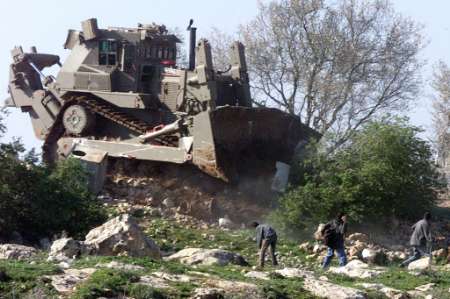
February 22, 2005 - The destruction of a seven-story house in a-Tur neighbourhood, in East Jerusalem. The building, which belonged to the Harhish and Qursh families, was demolished on 22 February 2005, on the grounds that it was built without a permit.
Photo credit: Kareem Jubran, B'TselemUruknet, 27/09/07, da MIFTAH, Tradotto da Gianluca Bifolchi (Tlaxcala). Il 10 Giugno 1967 il governo israeliano distrusse il quartiere marocchino nella Città Vecchia di Gerusalemme Est per rendere più facile l'accesso al Muro Occidentale. Dopo che l'esercito israeliano emise l'ordine di evacuazione per gli abitanti del quartiere due ore prima dell'inizio della demolizione, un ordine che non arrivò a tutti, 135 case furono demolite insieme a due moschee e ad altri siti. 650 residenti rimasero senza casa, e molti altri morirono sotto il crollo della propria casa. Questa demolizione non fu la prima nei Territori occupati, ma fu quella che segnò l'inizio di una lunga lotta contro la demolizione illegale di case da parte delle forze di occupazione israeliane.
Dal 1967 nei territori occupati palestinesi sono state demolite 18.000 case per tre principali ragioni: la punizione collettiva, e le ragioni cosiddette operative o amministrative.
La demolizione ebbe inizio prima del 1967 da parte del mandato Britannico per espellere i Palestinesi dalle loro case. Segue una breve storia della demolizione di case in Palestina:
- Anni 30: L'amministrazione britannica in Palestina usa la demolizione di case come mezzo punitivo contro le proteste indigene verso il dominio britannico.
- 1936-1939: le autorità britanniche demoliscono più di 5.000 case palestinesi.
- 1948: il nuovo stato d'Israele inizia a demolire le case dei rifugiati palestinesi per impedire il loro ritorno. Più di 125.000 case, alcune delle quali danneggiate durante la guerra, vennero sistematicamente distrutte in un processo a cui ci si riferiva come "cleaning up the national views" ["repulisti delle opinioni nazionali" -- ndt].
- Anni 50: Israele espelle i Palestinesi dalle aree di frontiera e dai villaggi dove parte della popolazione palestinese era rimasta dopo la guerra, e demolisce le case palestinesi.
- 1967: la distruzione di blocchi abitativi durante la guerra incluse 373 case a Imwas, 535 a Yalu, 550 case a Beit Nuba, circa 135 case nel quartiere marocchino della Città Vecchia di Gerusalemme, 1000 case a Qalqilya, in aggiunta a migliaia di case a Beit Marsam, Beit Awa, Jiftlik, e al-Burj, come anche nei campi profughi dell'area di Gerico e nella Striscia di Gaza.
- Anni 70 e 80: Israele demolisce più di 10.000 rifugi per i profughi della Striscia di Gaza per creare il cosiddetto corridoio di sicurezza tra il sud della Striscia di Gaza e il Sinai, e per ampliare le strade usate dalle pattuglie dell'esercito israeliano nei campi profughi. Le demolizioni erano anche parte di una campagna per mandare via dai campi con la forza i rifugiati.
- 1993-2000: Israele demolisce più di 1000 case nei territori occupati palestinesi.
- 2003: Israele continua a demolire case palestinesi all'interno d'Israele. Le demolizioni delle case dei Beduini nel Naqab (Negev) aumentano di otto volte. Più di 100 case vengono demolite. Altre 280 case vengono distrutte nella Galilea e nel Triangolo. In totale vengono distrutte più di 500 case. Gli ordini di demolizione finora sono stati di 12.000 in Galilea e circa 30.000 nel Negev.
- La demolizione di case procede.
Pretesti con cui viene giustificata la demolizione di case
Punizione collettiva:
Il governo israeliano usa la demolizione di case come punizione collettiva in risposta ad attacchi a Israele; le famiglie degli attaccanti o le persone sospettate di aver condotto attacchi, come anche i loro vicini, o in qualche caso l'intero quartiere, sono soggetti a questa violazione dei diritti umani. In base alla Quarta Convenzione di Ginevra alla potenza occupante è proibito distruggere proprietà o ricorrere alle punizioni collettive. L'Articolo 53 prevede: "Ogni distruzione da parte della potenza occupante di proprietà appartententi a gruppi o persone è proibita". Secondo l'organizzazione per i diritti umani israeliana B'Tselem il 47% delle case demolite come punizione collettiva non appartenevano agli attentatori o ai sospetti attentatori, ma erano solo case adiacenti alle loro. Inoltre, solo il 3% di tutti gli occupanti delle case demolite erano stati preventivamente avvertiti che le loro case e quelle adiacenti sarebbero state abbattute.
Prima che la politica di punizione collettiva per mezzo della demolizione di case venisse ripresa durante la seconda Intifada (al-Aqsa), le demolizioni venivano compiute solo dopo l'emissione di un ordine militare. In base alla legge israeliana l'ordine di demolizione va notificato alla famiglia e la famiglia può fare appello al comando militare entro 48 ore. Anche se l'appello è respinto, alla famiglia deve essere permesso di rivolgersi all'Alta Corte prima che la casa sia demolita. In realtà, questo non accade quasi mai. Durante l'attuale Intifada, Israele ha considerato la demolizione di case come un imperativo militare, per cui la maggior parte delle demolizioni di case hanno avuto luogo di notte, senza alcun avviso preventivo o ordine di demolizione.
Operazioni militari:
La seconda ragione fornita dal governo israeliano per la demolizione di case è di tipo operativo e prese piede durante le operazioni militari chiamate "operazioni di pulizia". In base alle leggi umanitarie internazionali, la distruzione di proprietà durante il combattimento non è illegale in quanto tale. La distruzione è proibita a meno che non vi sia una necessità assoluta. E' stato comunque osservato che le operazioni su larga scala di demolizione di case civili nel nome di necessità militari a seguito di attacchi contro gli Israeliani suggeriscono qualcos'altro. Gaza, più che qualsiasi altro posto in Palestina, è diventata il teatro di queste azioni e false giustificazioni. Miloon Khotari, un'osservatore speciale delle Nazioni Unite, parlando a Diakonia in reazione all'attacco di Israele a Beit Hanoun l'8 Novembre 2006, ha detto: "Dal 25 Giugno 2006, data della più recente incursione israeliana nella Striscia di Gaza, ho continuato a ricevere rapporti allarmanti sui deliberati attacchi da parte delle forze di Israele risultanti in distruzione di case, proprietà civili e infrastrutture nella Striscia di Gaza, e creato insicurezza e traumi pricologici. Such acts have a devastating impact on civilians particularly, women and children, and create insecurity and psychological trauma. Pertanto, questi sfratti forzati e ingiustificabili distruzioni costituiscono violazioni del diritto internazionale in materia di diritti umani, guerra e norme umanitarie. Il diritto internazionale proibisce severamente la distruzione di proprietà pubblica o privata nel corso di operazioni militari, quando non è assolutamente necessario". Dall'inizio della sollevazione al 2004, 14.852 palestinesi sono rimasti senza tetto per le operazioni di Israele.
Politiche amministrative:
La giustificazione più frequente per la demolizione di case a Gerusalemme Est e all'interno di Israele ha a che fare con ragioni amministrative. Il governo Israeliano demolisce case nell'area C (Aree della Palestina sotto controllo civile e militare israeliano) per la mancanza di permessi di costruzione anche se a Gerusalemme Est e all'interno d'Israele è quasi impossibile per i palestinesi ottenere permessi di costruzione. Il colonnello Shlomo Politus, consigliere legale dell'esercito israeliano, ha detto al parlamento israeliano nel giugno del 2003 che: "... non ci sono più permessi di costruzione per i Palestinesi", e il portavoce dell'esercito israeliano ha detto nel 1999 ai delegati di Amnesty International: "La nostra politica è di non rilasciare licenze per l'area C [della West Bank]". Le case vengono demolite perché Israele vuole espandere gli insediamenti israeliani nella West Bank, e creare fatti permanenti sul terreno. Secondo B'Tselem le case palestinesi vengono demolite in base a questa giustificazione per tre esigenze:
- Costruzione di bypass stradali: servono a permettere il movimento dei coloni e delle forze militari che proteggono gli insediamenti. Le case vicine a un bypass stradale esistente o da costruire sono destinate alla demolizione.
- Evacuazione dei Palestinesi dalle aree adiacenti agli insediamenti israeliani: le autorità israeliane hanno sempre distrutto strutture palestinesi percepite come ostacoli allo stabilimento o all'espansione di insediamenti israeliani. La prossimità delle case agli insediamenti ovviamente non viene presentata come ragione ufficiale per la loro demolizione.
- Per impedire trasferimenti di terra ai Palestinesi: Israele demolisce le case in aree su terra che vuole riservare a se stesso negli accordi per lo status finale. Perseguendo una simile politica, Israele sta impedendo all'Autorità Palestinese di richiedere quelle terre in base alla presenza di residenti palestinesi. La demolizione di case è un comodo espediente per l'espulsione della gente da quelle aree.
Le forze israeliane stanno ancora distruggendo case in grande numero dietro pretesti e false giustificazioni per servire lo scopo generale dello stato sionista di sradicare e scacciare quanti più Palestinesi possibile dalla loro terra, e costruire ancor più insediamenti illegali. Secondo recenti statistiche di B'Tselem, negli ultimi due anni (2006-2007) solo nella West Bank 165 case sono state demolite lasciando 724 persone senza tetto, e tra il 2004-2005 solo a Gerusalemme Est 300 case sono state distrutte lasciando 939 persone senza tetto. La demolizione di case ha un duro impatto sul popolo palestinese, colpendo l'economia e l'agricoltura e causando gravi traumi ai bambini, alle donne e agli uomini vittime di questo crimine di guerra.
Fonti:
Amnesty International
B'Tselem
Diakonia
Electronic Intifada - A history of destruction Report, BADIL, May 18 2004
ICAHD
POICA
Articolo originale pubblicato il 24 settembre 2007
http://www.miftah.org/Display.cfm?DocId=14882&CategoryId=4
Tradotto dall'inglese da Gianluca Bifolchi, un membro di Tlaxcala ( www.tlaxcala.es ), la rete di traduttori per la diversità linguistica. Questa traduzione è in Copyleft per ogni uso non-commerciale : è liberamente riproducibile, a condizione di rispettarne l'integrità e di menzionarne l'autore e la fonte.