Palestine News Agency, WAFA , reported that Israeli forces invaded the city, storming several neighborhoods, besieging homes and ransacking them. Some items of property were also confiscated.
The abducted Palestinians were later identified as: Ala Al Far, Abed Al Rahman Kasho'wa and Mohammad Abu Mariam. They have been transferred to an unidentified detention center.
In the southern West Bank city of Hebron, during a military operation in the area, Israeli forces kidnapped one Palestinian, summoning another to Israeli Intelligence.
WAFA sources reported that the kidnapped man is Shadi Abu Tu'ma. He was taken from his home in the Al Fuwar refugee camp while it was being searched by the army.
Israeli sources reported that military operations around the Al Fuwar refugee camp have been stepped up from Tuesday night when the area was closed and civilian movement prohibited.
In a separate operation, the Israeli army abducted two Palestinians from the southern West Bank city of Bethlehem.
Security sources reported that a large force of Israeli soldiers backed by reinforcements invaded the city center and the village of Nahleen tightening security measures in the area.
The same sources reported that troops besieged Palestinians houses, kidnapping two men who were later named as: Samer Hijazi, 28 and Ghassan Najajra, 24. Troops moved them to an unidentified Israeli detention center.
mercoledì 19 settembre 2007
Israeli forces kidnap 3 Palestinians from Qalqilia, one from Hebron, two from Bethlehem


For the second day the army continues to attack Nablus, killing one

Ameen Abu Wardah & Ghassan Bannoura & Nisreen Qumsieh ghassanb at imemc dot org, IMEMC, 19/09/07. Israeli forces continued, on Wednesday, the military operation in El-Ein Beit Al Ma refugee camp in the northern West Bank city of Nablus for the second consecutive day. Israeli soldiers shot and killed a disabled Palestinian man in his home during the early hours of Wednesday morning. The man, Adeeb Al Damouny, received serious injuries to his head and neck.
Eyewitnesses reported that he was shot at 7am and died of his wounds half an hour later. Al Damouny
see also: B'tselem: Qalqiliya, Extensive destruction of houses and gross humiliation of residents, Demolition for alleged Military Purpose
is thought to be the second Palestinian killed by the Israeli army in its continuing operation against the El –Ein Beit Al Ma refugee camp. Witnesses added that the military is still bringing in reinforcements through the Beit Iba and Huwarra checkpoints. According to Israeli sources, this military offensive is intended to target a group of resistance men who were planning attacks against Israeli targets.
The military offensive started on Tuesday at dawn, after storming the camp, Israeli troops commandeered several residential buildings, using their roofs as military outposts, and moved from house-to-house by destroying the walls dividing separate homes. Eyewitnesses stated that armed clashes broke out between Palestinian resistance fighters and Israeli forces as the troops besieged several homes in the camp.
Dr. Ghassan Hamdan, Director of the Palestinian Medical Relief Services in Nablus, told IMEMC on Tuesday that one young Palestinian man was killed when, after being shot, soldiers refused to allow ambulances to enter the camp. The man subsequently bled to death. Dr. Hamdan added that Israel soldiers opened fire on and injured a member of the medical services as he transported the wounded from the area.
Witnesses to the invasion on Tuesday also told IMEMC that the military used several Palestinian youths as human shields during the operation, a practice deemed illegal under international and Israeli law. Um Ahmad spoke to IMEMC.
"The army surrounded the camp entirely, and then invaded through people's homes, either demolishing them with bulldozers or breaking in. Soldiers forced local civilians to act as human shields. While families in the camp were not allowed to open their own doors to leave their homes, the army ordered the human shields to do so."
Troops continued today to commandeer several homes, using the rooftops as military outposts, and moving from house-to-house by destroying dividing walls.

Nablus: Cruel Deleuzian Approach Used by the IOF
Local sources in the camp expressed their fear that the violent attacks by the Israeli forces were a response to the death of an Israeli soldier on Tuesday. The soldier was killed during the Israeli raid on the camp on Tuesday, as Palestinian resistance fighters clashed with invading Israeli force Israeli forces.
At least seven Palestinian from several parts of El Ein Beit Al Ma refugee camp were kidnapped so far by the military, local sources confermened that the operation is till going.
Israel labels Gaza 'enemy entity'

Abu Mazen a Bush: «Niente vertice senza garanzie»
Meccanismo di applicazione degli accordi? Visione di Bush? Stato di Palestina? Quella che Erekat ha in testa è fantapolitica, un sogno che fa a pugni con una realtà ben diversa che lui non riesce o finge di non vedere. E a spiegarlo è stato ieri l'analista israeliano Shmuel Sandler, del Centro strategico «Begin-Sadat» di Tel Aviv. «Mettiamo da parte l'idea di una svolta a Washington, perché è impossibile - ha detto - Israele non ha fiducia in Abu Mazen. Il presidente palestinese non è in grado di controllare l'Anp, ha un potere limitato e quindi per quale motivo (Olmert) dovrebbe affidarsi a lui».
Quello che Olmert vuole è un Abu Mazen alla testa dei suoi servizi di sicurezza lanciato alla caccia di Hamas e di ogni forma di resistenza all'occupazione militare. Ma il presidente palestinese non può farlo e questo lo rende «inidoneo» per il ruolo che Usa e Israele vorrebbero affidargli. Shmuel Sandler è stato altrettanto netto nel dire che l'obiettivo reale degli americani «non è quello di fare progressi al tavolo israelo-palestinese ma invece di mettere insieme Israele con un certo numero di paesi arabi per dimostrare che il mondo arabo moderato teme di più l'Iran che lo stato ebraico». Per Israele, ha aggiunto, «solo la presenza (all'incontro) di paesi come l'Arabia saudita basterebbe a garantire il successo dell'iniziativa Usa».
L'intento americano è talmente plateale da spingere l'Arabia saudita, che pure è uno degli alleati più fedeli di Bush, a mostrarsi esitante. Riyadh sponsorizza il piano arabo approvato al vertice dello scorso marzo (pace in cambio del ritiro dello stato ebraico dai territori arabi e palestinesi che occupa dal 1967) e quindi i regnanti sauditi chiedono qualche progresso al tavolo israelo-palestinese in modo da apparire più disinvolti in prima fila nel processo di normalizzazione dei rapporti con Israele.
La scorsa settimana il ministro degli esteri saudita, Saud al Faisal, ha avvertito che il suo paese non sarà rappresentato a Washington se non verranno affrontate «le questioni principali» e, nonostante l'ostilità che nutre verso Damasco, si è riferito anche al Golan siriano occupato da Israele quaranta anni fa.
Families cannot sue firm for Israel deaths

Ed Pilkington, Guardian, 19/09/07. The parents of Rachel Corrie, the US peace activist who was crushed to death four years ago in the then Israeli-occupied Gaza as she was protesting against the demolition of Palestinian homes, have been refused permission to sue the company which made the bulldozer that killed her. A panel of three judges argued that the legal action could not have gone to trial "without implicitly questioning, and even condemning, United States foreign policy towards Israel".
Corrie was killed on March 16 2003 by a 60-tonne Caterpillar D9 bulldozer in Rafah, Gaza, as she was attempting to prevent the home of a Palestinian pharmacist being razed. She was wearing a fluorescent orange vest and according to witnesses in full view of the bulldozer operator.
Her parents, along with four Palestinian families left bereaved in actions involving similar bulldozers, began legal proceedings in 2005. Lawyers acting for the families alleged that Caterpillar had sold the machines to the Israeli government on a commercial basis. The firm knew, or should have known, that the equipment was going to be used to demolish homes in violation of international law in incidents that at times led to the deaths of innocent people, they said.
Caterpillar, with supporting evidence from the US government, argued that the machines had been paid for by the Pentagon as part of the government's military aid to Israel.
Cindy Corrie, Rachel's mother, told the Guardian that she was extremely disappointed by the court's decision. "Clearly there were war crimes committed here and we will continue to challenge Caterpillar and the US government."
Mariah LaHood, a lawyer with the Centre for Constitutional Rights who acted on the case, questioned the role the US government played in giving evidence favourable to Caterpillar. "Isn't there a responsibility to permit justice to be sought on behalf of a US citizen killed in a foreign country?"
Caterpillar said in a statement that it was pleased with the ruling. "We are hopeful it will bring to an end what has been a lengthy but fair judicial process."
Corrie's story received widespread attention at the time of her death. Her emails home describing her experiences as a peace activist in the run-up to her death were turned into a stage play, My Name is Rachel Corrie, coedited by Alan Rickman and the Guardian journalist Katharine Viner.
Among the other families included in the legal suit were that of Mahmoud Omar al-Shu'bi from Nablus in the West Bank. In April 2002 a D9 bulldozer destroyed his home in the middle of the night in an action by the IDF, allegedly without warning. His father Umar, sisters Fatima and Abir, brother Samir and sister-in-law Nabila who was pregnant, as well as their three children aged four , seven and nine, were all killed.
The sale of Caterpillar equipment to Israel caused controversy within the Church of England after the synod voted last year to disinvest from firms profiting from Israel's occupation of Palestinian territory. However, it later decided to keep its shares in the company.
The Palestinian Mandela
Uri Avnery, Gush Shalom, 15/09/07. SOME SEE Marwan Barghouti as the Palestinian Nelson Mandela.
In appearances, the two are very different, both physically and in temperament. But they have much in common.
Both became national heroes behind prison bars. Both were convicted of terrorism. Both supported violent struggle. Mandela supported the 1961 decision of the National African Congress to start an armed struggle against the racist government (but not against the white civilians). He remained in prison for 28 years and refused to buy his freedom by signing a statement denouncing "terrorism". Marwan supported the armed struggle of Fatah's Tanzim organization and has been sentenced to several life terms.
But both were in favor of peace and reconciliation, even before going to prison. I saw Barghouti for the first time in 1997, when he joined a Gush Shalom demonstration in Harbata, the village neighboring Bil'in, against the building of the Modiin-Illit settlement that was just starting. Five years later, during his trial, we demonstrated in the courthouse under the slogan "Barghouti to the negotiating table, not to prison!"
LAST WEEK we visited Marwan's family in Ramallah.
I had met Fadwa Barghouti for the first time at Yasser Arafat's funeral. Her face was wet with tears. We were crowded among the multitude of mourners, the din was ear-splitting and we could not exchange more than a few words.
This time she was calm and composed. She laughed only when she heard that Teddy Katz, a Gush activist who took part in the meeting, had sacrificed a toenail for Marwan: during our protest in court we were violently attacked by the guards and one of them stamped his heavy boot on Teddy's sandaled foot.
Fadwa Barghouti is a lawyer by profession, a mother of four (three sons, one daughter). The oldest, Kassem, has already been in prison for half a year without trial. She is a dark-blond woman ("All the family members, except Marwan, are blond," she explained, adding with a rare smile: "Perhaps because of the Crusaders.")
The Barghoutis are a large Hamula (extended family), inhabiting six villages near Bir Zeit. Dr. Mustapha Barghouti, the physician who is well-known for his human rights activities, is a distant relative. Marwan and Fadwa - also a Barghouti by birth - were born in Kobar village.
Marwan Barghouti's family lives in a nice apartment in a co-dominion building. On my way there, I noticed the widespread building activity in Ramallah - it looks as if new buildings are going on every corner, including commercial high-rises.
Near the door of the apartment, an embroidered sign says in English: "Welcome to my home". The apartment itself is decorated with many images of Marwan Barghouti, including a large drawing inspired by the famous photo that shows him in court, raising his handcuffed arms above his head like a victorious boxer. When the security forces were searching for him, they took possession of the apartment for three days and raised a large Israeli flag on the balcony.
Fadwa Barghouti is one of the few persons allowed to visit him. Not as a lawyer, but only as "close family" - a definition that includes parents, spouses, siblings and children under 16.
At present, there are about 11 thousand Palestinian prisoners in Israeli jails. Assuming an average of five "close family" members, that makes 55 thousand potential visitors. Those, too, need a permit for each visit, and many are rejected for "security reasons". Fadwa also needs a permit every time, which allows her only to go directly to the prison and back, without stopping anywhere in Israel. The three sons are not allowed to meet their father anymore, since all three have passed the age of 16. Only the young daughter can visit him.
THERE IS hardly anyone who is more popular with the Palestinian public than Marwan Barghouti. In this, too, he resembles Mandela while in prison.
It is difficult to explain the source of this authority. It does not emanate from his high position in Fatah, since the movement is disorganized and there is hardly any clear hierarchy. From the time when he was a simple activist in his village, he rose in the organization by sheer force of personality. It is that mysterious thing called charisma. He radiates a quiet authority that does not depend on outward signs.
The war of vilification between Fatah and Hamas does not touch him. Hamas takes care not to attack him. On the contrary, when they submitted a list of prisoners in exchange for the captured soldier Gilad Shalit, Marwan Barghouti, in spite of his being a Fatah leader, headed the list.
It was he who, together with the imprisoned leaders of the other organizations, composed the famous "prisoners' document", which called for national unity. All Palestinian factions accepted the document. Thus the "Mecca agreement", which created the (short-lived) Government of National Unity, was born. Before it was signed by the parties, urgent messengers were sent to Marwan, in order to obtain his agreement. Only when this was given, did the signing take place.
I TOOK advantage of my visit in Ramallah in order to get an impression of the opinions of Barghouti's adherents. They try not to be swept away by the climate of mutual hate that now governs the leaderships of the two sides.
Some of them strenuously oppose the Hamas actions in Gaza, but try to understand the causes. According to them, the Hamas people, unlike many of the Fatah leaders, have never been in the West and have not attended foreign universities. Their mental world was formed by the religious education system. Their horizon is narrow. The complex international situation, in which the Palestinian national movement is compelled to operate, is quite foreign to them.
In the last elections, my interlocutors explained, Hamas hoped to gain 35-40% of the votes and thus gain legitimacy for their movement. They were totally surprised when they got the majority. They did not know what to do with it. They had no ready plans. It was a mistake on their part to set up a government composed entirely of Hamas members, instead of insisting on a unity government. They misjudged the international and Israeli reaction.
Marwan's adherents do not shrink back from self-criticism. In their opinion, Fatah is not without blame for what happened in Gaza. The movement did not act wisely when they arrested and humiliated the Hamas leaders. For example, they arrested Mahmoud al-Zahar, the foreign minister in the Hamas government, humiliated him, cut off his beard and called him by the name of a famous Egyptian female dancer. This is one of the reasons for the burning hatred al-Zahar and his colleagues hold for Fatah.
I did not hear denials of the Hamas contention, that Muhammad Dahlan, the former confidant and security advisor of Mahmoud Abbas, conspired with the Americans to carry out a military coup in the Gaza Strip. Dahlan, the darling of the Americans (and the Israelis) believed, according to them, that, if provided with arms and money, he could take over Gaza. That pushed Hamas to the decision to act first and carry out an armed takeover themselves. Since the majority of the public supported Hamas and detested Dahlan, who was accused of collaborating with the occupation, Hamas easily won. Dahlan has now been sent into exile by Abbas.
Hamas' center of gravity is in the Gaza Strip. That is the problem of Khaled Mashal, the Hamas leader who resides in Damascus. Unlike his two deputies, he has no roots in Gaza. That's why he needs money to reinforce his standing there. He gets it from Iran.
(I would have liked to give some impressions here of the Hamas point of view, but it is quite impossible to enter the Gaza Strip, while our Hamas interlocutors in East Jerusalem have all been sent to prison.)
HOW WILL the Palestinians get out of this bind? How can they reestablish a national leadership that will be accepted by all parts of the people in the West Bank and the Gaza Strip, able to lead the national struggle and make peace with Israel, when peace becomes possible??
Bargouti's followers believe that at the right time, when Israel comes to the conclusion that it needs peace, he will be released from prison and play a central role in the reconciliation - much as Mandela was released from prison in South Africa when the white government came to the conclusion that the Apartheid regime could not be sustained anymore. I have no doubt that In order to bring such a situation about, the Israeli peace forces must start a big public campaign for Barghouti's release.
What will happen in the meantime?
There is hardly anyone on the Palestinian side who believes that Ehud Olmert will conclude a peace agreement and implement it. Hardly anyone believes that anything will come out of the "international meeting" that is supposed to take place in November. The Palestinians believe that it is a bone thrown by President Bush to Condoleezza Rice, whose standing has been dropping dramatically.
And if that has no results?
"There is no vacuum," one of the Fatah leaders told me, "If the efforts of President Abbas do not bear fruit, there will be another explosion, like the intifada after the failure of Camp David."
How is that possible, after the Fatah activists have turned over their arms and foresworn violence? "A new generation will arise," my interlocutor said, "As has happened before - one age-group gets tired and its place is taken by the next one. If the occupation does not come to an end and there is no peace, a peace that will enable the members of this generation to turn to the universities, to family, work and business, a new intifada will surely break out."
To achieve peace, the Palestinians need national unity, much as the Israelis need a consensus for withdrawal. The man who symbolizes the hope for unity among the Palestinians is sitting now in Hasharon jail.
martedì 18 settembre 2007
Village Invasion Forces Family to Live locked inside a Room on the Ground Floor
ISM, 18/09/07. Four days ago, the Israeli army invaded the town of Deir Istiya (Salfit district). They said they were there to catch militants- but what they did was break apart the gate to the village school and harass the people inside the town. The IOF have occupied a house in the village for the past four days. They have locked the upper floors of the house, leaving the family in the bottom floor. The family's belongings, including the children's schoolbooks, that were upstairs at the time of the occupation, remain locked upstairs. The soldiers come and go as they please, never telling the family when they are coming. When they do arrive, the family is locked inside a room on the ground floor for the duration of the soldiers' 'visit'.

The local villagers have also complained of harassment by the soldiers. They say they have been targeted with tear gas and sound bombs. They also feel afraid to walk the village streets as hummers and jeeps rush through at any hour.

The soldiers have said they will stay another week. This situation is creating unacceptable human consequences in the lives of the villagers there, especially of the family living directly under occupation.

For more information call the ISM Media Office at:
02-2971824 or 0599943157


--~--~---------~--~----~------------~-------~--~----~
The International Solidarity Movement (ISM) is a Palestinian-led  non-violent resistance movement committed to ending Israel's illegal occupation of Palestinian land.  We call for full compliance with all relevant UN resolutions and international law.

For specific media inquires such as interview requests, photo usage, etc. please email the ISM Media Office at media@palsolidarity.org
Heavy fighting in Al-'Ain Refugee camp. Palestinian and Israelian fatalities
ISM, 18/09/07. Last night saw heavy fighting in Al-'Ain Refugee camp (Nablus) between Palestinian fighters and the Israeli Occupation Forces (IOF). At least one Palestinian youth has died, with others wounded. One Israeli soldier also died, with others wounded. Human rights workers went to the camp with medial teams to assist the wounded. They reported being fired upon by IOF soldiers while inside the ambulance. When they left the ambulance, they were not allowed inside the camp. The soldiers confiscated the keys to the ambulance, preventing it from moving. The IOF have also physically attacked several journalists and fired tear gas at journalists and medical relief workers.

Inside the camp, there are reports of tear gas, rubber bullets, and sound bombs all being fired onto rooftops at youth throwing stones.

A 17-year-old Palestinian boy was dragged by the IOF out of the camp to the roadblock.  He was put in an ambulance as the IOF checked IDs of all ambulance workers.  After some time, the IOF soldiers brought an army medic to check if the boy was still alive.  After he showed signs of life, the ambulance was allowed to leave and seek medical care for him.  However, the other medical relief teams are still unable to enter the camp or get those wounded inside out.

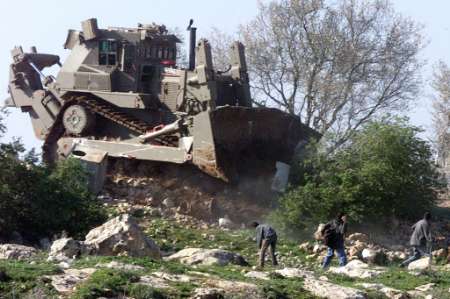
Curfew has been imposed on the camp and with no human rights groups permitted to enter, people are rightly worried about the conditions inside. Human rights workers still attempting to enter the camp have reported the a bulldozer has been driven into the camp, signaling an intention to demolish homes.

For more information call the ISM Media Office at:
02-2971824 or 0599943157
IRAQ-SYRIA: Iraqis stream into Syria ahead of visa clampdown
OPT: UN moves to counter deteriorating Gaza education levels
During the second semester of 2007, UNRWA hired over 1,500 new teachers to assist students in grades 1-3.
A further 2,000 UNRWA teachers were mobilised to implement the "Summer Learning" programme to teach students who failed Arabic or mathematics.
However, due to the turmoil Gaza has undergone in the first half of 2007, it is too early to predict the success of the programmes, UNRWA said.
| More on ecuation in OPT |
 Ban on truckloads of paper set to hit Gaza schools Ban on truckloads of paper set to hit Gaza schools |
| Poverty driving Palestinian children onto the streets |
| Gaza violence shuts schools |
| Teachers strike keeps children at home |
"School attendance has been seriously disrupted due to inter-factional fighting, repeated military raids and unprecedented poverty, where children come to school hungry and unable to concentrate," said Ging.
"If the present situation continues, poverty among Palestinian refugees in Gaza will soon reach 'unconscionable levels'," Karen AbuZayd, UNRWA's commissioner-general, recently said in Cairo.
UNRWA's 213 schools in Gaza educate some 197,000 students, all registered refugees. However, overcrowding has become a problem.
Building project
The agency is now hoping to build 160 more schools in order to abolish a two-shift system designed to address the overcrowding, but says doing so will require an increase in funding for its education programmes.
 School attendance has been seriously disrupted due to inter-factional fighting, repeated military raids and unprecedented poverty, where children come to school hungry and unable to concentrate. School attendance has been seriously disrupted due to inter-factional fighting, repeated military raids and unprecedented poverty, where children come to school hungry and unable to concentrate. |
The two or double shift system involves two different schools using the same facility on two different shifts, one in the morning and one in the afternoon.
"The new programme will cost millions of dollars more than our current budget, which for education is US$90 million a year," Ging said.
However, money is not the only impediment. Since the June takeover of Gaza by the Islamic movement Hamas, crossings into the enclave remain sealed for raw materials and UNRWA cannot import cement and similar products for building projects.
For now, the agency will reduce the size of classes to at most 30 students in the preparatory boys' schools and introduce two additional classes per week in both Arabic and mathematics, as UNRWA considers them building block subjects.
UNRWA said it also plans to work with its current teachers to improve the levels of instruction.
Overcrowding
In Palestinian Authority (PA) schools in Gaza during 2005 and 2006 the failure rate remained fairly static at only 2.9 percent for students from grades 4-11. However, this is due to regulations that allow only 5 percent of children to fail.
"Due to the chronic overcrowding of classes, the shortage of schools and the limited educational funds available, if a higher number of students were failed we would be unable to cope logistically as there would be no places left for new students," Haifa Fahmi El-Agha, the Education Ministry director-general of education in the Gaza Strip, told IRIN.
I nuovi israeliani? Da Asia e Africa
Diciamolo francamente: non sono tempi di vacche grasse, questi, per l´immigrazione in Israele, uno dei pilastri su cui si basava, ieri, il progetto sionista ed, oggi, la bilancia demografica dello Stato ebraico. L´anno appena concluso ha confermato il declino degli arrivi, 18.753 nel 2006-2007 contro i 20.050 del 2005-2006. Ma, soprattutto, sono di più quelli che emigrano, 30 mila lo scorso anno, la maggioranza dei quali giovani laureati, tecnici, scienziati in cerca di migliori opportunità all´estero. Fuga dei cervelli.
Ma ecco che, a riequilibrare parzialmente questi dati poco edificanti, si scopre che, secondo il Ministero dell´Interno, a decine di migliaia, e letteralmente dai quattro angoli della terra, desiderano essere riconosciuti come ebrei per poter emigrare in Israele. Il titolo, per così dire, che molti presentano è una lontana e tutta da verificare discendenza con le cosiddette Tribù perdute. E qui basti dire che le leggende sulle Tribù scomparse risalgono alla morte di Re Salomone (930 a. c.) quando il regno d´Israele fu diviso in Regno del Nord, che comprendeva 10 tribù (Ruben, Simone, Asher, Gad, Zebulon, Efraim, Manasse, Dan, Naftali, Issachar) ed il regno del Sud, con due sole tribù, quelle di Giuda e di Beniamino. Il regno del Nord fu conquistato e distrutto dagli Assiri nel 722 a. C. e la sua popolazione esiliata e dispersa nei territori dell´impero. Mentre gli appartenenti alle due tribù del regno del Sud subirono una sorte migliore: furono esiliati dai Babilonesi ma Ciro il Grande, fondatore dell´Impero persiano, ne permise il ritorno. Gli ebrei di oggi (detti anche giudei) sono in gran parte discendenti delle tribù di Giuda e Beniamino, regno del Sud. Ma chi sono questi potenziali candidati ad usufruire della legge del ritorno?
Per quanto riguarda l´Africa, essi provengono dalla Nigeria, dove alcune migliaia di membri della tribù Ibo rivendica di discendere dalla Tribù perduta di Gad, al Sud Africa, dove 70 mila appartenenti alla tribù Lemba dichiara di avere tratti genetici simili alla stirpe sacerdotale dei Cohaim. Dall´Uganda, dove 600 mila Abayudaya (qualche traccia nel nome?) hanno mantenuto tradizioni ebraiche negli ultimi 90 anni, all´Etiopia dove si sono fatti avanti 15 mila Falashmura, discendenti degli ebrei etiopi (Falashà, già emigrati in Israele negli anni ‘80) convertiti al cristianesimo.
Ma richieste di vagliare l´eventuale discendenza ebraica vengono anche dall´India (i cosiddetti figli di Menashe), dalla Cina e dal Sud America, dove, a fronte della sparuta comunità di Iquitos, in Perù, consistente solo in poche centinaia di persone, cominciano a farsi avanti i discendenti dei marrani, (ebrei costretti a convertirsi al cristianesimo) del Brasile, da un milione a dieci milioni. Senza tralasciare l´Europa (marrani spagnoli e portoghesi) e la Russia: i Sobotniks, discendenti da una comunità cristiana pravoslava, che all´inizio dell´800 decise di osservare il sabato secondo le regole ebraiche, da cui il nome.
Da notare che la maggior parte di questi potenziali immigrati provengono da paesi del terzo Mondo o da regioni coinvolte nel crollo dell´ex Impero russo. Sono, cioè, persone che, oltre alla spinta religiosa, o d´identità, sono alla ricerca di una soluzione "messianica" alle loro difficili condizioni materiali e di vita. In questo sforzo sono incoraggiati da un certo numero di organizzazioni private che sono interessate, chi per motivi laici, come il tentativo di equilibrare la bilancia demografica tra popolazione ebraica e popolazione araba, chi per motivi di fede a ritrovare le tracce delle cosiddette Tribù perdute. Ma sarebbe esagerato parlare di un fenomeno che coinvolge la società israeliana.
Il boomerang
Le armi statunitensi che erano state fornite agli uomini delle milizie di Fatah, prima che Hamas prendesse il controllo della Striscia di Gaza, vengono usate oggi dai miliziani della resistenza palestinese. Suona come una provovazione per Israele, ma è più probabilmente la conseguenza della politica del governo Olmert che, di concerto con Washington, ha deciso di armare e sostenere gli uomini di Fatah a scapito di quelli di Hamas. Hanno deciso di armare Al Fatah per colpire Hamas, e ora quelle stesse armi vengono rivolte contro di loro. Le due fazioni fino a giugno convivevano nel governo palestinese di unità nazionale. Secondo fonti di Hamas, il gruppo con quelle armi avrebbe istituito una nuova milizia, 'marittima', con il compito di proteggere le spiagge della Striscia.
Le armi Usa sono state trovate dagli uomini dei Comitati di Resistenza Popolare, legati a Hamas, durante la guerra civile, quando le loro milizie presero il controllo delle sedi della sicurezza del presidente dell'Autorità palestinese, Abu Mazen. Si tratta di fucili M16 e mitragliatrici pesanti, armamenti comunemente in dotazione all'esercito Usa e Israeliano, e forniti anche alle forze di Fatah. Da almeno sei mesi infatti, la dottrina statunitense e israeliana per il medio oriente e, in particolare, per la questione israelo-palestinese, passa per il motto “rinforzare Abbas”, dimenticando il risultato delle elezioni democratiche del 2006 e l'esistenza di un governo di unità nazionale palestinese, pur di liberarsi del nemico islamista. A giugno, pochi giorni prima dello scoppio della guerra civile a Gaza, gli israeliani che controllano i valichi lasciarono entrare nella Striscia circa 500 uomini di Fatah, armati. Mentre nei mesi precedenti parte di quelli, e molti altri in Cisgiordania, avevano ricevuto formazione militare da istruttori Usa.
M. Olmert fixe des objectifs limités à la conférence de paix prévue à Washington

Michel Bôle-Richard, Le Monde, 17/09/07. Le premier ministre israélien, Ehoud Olmert, a considérablement refroidi les espoirs d'une avancée majeure des négociations avec les Palestiniens, dans la perspective d'une réunion internationale, vers la mi-novembre, aux Etats-Unis. Malgré trois rencontres, en août, entre M. Olmert et M. Abbas, les pourparlers n'ont guère progressé. Après les derniers entretiens, il avait été décidé de constituer une groupe de travail afin de faire avancer les discussions. Il devrait se réunir pour la première fois cette semaine afin de tenter d'aboutir à une position commune. Pour le moment, les divergences sont profondes. Les Israéliens souhaitent se cantonner à une déclaration
Ehoud Olmert et Tzipi Livni, dimanche 16 septembre à Jérusalem.
De leur côté, les Palestiniens veulent parvenir à un document détaillé, avec un agenda pour sa mise en place. Mahmoud Abbas insiste pour que les question fondamentales que sont la délimitation des frontières, le statut de Jérusalem et le douloureux problème du retour des réfugiés soient abordées afin que la création d'un Etat palestinien, que tout le monde affirme appeler de ses voeux, soit véritablement au centre des pourparlers. L'un de ses proches conseillers, Nimr Hamad, a indiqué que, si la réunion de Washington "ne sert qu'à entériner une déclaration commune, cela ne vaut pas la peine d'y aller".
C'est dans ce climat que Condoleezza Rice, secrétaire d'Etat américaine, doit arriver, mardi 18 septembre, pour une visite de deux jours afin de se rendre compte de l'état d'avancement des discussions. Il ne reste plus que deux mois pour trouver la bonne formule permettant de relancer les pourparlers après sept années de blocage. Pour le moment, ni le lieu, ni les invités, ni l'objet même de cette réunion ne sont fixés.
Comme a déjà averti Amr Moussa, président de la Ligue arabe : "Nous devons nous opposer aux tentatives de vider la réunion de son sens dont je vois le signe dans certaines déclarations israéliennes." De leur côté, les Saoudiens ont clairement fait savoir qu'ils ne participeraient pas à cette réunion "si elle ne répond pas aux problèmes essentiels".
domenica 16 settembre 2007
Friday demo - in Bilin 10/8/07 (the 131th) Palestine-Israel, the week end joint struggle against the separation fence and occupation
When we were still a long way from the usual point of confrontation with the Israeli state force, we heard their threat to assault us if we come too near... As the 100 guests included also women, and kids, the popular comity decided to stop earlier than usual and have the public meeting there.
When all the participants arrived, speeches and explanations were given. After it ended, the nonviolent demonstrators and the guests returned to the apartment we always meet in and more explanation were given to the guests.
---------------------------------
The other Friday demonstration was at the village Wallage. There at noon, 100 of the villagers together with 25 Israelis of the AATW initiative, and about the same number of internationals, approached the area the separation fence is built on. After the mid day prayer of the villages, the demonstrators invaded the route of the fence holding hands and defying the state forces who try to drive them away. There were lot of pushing and pushing back, throwing of tear gas grenades and shooting where they fell to prevent the throwing these back on the soldiers. The gendarmes complained why the reservist soldiers were nearly not active and got one of them to start throwing stones confrontation. After the border gendarmes were issued batons and they started to use it, the demonstrators dispersed. When the state force drove away they passed near the anarchist car and vent their frustration from the confrontation by breaking its rear window.
=========================================
On Saturday we had a sample of another joint struggle against the occupation - demonstrations and temporary removal of road blocks that force Palestinians of the occupied West bank to use round about roads and paths instead of the main roads. A planned demonstration and action in the village Sarra was canceled, so the contingent of the AATW who used round about path up the hill to arrive at Sarra had to use another round about route to get to the demonstration and action in the village Qusin.
Arriving there, we marched together up the road leading to the locked gate on the main and easy road to the near by Nablus. Though there is a military camp near the locked gate, located near a sign forbidding Israeli from passing as it marks Palestinian area A. people succeeded to break the chain locking the gate. After a short celebration all the people started to return to the village.
The state force of the near camp got organized a bit late. They came in few cars and tried to block the way of the demonstrators to the village and to punish us on using the road near the camp.
In their efforts they shoot us with tear gas grenade and tried to destroy cameras and video equipment..... but were prevented from doing it. Most of the village people use the hill paths to escape from the state force harassment but two of them, 5 internationals and 6 of the Israeli AATW were detained.
After using round about path the 4 of us who were not arrested arrived at our car and started to participate in the publicity of the action and the support of the people detained. At a certain point we were informed the detained were arrested and will be taken to the regional Ariel police station.
We traveled there and were in time to say hallo to the comrades when they were taken from the military car into the police station for procession.
There we could see the harsh treatment of the two Palestinian comrades who were with tied hands and covered eyes - treatment the others were not suffering.
Gradually, the Israeli and the internationals were released subject to accepting the restriction not to enter closed military zone during the following 15 days signing self bail of 3000 shekel each.
http://awalls.org
Palestine-Israel, the week end joint struggle against the separation fence and occupation
When we were still a long way from the usual point of confrontation with the Israeli state force, we heard their threat to assault us if we come too near... As the 100 guests included also women, and kids, the popular comity decided to stop earlier than usual and have the public meeting there.
When all the participants arrived, speeches and explanations were given. After it ended, the nonviolent demonstrators and the guests returned to the apartment we always meet in and more explanation were given to the guests.
---------------------------------
The other Friday demonstration was at the village Wallage. There at noon, 100 of the villagers together with 25 Israelis of the AATW initiative, and about the same number of internationals, approached the area the separation fence is built on. After the mid day prayer of the villages, the demonstrators invaded the route of the fence holding hands and defying the state forces who try to drive them away. There were lot of pushing and pushing back, throwing of tear gas grenades and shooting where they fell to prevent the throwing these back on the soldiers. The gendarmes complained why the reservist soldiers were nearly not active and got one of them to start throwing stones confrontation. After the border gendarmes were issued batons and they started to use it, the demonstrators dispersed. When the state force drove away they passed near the anarchist car and vent their frustration from the confrontation by breaking its rear window.
=========================================
On Saturday we had a sample of another joint struggle against the occupation - demonstrations and temporary removal of road blocks that force Palestinians of the occupied West bank to use round about roads and paths instead of the main roads. A planned demonstration and action in the village Sarra was canceled, so the contingent of the AATW who used round about path up the hill to arrive at Sarra had to use another round about route to get to the demonstration and action in the village Qusin.
Arriving there, we marched together up the road leading to the locked gate on the main and easy road to the near by Nablus. Though there is a military camp near the locked gate, located near a sign forbidding Israeli from passing as it marks Palestinian area A. people succeeded to break the chain locking the gate. After a short celebration all the people started to return to the village.
The state force of the near camp got organized a bit late. They came in few cars and tried to block the way of the demonstrators to the village and to punish us on using the road near the camp.
In their efforts they shoot us with tear gas grenade and tried to destroy cameras and video equipment..... but were prevented from doing it. Most of the village people use the hill paths to escape from the state force harassment but two of them, 5 internationals and 6 of the Israeli AATW were detained.
After using round about path the 4 of us who were not arrested arrived at our car and started to participate in the publicity of the action and the support of the people detained. At a certain point we were informed the detained were arrested and will be taken to the regional Ariel police station.
We traveled there and were in time to say hallo to the comrades when they were taken from the military car into the police station for procession.
There we could see the harsh treatment of the two Palestinian comrades who were with tied hands and covered eyes - treatment the others were not suffering.
Gradually, the Israeli and the internationals were released subject to accepting the restriction not to enter closed military zone during the following 15 days signing self bail of 3000 shekel each.