Sergio Romano. Corriere della Sera. 25/07/07. Nelle memorie di Charles-Joseph de Ligne il progetto di trasferire gli ebrei in Palestina. Riemergono i suoi «Pensieri» del 1795
Esiste fra Ligne e Herzl un'altra analogia. Né l'uno né l'altro presero in considerazione nel loro progetto l'esistenza di una popolazione araba. Per Herzl la Palestina era «una terra senza popolo». Per Ligne, in quella parte del mondo vi erano soltanto i conquistatori turchi e l'Islam, vale a dire un monoteismo che a lui, scettico e agnostico, sembrava molto simile all'ebraismo. In un passaggio della sua memoria notò che ebrei e musulmani erano ambedue circoncisi e che, dopo tutto, «il nome di Maometto viene da quello di Mosé, Solimano da Salomone, Ibrahim da Abramo, Jusuf da Giuseppe, Achmet da Isacco, Salim da Salomé e Zaira da Sara». La profezia di Ligne e quella di Herzl si avverarono. Ma quella dimenticanza fu il granello di sabbia che inceppò la macchina della loro visione e rese la realtà diversa da quella che avevano immaginato.giovedì 26 luglio 2007


mercoledì 25 luglio 2007
A Trap for Fools
Uri Avnery's Column. Gush Shalom, 21/07/07. IN A classical American western, the difference is as glaring as the midday sun in Colorado: there are Good Guys and Bad Guys. The good ones are the settlers, who are making the prairie bloom. The bad ones are the Indians, who are blood-thirsty savages. The ultimate hero is the cowboy, tough, humane, with a big revolver or two, ready to defend himself at all times.
George Bush, who grew up on this myth, sticks to it even now, when he is the leader of the world's only superpower. This week he presented the world with an up-to-date western.
In this western - or, rather, middle eastern - there are also Good Guys and Bad Guys. The good ones are the "moderates", who are the allies of the US in the Middle East - Israel, Mahmoud Abbas and the pro-American Arab regimes. The bad ones are Hamas, Hizbullah, Iran, Syria and al-Qaeda.
It is a simple script. So simple, indeed, that an 8-year-old can understand it. The conclusions are also simple: the good guys have to be supported, the bad guys have to bite the dust. At the end, the hero - George himself - will ride off into the sunset on his noble steed, while the music reaches a crescendo.
THE CLASSICAL western, of course, does not show us the heroic pioneers stealing the land from the Indians. Or the United States Cavalry attacking the camps of the Indians, burning down the tents and killing their inhabitants, men, women and children. How the US government, after signing formal treaties with the Indian nations, breaks them one after another. And how it drives the remnants into desolate regions, long before the term "ethnic cleansing" was first used.
What escapes are for ?!
Heba. Contemplating from Gaza. 24/07/07. I kept looking at the blank page thinking and thinking about something to write about. Every now and then I go through this infertile impotent stage in which I can‘t think of anything and this blank page is really defying and frustrating me.
Should I write about taking driving lessons? That would be the funnies thing of all as my motor skills have always been poor and this task; learning how to drive, was postponed by me for ever till my work began to get affected. Should I write about how my temper with the kids is getting bad as I yell at them for no significant reasons; insignificant reasons in this case would include my two-year- old shampooing her hair after I just gave her a bath and put her in dry clothes and would include stuffing puppets in the dryer machine and washing machine and of course coloring the carpet with my lipstick!! And the list goes on and on. I feel inclined sometimes to write about the movie Fight Club and how it affects my mood in such a difficult- to- describe manner every time I watch it. It always makes me feel overwhelmed and emotionally estranged as project mayhem has been part of our surrounding for a certain period of time. I can write about my work colleague and friend who is waiting for Rafah Crossing to open to go to UAE to get married. As she has been engaged for a long period of time and of course had everything planned for the wedding (from the dress to the guests list) and as Gazan planning always falls short, her planning is gone with the wind-sort of!. I can also write about me reading Pride and Prejudice for the 10th time and falling in love with Elizabeth strength and uniqueness of character all over again, contradicting and opposing the image of a university colleague (a masters student) who said to the professor just yesterday with clear conviction “a woman is a woman and a man is a man- why to fuss about it?”. He nodded with silent consent or he was simply not paying attention.
I think all these topics are good escapes from writing about what matters now but what escapes are for? They are always good for adaptation, conformation, and assimilation purposes!
http://contemplating-from-gaza.blogspot.com/
Should I write about taking driving lessons? That would be the funnies thing of all as my motor skills have always been poor and this task; learning how to drive, was postponed by me for ever till my work began to get affected. Should I write about how my temper with the kids is getting bad as I yell at them for no significant reasons; insignificant reasons in this case would include my two-year- old shampooing her hair after I just gave her a bath and put her in dry clothes and would include stuffing puppets in the dryer machine and washing machine and of course coloring the carpet with my lipstick!! And the list goes on and on. I feel inclined sometimes to write about the movie Fight Club and how it affects my mood in such a difficult- to- describe manner every time I watch it. It always makes me feel overwhelmed and emotionally estranged as project mayhem has been part of our surrounding for a certain period of time. I can write about my work colleague and friend who is waiting for Rafah Crossing to open to go to UAE to get married. As she has been engaged for a long period of time and of course had everything planned for the wedding (from the dress to the guests list) and as Gazan planning always falls short, her planning is gone with the wind-sort of!. I can also write about me reading Pride and Prejudice for the 10th time and falling in love with Elizabeth strength and uniqueness of character all over again, contradicting and opposing the image of a university colleague (a masters student) who said to the professor just yesterday with clear conviction “a woman is a woman and a man is a man- why to fuss about it?”. He nodded with silent consent or he was simply not paying attention.
I think all these topics are good escapes from writing about what matters now but what escapes are for? They are always good for adaptation, conformation, and assimilation purposes!
http://contemplating-from-gaza.blogspot.com/
Le forze di occupazione hanno invaso l'area a est di Gaza. Campi distrutti, popolazione bloccata in casa.
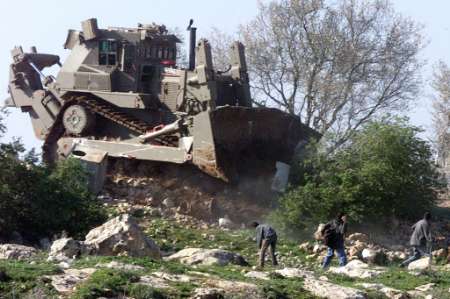
infopal.it. 25-07-2007 Gaza. All’alba di oggi, le forze di occupazione israeliane, appoggiate da diversi carri, bulldozer e aerei di controllo, hanno invaso la zona Hajar ad-Dik, a sud est di Gaza, scontrandosi con gli uomini della resistenza. La resistenza palestinese ha lanciato una granata RPJ contro un gruppo di forze speciali israeliane infiltrate, che hanno subito risposto con una massiccia sparatoria. I cittadini hanno riferito che le forze speciali si sono appostate sugli edifici più alti della zona “Abu Isa” e della scuola Kesariyah. I militari hanno arrestato numerosi cittadini durante la preghiera del Fajr (del mattino), impedendo anche il richiamo per la preghiera (l'adhan). Testimoni oculari hanno riferito che i carri militari hanno iniziato ad avanzare verso est, nei territori agricoli, mentre i bulldozer hanno preso a distruggere i campi di proprietà delle famiglie Elmi, al-Burini e al-Ifrangi. Gli abitanti della zona non possono uscire dalle loro case. Le strade sono vuote.
La guardia presidenziale ha aggredito la figlia e il figlio di Marwan al-Barghouthi.
infopal.it. 24-07-2007 Ramallah. Testimoni oculari hanno raccontato che l'auto di Ruba, la figlia di Marwan, che stava facendo ritorno dall'università di Birzeit, è stata fermata dalle Guardie presidenziali. Rafiq al-Husaini, capo della Corte presidenziale palestinese, ha promesso alla famiglia Barghouthi di indagare ufficialmente sull’aggressione.
La pattuglia ha perquisito la vettura, frugando tra le audiocassette, nonostante la ragazza avesse mostrato documenti e carta di identità, facendosi riconoscere. A seguito delle proteste, le guardie le hanno chiesto di seguirle alla Muqata'a, il plesso presidenziale, ma lei si è rifiutata, telefonando, nel frattempo, alla madre.
Sul posto sono giunti il fratello, Qassam, lo zio e un cugino. Il fratello ha chiesto di poter rimanere al posto di sua sorella permettendole di tornare a casa, ma loro hanno rifiutato. L'ufficiale lo ha aggredito e altri hanno puntato le armi contro la testa dello zio e del cugino.
Nel frattempo sono arrivati altri rinforzi dalla Muqata'a - circa sei volanti - e hanno circondato il gruppo iniziando a picchiare Qassam e alcuni passanti che tentavano di intervenire. Decine di giovani si sono presto radunati intorno a Qassam chiedendo all'Anp di svolgere indagini sull'episodio di violenza da parte delle Guardie.
Il ministro per gli affari dei detenuti, Ashraf al-Ajrami, ha promesso di aprire un'inchiesta sull’accaduto.
http://www.infopal.it/testidet.php?id=5879&PHPSESSID=b341a0f1d08dde7605da7989f2feb6df
We Can Correct the Sin of the Spies
Nadia Matar. Women For Israel's Tomorrow (Women in Green). 25/07/07. Even though it is clear now to any thinking person that handing over parts of the homeland to the Arab enemy endangers the very existence of the State of Israel, our political leaders continue their intent to surrender, to fold, to relinquish. to hand over, and to expel. In other words, today's political leaders are not all that different from the ten spies who slandered the Land. As we know, Caleb son of Jephunneh and Joshua son of Nun said (Numbers 13-14): "Let us by all means go up, and we shall gain possession of it, for we shall surely overcome it," while the other ten spies said - No! "We cannot attack that people, for it is stronger than we," "the country is one that devours its settlers." The entire people began to weep: "The whole community broke into loud cries, and the people wept that night." They proclaimed: "It would be better for us to go back to Egypt!" For this crying, the Holy One, blessed be He, punished the people of Israel with forty years in the wilderness, to ensure that whoever belonged to that wicked generation of weepers would not enter the Land of Israel. When it comes to Eretz Israel, there are no such rules of "democracy,". We are obligated to conquer, to take possession, and to settle every place in Eretz Israel. And if the people are stuck with weak leaders, then the people of Israel are obligated to rise up against them, and not to heed them. "The correction of the sin of the spies must come only by the building of Jerusalem and the expansion of the Jewish settlement, by the commandment of expansion, the prophetic mandate [Isaiah 54:2]: "Enlarge the site of your tent" [...] enlargement in the physical area [...] that is, expansion of the settlement, expansion of the number of those dwelling in Eretz Israel." This Shabbat we read in the portion of Devarim what is the necessary condition for possessing the Land (Deuteronomy 1:21): "See, the Lord your G-d has placed the land at your disposal, Go up, take possession, as the Lord, the G-d of your fathers, promised you. Fear not and be not dismayed." And further on in the same chapter (verses 29-30): "I said to you, 'Have no dread or fear of them. None other than the Lord your G-d, who goes before you, will fight for you.'" "Go up, take possession, as the Lord, the G-d of your fathers, promised you." Two years after the expulsion, I want to tell you: enough crying, enough mourning, enough of the submissive mamlakhtiyut (state-orientation). Now is the time to correct the sin of the spies. Now is the time to struggle for Eretz Yisrael, both to return to the places that were abandoned to the Arab enemy, and to struggle for the places that the government wants to give over now to the Arab enemy. I hope to see you all the day after tomorrow, on Wednesday, in Efrat, at 4:00 p.m. Together, we wefraill go up with the families and establish the settlement on the Eitam Hill. May it be His will that this new spirit, that so strongly desires to struggle for Eretz Israel, without fear of the authorities, will succeed in entering the entire people, and together we will free our land from domestic and external enemies; we will, with G-d's help, return to Gush Katif and northern Samaria, we will impose Israeli sovereignty over all of Eretz Israel; we will build thousands of homes everywhere in Judea and Samaria; and, at long last, we will drive out the Hamas foxes who run about on the Temple Mount and desecrate the place where we will rebuild our Temple. Thus, with G-d's help, we will save the people of Israel from its horrendous leaders; and thus, with G-d's help, we will bring closer our righteous Messiah, speedily in our days, Amen.
Institutions, order and hypocrisy
Amira Hass. Haaretz. 25/07/07. References to "law and order" are hypocritical. Blair is not mandated to confront the Israeli occupier's abuses of law and morality in the territories, on which it imposes the order of the master. It takes a great deal of cynicism to talk of institutions "representing all Palestinians" after the international policy of boycotting an elected government contributed so much to the destructive consequences in Gaza. The American and Israeli veto on political dialogue between the two rival movements consists of a great deal of malice. After all, dialogue is the only logical step the Palestinian public can now ask of its rival movements.
Bush's Israeli-Palestinian agenda A PALESTINIAN VIEW Notable only for a lack of imagination
Ghassan Khatib. bitterlemons.org. 23/07/07. The most notable thing about US President George W. Bush's July 16 speech was that it marked a continuation of US policies that have failed in the Middle East in general and with respect to the Palestinian-Israeli conflict in particular. The general reaction in the region was therefore negative, and any excitement generated did not last for more than a day. To start with, Bush lacks the credibility and the credentials to make proposals that commit the parties and the international community to any clear course of action. The idea of an international conference, for example, might have been taken seriously if it came from the Quartet, and if it came after some study, preparation and coordination. His repeated reference to the "moderates" is confusing and even backfires. Who are the moderates? Are they the ones who believe in a negotiated solution based on international law? In this case most Israelis, including the present government, are excluded.
The reference to making peace with the Jewish state on the basis of "current realities" is very loaded. To Palestinian ears that can only mean Bush intends for us to accept an illegal reality that was created by force. The only consequence of such words is that they will increase the Israeli appetite for more settlements in the West Bank and Jerusalem. Unfortunately, referring to the current reality as a benchmark--the facts on the ground in the form of settlements and the wall--implies that the illegal changes that Israel has imposed on the occupied territories are irreversible.
The only way to convince anybody on the "other side"--i.e., the Palestinians and the Arabs in general--of Bush's seriousness, is to use American-Israeli relations to at least put an end to ongoing illegal Israeli measures that consolidate the occupation, particularly the expansion of settlements. Bush cannot convince Palestinians and Arabs that he is serious about his "vision" of two states living side by side unless he contributes to such a solution by making sure some space is left for the one state that hasn't been realized yet.
Another problem with Bush's speech is that it envisions continued US monopoly on the peace process, even when critics, including many in the administration itself, have pointed out Washington's abject failure in this regard. This determination to maintain a US monopoly is evident in the American attitude on the future mission of Tony Blair. It was reported that in a telephone conversation a few days before his speech, Bush told President Mahmoud Abbas that Blair's mission would be confined to coordinating international aid, economic and social development and building the institutions of a future Palestinian state, while the political file would remain with Secretary of State Condoleezza Rice.
The American monopoly on international peace efforts, America's special relations with Israel, as well as the compromising of international law by Washington are among the main reasons for the failure of the peace process and the subsequent deterioration and radicalization. The US justification has always been the vital strategic role Israel plays vis-a-vis American and western interests in the region. However, it is evident that Israeli influence on the US agenda in the region, particularly as regards Iran/Iraq and the Palestinian-Israeli conflict, is directly responsible for the many negative setbacks to western interests, regional stability and general development that we are witness to now.
It is about time that other countries, particularly European countries, take a more proactive role. Europeans need to promote an alternative approach infused with European understanding to coordinate international efforts and base them on international legality to solve this conflict and potentially many more. It can only be hoped that such a rational approach will eventually win the full backing of the US.- Published 23/7/2007 © bitterlemons.org
Ghassan Khatib is coeditor of the bitterlemons family of internet publications. He is vice-president of Birzeit University and a former Palestinian Authority minister of planning.
Bush's Israeli-Palestinian agenda AN ISRAELI VIEW All the right things
Yossi Alpher. bitterlemons.org. 23/07/07. Bush apparently doesn't recognize that his strategy of undoing the damage of democratization in Gaza by relying on Mohammad Dahlan and General Keith Dayton merely helped cause greater damage in the form of the Hamas takeover. And as he acknowledges obliquely in the opening sentence of his speech, Iraq remains his real preoccupation in the region. Not only are Iran, Syria and Hamas determined to thwart this design, but Egypt, Saudi Arabia and much of the Quartet harbor doubts about Abbas and Fayyad as exclusive leaders.
In his speech last week on Israeli-Palestinian issues, President George W. Bush for a change said all the right things. Indeed he, PM Ehud Olmert and President Mahmoud Abbas are all beginning to do the right things. There does not appear to be any more attractive or even feasible alternative course of action on the Israeli-Palestinian agenda. These are grounds for guarded optimism.
Yet all three are weak leaders whose chances of success are extremely low and this is cause for pessimism.
Now that Abbas and his able prime minister, Salam Fayyad, are unencumbered by the need to accommodate Hamas in the West Bank, they are committed to tackling the vital task of internal reform within the Palestinian Authority's security and other institutions. Olmert has enhanced and stabilized his coalition at least for a few months until the Winograd commission issues its final report. He is desperately in need of a strategic achievement that will garner him public support. Hence he has begun to make the kind of gestures--prisoner release, amnesty, transfer of tax monies--Abbas needs to restore his own credibility. And Bush has now weighed in with talk about financial aid, institution-building and an international meeting to launch a peace process once the PA is in better shape.
But to no one's surprise, none of the three is yet engaged in the really heavy lifting, and it's doubtful they will be soon. Abbas, who needs the PLO more than ever as a policy vehicle in view of his government's doubtful legal status within the PA, has not even begun to reform the fossilized decision-making institutions of the Palestinian national movement he heads, even as he burns his bridges with Hamas with angry rhetoric. Fayyad is liable to be hurt more than helped by the administration's exaggerated adoration. Olmert cannot hope to make an impression on Abbas' constituency until he resumes in earnest dismantling outposts (something Bush reminded him to do, but so gently as to preclude any sign of American pressure) and planning the dismantling of settlements, and until he frees Marwan Barghouti and other non-Hamas heavyweights--tasks that still appear likely to overwhelm his coalition.
As for Bush, in view of his record over the past six and a half years it's hard to avoid the conclusion that last week's speech was, like previous pronouncements on Israel-Palestine, just talk. His presentation seemed designed more to show his Quartet partners--whom he needs on board for dealing with Iran and Afghanistan--that he's not sitting idly by while the Middle East burns. His determination to keep boycotting Hamas hardly corresponds with the policies of Egypt and Saudi Arabia, two key Middle East allies whose cooperation is vital and who counsel keeping channels of communication open because eventually a new unity government will become necessary. He can hardly expect the Saudis to "send cabinet-level visitors to Israel" under these circumstances.
Bush's aides quietly acknowledge that his democratization program for the region is a shambles, yet he apparently doesn't recognize that his strategy of undoing the damage of democratization in Gaza by relying on Mohammad Dahlan and General Keith Dayton merely helped cause greater damage in the form of the Hamas takeover. And as he acknowledges obliquely in the opening sentence of his speech, Iraq remains his real preoccupation in the region.
Even Bush's endorsement of an international "meeting" in the fall has begun to look hollow--downgraded in importance by his spin-masters, unlikely to be attended by many key Arab players and chaired by Secretary of State Condoleezza Rice rather than the president himself. Perhaps most important, a fall conference is far too early to congratulate Abbas on the fulfillment of his reform obligations, even with the help of Tony Blair. It's even too early for Olmert to report on making a serious effort to roll back the settlements.
Yet the timing issue is likely to be immaterial. Under present regional circumstances and bearing in mind the difficult political situations in Washington, Jerusalem and Ramallah and the strengths and (mainly) weaknesses of the leaders in question, the prospect of a successful confidence-building and institution-building process leading up to the declaration of renewed peace negotiations between Israel and the PLO sometime in the coming half year is far-fetched. Not only are Iran, Syria and Hamas determined to thwart this design, but Egypt, Saudi Arabia and much of the Quartet harbor doubts about Abbas and Fayyad as exclusive leaders.
Olmert, who is apparently preparing an alternative strategic track by renewing negotiations with Syria, appears to know this. Bush is reportedly not as opposed to this direction as his rhetoric might indicate. Yet Abbas may well turn out to be our last chance before Hamas takes over the West Bank as well as Gaza. That's why, for all its drawbacks and defects, it's important that we try to implement the new Bush policy approach.- Published 23/7/2007 © bitterlemons.org
Yossi Alpher is the Israeli coeditor of the bitterlemons family of internet publications. He is former director of the Jaffee Center for Strategic Studies at Tel Aviv University and a former special adviser to PM Ehud Barak.
martedì 24 luglio 2007
Who's in charge?
From The Economist print edition. GAZA, NABLUS AND RAMALLAH. 19/07/07. At the al-Awda sweet factory in central Gaza, the owner, Manal Hassan, says he is employing only a third of his usual staff of 370, and for less than half the week. But frequent border closures in the past few years have taught him to keep three months of stock; he is happy that Hamas has taken control. “Before, when I went to the bank, I needed to be surrounded by gunmen,” he says. “Now it is safer. I would rather have no money and be safe than have money and be in danger.” Down in Gaza, Hamas has its own problems. Only a few hundred of the 17,000 police are showing up for work, under orders from the government in the West Bank, which pays their salaries. Hamas militiamen are filling the gaps, and there have been cases of torture of Fatah men and attacks on journalists. Raji Sourani, a respected human-rights lawyer, condemns such attacks but says the Hamas leadership seems keen to avoid such “mistakes” and pins much of the blame on Mr Abbas. “How can you tell these people not to turn up for work? They are destroying an existing civil system.”
FOR years they have fought Israel; now it wants to pardon them. Israeli right-wingers were predictably furious at their government's decision to take 180 members of the al-Aqsa Martyrs' Brigades, the militias loyal to the Palestinians' secular Fatah party, off its most wanted list last week. If they lay down their guns and behave for three months, it will let them move freely in the West Bank for the first time in years.
Most have signed up, though some, like Nasser Abu Aziz, a beefy militant from Nablus, the West Bank's biggest city, who sports a neatly trimmed beard, a commando-style woollen cap and a new-looking M16 rifle, are holding out for something more—possibly promises of jobs from the Palestinian Authority (PA), where many of them once worked in the security services. Fayez Tirawi, a comrade of Abu Aziz who is not on the amnesty list, is more pragmatic. He doubts that Israel will abide by the deal, but is convinced that it is the only way to give Mahmoud Abbas, the PA's president and Fatah boss (pictured above), a chance to prove his claim that he can bring order to the West Bank.
Mr Abbas is not doing this just for Israel. Some self-styled “wanted militants” are, says Shawan Jabareen, director of the al-Haq human-rights centre in Ramallah, “mafiosi” who use patriotism as a cover for crime and extortion. If Mr Abbas can use the amnesty as a first step to bringing these and other gunmen to heel, it will cement his authority in the West Bank. After last month's showdown between Fatah and Hamas left Fatah running the West Bank and the Islamists of Hamas in control of the Gaza Strip, he must convince Palestinians that Fatah can do a better job than Hamas. But these are fragile times. Israel's army still makes near-nightly raids in Nablus and other towns, killing and arresting suspects. If it accidentally kills someone on the list, all bets will be off.
Fragile times, but also strange times. Men like Mr Tirawi are now readier to co-operate with Israel, which has occupied the West Bank for 40 years, than with Hamas, many of whose men they once counted as brothers-in-arms. When he accuses the Islamists of “collaborating with Syria and Iran” and “destroying the national project”, he sounds more like George Bush, who in a speech this week said Hamas was more “devoted to extremism and murder than to serving the Palestinian people”.
Mr Bush says he wants to “boost” Mr Abbas. In his speech, originally scheduled to commemorate the much-trumpeted “vision of two states” he announced five years ago, he promised Mr Abbas $270m in aid, a loans programme for Palestinian businesses and an “international meeting” on the conflict which may well be just a special session of an already-existing foreign donors' forum. Its time and place have yet to be announced.
But that boosting does not include what even the most moderate Palestinians insist is necessary to make Mr Abbas credible at home: some prior commitments by Israel towards the creation of a Palestinian state. The goals that Mr Bush set each side are similar to those of the long-dormant “road map” towards peace, which leaves those issues to the end. Noticeably, the Palestinian obligations (such as rounding up terrorists) were “musts”, while Israeli ones (such as stopping settlement-building on the West Bank) were “shoulds”, prompting Israeli pundits to comment that Ehud Olmert, the prime minister, need fear no pressure from the Americans.
Mr Abbas, however, is feeling it intensely. The interim government he appointed after the Fatah-Hamas showdown is trying to impose order on the streets and bring the PA's institutions back to life after a year-long aid boycott during Hamas's reign, all while it is in a legal limbo. Parliament must ratify the government but more than half of Hamas's MPs are in Israeli jails and the rest refuse to turn up to vote, so there is no quorum. Early elections, which Mr Abbas has called for, are impossible without Hamas's consent.
Mr Abbas may be trying to manoeuvre the Palestine Liberation Organisation, the worldwide umbrella body (of which he is also chairman), into holding elections for its own representative council for the first time in a decade, perhaps in an attempt to override parliament. He has also signed decrees extending military courts' power and giving the interior ministry the right to close down non-governmental organisations without a court order, measures that Mr Jabareen compares to other, more repressive Arab regimes. It all adds up to a slow dismantling of institutions on which foreign donors have spent billions—with the donors' acquiescence.
Down in Gaza, Hamas has its own problems. Only a few hundred of the 17,000 police are showing up for work, under orders from the government in the West Bank, which pays their salaries. Hamas militiamen are filling the gaps, and there have been cases of torture of Fatah men and attacks on journalists. Raji Sourani, a respected human-rights lawyer, condemns such attacks but says the Hamas leadership seems keen to avoid such “mistakes” and pins much of the blame on Mr Abbas. “How can you tell these people not to turn up for work? They are destroying an existing civil system.”
Still suffocating
Meanwhile, Gaza's border crossings with Israel have stayed shut to all but humanitarian aid since the Hamas takeover. Ban Ki-moon, the UN secretary-general, has given warning that Gaza will become “near totally aid-dependent” unless commercial trade resumes. A telephone poll in Gaza by Near East Consulting, a firm based in Ramallah, the Palestinian capital, found that Mr Abbas now enjoys nearly double the trust rating of Ismail Haniyeh, the Hamas man who was prime minister until Mr Abbas brought in the emergency government, and that if an election were held, Fatah would get double the Hamas vote. Some Fatah and other politicians in the West Bank say they see signs that Hamas is beginning to buckle, and may agree to early elections under public pressure.
At the al-Awda sweet factory in central Gaza, the owner, Manal Hassan, says he is employing only a third of his usual staff of 370, and for less than half the week. But frequent border closures in the past few years have taught him to keep three months of stock; he is happy that Hamas has taken control. “Before, when I went to the bank, I needed to be surrounded by gunmen,” he says. “Now it is safer. I would rather have no money and be safe than have money and be in danger.”
Rashid Khalidi on International Law

Jane Adas. Washinton Report on Middle East Affairs. July 2007. "The U.S. bears special responsibility. Despite its mainly unilateral efforts following the 1967 war—Henry Kissinger’s shuttle diplomacy, President Jimmy Carter at Camp David, and Secretary of State James Baker’s Madrid peace conference—the U.S. has never supported self-determination for the Palestinians. President George Bush’s 2005 comment in support of Palestinian statehood was rendered irrelevant, Khalidi asserted, by his April 2004 letter to Prime Minister Ariel Sharon supporting the annexation of Jewish settlement blocs ["In light of new realities on the ground, including already existing major Israeli populations centers"] and denying Palestinian refugees the right to return to Israel ["The United States is strongly committed to Israel's security and well-being as a Jewish state. It seems clear that an agreed, just, fair and realistic framework for a solution to the Palestinian refugee issue as part of any final status agreement will need to be found through the establishment of a Palestinian state, and the settling of Palestinian refugees there, rather than in Israel".] —both in contradiction to many U.N. resolutions Washington formerly had supported. Khalidi accused the U.S., like Great Britain earlier, of being driven by domestic concerns and great power strategies rather than abiding by the principles of international laws".
Rashid Khalidi, the Edward Said Professor of Arab Studies and director of the Middle East Institute at Columbia University, discussed “International Law, Legitimacy and the Palestinian Question” in Princeton on April 21. The event was sponsored by the New Jersey Division of the United Nations Association of the United States, an organization Khalidi regards as important because it counters the trends toward unilateralism and increasing contempt for the U.N. and international law.
Khalidi has long considered the question of why the Palestinian people, despite having a well-developed national identity, have been unsuccessful in achieving independence and statehood. While his most recent book, The Iron Cage, focuses on internal Palestinian causes, there also have been externally imposed constraints, he said, the most important emanating from the two pillars of modern international law and legitimacy: the League of Nations and the United Nations. The issue of Palestine, he argued, shows the limits of those institutions and the long-term perils of great powers following short-sighted policies not based on their professed principles.
Because of Britain’s difficulties during WWI, Khalidi noted, Palestine became the “thrice-promised land.” In the Hussein-McMahon correspondence of 1915-16, Britain made vague promises to the Arabs about independence in order to persuade them to revolt against the Ottomans on the eastern front. At about the same time, Britain and France signed the Sykes-Picot agreement, secretly dividing between themselves Arab lands under the Ottomans as a sort of colonial compensation for their huge losses on the western front. In November 1917, Britain agreed to the Balfour Declaration, promising European Zionists a “Jewish national home” in Palestine.
For the same reasons, Khalidi continued, Britain for the first time was dependent on the U.S. and was therefore obliged to accept Washington’s war aims as put forward by President Woodrow Wilson’s “Fourteen Points” of December 1917—including the principle of self-determination and the creation of a world body to regulate international affairs. This led to the League of Nations and the Mandate system, behind which Britain and France were obliged to mask their territorial ambitions. Article 22 of the Covenant of the League of Nations designated Arab areas of the former Ottoman Empire as Class A Mandates, meaning they had reached a state of development whereby their existence as independent nations could be provisionally recognized, subject to the “rendering of administrative assistance and advice” through the mandatory power.
The terms of Britain’s Mandate for Palestine, which Khalidi described as the governing document from 1922 until WWII, adopted the language of the Balfour declaration, according to which Palestinians were the “non-Jewish communities.” Jews, by contrast, who constituted 10 percent of Palestine’s population at the time, were a “people” with “national rights” for whom the mandatory power was enjoined to support the creation of Jewish national institutions and facilitate Jewish immigration. In this way, Khalidi asserted, Britain and the League of Nations helped to produce an intractable conflict.
Palestine was one of the first issues brought before the newly established United Nations, Khalidi pointed out. General Assembly Resolution 181 of Nov. 29, 1947 went farther than the League of Nations Mandate by acknowledging that there was an Arab people in Palestine deserving of statehood. Nevertheless it assigned 55 percent of the land to the Jews, at that time only one-third of the population. Khalidi attributed this to the fact that World War II had seen a new level of inhumanity, and it was the unlucky fate of Palestinians to be in conflict with the primary victims of the worst crimes. He charged the international community with acquiescing in the extinction of the Arab state, noting that the U.N. sent no peacekeeping forces and provided no mechanism to regulate the conflict it had created.
The U.S. bears special responsibility, Khalidi said. Despite its mainly unilateral efforts following the 1967 war—Henry Kissinger’s shuttle diplomacy, President Jimmy Carter at Camp David, and Secretary of State James Baker’s Madrid peace conference—the U.S. has never supported self-determination for the Palestinians. President George Bush’s 2005 comment in support of Palestinian statehood was rendered irrelevant, Khalidi asserted, by his April 2004 letter to Prime Minister Ariel Sharon supporting the annexation of Jewish settlement blocs and denying Palestinian refugees the right to return to Israel—both in contradiction to many U.N. resolutions Washington formerly had supported. Khalidi accused the U.S., like Great Britain earlier, of being driven by domestic concerns and great power strategies rather than abiding by the principles of international laws.
http://www.wrmea.com/archives/July_2007/0707038.html
PCHR Condemns the Attack on a Demonstration in Rafah, the Detention of a Demonstrator, and Torturing the Detainee by the Executive Force
24/07/07. 12:30 GMT. PCHR strongly condemns the attack on a demonstration yesterday in Rafah, the detention of a detainee, and torturing him by members of the Executive Force. The Centre calls for investigating this attack, stopping all forms of torture, and prosecuting the perpetrators of torture.
The Center’s preliminary investigation indicates that at approximately 21:30 on Monday, 23 July 2007, a large number of members of the Executive Force in 7 vehicles fired in the air and use batons to disburse a demonstration near the CARE Vocational Training Institute in Rafah. The demonstrators fled and disbursed. The demonstration comprised of hundreds of Fatah members and started near
In a related development at 23:00 on the same day, the Executive Force detained one of the demonstrators: Mohammad Kamel El-Shekhrit (21), who was on his way home in Rafah refugee camp. He was taken to the old headquarters of the National Security Forces in Rafah. In his statement to PCHR’s fieldworker, he stated that he was questioned on his participation in the demonstration. He stated that he was tortured by the Executive Force during the interrogation, including tying his hands behind his back, tying his legs, covering his eyes, and being beaten by batons and sticks on parts of his body including the bottom of his feet. He also stated that his hand was electrocuted once. The Executive Force released him at approximately 2:30 on Tuesday, 24 July 2007, after he signed a statement committing to refrain from breaking law and order.
PCHR reiterates its condemnation of these attacks, and:
- Strongly condemns the use of torture, and calls for investigating torture claims to prosecute its perpetrators, and to take effective steps to stop all forms of torture.
- Reminds that torture is outlawed in the Palestinian law; and that it is a serious violation of human rights as outlined by international human rights law, including the Convention against Torture and other forms of Cruel, Degrading, or Inhumane Treatment (1984).
- Affirms that all forms of detention are regulated by the Palestinian Law, which specifies that detention is the sole function of law-enforcement represented by the civilian police, under the authority of the Attorney-General.
- Affirms the right to peaceful assembly, including organizing demonstrations, which is guaranteed by the Basic Law and the Law of General Assemblies for the year 1998.
PCHR Calls for Investigating the Assault on PLC Member Ashraf Jum’a in Rafah
24/07/07. 11:30 GMT. PCHR strongly condemns the attack on Ashraf Jum’a, a member of the Palestinian Legislative Council from the Fatah party, at the hands of unknown gunmen yesterday. The Centre calls for an immediate investigation into the incident to expose and prosecute the perpetrators.
The Center’s preliminary investigation indicates that at approximately 20:10 on Monday, 23 July 2007, a group of about 25 masked gunmen arrived in Palestinian police vehicles at Ashraf Jum’a’s office in
Prior to this attack, members of the security forces distributed a leaflet in Rafah accusing Ashraf Jum’a of sending the names of security personnel who continued to work after 15 June to the Emergency Government in Ramallah. As a result, these security personnel were fired, and their salaries cut off.
PCHR strongly condemns this crime, and:
- Calls for a serious and immediate investigation into this attack to expose and prosecute the perpetrators.
- Views with concern the use of official police vehicles in the attack, which points towards the possibility of involvement of some policemen in the attack.
- Stresses the immunity of PLC members under the Palestinian Basic Law, which outlaws any form of infringement on them as long as the immunity is effective.
- Warns against the danger of such attacks that constitute a continuation of security chaos in the OPT.
Public Document
**************************************
For more information please call PCHR office in
PCHR, 29 Omer El Mukhtar St., El Remal, PO Box 1328 Gaza, Gaza Strip. E-mail: pchr@pchrgaza.org, Webpage http://www.pchrgaza.org
-----------------------------------
If you got this forwarded and you want to subscribe, send mail to request@pchrgaza.org
and write "subscribe" in the subject line.
---------
To unsubscribe, send mail to request@pchrgaza.org
and write "unsubscribe" in the subject line.
For assistance: info@pchrgaza.org
Non si tratta con Hamas
R.A. Segre [Vitorio Dan Segre]. 24/07/07. Venerdì scorso, in un articolo intitolato «Israele la pace si fa coi nemici», Arrigo Levi ha discusso sulla Stampa la tesi (sostenuta dal ministro D'Alema e respinta da Israele, Europa e Usa) che Israele dovrà trattare anche con un avversario come Hamas. Levi insiste giustamente sulla prudenza che deve accompagnare un dialogo del genere. Infatti gli osannati accordi di Oslo, non solo non possono più rappresentare un precedente ma dimostrano che i popoli non possono accettare accordi condotti in fretta da negoziatori su schemi elaborati da diplomatici, giornalisti e intellettuali pieni di impaziente autostima e arrogante superiorità culturale. I risultati sono stati tragici. Riproporli sarebbe - come diceva Taillerand - «più che un crimine, un errore».
Ora il primo errore da evitare è quello di credere che il negoziato possa portare all'intesa assieme alla creazione di istituzioni statali responsabili. La pace fra Israele e l'Egitto e la Giordania, la coesistenza non pacifica ma non bellica con la Siria sono state rese possibili non dall'esistenza di avversari democratici ma da quella di Stati nemici. La statalità è ciò che mancava all'Olp di Arafat, che manca al protostato islamico di Hamas a Gaza e al protostato di Al Fatah in Cisgiordania checché si possa dire della democrazia dell'uno e della moderazione dell'altro. Di per sé, infatti, il processo elettorale democratico non accompagnato da garanzie di libertà non comporta il diritto al riconoscimento. Non averlo compreso fu l'errore dei progettisti degli accordi di Oslo, errore che non si dovrebbe ripetere.
Ma il dialogo con Hamas solleva una questione più complicata, solo in parte legata al fatto che una legittima occupazione militare causata da una guerra si è trasformata per povertà di visione storica e per discutibili considerazioni strategiche e diritti storici in colonizzazione.
La questione è questa: l'identità palestinese non è il frutto del nazionalismo arabo o dello statalismo islamico anche se entrambi vi hanno contribuito. L'identità palestinese nata e cresciuta nello scontro con Israele è il frutto di un «sionismo arabo», figlio di un incontro appassionato e violento di due nazionalismi, ciascuno così convinto del proprio buon diritto da evitare sino ad oggi di riconoscere le responsabilità del risultato tragico di questo violento incontro. Indipendentemente dalla strumentalizzazione che arabi e israeliani hanno fatto dei palestinesi lo scopo della contestata sovranità palestinese è stato - fuori del campo propagandistico e dell'elaborazione di «etichette» statali - l'ottenimento della giustizia e la difesa dell'onore. Non la creazione di uno Stato responsabile.
L'onore è quel valore che si ottiene togliendolo all'altro, mentre la ricerca della giustizia fuori dallo Stato sovrano è garanzia di rivoluzione e guerra permanente. Per questo tanto la carta costituzionale dell'Olp quanto quella di Hamas stabilisce che lo scopo primo è la distruzione di quello israeliano (un freudiano direbbe un parricidio del «genitore» israeliano ma anche, considerando l'opera distruttiva dei palestinesi in molti Paesi arabi, dei «genitori» arabi). Levi conclude: lasciamo lavorare Blair, il nuovo inviato del «quartetto» delle grandi potenze nella questione palestinese. Giusto ma a condizione che comprenda che il precedente irlandese è attraente ma controproducente. Perché per affermarsi al sionismo non è occorsa solo la volontà di indipendenza ebraica (molto debole fra gli ebrei, prima e dopo la Shoah). È occorsa la protezione coloniale britannica. Quando questa fu brutalmente tolta da Londra allo Yishuv ebraico di Palestina (contro la volontà non dimentichiamolo della stragrande maggioranza degli ebrei che avrebbero preferito trasformarsi in Dominion britannico) le istituzioni del proto Stato ebraico erano ormai troppo sviluppate e solide per essere sommerse dall'attacco arabo. Ma erano occorsi venti anni di umile lavoro costruttivo (una mucca dopo l'altra, un ettaro dopo l'altro era il motto della corrente sionista di maggioranza) e di sei anni di dura lotta armata che mai per scopo ebbe l'odio e la distruzione del nemico.
R.A. Segre
http://www.ilgiornale.it/a.pic1?ID=194843&START=1&2col=
Ora il primo errore da evitare è quello di credere che il negoziato possa portare all'intesa assieme alla creazione di istituzioni statali responsabili. La pace fra Israele e l'Egitto e la Giordania, la coesistenza non pacifica ma non bellica con la Siria sono state rese possibili non dall'esistenza di avversari democratici ma da quella di Stati nemici. La statalità è ciò che mancava all'Olp di Arafat, che manca al protostato islamico di Hamas a Gaza e al protostato di Al Fatah in Cisgiordania checché si possa dire della democrazia dell'uno e della moderazione dell'altro. Di per sé, infatti, il processo elettorale democratico non accompagnato da garanzie di libertà non comporta il diritto al riconoscimento. Non averlo compreso fu l'errore dei progettisti degli accordi di Oslo, errore che non si dovrebbe ripetere.
Ma il dialogo con Hamas solleva una questione più complicata, solo in parte legata al fatto che una legittima occupazione militare causata da una guerra si è trasformata per povertà di visione storica e per discutibili considerazioni strategiche e diritti storici in colonizzazione.
La questione è questa: l'identità palestinese non è il frutto del nazionalismo arabo o dello statalismo islamico anche se entrambi vi hanno contribuito. L'identità palestinese nata e cresciuta nello scontro con Israele è il frutto di un «sionismo arabo», figlio di un incontro appassionato e violento di due nazionalismi, ciascuno così convinto del proprio buon diritto da evitare sino ad oggi di riconoscere le responsabilità del risultato tragico di questo violento incontro. Indipendentemente dalla strumentalizzazione che arabi e israeliani hanno fatto dei palestinesi lo scopo della contestata sovranità palestinese è stato - fuori del campo propagandistico e dell'elaborazione di «etichette» statali - l'ottenimento della giustizia e la difesa dell'onore. Non la creazione di uno Stato responsabile.
L'onore è quel valore che si ottiene togliendolo all'altro, mentre la ricerca della giustizia fuori dallo Stato sovrano è garanzia di rivoluzione e guerra permanente. Per questo tanto la carta costituzionale dell'Olp quanto quella di Hamas stabilisce che lo scopo primo è la distruzione di quello israeliano (un freudiano direbbe un parricidio del «genitore» israeliano ma anche, considerando l'opera distruttiva dei palestinesi in molti Paesi arabi, dei «genitori» arabi). Levi conclude: lasciamo lavorare Blair, il nuovo inviato del «quartetto» delle grandi potenze nella questione palestinese. Giusto ma a condizione che comprenda che il precedente irlandese è attraente ma controproducente. Perché per affermarsi al sionismo non è occorsa solo la volontà di indipendenza ebraica (molto debole fra gli ebrei, prima e dopo la Shoah). È occorsa la protezione coloniale britannica. Quando questa fu brutalmente tolta da Londra allo Yishuv ebraico di Palestina (contro la volontà non dimentichiamolo della stragrande maggioranza degli ebrei che avrebbero preferito trasformarsi in Dominion britannico) le istituzioni del proto Stato ebraico erano ormai troppo sviluppate e solide per essere sommerse dall'attacco arabo. Ma erano occorsi venti anni di umile lavoro costruttivo (una mucca dopo l'altra, un ettaro dopo l'altro era il motto della corrente sionista di maggioranza) e di sei anni di dura lotta armata che mai per scopo ebbe l'odio e la distruzione del nemico.
R.A. Segre
http://www.ilgiornale.it/a.pic1?ID=194843&START=1&2col=
lunedì 23 luglio 2007
'Homesh First' Declares Victory
 Peace Now's activists demontrating opposite the new settlement in Hebron
Hillel Fendel. IsraelNationalNews.com. 23/07/07. The army says it prevented the planned ascent to the ruins of the Jewish community of Homesh in Samaria, 18 miles east of Netanya, but hundreds of pioneers made their way up at night. They built a water tower and the beginnings of a makeshift synagogue. The security forces are planning ways to remove the hundreds, and destroy the makeshift structures. "The event has been successful, and continues." So states a recorded announcement from the headquarters of Homesh First, the grassroots organization dedicated to rebuilding the destroyed town of Homesh. Homesh was one of four Jewish communities in Northern Samaria razed by Ariel Sharon's Disengagement plan two years ago, but its residents have never given up the idea of rebuilding it.
An estimated 2,000 to 3,000 people have tried to make their way by foot to Homesh since Sunday morning. Many of them were stopped at several blockades set up by the army along the way, and many others were forcibly removed after reaching the ruins.
The pioneers reported that one person was knocked unconscious during the eviction, and five others were injured by security forces in violence reminiscent of Amona. Nearly a year and a half ago, hundreds of youths required hospital treatment after police used excessive violence to remove them from a hilltop in Amona in order to enable the razing of nine Jewish houses.
Limor Sohn Har-Melekh, from the Homesh First task force, announced Sunday night, "Army and police spokespersons say they have defeated us, but the fact is that more people are marching towards Homesh right now than this morning... The police were very violent, breaking cameras, using clubs, and pushing people from terraces. But our spirit is so strong that people who are taken down right away try to come back up..."
In addition to the many hundreds of youth who participated, several families planning to live in Homesh were removed from the hilltop in the afternoon hours, while others who were on the scenic hilltop ran away. The army bused some of them to Rosh HaAyin and there dropped them off, and took the others to nearby Kedumim.
Several dozen youths were attacked by Arabs from a nearby village, and the security forces intervened.
MK Aryeh Eldad (National Union), who moved to Homesh three months before its destruction in 2005, also took part in the ascent on Sunday. This, after initially being told that even his Knesset Member privileges would not suffice to allow him passage to the area. "The manhunt that the Border Guard policemen are waging after the youths who have come to rebuild Homesh," he said, "will not break the spirit of those who still believe that the Land of Israel belongs to the Jewish People and not the Arabs."
Organizers were very happy at the way the event was developing. "This is a rolling event, not a one-time thing," they said, "and it is not yet over. This is our climactic moment in the struggle for Homesh. It began last week when we pulled a good trick in announcing that Tuesday's planned ascent would not take place - while ever since then, hundreds have made their way up."
"The point is to show the Prime Minister that we are not planning to ever give up the plan to return and rebuild Homesh. We have changed the rules of the game, and the government is unable to deal with the great amounts of people that keep coming here."
The first ascent to Homesh took place seven months ago, on Chanukah, when 1,000 people evaded army checkpoints and lit holiday candles there. A few months later, shortly before Passover, 3,000 people attempted to settle the site, but were thrown out after three days. A month later, on Independence Day, 20,000 people marched to Homesh, in an event permitted at the last moment by the security forces. On June 12, thousands made their way to Homesh in a government-authorized visit, marking the 40th anniversary of the liberation of the area, and of all of Judea and Samaria.
Iscriviti a:
Post (Atom)