giovedì 13 dicembre 2007

PALESTINE • La pénurie d'eau précipite la bande de Gaza dans la misère

Juan Miguel Muñoz (El País), Courier International, 11.12.07. Les conséquences du blocus économique imposé à la bande de Gaza par Israël et la communauté internationale depuis le triomphe électoral du Hamas en janvier 2006 n'ont jamais été plus tragiques qu'en ce moment, déplore El País. La démocratie s'est révélée bien funeste pour les quelque 1,5 million d'habitants de la bande de Gaza. Les pièces de rechange n'arrivent plus. L'alimentation en électricité se raréfie. Le système de traitement des eaux usées frôle la paralysie. Et tirer quelque liquide vaguement potable de l'un des 137 puits relève quasiment de l'exploit. A Gaza, les eaux usées se déversent dans deux grands bassins : celui de Beit Lahia, au nord, a débordé en mars et cinq Bédouins sont morts. Ce fut un premier avertissement. Le bassin est de nouveau plein à ras bord, et la saison des pluies vient de commencer. "Encore 30 à 50 centimètres, et les eaux sales se répandront par-dessus les sacs de sable que nous avons installés. Le risque, c'est un véritable raz-de-marée de merde", assure l'ingénieur Bachar Achour. "Au robinet, 1 mètre cube d'eau coûte 1 shekel [0,16 euro] ; pour la même quantité d'eau traitée vendue par les entreprises, il faut débourser 50 shekels. Beaucoup de gens ne peuvent pas se le permettre, alors ils boivent l'eau du robinet, constate l'ingénieur Bachar Achour. Elle présente de forts taux de chlorates et de nitrates, d'où une forte incidence sur les maladies des reins et des cas de cancer.

Triste ironie du sort. Malgré l'insuffisance des précipitations, les techniciens scrutent tous les jours le ciel, craignant que des orages violents ne fassent à nouveau déborder ce réservoir pestilentiel. "Si c'est le cas, 20 000 personnes devront s'installer 15 mètres plus haut pour échapper à la crue", ajoute ce jeune spécialiste. Dire que le traitement des eaux sanitaires usées est problématique est un doux euphémisme. Outre celui de Beit Lahia, un second réservoir gigantesque a été construit plus au sud, dans les faubourgs de la ville de Khan Younès. Des centaines d'enfants longent cet étang pour aller à l'école. Mais, dans le centre de la bande de Gaza, la situation est pire encore : les eaux souillées sont déversées directement dans la mer, sans le moindre traitement.

A Gaza même, les stations de pompage sont connectées à trois stations de traitement qui fonctionnent plus que mal. "Avec la pénurie d'électricité et de gazole, impossible de pomper", explique le technicien. Mais, si le gouvernement israélien met ses menaces à exécution, le pire est encore à venir : l'Etat hébreu prévoit en effet de limiter l'alimentation électrique, et depuis le week-end dernier les entreprises israéliennes ne livrent plus que 25 % des quantités qu'elles fournissaient jusque-là.

En hiver, une grande partie du territoire de Gaza se transforme en marécage, et dans les rues des villes apparaissent des flaques qui, mêlées aux détritus, forment une gadoue répugnante. Les éboueurs se démènent pour collecter les immondices, qui terminent dans des décharges disséminées dans toute la bande de Gaza. Mais certaines zones n'ont pas la moindre infrastructure. Et les habitants ne sont pas sensibilisés à la question. Parler d'environnement, ici, est presque une impudence. "A Khan Younès, les habitants creusent des fosses septiques à peu près n'importe où. Et, naturellement, la pollution des nappes phréatiques ne cesse de s'aggraver", déplore Bachar Achour. "De plus, beaucoup de gens relient illégalement la plomberie de leur maison à un réseau de conduits que nous avons construit pour stocker les eaux de pluie." Les conséquences sont catastrophiques : le précieux liquide collecté pour reconstituer les eaux souterraines surexploitées est gaspillé et perdu.

La Lettre à Elise de Beethoven retentit dans les rues de Gaza, de Khan Younès et de Rafah. Dans ces villes où l'eau du robinet a un goût d'eau de mer, des hommes conduisent des ânes tirant des carrioles chargées d'énormes bidons. L'eau est également distribuée par camion-citerne. Et la pièce pour piano du grand compositeur allemand annonce que la vente est ouverte. A des prix prohibitifs, bien sûr. "Au robinet, 1 mètre cube d'eau coûte 1 shekel [0,16 euro] ; pour la même quantité d'eau traitée vendue par les entreprises, il faut débourser 50 shekels. Beaucoup de gens ne peuvent pas se le permettre, alors ils boivent l'eau du robinet, constate l'ingénieur Bachar Achour. Elle présente de forts taux de chlorates et de nitrates, d'où une forte incidence sur les maladies des reins et des cas de cancer.

Los asentamientos, otra vez

JUAN MIGUEL MUÑOZ, El Pais, 13.12.07. Nadie puede excusarse con el pretexto del efecto sorpresa. Ariel Sharon, ya dijo en 1973: "Haremos un sándwich de pastrami con los palestinos. Insertaremos una franja de asentamientos judíos en medio de los palestinos, y otra franja de colonias a través de Cisjordania, y así en 25 años, ni Naciones Unidas, ni Estados Unidos, nadie, podrá destrozarlos". No ha sorprendido que a las primeras de cambio, sólo dos semanas después de la conferencia en la base naval de Maryland, brotara el escollo inaugural a las negociaciones que comenzaron ayer. El Ejecutivo hebreo ha anunciado la construcción de 307 viviendas en la colonia de Har Homa, en Jerusalén Este, ocupado en 1967. La historia se repite. En 1997, cuando se había forjado un acuerdo para transferir a la Autoridad Palestina gran parte de la ciudad de Hebrón, el Gobierno de Benjamin Netanyahu -con el apoyo del alcalde Olmert- decidió alzar esta colonia de Har Homa en una colina coronada por un bosque. Todo se fue al traste. Hoy, se ven las grúas desde Belén. Y el general al mando en Cisjordania advirtió el martes que los permisos para construir cientos de casas más en este territorio ya están aprobados. "Es un asunto interno. Har Homa se halla en el término municipal de Jerusalén", aducen los funcionarios israelíes. "Son argumentos ridículos. Nadie en el mundo acepta la anexión de Jerusalén Este", replicaba el editorial del diario Haaretz.

From Annapolis to Har Homa

Haaretz Editorial, 13.12.07. US. Secretary of State Condoleezza Rice expressed fear that the construction in Har Homa would disrupt the Annapolis process. No one in the world recognizes Israel's annexation of East Jerusalem. It is enough to examine the official maps published by the U.S. State Department and the CIA: Everything beyond the lines Israel held on June 4, 1967, is occupied territory. That is true for the Golan Heights, and it is true for the new neighborhoods Israel built in Jerusalem. The Annapolis festivities have ended, and the test will be in the dull implementation. Thus far, not a single outpost has been evacuated, not the slightest diplomatic progress has been made, and Israel is retreating into the worst of all possible worlds - subject to terror attacks that the Palestinians are still not really trying to restrain, yet putting itself, with its own hands, on the diplomatic defensive. At this rate, and with this sagacity, the Annapolis conference will prove no more than a barren footnote.

US. Secretary of State Condoleezza Rice demanded explanations from her Israeli counterpart, Tzipi Livni, last week about the plan to build another 300 apartments in the Har Homa neighborhood of East Jerusalem. Rice did not make do with posing a question to Livni; she hastened to go public with the Bush Administration's objections to the plan.

Administration spokespeople normally oppose any moves liable to damage Israeli-Palestinian final-status negotiations - namely, the settlements. But this time, Rice also expressed fear that the construction in Har Homa would disrupt the Annapolis process. Prime Minister Ehud Olmert and Palestinian President Mahmoud Abbas claim to be racing toward George W. Bush's goal - concluding the negotiations and establishing a Palestinian state within a year - but the talks are still at the takeoff stage, and the presumption that the process is going quickly is threatening to crash into Har Homa.

Israel has no good answer to the American objections. An internal matter? Har Homa is within Jerusalem's municipal boundaries and under Israeli sovereignty? A bureaucratic issue? An Israel Lands Administration tender whose turn had come to be published? These claims are ridiculous. No one in the world recognizes Israel's annexation of East Jerusalem. It is enough to examine the official maps published by the U.S. State Department and the CIA: Everything beyond the lines Israel held on June 4, 1967, is occupied territory. That is true for the Golan Heights, and it is true for the new neighborhoods Israel built in Jerusalem. Israel's unilateral steps are a game of make-believe that obligate nobody but itself - and especially not the world's greatest power, which is also the only country that gives Israel vital military and diplomatic assistance.
Nor can Israel rely on Bush's April 2004 letter to former prime minister Ariel Sharon in which the U.S. president said the reality created by settlements in the territories must be taken into account. Bush's declaration was not a commitment to refrain from evacuating settlements, does not bind his successors and has even been demonstratively omitted from other diplomatic documents, including an almost identical letter he sent at the same time to King Abdullah of Jordan. In any case, anything that has happened in the three and a half years since then is surely not covered by the Bush declaration.

It is no surprise that Israel's move has been interpreted as a provocation, or at best stupidity, coming as it does on the threshold of a fateful diplomatic breakthrough that Israel is ostensibly happy to participate in, not one it has been dragged to. The old tricks - like expanding the settlements' external boundaries, building new settlements under the guise of neighborhoods of existing settlements or, the most beloved excuse of all, "natural growth" - deceive nobody. They merely provide the Palestinians with ammunition for their propaganda, help Hamas to claim that Olmert is humiliating Abbas and push Bush and Rice into taking a stand against Israel.


Israel tanks enter Gaza on eve of peace talks Palestinians demand halt to settlements as peace talks begin

Rory McCarthy in Jerusalem, The Guardian ,12.12.07. Iraeli troops in tanks and armoured vehicles mounted an incursion into Gaza yesterday, killing at least six Palestinian militants on the eve of a new round of peace talks. As many as 30 tanks and vehicles were involved in the operation in southern Gaza, near the Sufa crossing and close to the town of Khan Yunis. Several Palestinians were reported injured.

The Israeli military said it was a routine operation against militants, but Palestinian officials accused Israel of trying to disrupt the peace talks. Israeli and Palestinian negotiators were to meet today at the King David hotel in Jerusalem to start a new process of talks in the wake of the Middle East conference in Annapolis late last month.

Palestinian officials have already complained about an Israeli decision last week to issue tenders for more than 300 houses in the East Jerusalem settlement of Har Homa. "The Israeli policy of escalation aims to sabotage and place obstacles before the negotiations even before they start," said Nabil Abu Rdeneh, a spokesman for the Palestinian president, Mahmoud Abbas.

David Batty, Palestinians demand halt to settlements as peace talks begin, Guardian Unlimited , 12.12.07

Israeli Occupation Forces (IOF) Continue Systematic Attacks against Palestinian Civilians and Property in the Occupied Palestinian Territory (OPT)


Weekly Report: On Israeli Human Rights Violations in the Occupied Palestinian Territories 06-12.12.07

A Palestinian woman standing near the debris of her house that was demolished by Israeli Occupation Forces in Jerusalem
  • 8 Palestinians, including 3 civilians, were killed by IOF in the Gaza Strip and the West Bank.

  • 5 of the victims were killed by IOF during an offensive against the southern Gaza Strip.

  • 12 Palestinians were wounded by the IOF gunfire in the Gaza Strip, and 9 persons, including 5 journalists and an Israeli human rights defender, sustained bruises in the West Bank.

  • IOF conducted 22 incursions into Palestinian communities in the West Bank, invaded the south of the Gaza Strip and moved into its north.

  • IOF arrested 28 Palestinian civilians, including 4 children, in the West Bank and one in the Gaza Strip.

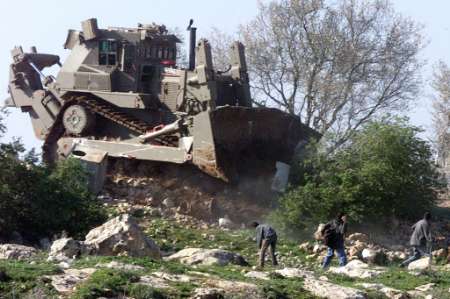
  • IOF razed 133 donums of agricultural land in Khan Yunis.

  • IOF transformed a number of houses into military sites.

  • IOF raided a number of media institutions in Nablus, confiscated equipment and closed one of them.

  • IOF have continued to impose a total siege on the OPT.

  • IOF have isolated the Gaza Strip from the outside world and a humanitarian crisis has emerged.

  • The number of patients who died due to the denial of their access to medical treatment increased to 15.

  • IOF troops positioned at checkpoints in the West Bank arrested 7 Palestinian civilians, including a child and a girl.

  • IOF have continued settlement activities in the West Bank and Israeli settlers have continued to attacks Palestinian civilians and property.

  • IOF demolished a house in Jerusalem.

  • Israeli settlers uprooted 32 olive trees in Hebron.

Summary

Israeli violations of international law and humanitarian law continued in the OPT during the reporting period (6 – 12 December 2007):

Shooting: During the reporting period, IOF killed 8 Palestinians, including 3 civilians, and wounded 12 others in the Gaza Strip. Additionally, 9 persons, including 5 journalists and an Israeli human rights defender, sustained bruises by IOF in the West Bank.

In the Gaza Strip, on 6 December 2007, IOF shot dead a Palestinian civilian while he was hunting birds near the border between the Gaza Strip and Israel, east of Jabalya. On 7 December 2007, IOF shot dead a Palestinian farmer in Khuza’a village, east of Khan Yunis. On 11 December 2007, IOF killed 5 Palestinians, including one civilian, during a wide scale offensive on the southern Gaza Strip. Nine Palestinians were also wounded. On the same day, an IOF air strike killed a member of the Palestinian resistance and wounded 3 others in the northern Gaza Strip town of Beit Hanoun.

In the West Bank, On 30 November 2007, 8 Palestinian civilians, including 5 journalists, and an Israeli human rights defender sustained bruises when IOF troops used force to disperse peaceful demonstrations organized by Palestinian civilians and international and Israeli human rights defenders in protest to the construction of the Annexation Wall in Bal’ein village, west of Ramallah, and al-Ma’sara village, south of Bethlehem.

Incursions: During the reporting period, IOF conducted at least 22 military incursions into Palestinian communities in the West Bank. During those incursions, IOF arrested 28 Palestinian civilians, including 4 children. Thus, the number of Palestinians arrested by IOF in the West Bank since the beginning of this year has mounted to 2,553. During the reporting period, IOF transformed 3 Palestinian houses into military sites. IOF also raided a number of media offices in Nablus, confiscated media equipment and closed Afaq TV.

In the Gaza Strip, IOF conducted 2 incursions into al-Fukhari area in the southern Gaza Strip and Beit Hanoun town in the north. During those incursions, IOF killed 6 Palestinians, razed 133 donums of agricultural land, damaged a factory and arrested one Palestinian civilian.

Restrictions on Movement: IOF have continued to impose a tightened siege on the OPT and imposed severe restrictions on the movement of Palestinian civilians in the Gaza Strip and the West Bank, including occupied East Jerusalem.

Gaza Strip

IOF have continued to close all border crossings of the Gaza Strip for nearly 17 months. The total siege imposed by IOF on the Gaza Strip has left disastrous impacts on the humanitarian situation and has violated the economic and social rights of the Palestinian civilian population, particularly the rights to appropriate living conditions, health and education. It has also paralyzed most economic sectors. Furthermore, severe restrictions have been imposed on the movement of the Palestinian civilian population. Moreover, the siege imposed on the Gaza Strip has severely impacted the flow of food, medical supplies and other necessities such as fuel, construction materials and raw materials for various economic sectors. IOF have further tightened the siege imposed on the Gaza Strip since Hamas’ takeover of the Gaza Strip, and the living and economic conditions of Palestinian civilians have further deteriorated. On 19 September 2007, the Israeli government declared the Gaza Strip as “a hostile entity” and accordingly measures of collective punishment against Gaza escalated. Since that time, IOF have limited the goods exported to the Gaza Strip to only 9 basic materials. As a consequence, local markets ran out of many goods, which caused a sharp increase in prices, which mounted to 500% for some goods. Israeli occupation forces have banned the flow of some medicines, furniture, electrical appliances and cigarettes into the Gaza Strip, and have decreased the amounts of some goods allowed into the Gaza Strip, such as fruits, milk and some dairy products.

West Bank

IOF have continued to impose severe restrictions on the movement of Palestinian civilians to and from Jerusalem. Thousands of Palestinian civilians from the West Bank and the Gaza Strip have been denied access to the city. IOF have established many checkpoints around and inside the city. Restrictions of the movement of Palestinian civilians often escalate on Fridays to prevent them from praying at the al-Aqsa Mosque. IOF often violently beat Palestinian civilians who attempt to bypass checkpoints and enter the city. IOF have also tightened the siege imposed on Palestinian communities in the West Bank. IOF positioned at various checkpoints in the West Bank have continued to impose severe restrictions on the movement of Palestinian civilians. IOF also erected more checkpoints on the main roads and intersections in the West Bank. During the reporting period, IOF troops positioned at checkpoints and border crossings in the West Bank arrested at least 7 Palestinian civilians, including a girl and child.

Settlement Activities: IOF have continued settlement activities and Israeli settlers living in the OPT in violation of international humanitarian law have continued to attack Palestinian civilians and property. On Tuesday morning, 11 December 2007, IOF demolished a house in the old town of Jerusalem claiming that it was built without a license. On 6 December 2007, Israeli settlers from “Sousia” settlement, south of Hebron, uprooted 32 olive trees from a tract of agricultural land belonging to Yasser Radhi al-Nawaj’a in Kherbat Sousia area, south of Hebron. On 7 December 2007, dozens of Israeli settlers, accompanied by IOF troops, arrived at al-Jumjoma Mount near bypass road #60, northeast of Hebron. They set up 3 tents and raised the Israeli flag. They remained in the area until night, when the Israeli police eventually evacuated them.

Israeli Violations Documented during the Reporting Period (6 – 12 December 2007)

The Clash of Ignorance

Edward W. Said, The Nation, 22.10.01. [...] In this [ Samuel Huntington's article "The Clash of Civilizations?] belligerent kind of thought, he relies heavily on a 1990 article by the veteran Orientalist Bernard Lewis, whose ideological colors are manifest in its title, "The Roots of Muslim Rage." In both articles, the personification of enormous entities called "the West" and "Islam" is recklessly affirmed, as if hugely complicated matters like identity and culture existed in a cartoonlike world where Popeye and Bluto bash each other mercilessly, with one always more virtuous pugilist getting the upper hand over his adversary. Certainly neither Huntington nor Lewis has much time to spare for the internal dynamics and plurality of every civilization, or for the fact that the major contest in most modern cultures concerns the definition or interpretation of each culture, or for the unattractive possibility that a great deal of demagogy and downright ignorance is involved in presuming to speak for a whole religion or civilization. No, the West is the West, and Islam Islam. [...] [none of the major planners of this [Iraq's] war, certainly not the so-called experts like Bernard Lewis and Fouad, neither of whom has so much as lived in or come near the Arab world in decades, nor the military and political people like Powell, Rice, Cheney, or the great god Bush himself, know anything about the Muslim or Arab worlds beyond what they see through Israeli or oil company or military lenses, and therefore have no idea what a war of this magnitude against Iraq will produce for the people actually living there.Who's In Charge? A Tiny, Unelected Group, Backed by Powerful Unrepresentative Interests, Counterpunch, 8.03.03] The basic paradigm of West versus the rest (the cold war opposition reformulated) remained untouched, and this is what has persisted, often insidiously and implicitly, in discussion since the terrible events of September 11. The carefully planned and horrendous, pathologically motivated suicide attack and mass slaughter by a small group of deranged militants has been turned into proof of Huntington's thesis. Instead of seeing it for what it is--the capture of big ideas (I use the word loosely) by a tiny band of crazed fanatics for criminal purposes--international luminaries from former Pakistani Prime Minister Benazir Bhutto to Italian Prime Minister Silvio Berlusconi have pontificated about Islam's troubles, and in the latter's case have used Huntington's ideas to rant on about the West's superiority, how "we" have Mozart and Michelangelo and they don't. (Berlusconi has since made a halfhearted apology for his insult to "Islam.") [...] In a remarkable series of three articles published between January and March 1999 in Dawn, Pakistan's most respected weekly, the late Eqbal Ahmad, writing for a Muslim audience [...] concluded, " The modern Islamists are concerned with power, not with the soul; with the mobilization of people for political purposes rather than with sharing and alleviating their sufferings and aspirations. Theirs is a very limited and time-bound political agenda." What has made matters worse is that similar distortions and zealotry occur in the "Jewish" and "Christian" universes of discourse.

It was Conrad, more powerfully than any of his readers at the end of the nineteenth century could have imagined, who understood that the distinctions between civilized London and "the heart of darkness" quickly collapsed in extreme situations, and that the heights of European civilization could instantaneously fall into the most barbarous practices without preparation or transition. And it was Conrad also, in The Secret Agent (1907), who described terrorism's affinity for abstractions like "pure science" (and by extension for "Islam" or "the West"), as well as the terrorist's ultimate moral degradation. [...] we are all swimming in those waters, Westerners and Muslims and others alike. And since the waters are part of the ocean of history, trying to plow or divide them with barriers is futile. These are tense times, but it is better to think in terms of powerful and powerless communities, the secular politics of reason and ignorance, and universal principles of justice and injustice, than to wander off in search of vast abstractions that may give momentary satisfaction but little self-knowledge or informed analysis. "The Clash of Civilizations" thesis is a gimmick like "The War of the Worlds," better for reinforcing defensive self-pride than for critical understanding of the bewildering interdependence of our time.

Liberiamoli o ci distruggeranno”. Lewis e i regimi islamici

Giulio Meotti, Il Foglio, 12.12.07. I Fratelli musulmani in Egitto, che hanno tradotto in arabo uno dei suoi libri, lo hanno definito “un nemico onesto”. E in questa veste di grande vecchio innamorato del mondo islamico, di perfido vate dell’arabistica neoconservatrice che ripone speranza nelle shure e negli hadith, Bernard Lewis ha partecipato a Roma al convegno sulla “Battaglia della democrazia nel mondo islamico”, organizzato da fondazioni italiane e israeliane a favore della dissidenza islamica. Scrittore eccelso e infaticabile, Lewis ha raccontato come pochi altri la Cordova dei mori, la Baghdad degli abbasidi e la Istanbul degli ottomani. E’ l’ultimo grande “orientalista”. Londinese classe 1916, fra i più grandi esperti del mondo islamico, professore emerito all’Università di Princeton, a proprio agio con l’arabo, il turco e il farsi, Lewis ha sempre rifiutato l’assunto razzista secondo cui gli arabi sarebbero incapaci di darsi un governo democratico, la democrazia sarebbe una creazione esclusivamente occidentale e che stabilire un sistema democratico in un paese come l’Iraq fosse una pericolosa fantasmagoria. Lewis dice che, se la democrazia è un’idea dell’occidente, tale è anche la dittatura. La dittatura nel medio oriente è un’invenzione moderna, seguita alla modernizzazione ispirata dall’occidente. Lewis è stato il primo a riconoscere che è proprio questa una ragione dell’ostilità araba nei confronti dell’occidente. “Perché allora penso che ci siano ancora delle speranze?” chiedeva nella primavera del 2003, quando i fanti americani si preparavano a entrare nella capitale del califfato mesopotamico. “Innanzitutto perché nel mondo islamico ci sono queste tradizioni più antiche, non di governo democratico ma di governo sottoposto alla legge, esercitato sulla base del consenso e fondato su un patto sociale. La visione islamica tradizionale del governo è impostata sull’idea del patto sociale e del consenso. Ed è questo, io credo, che dà speranze per il futuro”. Lewis non pensa che soltanto classi dirigenti laicizzate possano governare democraticamente un paese musulmano. Ha piena fiducia che la democrazia possa trovar casa nell’islam delle moschee e piantare radici nella stessa fede coranica. Nel 1998 su Foreign Affairs fu il primo a “leggere” profeticamente che cosa bisognava attendersi da Osama bin Laden. Per far fronte alla visione liberticida egemonica nelle università americane, Lewis ha dato vita a una nuova Associazione per gli studi sul medio oriente. Sarà inaugurata la primavera prossima a Washington. Ne fa parte Fouad Ajami, arabista di fama e decano alla Johns Hopkins University. Bernard Lewis chiede di distinguere “l’islam come civiltà e l’islam come religione. E’ una distinzione molto importante. Le dittature in medio oriente sono creature europee importate nel mondo arabo. Nel XIX secolo il mondo arabo ha cercato di imitare il mondo occidentale per non perdere la corsa alla modernità”. Negli anni Trenta ci fu “una nazificazione del medio oriente” e gli attuali regimi islamici sono “una perversione mostruosa” esattamente come lo fu il nazismo. “L’attuale modello arabo-totalitario è un’esportazione europea che non trova corrispondenza nella storia islamica”. Nell’islam ci sono due tradizioni politiche. “La Mecca e Medina, Maometto che è stato prima resistente e poi autorità. Nell’islam si parla sempre di ‘autorità limitata’. Noi usiamo dire diritto alla disobbedienza, nell’islam si parla del dovere alla disobbedienza. Nell’islam c’è anche un continuo riferimento al ‘consulto’, la shura. La tirannia nell’islam è dunque un’aberrazione. L’islam ha una tradizione protodemocratica”. Lewis spiega che “in epoca ottomana il sultano doveva consultarsi con tutti i dignitari” e, al momento della salita al trono, era salutato dalla folla con la frase “Allah è più grande di te”. Venendo alla minaccia nichilista e negazionista che ammorba la civiltà coranica dopo l’11 settembre, secondo Lewis “un nuovo movimento nell’islam è emerso grazie a una combinazione politica ed economica. E’ un pericolo che ricorda il nazismo. La Germania aveva dato un grande contributo alla civiltà e il nazismo fu una mostruosità tedesca. Oggi vediamo una simile perversione nell’islam. E’ una minaccia per tutto il mondo”. Sebbene il contributo attivo dell’occidente sia in qualche modo limitato (“i veri cambiamenti possono essere raggiunti soltanto dai musulmani”), il sublime arabista avverte: “Abbiamo soltanto una scelta: aiutiamoli a liberarsi o ci distruggeranno”.

mercoledì 12 dicembre 2007

Assedio di Gaza, sale a 34 il numero di malati deceduti

Infopal, 12.12.07. Continua a crescere, giorno dopo giorno, il numero delle vittime dell’assedio israeliano imposto sulla Striscia di Gaza: sono già 34 i malati morti per mancanza di medicine e per l’impossibilità di recarsi all'estero per le cure. Venerdì è deceduto il cittadino Zuhair Badr Hussein, 49 anni. Sabato sono morte altre tre persone: la signora Aishah Ghnem; la piccola Riwan Sameh Diab, 13 mesi; Ahmad Hussein Abu Harb, 55 anni. Domenica è deceduta Fatima Abdelaal, 50 anni.

Il dott. Mu'awiya Hassanien, direttore del servizio emergenza del ministero della Sanità palestinese, ha lanciato l'allarme sulla crisi umanitaria e sanitaria nella Striscia di Gaza causata dall’assedio israeliano, dalla chiusura dei passaggi e dall'embargo commerciale, energetico e sanitario. Mu'awiya ha invitato la comunità internazionale, l’organizzazione internazionale della sanità e tutte le associazioni internazionali ad affrettarsi a sciogliere l’assedio e ad alleggerire la loro sofferenza del popolo palestinese, garantendo anche l'arrivo di prodotti sanitari per curare i malati.

La morte sta lambendo una lunga lista di malati....

Delegazione firmatari dell'appello 'Gaza Vivrà' ricevuta dal vice-ministro degli esteri Intini. In preparazione viaggio a Gaza.

Infopal, 11.12.07. E' stata ricevuta questa mattina alla Farnesina dal vice-ministro degli esteri Ugo Intini una delegazione italiana e palestinese promotrice dell'appello "Gaza Vivrà" e dell'imminente viaggio di alcuni volontari nella Striscia di Gaza. La delegazione era formata da Leonardo Mazzei, "Comitato Gaza Vive"; Lucio Manisco, già corrispondente Rai ed ex parlamentare; don Giovanni Franzoni, Comunità cristiane di Base; Mohammad Hannoun, presidente Abspp - Associazione benefica di solidarietà con il popolo palestinese - onlus. I delegati, in rappresentanza dei firmatari dell'appello "Gaza Vivrà", hanno chiesto che il governo italiano si impegni a garantire che il viaggio di solidarietà nella Striscia assediata non venga ostacolato da Tel Aviv. Essi hanno ribadito la determinazione dei volontari, tra cui alcuni dei presenti - Mazzei, Manisco, Franzoni - di recarsi a Gaza, dove sono stati invitati da organizzazioni umanitarie per testimoniare e denunciare con forza le condizioni disumane create dall'embargo e per chiederne la fine. La missione si svolgerà dal 23 al 28 dicembre e coinvolgerà circa dodici italiani.

Expanding settlements in Jerusalem proves lies of ZOA's peace overtures

Ezzedeen Al Qassam Brigades, 12.12.07. The Hamas Movement affirmed that the Zionist occupation authority's announcement of building new housing units in occupied east Jerusalem proves failure of Annapolis conference and that its peace overtures were a lie. Dr. Sami Abu Zuhri, the Hamas spokesman in Gaza, told the PIC correspondent in an exclusive statement that the move indicated that ZOA would not abide by any pledge on halting settlement activity. He said that the step meant that Annapolis was merely a "big lie and a deception", and called on the PA leadership to stop contacts with the ZOA following that step. He underlined, "It is no use negotiating with occupation in the light of such a stand". Abu Zuhri also said that it was strange the PA leadership was insisting on implementing the roadmap plan while Zionist entity was shunning it. PA chief Mahmoud Abbas is called upon to reconsider his stands, Abu Zuhri said.

The Zionist occupation government had invited construction firms to bid for contracts to build 307 housing units in eastern Jerusalem occupied in 1967. The step came less than a week after conclusion of the Annapolis conference in which US president George Bush declared that the Zionists and the Palestinians have agreed on initiating talks on final status issues.

Jihad leader Khaled Al-Batesh said in a press release in Gaza on Wednesday that the conference was held with the aim of eliminating the Palestinian people's legitimate rights including the establishment of an independent state and the right of return. He said that other goals of that conference were preparing strikes against Syria, Iran, Hamas and Hizbullah, tightening the siege on Gaza, justifying aggressions on the Strip and deepening the rift between Hamas and Fatah.

Israeli Forces Move Into Gaza

STEVEN ERLANGER, The New York Times, 12.12.07. Mr. Olmert has said that any final agreement with Mr. Abbas will not be put into effect until the first stage of the peace plan has been completed, as judged by the United States, and Gaza has returned to the control of Mr. Abbas.

Al Mezan Center Calls for Quick Action to Prevent New Environmental Disaster Northern Gaza


Al Mezan, 10.12.07. North Gaza district is nearing a new environmental disaster owing to problems with main sewage plant; especially as rainy winter is approaching. The risk is expected to impact not only the population of the village of Umm An-Nasr, but also the 250,000 population of the district. This problem has been standing for years now, as the work to build an alternative, modern treatment plant continues in the east of the district. However, Israeli restrictions on movement prevented concluding the construction works thus far. According to the monitoring by Al Mezan Center, the Palestinian authorities continue to implement temporary measures to face the possible risks. Similar measures have only exacerbated the problem over the past years. After the disaster that hit the village on 27 March 2007, the authorities started building a large basin in north of the village in order to increase the capacity of the plant to absorb sewage. The basins contain tens of millions of cubic meters of sewage water. Collapses of small basins occurred in the past, causing floods that killed many people and destroyed dozens of houses. They also threaten the population's life and health. Recently, residents of Um An-Nasser village told Al Mezan that they noticed that a large amount of waste water disappeared from the largest basin near their village. "No one knows for sure where this water went", said one resident. It is believed that the waste water found its way the underground aquifer, which is the largest aquifer in the Gaza Strip. If this guess is confirmed, the leak poses a threat to the main source of drinking water in the area, and could severely affect public health in north Gaza. Al Mezan Center for Human Rights is gravely concerned by this situation, which causes the population to continue to live under inhumane conditions and violate their rights; particularly economic, social and cultural rights. The Center denounces that this problem exacerbates day after day because of the failure of the local and Israeli authorities, and international organizations to accelerate the works of construction of an alternative treatment plant and a pipeline, which could transfer the sewage water far from the population and the aquifer. This project has started a long time ago, but had to stop so many times because of the restrictions on the movement of technicians, equipment and materials necessary to finish it. AL Mezan calls on the international community to act urgently and effectively to exert pressure on Israel to stop its restrictions which impede ending the construction of the alternative plant. These restrictions deny the access to the construction site and prevent the entry of materials and equipment indispensable to complete the project.

martedì 11 dicembre 2007

Just Drifting...

Heba, Contemplating from Gaza. 11.12.07. As a puppeteer moves his puppets without any consent or objection on their side, the situation in Gaza manipulates us, obliging us to live mechanically dealing with what we have on the ground. Hollow men we became! Do we have a single word regarding how to live our lives? Most certainly, not! We just live trying to pass through the day, not knowing how much disappointment and despair are awaiting us in the next morning. I remember when I watched the movie American Beauty, the thing that attracted my attention the most, was the picture of the plastic bag that drifted from one place to another in a windy day, totally powerless and utterly controlled by forces of nature. Now I feel the same and think many Gazans do even without knowing or without wanting to know. They are waiting for a word on TV about fuel sometimes, permits other times. Pilgrims of Gaza had their bags prepared for days waiting for one word only and when they were allowed to travel through Egypt , they had to stay 3 days on the road , no planes, no facilities .

And amidst this, I go to the theater to attend an acted play on stage! Isn’t that beautiful ? Life goes on or “the show must go on”. 1200 people attended the play , which was titled “In Reverse“ and was acted as part of a campaign conducted by the Women’s Affairs center- Gaza to celebrate the 16 day campaign of combating gender based violence. The play was about a writer who hates how women are treated in our society and wants to reverse gender roles. So he imagines 4 men, who are still dressed as men and talk as men but have all the problems of women. So the 4 men go, one at a time, to a fortune teller to tell her their problems seeking solutions. One was forced to do house chores and is hit on a regular basis by his wife. The other was deprived of his inheritance and is forced to quit school by hi sisters. The third was denied his right to marry the woman he loves and is forced to become a male spinster. And the forth had an affair and is afraid to be killed if his mother and sisters find out!!

And you know, the audience was interacting ardently, clapping, whistling, and shouting in discontent- as men could not tolerate seeing other men humiliated!. The play was rebellious and very entertaining. It really made me realize how many entertainment means we lack. Our people, basically, have no places to go to and in their continuous attempts to get their families’ basic needs fulfilled, they forget how to have a good time.

Christian Peacemaker Teams protecting school children, shepherds and farmers plowing sowing picking olives, from settlers

At-Tuwani Update: 1 November – 30 November 2007

Every school day, the team monitored the Israeli army escort of children coming to and going from the Tuwani school. The team accompanied Palestinian shepherds and farmers plowing and sowing, in fields near the Israeli settlement of Ma’on and the settler outpost of Havot Ma’on. They also accompanied Palestinians picking olives. The team monitored several temporary Israeli military checkpoints beside Road 317. The checkpoints restrict movement on the Palestinian road leading from At-Tuwani north to Yatta.

On team were CPTers: Jan Benvie, Laura Chiagi, Joy Ellison, Lorne Friesen, Art Gish, Eileen Hanson, Bob Holmes, Rich Meyer, Sean O’Neill, and Jonathon Stucky.

Friday, November 2

The team marked All Souls Day by spending time in silence (Quaker style) at the olive tree that was planted in memory of CPTer Tom Fox (killed in Iraq in March 2006).

Women from the Israeli group Ta’ayush visited the village to meet with Palestinian women. They reported that they had observed an Israeli soldier and settler harassing a Palestinian shepherd near Road 317. They said that the soldier had pointed his gun at the shepherd.

Saturday November 3

At around 3:30pm Hanson saw an army jeep drive through Tuwani and stop just beyond the village, near Humra. Hanson and Hough spoke with the soldiers who advised the CPTers that they were there to provide security for the olive harvest. The soldiers left the area when the family picking olives had finished their harvest and returned home.

The Palestinian Minister of Health visited the village and came to speak with CPT for a short time. About what?

Wednesday November 7

The Israeli army erected a guard rail along Road 317. Initially the team was concerned that the rail would have the same effect as the low wall that was recently removed following an Israeli court ruling (see update entry for Tuesday 7 August). However, the guard rail only covers a short area, and does not completely block access across Road 317.

Friday, November 9, 2007

The team, along with other internationals and Israelis from Rabbis for Human Rights, accompanied farmers plowing and sowing near Tuba.

Saturday, November 10, 2007

Shepherds from Tuba, the site of the plowing action the previous day, reported that a group of Israeli settlers had chased them off their land. The Palestinians felt that this was retaliation for the previous day’s action when they were able to work their land, albeit with Israeli military protection. CPTers walked over to Khoruba hill to view the area, but did not see any settlers.

Monday, November 12, 2007

This was a very sad day in the village. The team was awakened at 4 am by the loudspeakers of the mosque. A 12 year old girl from the village had died. As there is no health care available in the village, her family drove her to a hospital in Yatta, a 30 minute drive along poorly maintained roads. They initially went to one inadequately equipped hospital, then to another, but by the time they reached the second hospital she had died. (Palestinian hospitals and roads, like the rest of the public infrastructure, are in poor condition after 40 years of Israeli military occupation. The already impoverished conditions were worsened by the financial boycott, imposed by the international community, on the Palestinian territories following the democratic election of a Hamas government in 2006. Most of the financial aid given recently to the Fatah government, has been for the security forces of President Mahmoud Abbas)

Chiagi and Ellison visited with the women of the family and Hough with the men. They expressed their grief and sorrow at the death of one so young.

This event has deeply saddened the whole village. There was no school as the whole village was in mourning.

Tuesday, November 13, 2007

The army escort did not come for the children in the morning. The children waited for over one and a half hours, then walked by themselves to school. They did not walk the short route (that they walk with the army escort) for fear of attack by settlers, but opted to walk a longer route. CPTers accompanied them.

Meyer and Stucky visited the men’s mourning tent to pay their respects to the dead girl’s family. Chiagi and Hanson visited the women of the family.

Thursday, November 15, 2007

Chiagi, Hanson and Stucky went to observe and monitor Palestinians plowing the Qawawis/Susiya area, south of At-Tuwani, near the Israeli settlement of Beit Yattir. Many of the families have left their homes because of harassment from Israeli settlers and now live in the nearby city of Yatta. However, they still work their land. The Palestinians had coordinated their plowing work with the DCO (the branch of the Israeli military that deals with Palestinian civilian matters). (see 15 November Release: Settlers Interfere with Palestinian plowing)

Wednesday, November 21, 2007

When the army arrived for school escort in the afternoon, they were rude and impatient with Ellison because the children were not there. After a short time the children came and the soldiers left with them.

Friday, November 23, 2007

Benvie, Ellison and Stucky went with an At-Tuwani family as they plowed and sowed their fields just below the Havot Ma’on outpost. Settlers from the outpost claimed that the Palestinians were on their land and called the Israeli police. The Israeli army and police came and stopped the Palestinians from working (although not before the farmers had almost completed their work). They took four Palestinians and CPTer Stucky to Kiryat Arba police station for questioning. On the way, the police asked Stucky to sign a paper in Hebrew, and told him that he would not have to go to the police station if he did so. Stucky explained that he could not read Hebrew and could not therefore sign the paper. All the men were held at the police station for almost four hours; during this time only one Palestinian was questioned. They were all then released without charge.

Saturday November 24, 2007

The team attended a meeting with Palestinians and Israelis to discuss a solidarity walk to the nearby village of Tuba, on 1 December. The Israeli settlers of Ma’on and Havot Ma’on have attacked Palestinians using the direct road from Tuba to At-Tuwani. The Palestinians now have to use a much longer route. The settlers also attack and harass the Tuba villagers in their homes and fields.

Monday November 26, 2007

The Israeli army delivered a demolition order for the mosque in At-Tuwani, driving into the village and leaving the order paper under a stone near the mosque. (See 26 November Release: Demolition Order Issued for Mosque in At-Tuwani)

Wednesday November 28, 2007

An Italian film director came to film the children from Tuba walking to school in At-Tuwani with the army escort. She told CPT that she had contacted the Israeli army asking if she could drive over to Tuba (on the road between the settlement and the outpost) to film the children as they left their village. She said that the army told her that it was too dangerous for her to drive on the road, even with an Israeli registered vehicle. The director and her crew filmed the children as they walked near At-Tuwani.

The CPT delegation arrived in the early afternoon and stayed the night in the village.

Thursday November 29, 2007

The delegation helped with the morning school patrol, then, after breakfast, the team took them on a tour of the village. Palestinians from the village spoke with the delegation, telling them about the difficulties the villagers face because of the nearby illegal Israeli settlement and settlement outpost.

Christian Peacemaker Teams is an ecumenical initiative to support violence reduction efforts around the world. To learn more about CPT's peacemaking work, visit our website www.cpt.org Photos of our projects are at www.cpt.org/gallery A map of the center of Hebron is at http://www.reliefweb.int/rw/fullMaps_Sa.nsf/0/5618737E38C0B3DE8525708C004BA584/$File/ocha_OTS_hebron_oPt010805.pdf?OpenElement The same map is the last page of this report on closures in Hebron: www.humanitarianinfo.org/opt/docs/UN/OCHA/och

Colons : aux avant-postes contre un État palestinien

Des colons israéliens prennent possession d’un bâtiment abandonné sur une colline située entre la colonie de Maale Adoumim, en Cisjordanie et Jérusalem-Est.

Cette terre nous a été donnée dans sa totalité par la Torah. Aujourd’hui nous ne sommes pas venus ici pour construire, mais pour protester contre tout projet de céder notre terre aux Palestiniens. Un jour nos maisons s’étendront ici. Car la logique le veut.

Patrick Saint-Paul envoyé spécial à Maale Adumin, Le Figaro, 10.12.07. Hier, quelque mille ultranationalistes israéliens ont érigé symboliquement huit nouvelles colonies en Cisjordanie. Hier soir, la plupart des colons avaient abandonné les huit avant-postes. Cependant, quelques dizaines d’entre eux sont restés pour y allumer des bougies de Hanoukka. « Aujourd’hui nous ne sommes pas venus ici pour construire, mais pour protester contre tout projet de céder notre terre aux Palestiniens, explique le député nationaliste religieux Arieh Eldad. Un jour nos maisons s’étendront ici. Car la logique le veut.»

Coiffés de leurs traditionnelles kippas tricotées et agitant des drapeaux israéliens, les colons dansent en entonnant des chants nationalistes. D’autres se basculent d’avant en arrière, Torah à la main, et récitent leurs prières devant un muret de fortune. Quelque 300 extrémistes juifs ont gravi, hier, une colline stratégique située entre la colonie de Maale Adoumim, en Cisjordanie et Jérusalem-Est. Ils y ont posé les premières pierres d’un avant-poste, baptisé «Mevaseret Adoumim», espérant ainsi contribuer à l’échec des négociations de paix israélo-palestiniennes.

Déployés autour de la colline, les policiers israéliens laissent passer les colons à pied. Cependant, ils leur interdisent l’accès avec leurs véhicules, pour empêcher la construction de bâtiments, qui serviraient d’embryon à une «colonie sauvage». «C’est un scandale, la police a fermé la route aux Juifs, s’offusque Aryeh Itzhaki, l’un des chefs du mouvement «Fidèles à la Terre d’Israël». C’est de l’Apartheid à l’envers. Si l’on ne relie pas Maale Adoumim à Jérusalem, les Palestiniens s’installeront ici et nous serons forcés d’aller prier au mur des Lamentations en bus blindé sous les jets de pierres des terroristes. Notre but est de déjouer le complot visant à créer un État palestinien.»

L’endroit n’a pas été choisi au hasard. Les colons ont installé «Mevaseret Adoumim» en plein cœur de la zone dite «E1». Sous la pression des États-Unis, le gouvernement israélien a renoncé provisoirement à y construire 4 000 nouveaux logements et une zone industrielle. Israël espérait ainsi arrimer définitivement la plus grande colonie de Cisjordanie, Maale Adoumim, 34 000 habitants, à Jérusalem distante d’une dizaine de kilomètres. Les Palestiniens avaient vivement dénoncé ce projet, parce qu’il coupe en deux la Cisjordanie, rendant extrêmement problématique la constitution d’un État palestinien contigu et viable.

La permanence du projet E1

Israël n’a cependant pas renoncé à construire le quartier général de la police israélienne en Cisjordanie, passant outre l’opposition des États-Unis. Marquant cette détermination, l’imposant bâtiment de la police se dresse au sommet d’une colline, face à «Mevaseret Adoumim», desservie par une route goudronnée à quatre voies. «Tous les premiers ministres israéliens depuis Yitzhak Rabin ont donné leur accord pour la construction du projet E1, affirme Aryeh Itzhaki. Le poste de police a été construit pour protéger nos concitoyens, qui s’installeront ici. E1 verra le jour, car nous ne pouvons pas laisser les Palestiniens morceler notre État.»

Censée relancer les négociations israélo-palestiniennes, la conférence d’Annapolis, qui s’est tenue fin novembre près de Washington, a ravivé l’inquiétude des quelque 450 000 colons habitant à Jérusalem-Est et en Cisjordanie. Le premier ministre israélien, Ehoud Olmert, s’est dit prêt à envisager la création d’un État palestinien tenant compte de la nouvelle réalité créée par les grands blocs de colonies juives, qui grignotent et morcellent la Cisjordanie. Cependant, un accord entraînerait l’évacuation d’environ 80 000 colons, installés à l’est de la barrière de séparation avec les Palestiniens.

Hier environ 1 000 colons ultras se sont mobilisés, pour ériger symboliquement huit nouvelles colonies sauvages en Cisjordanie. Ils ont manifesté ainsi leur opposition au gel de la colonisation, que s’est engagé à respecter le gouvernement Olmert à Annapolis. Ce «gel» avait déjà été mis à mal la semaine dernière par un projet israélien de construction de 300 nouveaux logements dans la colonie de Har Homa, perchée sur les hauteurs de Bethléem. «Nous n’avons pas attendu le retour sur notre terre sainte pendant deux mille ans, pour que les États-Unis nous dictent à quel endroit nous avons le droit de nous installer, lance le rabbin de Maale Adoumim, Yehoshua Katz, en inaugurant le nouvel avant-poste. Cette terre nous a été donnée dans sa totalité par la Torah.»

Hier soir, la plupart des colons avaient abandonné les huit avant-postes. Cependant, quelques dizaines d’entre eux sont restés pour y allumer des bougies de Hanoukka. « Aujourd’hui nous ne sommes pas venus ici pour construire, mais pour protester contre tout projet de céder notre terre aux Palestiniens, explique le député nationaliste religieux Arieh Eldad. Un jour nos maisons s’étendront ici. Car la logique le veut.»