mercoledì 21 novembre 2007

Gerusalemme è e resterà israeliana

Michele Giorgio, il manifesto, 18.11.07. Come e perché il prossimo vertice convocato da Bush a Annapolis sarà una trappola in cui il presidente palestinese Abu Mazen andrà a cacciarsi. La città e la Cisgiordania isolati l'una dall'altra. Allo «Stato» di Palestina andranno solo alcuni quartieri etnicamente arabi. Per un antropologo prestato all'impegno politico come Jeff Halper la realtà non è di difficile intepretazione. E le previsioni sono quasi automatiche. L'incontro di Annapolis, previsto tra una decina di giorni, al quale l'amministrazione Bush attribuisce un potere taumaturgico, non solo non offrirà soluzioni in linea con il diritto internazionale ma si svolgerà in un percorso definito con largo anticipo da Israele. E' un tragitto, spiega l'esperto israeliano, volto a convincere la leadership palestinese a rinunciare alla Gerusalemme araba (est), occupata militarmente nel 1967, in cambio di una vaga sovranità su qualche rione o sobborgo della città abitato da palestinesi. «E' un progetto politico - spiega Halper, noto in Italia come coordinatore dell'Icahd (Israeli Committee Against House Demolitions) - che è partito subito dopo l'occupazione con la costruzione di insediamenti ebraici nella zona est dove ormai, dopo 40 anni, vivono circa 200mila coloni israeliani». Tuttavia, aggiunge l'antropologo, per annettere in via definita Gerusalemme est a Israele e mantenere la città a maggioranza ebraica non è sufficiente costruire gli insediamenti. «Nella ridefinizione dei confini che avevano e hanno in mente i dirigenti politici israeliani è necessario tagliare fuori dalla città quanti piu palestinesi possibile». Non soprende, aggiunge, «che i centri abitati palestinesi ad alta densità di popolazione siano stati escluse dai confini della linea rossa che definisce l'area sulla quale sta sorgendo la Grande Gerusalemme. In sostanza hanno annesso zone che un tempo non facevano parte di Gerusalemme e hanno estromesso aree che prima vi erano incluse».
A Annapolis il premier israeliano Ehud Olmert e i suoi collaboratori andranno decisi a strappare al presidente palestinese Abu Mazen quel «sì» che l'ex primo ministro Ehud Olmert non riuscì ad ottenere dal rais Yasser Arafat. Andranno negli Usa con in mente la Grande Gerusalemme, un progetto che passo dopo passo sta trasformando la città santa in una vera e propria regione inserita, come un cuneo, nel cuore della Cisgiordania, spaccandola in due.
«Quando si parla di Stato palestinese, uno Stato sovrano che può autosostenersi economicamente, ci riferiamo ad un territorio omogeneo, non a macchia di leopardo, collegato in tutte le sue parti da una rete stradale - aggiunge il geografo Khalil Tufakji, noto esperto palestinese di Gerusalemme -. Ci deve essere, ad esempio, una autostrada che metta in comunicazione il nord col sud della Cisgiordania, per il movimento di beni e persone, altrimenti non si può nemmeno parlare di un vero Stato». Tenendo conto della geografia, spiega Tufakji, il transito tra nord e sud della Cisgiordania si interrompe tra la colonia ebraica di Maale Adumim e Gerusalemme est. «In quel punto - prosegue - Israele sta costruendo un'area che si chiama "E1" e che chiude l'unico corridoio che hanno i palestinesi, costringendoli a passare per Gerusalemme per poter recarsi da nord a sud. In sostanza, i palestinesi in futuro saranno sotto costante controllo perchè per spostarsi lungo il loro territorio dovranno chiedere il permesso a Israele».
Il muro di separazione costruito intorno a Gerusalemme (181 km), spiega Tufakji, «è parte essenziale del progetto riguardante la zona "E1": da un lato delimita il territorio palestinese che Israele intende attennersi e dall'altro isola i 250.000 palestinesi di Gerusalemme est dal loro Stato e da Ramallah, la città più importante della Cisgiordania. Il muro garantisce inoltre l'annessione di tutti i blocchi di insediamento intorno alla città e la loro espansione sulle terre palestinesi confiscate durante la costruzione della barriera».
Il governo Olmert, incurante delle incerte e deboli obiezioni statunitensi, è deciso ad andare avanti e descrive il progetto per la zona "E1" come un passaggio necessario per garantire la «sicurezza» di Gerusalemme, tutta sotto sovranità israeliana, ad eccezione, come spiega Halper, delle aree densamente popolate da palestinesi. A fine settembre ha perciò rilanciato il progetto e ordinato la confisca delle terre palestinesi a ridosso di Maale Adumim che, grazie alla costruzione di altre 3500 case per coloni, si ritroverà collegata a Gerusalemme. Le confische riguardano di 110 ettari di terre di Abu Dis, Sawahreh a-Sharqiye, Nabi Mussa e Khan Ahmar, nei pressi di Gerusalemme est e sulla strada che porta a Maale Adumim. Così modo i palestinesi perderanno continuità territoriale con la valle del Giordano.
A lanciare il progetto "E1" è stato nel 1994 il «martire della pace» Yitzhak Rabin. Mentre ritirava il premio Nobel per la pace assieme a Yasser Arafat e all'allora ministro degli esteri Shimon Peres, il premier israeliano assassinato 12 anni fa da un estremista di destra ebreo, garantiva la crescita della colonie e l'annessione, in forma dilatata rispetto al 1967, della Gerusalemme palestinese. Il progetto "E1" venne congelato nel 2005 su pressione di Washington e non casualmente ha ripreso slancio proprio subito dopo l'annuncio dell'incontro di Annapolis fatto da George Bush. «L'espansione delle colonie nella regione di Gerusalemme, va a minare, anzi annientare gli sforzi di pace», ha dichiarato Saeb Erekat, negoziatore palestinese e stretto colaboratore di Abu Mazen. Tuttavia l'Anp non ha mai posto come condizione per andare ad Annapolis lo stop dei progetti israeliani a Gerusalemme e nei Territori occupati.
Abu Mazen ad Annapolis corre il rischio concreto di vedersi accusare, proprio come accaduto al suo predecessore Arafat a Camp David, di non aver accettato le «generose offerte» (il controllo di qualche rione arabo) presentate da Olmert su Gerusalemme e Cisgiordania (Gaza, strangolata dal blocco economico e militare, formalmente è un territorio che Israele ha restituito ai palestinesi). «Si sta scherzando con il fuoco perché questa terra determinerà se ci sarà o meno la pace - sottolinea Jeff Halper -. Israele ha il controllo di tutta Gerusalemme, dei confini, delle strade e dell'acqua. E stando così le cose come si potrà costituire uno Stato palestinese?».

The Middle East has had a secretive nuclear power in its midst for years

George Monbiot, The Guardian, 20.11.07. When will the US and the UK tell the truth about Israeli weapons? Iran isn't starting an atomic arms race, it's joining one. I believe that Iran is trying to acquire the bomb. I also believe it should be discouraged, by a combination of economic pressure and bribery, from doing so (a military response would, of course, be disastrous). I believe that Bush and Brown - who maintain their nuclear arsenals in defiance of the non-proliferation treaty - are in no position to lecture anyone else. But if, as Bush claims, the proliferation of such weapons "would be a dangerous threat to world peace", why does neither man mention the fact that Israel, according to a secret briefing by the US Defence Intelligence Agency, possesses between 60 and 80 of them? Officially, the Israeli government maintains a position of "nuclear ambiguity": neither confirming nor denying its possession of nuclear weapons. But everyone who has studied the issue knows that this is a formula with a simple purpose: to give the United States an excuse to keep breaking its own laws, which forbid it to grant aid to a country with unauthorised weapons of mass destruction. The US government has continued to protect it. Every six months, the intelligence agencies provide Congress with a report on technology acquired by foreign states that's "useful for the development or production of weapons of mass destruction". These reports discuss the programmes in India, Pakistan, North Korea, Iran and other nations, but not in Israel. Whenever other states have tried to press Israel to join the nuclear non-proliferation treaty, the US and European governments have blocked them. Israel has also exempted itself from the biological and chemical weapons conventions.

By refusing to sign these treaties, Israel ensures it needs never be inspected. While the International Atomic Energy Agency's inspectors crawl round Iran's factories, put seals on its uranium tanks and blow the whistle when it fails to cooperate, they have no legal authority to inspect facilities in Israel. So when the Israeli government complains, as it did last week, that the head of the IAEA is "sticking his head in the sand over Iran's nuclear programme", you can only gape at its chutzpah. Israel is constantly racking up the pressure for action against Iran, aware that no powerful state will press for action against Israel.

Cisgiordania, colono israeliano ucciso

l'Unità, 2011.07. Un colono israeliano è stato colpito a morte - lunedì sera vicino Nablus, in Cisgiordania - da colpi di arma da fuoco esplosi da palestinesi, hanno annunciato fonti sanitarie e militari. La vittima - di 29 anni e residente nella colonia di Kedoumim - è stata uccisa dai colpi provenienti da una vettura con a bordo palestinesi, che si sarebbe allontanata dalla zona a tutto gas, hanno precisato le fonti. L'attentato è avvenuto pochi giorni prima di un incontro, che gli Stati Uniti intendono organizzare verso la fine del mese ad Annapolis per tentare di rilanciare i negoziati tra Israele e l'autorità palestinese, in vista della creazione di uno stato palestinese.

Lunedì intanto, ad una settimana dalla Conferenza di pace di Annapolis (Maryland) il premier israeliano Ehud Olmert e il presidente palestinese Abu Mazen hanno cercato assieme, per oltre due ore, di compiere progressi per definire una dichiarazione congiunta. Al termine del nuovo incontro, avvenuto a Gerusalemme, hanno espresso compiacimento per i progressi registrati e hanno chiesto ai rispettivi negoziatori capo (il ministro degli esteri Tzipi Livni e l'ex premier Abu Ala) di proseguire subito gli sforzi congiunti. Malgrado tutto, restano divergenze significative.

martedì 20 novembre 2007

Gaza Strip Closure: Palestinian Child Dies as a result of Delay in Allowing Entry to Israeli Hospital


20.11.07. This brings to 10 the number of Gaza patients who died since last August as a result of denying them their medical rights. The victims include 2 women and an infant. PCHR strongly condemns Israeli Occupation Forces (IOF) for violating Palestinians’ rights to health, and depriving them of treatment in medical facilities outside the Gaza Strip. Restricting movement of patients to hospitals in the West Bank and Israel effectively puts them in a struggle against death. Most recently, a Palestinian child died after delaying his entry to Ichilov hospital inside Israel.

The Center’s preliminary investigation indicates that the child Amir Shaher Abdallah El-Yazji (8) from Sheikh Radwan Quarter in Gaza City died on Monday 19 November 2007. The child’s death came after IOF delayed his entry through Beit Hanoun (Erez) checkpoint to Ichilov hospital in Israel despite having the necessary permits to enter. The child’s father, Shaher El-Yazji, stated that on Sunday, 18 November 2007, he obtained a permit for his child to enter through Erez and head to Ichilov hospital for an MRI. He attempted to take his son through the crossing 4 times during the day. However, IOF prevented their entry, citing objection to the medical personnel charged with delivering the child to the Israeli ambulance on the other side of the checkpoint. At about 16:45, IOF informed the father that the child should be taken across in 15 minutes. However, it was not possible at the time to do so as the child’s condition deteriorated, and he was in the intensive care unit in Naser Pediatric hospital in Gaza City.

Physicians in Naser hospital indicated that the child was unconscious, and was suffering from an undiagnosed condition in the brain and high blood pressure. They suspected that the child was suffering from a brain tumor. The child died yesterday morning after efforts to transfer him to the Israeli hospital failed. This brings to 10 the number of Gaza patients who died since last August as a result of denying them their medical rights. The victims include 2 women and an infant.

PCHR condemns denying the child Amir El-Yazji the right to medical treatment, and:

  1. Calls upon the High Contracting Parties of the Fourth Geneva Convention to pressure IOF to respect International Humanitarian Law, and to cease their policy of collective punishment against eh civilian population in the Gaza Strip.
  1. Calls upon these Parties to work to ensure that Palestinian patients have free and timely access to healthcare facilities outside the Gaza Strip.
  2. Calls upon international organizations working in the Occupied Palestinian Territory to act against this policy of collective punishment of the civilian population of the Gaza Strip, and to act to stop the deterioration of the humanitarian and health situation by ensuring the safe and timely passage of food and medicine so as to protect the lives of the civilian population of the Strip.

Public Document

**************************************

For more information please call PCHR office in Gaza, Gaza Strip, on +972 8 2824776 - 2825893

PCHR, 29 Omer El Mukhtar St., El Remal, PO Box 1328 Gaza, Gaza Strip. E-mail: pchr@pchrgaza.org, Webpage http://www.pchrgaza.org

-----------------------------------

If you got this forwarded and you want to subscribe, send mail to request@pchrgaza.org

and write "subscribe" in the subject line.
For assistance: info@pchrgaza.org

Palestinian Childrens Rights and the 18th Anniversary of the Adoption of the United Nations Convention on the Rights of the Child

Defence for Children International. Palestinian Section. [RAMALLAH, 20 November] - The 20 th of November 2007 marks the 18 th anniversary of the adoption of the United Nations Convention on the Rights of the Child (UNCRC) in 1989, by the United Nations General Assembly through Resolution 44/25. The Convention entered into force in Israel in November 1991, but as with most other international conventions and treaties, Israel denies its applicability to the Palestinian territory. Israel contends that human rights treaties to which it is party were intended for the protection of nationals from their own government in time of peace, and do not apply to the current situation in the occupied Palestinian territory. However, the international community widely accepts the applicability of international human rights law to situations of armed conflict and occupation, and Israel therefore has a moral and legal obligation to uphold international human rights standards in its administration of the territory. On the 18th anniversary of the Convention, children's rights in the occupied Palestinian territories are still routinely and widely violated as a result of the Israeli occupation and the PNA's failure to undertake appropriate measures for the implementation of the rights enshrined in the Convention.

Since the start of its occupation of the Palestinian territory in 1967, Israel has carried out policies and practices that have continuously violated Palestinian children's civil, political, economic, social and cultural rights. These violations did not cease with Israel's ratification of the Convention in 1991. On the contrary, they escalated and reached unprecedented levels during the second Intifada . Between 1991 and September 2000 (period preceding the second Intifada ) 249 Palestinian children were killed as a result of Israeli military activity in the occupied territory, and since the start of the second Intifada (September 2000) 899 Palestinian children were killed by Israeli military activity. In addition to violating Palestinian children's right to life, Israeli policies and military practices breach many other provisions of the Convention, including: protection from discrimination; provision of adequate standards of living and the highest attainable standard of health; access to education; a guarantee not to be unlawfully or arbitrarily deprived of liberty; and protection from the impact of armed conflict. Indeed, in 2007 alone, hundreds of Palestinian children have been arrested and detained, and around 340 are still currently imprisoned. Most of them are held inside Israel, in contravention of international humanitarian law. Furthermore, the Israeli military routinely resorts to cruel, inhuman and degrading treatment amounting to torture when dealing with Palestinian children during arrest, interrogation and detention procedures.

On the Palestinian level, the PNA has still not fully undertaken appropriate measures to implement the rights enshrined in the Convention domestically. While it has drafted and adopted a national Child Law in 2004, it must take other executive steps to implement national laws which would guarantee Palestinian children's enjoyment of the rights set out in the Convention.

The Palestinian National Authority's lack of capacity and the absence of rule of law throughout 2007 have resulted in the deaths of 46 children. Among these 46 children, 24 were killed as a result of infighting between Palestinian political factions.

On the global level, the international community has failed to provide the PNA with the financial resources required to assist in the implementation of the Convention on the Rights of the Child nationally. The recent suspension of foreign aid and assistance to the Palestinian National Authority has placed immense financial pressure on its institutions, and made Palestinian children victim of political decisions.

Defence for Children International-Palestine Section calls upon the international community to place pressure on the Israeli government to abide by international law and cease its violations of Palestinian children's rights. We ask State Parties to the Convention to abide by their obligations and endeavour to protect all children without discrimination.

Defence for Children International-Palestine Section also calls upon the Palestinian National Authority to ensure the protection of Palestinian children and take appropriate measures towards effective domestic implementation of the rights recognised in the Convention.


lunedì 19 novembre 2007

8 percent of new IDF recruits have a criminal record

Yuval Azoulay, Haaretz, 19.11.07 The IDF is adopting measures aimed at preventing the downward spiral in the number of dropouts and rejected conscripts. According to data from the Human Resources Directorate of the army, 18 percent of conscripts drop out during their first year in the IDF and as many as 28 percent of youth eligible for conscription are exempt each year. Most of those who gain exemptions do so for religious reasons, but there are also those who suffer psychological problems, and others who have substantial criminal records. Another problem the IDF has been addressing stems from the fact that as many as 8 percent of each year's conscripts have a criminal record. A decade ago the numbers were approximately 2 percent. As many as 70 percent of conscripts with criminal records do finish their military service. A senior IDF officer explained to Haaretz yesterday that the minute a teenager with a criminal record is conscripted, his background is kept a secret, also from his commanding officers. "He joins the military and no one knows about his past and he comes in clean. We allow him to carry out his military service in the best way, depending on his level of motivation," the officer said.

He also said that every year the IDF files hundreds of requests with the president, asking to do away with the criminal records of soldiers who completed their military service without any major disciplinary problems.

"There is a proposal that we are evaluating at this time to automatically erase all criminal records who complete their full military service," the officer said.

Undernourishment causes 10% of these Palestinian children to suffer impaired development, a 36% increase from statistics in 2000

ALEX GELLER , jerusalempost, 18.11.07. Only 52.2% of Palestinian families feel they can provide a safe environment for their children.
According to attorney Irit Rosenblum, founder and chairperson of New Family, the issue affects more than just Palestinian households: "It is a global problem. The world is not paying enough attention to poor society". Data from the New Family report revealed that 2.1 million children under the age of 18 comprise 52.2% of the Palestinian population living in the occupied territories. Reportedly, undernourishment causes 10% of these Palestinian children to suffer impaired development, a 36% increase from statistics in 2000. "The situation is getting worse and worse because people are poor," stated Rosenblum, "and Israel needs to help." Today, low body weight is the leading cause for infant deaths in Gaza. This infant mortality rate is three times greater than that of Israel, and also higher than the rate in the Western world. "Palestinian distress has many repercussions for Israeli society that may not be immediately apparent... the Palestinian regime is under our control, and they are considered to be our poor," she said". According to Rosenblum, the current hardships affecting Palestinian society will have harmful effects on neighboring societies. "This [issue] is the sparkplug of religious global conflict, and Israel is the door to the Third World - a world that influences the actions of fundamental Islam."

After-school clubs and activities are rarely available to Palestinian children, mainly because few options exist, and those are largely unaffordable. The poverty plaguing the families forces one in every 10 Palestinian children under age 18 to work; 73.4% of them work for their families without pay.

New Family found that 95.1% of Palestinian girls spend the majority of their free time at home, in contrast to 80.5% of Palestinian boys, making the home the only place where female children suffer more violence than males.

Rosenblum says "girls, who are less powerful, are the victims. Tradition encourages the inferiority of women, but tradition affects reality."

While 24.6% of Palestinian mothers are unaware of their sons' general whereabouts, only 5.2% say they don't know where their daughters spend their free time.

According to statistics gathered from the Palestinian Central Bureau of Statistics and the Palestinian Center for Public Opinion (PCPO), 93.3 percent of Palestinian children have experienced domestic violence, amounting to 1,950,739 children - 953,950 of whom are girls.

UN aid chief attacks new Israeli checkpoint plan

Rory McCarthy in Jerusalem, The Guardian, 19.11.07 The head of the UN agency for Palestinian refugees launched a scathing attack today on a new Israeli plan for a system of checkpoint terminals across the occupied West Bank. Karen AbuZayd, head of the UN Relief and Works Agency (UNRWA), said Israeli authorities had told them of plans to install six specially built terminals to check people and cargo, including aid deliveries. She said it would hamper the agency's work and dramatically raise costs. "An insidious new regime to limit freedom of movement is threatening to further stifle economic activity and smother social interaction between villages and towns in the West Bank," AbuZayd said today at a meeting of UNRWA donors in Amman, Jordan. Under the new system, UNRWA expects the annual cost of transporting and delivering aid is likely to treble from $220,000 (£110,000) this year to $720,000 next year. "It is obvious that these new procedures will result in loss of time and an exponential increase in costs," AbuZayd said. There are already 563 obstacles in the West Bank, from permanent checkpoints to earth mounds, according to the UN. "Unless access is assured, there will be a high human cost," said AbuZayd. "More lives will be lost, public health will suffer and the standards of education will fall. The resulting sense of isolation and abandonment accompanied by an increase in radicalism serves no one's interests."

Israeli officials said the terminals were intended to "streamline" crossings. The new checkpoint policy comes at a time when Israel and the Palestinians are engaged in a new round of talks ahead of a summit expected next week in the US in Annapolis, which is intended to restart peace negotiations.


PCHR Calls for Investigation into Methods of Torture Practiced by Palestinian Police in the Gaza Strip


19.11.07. PCHR has received more affidavits from Palestinians who were subjected to beating, torture and inhuman and degrading treatment while in detention by the Palestinian police in the Gaza Strip. PCHR condemns such illegal practices and calls for prosecuting the perpetrators and ensuring that laws that regulate procedures of detention are applied.

According to investigations conducted by PCHR, last week, the police of the dismissed Palestinian government in the Gaza Strip, accompanied by individuals wearing civilian clothes, waged a wide scale arrest campaign throughout the Gaza Strip targeting activists of Fatah movement because they participated in a ceremony organized in Gaza City on 12 November 2007 on the third anniversary of the death of the late Palestinian President Yasser Arafat.[1] A number of these activists who have been released have told PCHR staff members that they were subjected to beating, torture and inhuman and degrading treatment during interrogation. They were also forced to sign documents pledging not to participate in any activities organized by Fatah movement.

An activist of Fatah movement, from Beit Hanoun, who was arrested on 13 November 2007 and was released on the following day, stated:

“At approximately 11:00 on Tuesday, 13 November 2007, the police came to my house and summoned me to the police station in Beit Hanoun. I went to the station. The guards at the entrance of the station took my identity card and held me in a room. Nearly half an hour later, a number of policemen entered the room. They handcuffed me and covered my head with a sac. They then took me to another room. There, they violently beat me using sticks, especially on my feet, for nearly half an hour, and they insulted me. They then took me back to the first room. I felt severe pains in my legs, so I asked them to take me to the hospital, but they refused. At approximately 02:00 on Wednesday, 14 November 2007, they transported me to Beit Hanoun Hospital, where doctors asserted that I had sustained fractures to the feet.”

Another activist, from Khan Yunis, who was arrested and released on 13 November 2007, stated:

“At approximately 16:00 on Tuesday, 13 November 2007, I went to the police station in Khan Yunis as I had been summoned by the police in the morning. Policemen took me to the interrogation center. They handcuffed and blindfolded me. They then violently beat me. I informed them that I have chronic pains in my back, but they did not pay attention and continued to beat me. They even put a piece of cloth in my mouth in order not hear my screams. When I was sitting with my hands tied behind my back and my back down, one of them treaded on my neck and pressed hard. I suffered from severe pains and my limbs were almost paralyzed. They called for an ambulance that transported me to Nasser Hospital in Khan Yunis.”

A third activist, from Jabalya refugee camp, who was arrested and released on 15 November 2007, stated:

“At approximately 23:00 on Wednesday, 14 November 2007, a person wearing civilian clothes came to my house and handed to me a note summoning me to Jabalya police station at 15:00 on the following day. He also threatened me that I would be severely punished if I did not go. I went to the police station on time. Policemen took me to a room on the upper floor. A person then came and ordered me to stand with my face to the wall. He covered my face and tied my hands and legs. He tied my feet to a lever and pulled me up until my head was down and my legs were up. A number of other persons came and started to violently beat me using sticks and plastic hoses. I screamed and one of them covered my face with a blanket to suppress my screams. I told them that I was suffocating. They then took me down and sprinkled cold water on me. At approximately 18:00 on the same day, I was released when a number of leaders of Hamas intervened. Before my release, I was forced to sign a document pledging not to participate in any activities organized by Fatah movement.”

A fourth activist, from Gaza City, who was arrested and released on 15 November 2007, stated:

“At approximately 04:30 on Thursday, 15 November 2007, a number of militants, including masked ones, came to my house and asked me to accompany them quietly. They transported me in a police vehicle to the headquarters of the police (al-Jawazat) in Gaza City. Once we arrived there, they covered my head and started to violently beat me. They then put me in a room for 3 hours, during which time they beat and insulted me. At approximately 23:00, they shaved my hair and forced me to sign a document pledging not to participate in activities organized by Fatah movement.”

In light of the above:

1) PCHR reiterates its strong condemnation for torture and calls for investigating such practices and taking legal action against the perpetrators to ensure their non-recurrence.

2) PCHR reminds that torture is outlawed by Palestinian Law, and is a grave human rights violation under international human rights instruments, especially the Convention against Torture and Other Forms of Cruel, Inhumane, or Degrading Treatment (1984).

3) PCHR is concerned for prevailing inhuman and degrading treatment by security officials against detainees.

4) PCHR stresses that arrests under the Palestinian Law are the mandate of judicial warranty officials represented by the civilian police, working under the instruction and supervision of the Attorney-General.

Public Document

**************************************

For more information please call PCHR office in Gaza, Gaza Strip, on +972 8 2824776 - 2825893

PCHR, 29 Omer El Mukhtar St., El Remal, PO Box 1328 Gaza, Gaza Strip. E-mail: pchr@pchrgaza.org, Webpage http://www.pchrgaza.org

-----------------------------------

If you got this forwarded and you want to subscribe, send mail to request@pchrgaza.org

and write "subscribe" in the subject line.
For assistance: info@pchrgaza.org


[1] For more details about the regrettable incidents that accompanied the ceremony, see PCHR’s press release on 13 November 2007, “PCHR Condemns Excessive and Lethal Use of Force against Civilians in Gaza.”

domenica 18 novembre 2007

Hebron città militarmente occupata

L'occupazione qui a Hebron ha un aspetto molto più pesante ed opprimente rispetto a Twani. I coloni sono arrivati nel cuore della città occupando alcuni edifici che storicamente appartenevano alla comunità ebraica, un gruppo di ebrei fuggiti dopo un violento pogrom nel 1929. Con i coloni è arrivata una cospicua presenza militare che interferisce in modo pesante con la quotidianità degli hebroniti. Da allora Hebron è divisa in due: il 20% sotto totale controllo israeliano, con parte della città riservata esclusivamente ai coloni e il restante 80% sotto controllo palestinese, comunque con la presenza di presidi dell'esercito israeliano. Nel tempo si sono sviluppati due sistemi di viabilità, spesso intrecciati e sovrapposti ma che non si incontrano mai. Per questo i coloni israeliani e i palestinesi residenti vivono vite parallele, fianco a fianco e a volte muro a muro, senza incontrarsi mai.

La separazione è tenuta in piedi da filo spinato, muri di cemento e tanti tanti militari. I numeri aiutano a definire la situazione: circa 120.000 abitanti palestinesi, 600 coloni all'interno della città, altri 7000 circa nelle colonie circostanti (in particolare Kyriat Arba), 1200 soldati piu un gran numero di poliziotti.

Il CPT ha un appartamento nel cuore di Hebron, proprio dove finisce la zona abitata -ma sarebbe meglio dire 'disabitata'- dai Palestinesi e dove inizia l'area riservata ai coloni.

Dopo un po' ci si abitua a tutto... a dover passare attraverso tre check-point per percorrere mezzo chilometro nella città oppure ad incontrare una pattuglia armata fino ai denti, in assetto di combattimento, andando a fare la spesa; ci si abitua a stendere la biancheria mentre sull'ex stazione degli autobus, attualmente confiscata e trasformata in base militare, un centinaio di nuove reclute chiacchierano in cortile in attesa di essere istruiti su come controllare la città. Il gracchiare delle radio militari dai tetti ti ricorda che esiste un "livello superiore" rispetto a quello dove cammini tu: è fatto da giovani diciottenni armati di tutto punto, che si annoiano o vigilano spaventati (a seconda di quanta tensione c'è in città) su quello che succede "di sotto".

Noi siamo " di sotto"...

E qui non accade certo che uno si dimentichi per un solo istante che vive sotto occupazione... ma è ugualmente impossibile non rimanere stupii delle mille risorse che gli abitanti della citta' adottano per resistere in questo posto: è così che il caffè vicino alla nostra sede riapre tutte le mattine con testardaggine sapendo che per ordine militare potrà venir chiuso regolarmente poche ore dopo. E non ti meravigli più se i bambini e gli insegnanti si mettono in fila al checkpoint per andare a scuola, i venditori ti fermano venti volte al giorno illudendosi di venderti qualcosa... fantasticando turisti che ormai da anni non si vedono più. “Hebron, città fantasma” titola un rapporto di B'tselem che dimostra con numeri allarmanti come la stretta militare sulla citta vecchia stia portando al suo totale declino economico e sociale.

Hebron, città che risuscita ogni mattina: è quello che voglio pensare io, rispecchiandomi nella resistenza tenace dei suoi abitanti.

Un abbraccio di speranza.

Laura

volontaria del Christian Peacemaker Team

"ONE BIG PRISON" A Glimpse at Daily Misery in the Gaza Strip

Ulrike Putz in Gaza City, SPIEGELONLINE, 18.12.06 John Ging is the director of the United Nations Refugee and Works Agency (UNRWA), the body that has been dealing with the Palestinians since they were expelled following the foundation of the state of Israel in 1948. Ging doesn't blame the Israelis for everything. When he speaks about Hamas, his voice is filled with anger: "Hamas knew that the money would stop flowing if they didn't maintain relations with the international community," he said. "But they didn't do it anyway. That was irresponsible. The party took into account the fact that the people would suffer." He says that international donors have the right to stop their aid payments. "But then they can't act surprised when the psychological strain leads to a greater tendency towards violence." The fact that the Palestinian government was 70 percent dependent on foreign aid wasn't considered either. "The absence of aid deliveries caused chaos."

As bad as the economic situation is for the inhabitants of the Gaza Strip, the psychological strain is even worse. "In the past people hoped that the Israelis would leave. Today there is no more light at the end of the tunnel," Ging says. Morale is terribly low. People feel oppressed. Hopelessness leads to despair, which in turn leads to violence. What worries Ging is that a lost generation is growing up. "Just try inspiring a young person to learn, when he knows that after school absolutely nothing awaits him."

Israeli Sabotage is a Deliberate Policy to Bring Down Palestinian Moderation

Raghida Dergham, Dar Al-Hayat, 16.11.07 Israel currently rejects mentioning the Arab Peace Initiative as a reference-point for the peace process, which is very embarrassing for the US administration, which has made the greatest possible efforts to convince Arab countries to attend the conference, and this includes the initiative's author, Saudi Arabia. This peace plan is the Arab peace plan. Israel has never put forward an Israeli peace plan. It continually works to abort peace plans that are proposed. Its provocative stance on refusing to mention the Arab Peace Initiative as one of the reference-points for the peace process can only be a testament to the sterile Israeli maneuvers, just like its demand that Palestinians issue a prior recognition of the Jewishness of Israel to head off any discussion of the right of return.

Then there is the Knesset, which last week approved a draft law to prevent the Israeli government from changing the borders of east and west Jerusalem without the approval of two thirds (80) of Knesset members, instead of an absolute majority of 61, according to current law. The goal of this change is head off any chance of reaching an agreement about the status of East Jerusalem. This stance by the Israeli Knesset is another chapter in the annals of Israeli intransigence when it comes to the requirements of peace with the Palestinians.

It's no coincidence that these Israeli positions, meant to sabotage the conference, are part of a deliberate policy to bring down Palestinian moderates, represented by the PA and the government of Abbas and Fayyad, at a time of competition between Hamas and the PA. This is not the first time that Israel has invested in Hamas; the Jewish state directly helped create Hamas to challenge the Palestinian Liberation Organization. Israel is trying to ignite inter-Palestinian division, in the belief that this is in Israel's interest. Thus, it is readying itself militarily for the post-Annapolis conference phase, since it expects the eruption of a wave of violence against the PA if the Annapolis Conference fails to push the peace process seriously forward. Thus, the Israelis are competing among themselves, at a time in which there is no Israeli option other than igniting a Palestinian civil war in order to justify Israel's mass expulsion of Palestinians to Jordan, as an alternative homeland - this is in order to solve the demographic problem and turn Israel into a purely Jewish state, militarily, with no need for negotiations or compromises.

HEBRON UPDATE 22-28 October 2007

Key events: A home invasion; clashes at the Bab iZaweyya; soldiers harassing Palestinians at checkpoints
Regular events: Accompanying Hani to and from school; school, noon, and afternoon patrols
Monday 22 October
In the morning, Border Police detained a Palestinian teacher and searched the bags of ten Palestinian children in ten minutes. Jessica Frederick spoke with three Border Police and one Blue Police officer and presented them with a legal position from the Civil Administration stating they could not search the bags of children on their way to or from school. One Border Police said, “Someone puts a bomb in the bag of a ‘little one,’ as you call them.”

Frederick, Christina Gibb, and Donna Hicks went to the Ibrahimiyye Boys’ School to meet with the headmaster and meet Hani (not his real name), a boy in a wheelchair that they are accompanying to school. A wall erected by the Israeli authorities prevents him from a direct route to his school (see Reflection: “Obstacles to School, Obstacles to Peace” 14 November.)

In addition, the headmaster told them Israeli soldiers tried to destroy the Palestinian Authority ID of a teacher they detained in the morning. Even though teachers have these special IDs that ought to get them through checkpoints without detention (in addition to IDs issued by the Israeli government), one of the Palestinian school staff said, “When he [the teacher] would take it [the special ID] out for a soldier, he would start laughing on (sic) him.”

Wednesday 24 October

On afternoon patrol, Frederick and Mary Wendeln caught up with three soldiers walking hurriedly through the market with a map in hand. The soldiers started down a hill and positioned themselves low on the ground with their guns aimed. They rapidly entered a nearby building and went up its steps. The soldiers, ahead of the CPTers, entered a home. Hearing them inside, Frederick opened the door and propped it open with her foot as Wendeln informed the soldiers they needed to leave as they did not show a search warrant. Frederick snapped a picture before a soldier pushed the door shut. After a few minutes, the soldiers left and took the stairs to a higher level in the building.

When they left the apartment, Frederick and Wendeln entered the home to find a visibly shaken mother with her 18-month-old son. Wendeln called Zleehka Muhtaseb, who translated for the woman. She said the soldiers came into the house unannounced and physically dragged her and her child from the laundry room to the living room. Muhtaseb told Frederick members of the family have connections to Hamas (one spent time in jail), so soldiers periodically harass them in their home. Frederick and Wendeln stayed with the family, sharing tea, cookies, dinner, and coffee with them. Finally, the soldiers exited the building.

Thursday 25 October

Delegation members went on school patrol with the team, including going to Qurtuba School. One delegate had an extended conversation with a soldier, whose brigade arrived in Hebron from Gaza. He said he liked being in Hebron better, because in Gaza soldiers did not interact with Palestinians. He said to the delegate, “They’re human beings. They have rights.”

Gibb and Wendeln went to Qurtuba school again for afternoon school patrol. Hisham Sharabati told them young men were burning tires and throwing stones in Bab iZaweyya. He said shopkeepers were going on strike, because a Palestinian prisoner had been killed in an Israeli jail the day before. The deputy principal dismissed the children as usual, despite the whiff of tear gas and sounds of percussion grenades from the direction of the checkpoint. The children and teachers were unable to travel freely home because the army had closed the checkpoint and some of the roads. Eventually, two TIPH (Temporary International Presence in Hebron) members escorted them along a path and up a steep track where they were vulnerable to harassment by soldiers and attack by settlers from Tel Rumeida.

Frederick and Lorne Friesen accompanied Hani to and from school. They visited with a friend of Hani’s family. Years ago, one of his sons was at a checkpoint when Israeli soldiers shot and killed a child. This traumatized his son. When Friesen asked him if he studied a lot for school, the translator (a friend of the family) explained the trauma he experienced had made studying difficult; he now has a very poor memory. The translator said, “They [the Israeli soldiers] ruined his future.”

At about 3pm, Hicks and Gibb went out on patrol to see what was happening in Bab iZaweyya. A rubber bullet had hit someone in the neck. He was not seriously hurt, refusing to go in an ambulance. The CPTers saw a group of boys running towards the checkpoint. One by one, they ran and threw their stones, then ran out of sight. The army retaliated from the checkpoint with tear gas canisters and percussion grenades. The tear gas overcame an older man, who lay in the street while passers by administered first aid.

Friday 26 October

After a short prayer, the delegation and the team headed for the Al Jabari and Da’na lands to pick olives. One ISM (International Solidarity Movement) member tried to conduct interviews with Palestinians and some Israeli settlers. The ISMer said Palestinians would not give interviews, because “they were arrested the last time” they gave interviews.

On their way home, at the Mosque checkpoint, CPTers saw border police restraining an elderly Palestinian man by pulling at his clothes, while they laughed at him. Gibb confronted the soldiers and told them their behaviour was disgraceful. One of the soldiers said it was only a joke; they were just having fun. Gibb said it was not a joke for the man, and they had a responsibility to respect Palestinian civilians, who are also children of God.

Saturday 27 October

While on CPT’s roof, Mary Rose and a soldier on duty on the roof across the road began chatting. Rose offered the soldier a brochure to describe the work of CPT. They decided to meet in Shuhada Street, so Rose asked Muhtaseb for access through her house. The two went to Muhtaseb’s front door. After aggressive settler adolescents confronted them and a soldier questioned them about using the door, the other soldier arrived to collect the brochure.

When Jan Benvie and Hicks approached the Gutnick Center checkpoint at around 4pm, they observed four Israeli border police surrounding a Palestinian man, forcing him to remove his trousers. As the CPTers approached, the Border Police stepped back from the man. Not wanting to embarrass him, Benvie and Hicks walked past, but stayed in a position to monitor the situation. Half an hour later, Israeli authorities released him.

As Benvie and Hicks returned home, a patrol of six soldiers appeared from the market, not far from their home. One soldier asked Benvie “Are you hiding terrorists in your house?” She explained CPT is against violence and that they worked for peace.

Team members during this period included: Jan Benvie, Jessica Frederick, Lorne Friesen, Christina Gibb, Donna Hicks, Jonathan Stucky, Mary Wendeln, and Mary Rose, a guest from New Zealand

Christian Peacemaker Teams is an ecumenical initiative to support violence reduction efforts around the world. To learn more about CPT's peacemaking work, visit our website www.cpt.org Photos of our projects are at www.cpt.org/gallery A map of the center of Hebron is at http://www.reliefweb.int/rw/fullMaps_Sa.nsf/0/5618737E38C0B3DE8525708C004BA584/$File/ocha_OTS_hebron_oPt010805.pdf?OpenElement The same map is the last page of this report on closures in Hebron: www.humanitarianinfo.org/opt/docs/UN/OCHA/ochaHU0705_En.pdf

Abu Mazen: «Cacciamo la banda di Hamas»

Davide Frattini, Corriere della Sera, 16.11.07. Il governo di Ehud Olmert — rivela il quotidiano Haaretz — discuterà lunedì la questione del riconoscimento di Israele come Stato ebraico. Avigdor Lieberman, ministro per le Minacce strategiche, vuole che il riconoscimento da parte dei palestinesi venga posto come precondizione a qualunque negoziato. Il leader del partito ultranazionalista Israele la nostra casa starebbe preparando con il Likud, all'opposizione, una legge che stabilisca il principio. «Olmert ha deciso di impedire qualunque apertura sui rifugiati palestinesi», commenta l'analista Danny Rubinstein alla France Presse. Israele considera il diritto al ritorno una minaccia alla sua esistenza come Stato ebraico. «Alla vigilia di Annapolis — scrive Haaretz in un editoriale — il governo tira fuori questa assurda richiesta, dopo che i nostri leader hanno fatto di tutto per sabotare il carattere ebraico del Paese: insediamenti sparsi nel cuore della popolazione palestinese che rendono impossibile separare i due Stati lungo un confine attuabile».
Abu Mazen non ha risposto direttamente alla richiesta. «La Palestina storica sarà divisa in due Stati — ha commentato —. Non discutiamo del carattere religioso dell'uno o dell'altro». A escludere un'intesa sono stati il premier Salam Fayyad («possono chiedere quello che vogliono, ma non lo otterranno da noi») e Saeb Erekat, negoziatore e consigliere del presidente: «Riconosciamo il diritto di Israele a esistere. Ma i palestinesi non lo accetteranno come uno Stato ebraico».
La strage di lunedì ha spinto Abu Mazen a cambiare i toni. «Dobbiamo far cadere questa banda che ha preso il controllo con le armi e sta abusando del nostro popolo», ha detto il presidente in un discorso. L'appello minaccioso è arrivato dopo gli scontri alla manifestazione in memoria di Yasser Arafat, dove il Fatah è riuscito a portare oltre duecentomila persone. Alla fine della parata i miliziani fondamentalisti hanno sparato sulla folla e otto persone sono rimaste uccise. La polizia organizzata dal movimento integralista ha arrestato quattrocento attivisti del partito laico — il premier deposto Ismail Haniyeh ha annunciato che alcuni verranno rilasciati —, ha aumentato i controlli sui giornalisti palestinesi e starebbe progettando di limitare le riunioni pubbliche

Israeli Occupation Forces (IOF) Continue Systematic Attacks on Palestinian Civilians and Property in the Occupied Palestinian Territory (OPT

PCHR
Palestinian Centre for Human Rights

http://www.pchrgaza.org

Weekly Report: On Israeli Human Rights Violations in the Occupied Palestinian Territory

No. 44/2007

01 – 07 Nov. 2007

Israeli Occupation Forces (IOF) Continue Systematic Attacks on Palestinian Civilians and Property in the Occupied Palestinian Territory (OPT)

  • 3 Palestinian civilians (2 children and a doctor) were killed by IOF in the Gaza Strip.

  • 2 Palestinian civilians, including a woman, were wounded by IOF in the Gaza Strip.

  • IOF conducted 30 incursions into Palestinian communities in the West Bank and one into the Gaza Strip.

  • IOF arrested 66 Palestinian civilians, including 3 children and 2 members of the Palestinian Legislative Council, in the West Bank.

  • IOF arrested a Palestinian civilian and damaged the infrastructure in Um al-Nasser village near Beit Lahia.

  • IOF transformed a house in ‘Allar village near Tulkarm into a military site.

  • IOF have continued to impose a total siege on the OPT.

  • IOF have isolated the Gaza Strip from the outside world and a humanitarian crisis has emerged.

  • IOF troops positioned at checkpoints in the West Bank arrested 5 Palestinian civilians.

  • IOF have continued settlement activities in the West Bank and Israeli settlers have continued to attacks Palestinian civilians and property.

  • IOF demolished 2 under-construction houses in Bethlehem.


Summary

Israeli violations of international law and humanitarian law continued in the OPT during the reporting period (8 – 14 November 2007):

Shooting: During the reporting period, IOF killed 3 Palestinian civilians ( 2 children and a doctor) and wounded 2 others, including a woman, in the Gaza Strip.

On Friday, 19 November 2007, IOF troops positioned at the border between the Gaza Strip and Israel, east of al-Boreij refugee camp, shot dead 2 Palestinian children. On Saturday, 10 November 2007, IOF troops positioned at the border between the Gaza Strip and Israel, east of Gaza City, fired a surface-to-surface missile at a home-made rocket launcher at Sha’sha’a intersection to the east of Jablaya town. The missile fell near a civilian vehicle, in which Waheed Rabee’ Saleh, 46, a doctor, and his family were traveling. Rabee’ was seriously wounded by shrapnel throughout the body and the vehicle collided with an electricity tower. He was evacuated to Shifa Hospital where he received medical treatment, but he died from his wound on Monday, 12 November 2007. Additionally, a passing civilian wounded. On Tuesday, 13 November 2007, IOF troops positioned at the border between the Gaza Strip and Israel, east of Deir al-Balah, wounded a Palestinian woman who was on her family’s land.

Incursions: During the reporting period, IOF conducted at least 30 military incursions into Palestinian communities in the West Bank. During those incursions, IOF arrested 68 Palestinian civilians, including 3 children and 2 members of the Palestinian Legislative Council from Hamas. Thus, the number of members of the Palestinian Legislative Council detained by IOF has increased to 45, and the number of Palestinians arrested by IOF in the West Bank since the beginning of this year has mounted to 2,395. During the reporting period, IOF transformed a house in ‘Allar village, north of Tulkarm, into a military site.

In the Gaza Strip, IOF conducted one incursion into Um al-Nasser village in the northern Gaza Strip on Thursday, 8 November 2007. During this incursion, at least 15 journalists were trapped under the IOF gunfire for nearly an hour. One of them sustained bruises to the leg as he fell when he was attempting to flee. During this incursion, IOF troops arrested 67 Palestinian civilians and moved them to a military site at the border between the Gaza Strip and Israel. They then interrogated the detainees and released them in the evening, excluding one. Also during the incursion, IOF troops damaged the infrastructure of the village.

Restrictions on Movement: IOF have continued to impose a tightened siege on the OPT and imposed severe restrictions on the movement of Palestinian civilians in the Gaza Strip and the West Bank, including occupied East Jerusalem.

Gaza Strip

IOF have continued to close all border crossings of the Gaza Strip for nearly 17 months. The total siege imposed by IOF on the Gaza Strip has left disastrous impacts on the humanitarian situation and has violated the economic and social rights of the Palestinian civilian population, particularly the rights to appropriate living conditions, health and education. It has also paralyzed most economic sectors. Furthermore, severe restrictions have been imposed on the movement of the Palestinian civilian population. Moreover, the siege imposed on the Gaza Strip has severely impacted the flow of food, medical supplies and other necessities such as fuel, construction materials and raw materials for various economic sectors. IOF have further tightened the siege imposed on the Gaza Strip since Hamas’ takeover of the Gaza Strip, and the living and economic conditions of Palestinian civilians have further deteriorated. During the reporting period, the Israeli government declared the Gaza Strip as “an enemy entity,” which implies imposing more restrictions and measures of collective punishment against the Palestinian civilian population. On 19 September 2007, the Israeli government declared the Gaza Strip as “an enemy entity” and accordingly measures of collective punishment against Gaza escalated. Since that time, IOF have limited the goods exported to the Gaza Strip to only 9 basic materials. As a consequence, local markets ran out of many goods, which caused a sharp increase in prices, which mounted to 500% for some goods. Israeli occupation forces have banned the flow of some medicines, furniture, electrical appliances, cows and cigarettes into the Gaza Strip, and have decreased the amounts of some goods allowed into the Gaza Strip, such as fruits, milk and some dairy products. IOF have also continued to impose severe restrictions on fishing in the Gaza Strip.

West Bank

IOF have continued to impose severe restrictions on the movement of Palestinian civilians to and from Jerusalem. Thousands of Palestinian civilians from the West Bank and the Gaza Strip have been denied access to the city. IOF have established many checkpoints around and inside the city. Restrictions of the movement of Palestinian civilians often escalate on Fridays to prevent them from praying at the al-Aqsa Mosque. IOF often violently beat Palestinian civilians who attempt to bypass checkpoints and enter the city. IOF have also tightened the siege imposed on Palestinian communities in the West Bank. IOF positioned at various checkpoints in the West Bank have continued to impose severe restrictions on the movement of Palestinian civilians. IOF also erected more checkpoints on the main roads and intersections in the West Bank. During the reporting period, IOF troops positioned at checkpoints and border crossings in the West Bank arrested at least 5 Palestinian civilians.

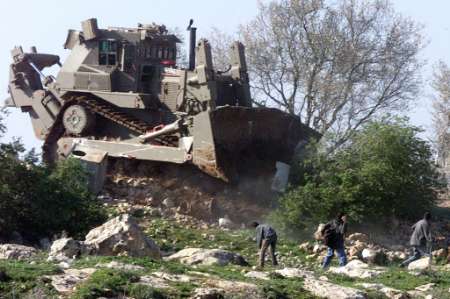
Settlement Activities: Israeli settlers living in the OPT in violation of international humanitarian law have continued to attack Palestinian civilians and property. During the reporting period, IOF demolished 2 houses in al-Fraidees village, southeast of Bethlehem, and a shop in Hares village, west of Salfit, claiming that they were built without licenses.


Israeli Violations Documented during the Reporting Period (8 – 14 November 2007)

The full report is available online at:

html format:

http://www.pchrgaza.org/files/W_report/English/2007/15-11-2007.htm

pdf format:

http://www.pchrgaza.org/files/W_report/English/2007/pdf/Weekly%20Report%2045.pdf

Public Document

For further information please visit our website (http://www.pchrgaza.org) or contact PCHR’s office in Gaza City, Gaza Strip by email (pchr@pchrgaza.org) or telephone (+972 (0)8 2824776 – 2825893).

*Office Hours are between 08:00 – 16:00 hours (05:00 GMT – 13:00 GMT) Sun – Thurs.

-----------------------------------

If you got this forwarded and you want to subscribe, send mail to request@pchrgaza.org

and write "subscribe" in the subject line.