mercoledì 26 settembre 2007

Un journaliste français en butte à la justice israélienne

Gilles Paris, Le Monde, 25/09/07. Selon les témoignages d'autres journalistes présents sur les lieux, Jacques-Marie Bourget, frappé aujourd'hui d'une invalidité de plus 40 %, aurait pu être victime d'un tir provenant d'un hôtel surplombant le carrefour et où avaient pris position des soldats israéliens. La justice israélienne a signifié officiellement à la juge française qu'elle ne collaborerait pas avec elle dans cette affaire.

L'expertise de la balle restée entre le poumon et l'omoplate et extraite ultérieurement tend à accréditer ces témoignages. Elle a montré qu'il s'agissait d'un projectile de fabrication israélienne pouvant être tiré par les fusils d'assaut M-16 ou Galil dont sont équipés les fantassins israéliens. Une commission rogatoire a été délivrée, le 27 avril 2005, par une juge du tribunal de grande instance de Paris. Les autorités israéliennes se sont gardées d'y donner suite, ainsi qu'à une demande de déplacement de la magistrate.

plein text

A new idea to put an end to the Qassam rocket !!

Ezzedeen Alqassam Brigades, 25/09/07. It is not strange to find an occupation army acting with impunity considering mass destruction and deportation of towns and population centers. And on the other hand, it is not strange to find an occupation that has failed to break the will of its victim resort to extreme measures to cover its failure. After all, the regional superpower is annoyed by the "primitive" Qassam rocket.


The occupation political leadership and military commanders have come up with a new idea to put an end to retaliatory rocket attacks against targets beyond the borders of the Gaza Strip. The latest design is the threat to cut off fuel and electricity on the whole Gaza Strip and to consider the Gaza Strip as a " hostile entity". The first step in this threat was cutting off electricity at each rocket launch.

But before talking about the threat and its implications, it is noteworthy to point that occupation forces have continued their attacks on Palestinians and their properties, with total disregard to the unofficial conditional ceasefire observed by Palestinian resistance factions. Over the last month 25 Palestinians have been killed and more than 40 injured; while one Zionist soldier killed during clashes with Palestinian resistance. Hundreds were detained. And thousands of dunums of Palestinian land was confiscated.

The occupation military leadership, fully knowing that Palestinian resistance factions can fire rockets from anywhere in the Strip and still hit their targets, threaten to have a large scale operation in the Gaza Strip. The message is that "destruction will be brought to any area where rockets are fired from."

This is not the first time that this message was sent to Palestinians. Prior to the withdrawal of occupation soldiers and settlers from the Gaza Strip, the same message was sent. But it failed to stop the resistance. And in the end, the occupation was forced to cut its losses and stop.

The occupation military leadership continues to engage in behavior and strategy blinded by the arrogance of the occupation and military power. This leadership fails to see the suffering it brings to Palestinians on a daily basis; and is shocked when there is an attack against the source of suffering.

It is a leadership that has never faced any serious practical action by the international community to put a stop to the crimes perpetrated against Palestinians. With the total lack of accountability at the international stage, the occupation army continues to perpetrate crimes and cause suffering. And thus, the silence has given legitimacy to these actions.

Thus, it is not strange to find an occupation army acting with impunity considering mass destruction and deportation of towns and population centers. And on the other hand, it is not strange to find an occupation that has failed to break the will of its victim resort to extreme measures to cover its failure. After all, the regional superpower is annoyed by the "primitive" Qassam rocket.

martedì 25 settembre 2007

Les photos de la vie heureuse des tortionnaires d'Auschwitz


REUTERS/
U.S. HOLOCAUST MEMORIAL MUSEUM
L'un des 116 clichés extraits de l'album privé d'un adjudant du commandant du camp d'Auschwitz et rendus publics, le 20 septembre 2007, par le Mémorial de l'Holocauste, à Washington.


Cécile Colla, Le Monde, 25/09/07.
Les images semblent être tout droit sorties d'un album de vacances : on y voit un groupe de femmes assises sur une balustrade en bois en train de déguster des myrtilles, des hommes et des femmes allongés sur des chaises longues, d'autres en train de chanter et de rire accompagnés par un accordéon.


Ces photographies, qui témoignent pour la première fois du mode de vie des responsables et des personnels du camp d'Auschwitz, ont été rendues publiques jeudi 20 septembre par le Mémorial de l'Holocauste à Washington. Les 116 clichés sont tirés de l'album privé de Karl-Friedrich Höcker, adjudant du commandant du camp de concentration d'Auschwitz de mai 1944 à janvier 1945. Ils ont été remis au Mémorial en début d'année par un ancien membre des services de renseignement militaire américains mort au cours de l'été. L'officier, dont l'identité n'a pas été révélée, les aurait trouvés dans un appartement vide de Francfort en 1946.

Ces images, qui ont fait la "une" du quotidien populaire allemand Bild, confirment les témoignages des survivants d'Auschwitz. Alors que des centaines de milliers de juifs étaient envoyés dans les chambres à gaz, le personnel administratif du camp menait en parallèle une paisible existence. Dans le lotissement SS, à côté, il y avait une piscine, un stade de football et une bibliothèque. Les SS disposaient d'une sorte de maison de vacances située à 30 kilomètres au sud.

De nombreuses photos de l'album y ont été prises. D'autres clichés se rapportent à des activités plus officielles : l'inauguration d'un hôpital SS, des séances de tir ou une marche militaire. Jamais un détenu n'apparaît sur ces photos. Lors de son procès en 1962, Karl-Friedrich Höcker, qui sera condamné à sept ans de prison, s'était retranché derrière son devoir. Il est mort en 2000 à 88 ans.

Autre découverte d'importance, le funeste docteur Josef Mengele, dont il existe très peu de photographies, apparaît sur huit clichés. Ce médecin nazi surnommé "l'ange de la mort" qui pratiquait des expériences médicales sur les détenus, est mort en Amérique latine en 1979.

Les photos de Karl-Friedrich Höcker contrastent avec les rares autres images existantes du camp d'Auschwitz avant sa libération. Le mémorial Yad Vashem, en Israël, possède plusieurs photos prises par un officier SS le 26 mai 1944 sur l'arrivée de juifs en provenance de Hongrie, la sélection, la marche en direction des chambres à gaz et l'activité des fours crématoires.

La découverte tardive de ces photos, peu commentée outre-Rhin en dehors de Bild, y suscite quelques interrogations. "Les services secrets américains voulaient-ils protéger certains criminels ? Ou bien le rapport avec l'album n'est qu'un exemple supplémentaire pour le désintérêt croissant avec lequel les Alliés ont poursuivi les criminels nazis", souligne l'hebdomadaire Der Spiegel dans son édition de lundi 24 septembre.

Cécile Calla

Israel on path to becoming a pariah state

Carlo Strenger strenger@freud.tau.ac.il, Haaretz, 25/09/07. Many of us believe that Israel's moral fiber has been fatally harmed by the occupation and by the two Lebanon wars. The result is that both morally and strategically, the continued occupation and subjugation of the Palestinian people has put us on the wrong side of history. Israel's way of dealing with the Palestinians and Lebanon in the last few decades has led to a long-term process in which the Western world is beginning to see Israel as a pariah state that has no true affinity to Western values. Hence, it is not on the 'right' side of the clash of civilizations, as was reflected in the French ambassador to Britain calling Israel "that shitty little country" not long ago.

Behaving in a manner befitting the standards of the Western world is far more important for Israel's long-term survival than gaining a few square miles here and there, by building the security wall through Palestinian territories, tearing apart villages, homes and schools, and expanding settlements. Every such act is not just a moral outrage; it pushes Israel one step closer to being disqualified from belonging to the West.

The writer is professor of Psychology at Tel Aviv University, and a member of the Permanent Monitoring Panel on Terrorism of the World Federation of Scientists.

Palestinian Security Uses Force to Disperse Peaceful Women’s Rally

Press Release, 23/09/07. PCHR strongly condemns the use of force by Palestinian security forces to disperse a peaceful march organized by dozens wives of political prisoners and female Hamas activists yesterday in Ramallah. The Centre affirms that this is a clear violation of the right to peaceful assembly that is constitutionally protected and guaranteed.

The Center’s preliminary investigation indicates that at after noon prayers on Saturday, 22 September 2007, a women’s demonstration composed of tens of wives of political prisoners and female Hamas activists issued from Jamal Abdel Naser Mosque and headed towards El-Manara Square in the center of Ramallah. When the demonstration came close to the square, tens of male and female Palestinian police intercepted the demonstration and formed a human chain in front of the demonstrators. When the demonstrators attempted to move forward, they were pushed back; and the police fired tear gas to disperse them.

Mona Mansour, PLC member from the Change and Reform List, participated in the demonstration. She informed PCHR’s fieldworker that she was dizzy and ill as a result of the tear gas. After returning to her hometown of Nablus, she went to El-Rahma clinic for treatment. She stated that, since mid-June, the security forces have detained approximately 850 people suspected of affiliation with Hamas. About 150 of them remain in custody.

Over the past 3 days, Palestinian security forces have detained 13 Hamas supporters. On 20 September 2007, Palestinian security forces detained Ghassan El-Tanbour (Nablus), Mahmoud Darwish El-Meseimi (Askar refugee camp), Naser Abd El-Latif Dabous (Beit Ebba), Ahmad Salatna (Jenin), Yusef Abu Ras (Hebron), Noah Abd El-Aziz El-Harish (Beitunia), and Hussein Suwwan (Ammatin). And on 21 September, Palestinian security detained Fayyad El-Aghbar (Nablus), Husam El-Qataluni (Nablus), Khaled Ata (Ein Beit El-Ma’ refugee camp), Mohammad Yasir Abu El-Rob (Maseela), Mohammad Yusef Abu El-Rob (Maseela), and Yasir Adeeb Abu El-Rob (Maseela).

In light of these developments, PCHR:

- Strongly condemns the forceful dispersing of the women’s demonstration, including the firing of tear gas and other forms of inhumane treatment.

- Affirm’s people’s full and legitimate right to hold public assemblies and organize demonstrations and peaceful marches as means of protest and expression that are protected by the law and international human rights standards.

- Calls upon the government in Ramallah to immediately investigate these attacks, prosecute the perpetrators, and to take the necessary steps to prevent their recurrence.

- Expresses deep concern over the continued campaign of arrests against Hamas supporters in the West Bank; and calls for stopping this campaign and for respecting the law relevant to arrest and detention operations.

Peace groups challenge gov't separation of Israelis, Palestinians

Amira Hass, Haaretz, 25/09/07. Because of this separation, the Palestinians know only settlers and soldiers - in other words, only those whose conduct and roles in the system justify the Palestinians' conclusion that it is impossible to reach a just agreement and peace with Israel. This separation also reinforces Israelis' racist - or at best, patronizing - attitudes toward the Palestinians.

The anarchists, Machsom Watch, Yesh Din, Rabbis for Human Rights, the Israeli Committee Against House Demolitions, Physicians for Human Rights and other activist groups - few as their members may be - disrupt the separation policy and its ills. They remind the Palestinians that there are other Israelis, so perhaps there is still hope. And in their immediate environment, they expose Israelis to facts and experiences that make it difficult for them to keep wallowing in their voluntary ignorance and disregarding the dangers that our oppressive regime poses over the Palestinians.

Hamas su rilascio 90 prigionieri, Israele si limita a far ruotare una porta girevole

la Repubblica, 25/09/07. Hamas ha criticato aspramente la decisione del governo israeliano di disporre la scarcerazione di una novantina di altri detenuti palestinesi, dopo gli oltre duecentocinquanta liberati lo scorso luglio, negando che si sia trattato di un "gesto di buona volonta'", come ribadito invece dai collaboratori del premier dello Stato ebraico, Ehud Olmert. "Israele si limita a far ruotare una porta girevole, arrestando e liberando prigionieri a proprio piacimento", ha tagliato corto un portavoce del gruppo radicale, Fawzi Barhoum. "Questo e' inaccettabile per il nostro popolo", ha incalzato Barhoum. "Hamas festeggia il rilascio di qualsiasi palestinese recluso, giacche' cio' pone fine alle sue sofferenze, ma allo stesso tempo vuole che siano rimessi in liberta' anche tutti gli altri. L'unico linguaggio che le forze di occupazione comprendono e' quello della forza", ha proseguito il portavoce integralista, "e dunque noi riteniamo che soltanto la forza obblighera' Israele a rilasciare ulteriori detenuti".

Una sola ideologia: fare della Palestina uno stato ebraico con una presenza il più possibile ridotta di palestinesi

Ilan Pappe, Seconda conferenza annuale a Bil’in, medioriente.net., uruknet.info, 18/09/07. Il nostro punto di partenza, sia che si viva sotto occupazione, sia che si viva in esilio, sia che si viva in Israele o che si viva in qualsiasi luogo del mondo e si abbia a cuore la Palestina, il nostro punto di partenza è che questo paese è già un paese con uno stato unico governato da un regime che ubbidisce a una ideologia che non concede ai palestinesi nessuna parte di questa terra sia che essi siano in esilio, sia che vivano a Bil’in, sia che vivano a Nazareth.


Da questo punto di vista noi siamo tutti sotto il dominio di un regime ideologico che lotta per imporre il dominio ebraico su tutto il territorio della Palestina, ed è disposto, almeno per il tempo presente, ad accontentarsi di differenti tattiche e mezzi di occupazione e di controllo del territorio. Ma la strategia è la stessa e l’ideologia è la stessa e quello che noi dovemmo attaccare, affrontare è l’infrastruttura ideologica dello stato ebraico, la struttura ideologica del sionismo. Questa è la origine di tutte le scelte politiche: la politica del 1948 che portò alla pulizia etnica di tre quarti dei palestinesi; questa è l’ideologia che ha prodotto le politiche dal 1967 fino a oggi ; e questa è l’ideologia che guiderà in futuro le politiche contro il popolo che vive al di là del muro, contro il popolo che vive nell’ area della grande Gerusalemme e anche contro i palestinesi che oggi sono cittadini della Stato di Israele, perché, come i più recenti indizi suggeriscono, qualche cosa di veramente importante sta cambiando nella politica verso questa minoranza, mentre noi parliamo.

E questa ideologia è molto chiara e, infatti, a differenza di molti anni fa, l’elite politica ufficiale israeliana ora parla in modo esplicito di questa ideologia. L’elite politica israeliana è stanca di barcamenarsi fra il gioco della democrazia e l’attuale politica di espropriazione etnica e razzista. Qualche cosa è accaduto nell’ultimo anno. Hanno rinunciato all’inerzia; hanno rinunciato alla abilità di barcamenarsi e di apparire in tutto il mondo come se vi fosse un dibattito reale in Israele fra impulsi democratici e una pulsione etnica e razzista. Questo è ciò che realmente sta sul tavolo. Non vi è alcuna necessità di una de-costruzione sofisticata per comprendere che a questo punto l’elite politica israeliana non sta più giocando una partita democratica. Essa sta realizzando gli ultimi capitoli della sua ideologia: fare della Palestina uno stato ebraico con una presenza il più possibile ridotta di palestinesi.


Leading Israeli authors, intellectuals call for truce with Hamas

Shiri Lev Ari and Mazal Mualem, Haaretz Correspondent, 24/09/07. "The appropriate course of action is to negotiate with Hamas to reach a general cease-fire to prevent further suffering for both sides." A long list of prominent intellectuals recently signed a petition calling for Prime Minister Ehud Olmert to negotiate a cease-fire with Hamas.

The signatories of the petition - which was organized by the sponsors of the Geneva Initiative and will be published today - include the novelists Amos Oz, A.B. Yehoshua, David Grossman, Meir Shalev, Judith Katzir, Eli Amir, Savyon Liebrecht, Yehoshua Sobol and Dorit Rabinyan.

The petition, titled "Agreement with [Palestinian Authority Chairman Mahmoud] Abbas, cease-fire with Hamas," reads: "Israel has in the past negotiated with its worst enemies ... Now, the appropriate course of action is to negotiate with Hamas to reach a general cease-fire to prevent further suffering for both sides."

"We believe Israel is facing an opportunity to promote the peace process ahead of the regional peace summit planned for November," the document continued. "We urge the prime minister to strive to reach tangible agreements with the leadership of the Palestinian Authority and not miss this opportunity."

Asked what impact he believes the petition will have, A.B. Yehoshua said: "Only reality will show how significant this petition will be."

President Bush reaffirms his two-state vision

Rami Almeghari , IMEMC & Agencies, 25/09/07. President Gorge. W. Bush reiterated Monday his two-state vision for the resolution of the Palestinian-Israeli conflict. “ I appreciate the fact that you are fighting the extremists who oppose peace” , Bush told Abbas. Meanwhile, President Abbas expressed an optimistic tone regarding the upcoming peace conference. “The meeting should be the precursor to full negotiations on the permanent status, we have faith and trust," Abbas said.

President Bush, right, President Abbas, left, during their meeting Monday

President Bush, right, President Abbas, left, during their meeting Monday

Bush’s remarks came during a joint press briefing with Palestinian president Mahmoud Abbas following a one-hour-long meeting on the sideline of United Nations General Assembly’s annual session in New York.

Bush told reporters “I believe that the two-state solution is workable”.

The U.S president did not refer to the Washington-sponsored conference on Middle East peace, scheduled for this November.

“ I appreciate the fact that you are fighting the extremists who oppose peace” , Bush told Abbas.

Meanwhile, President Abbas expressed an optimistic tone regarding the upcoming peace conference. “The meeting should be the precursor to full negotiations on the permanent status, we have faith and trust," Abbas said.

Also, a separate meeting involving President Bush, President Abbas and Palestinian Prime Mistier, Salam Fayyad, was held yesterday.

Preparations for the likely conference, such as a specific agenda and number or identities of invitees, have not been made public yet

Puppet leader

Gideon Levy, Haaretz, 23/09/07. Mahmoud Abbas has to stay home. As things stand right now, he must not go to Washington. If Abu Mazen were a genuine national leader instead of a petty retailer, he would refuse to participate in the summit and any other meetings until the blockade of Gaza is lifted. Palestinians live in Gaza, too - an area controlled by Hamas, which Abu Mazen so loathes: He cannot continue to ignore the inhumane conditions in which Gazans live, caged in by Israel. The least one could expect from the person with the lofty title of "President of the Palestinian Authority" is to strive for the greater good of all his people, especially in light of the extent of their distress. If he were a man of truly historic stature he would add that no conference can be held without Ismail Haniyeh, another crucial Palestinian representative. And if Israel really wanted peace, not only an "agreement of principles" with a puppet-leader that will lead nowhere, it should respect Abbas' demand. Israel should aspire for Abu Mazen to be considered a leader in the eyes of his people, not only a marionette whose strings are pulled by Israel and the United States, or affected by other short-term power plays.

Mahmoud Abbas has to stay home. As things stand right now, he must not go to Washington. Even his meetings with Ehud Olmert are gradually turning into a disgrace and have become a humiliation for his people. Nothing good will come of them. It has become impossible to bear the spectacle of the Palestinian leader's jolly visits in Jerusalem, bussing the cheek of the wife of the very prime minister who is meanwhile threatening to blockade a million and a half of his people, condemning them to darkness and hunger.

If Abu Mazen were a genuine national leader instead of a petty retailer, he would refuse to participate in the summit and any other meetings until the blockade of Gaza is lifted. If he were a man of truly historic stature he would add that no conference can be held without Ismail Haniyeh, another crucial Palestinian representative. And if Israel really wanted peace, not only an "agreement of principles" with a puppet-leader that will lead nowhere, it should respect Abbas' demand. Israel should aspire for Abu Mazen to be considered a leader in the eyes of his people, not only a marionette whose strings are pulled by Israel and the United States, or affected by other short-term power plays.

Right now power rests with the powerless Abu Mazen. Since Washington - and perhaps Jerusalem as well - badly want the photo-op otherwise known as a "peace summit" to show off an "achievement," Abu Mazen could and should threaten to boycott the meeting to try and force some achievement on behalf of his people. Palestinians live in Gaza, too - an area controlled by Hamas, which Abu Mazen so loathes: He cannot continue to ignore the inhumane conditions in which Gazans live, caged in by Israel.

But the impression Abu Mazen makes is that he's no more than a political survivor. He's participating in the American-Israeli masked ball not because of naivete or weakness - for him, Gaza is just as "hostile territory" as Israel is. Therefore, he shares a shameful common interest with Israel, which will do neither side any good. Judging by his behavior Abu Mazen not only doesn't object to what Israel is doing in Gaza, he may even agree with the twisted doctrine arguing that cruel pressure will subdue Hamas and return the people to Fatah's embrace. In so doing, Abu Mazen proves that he's no "downy chick," as Ariel Sharon once put it, but a cynical rooster who cares little for the welfare of his people.

A genuine peace conference should involve all the hawks. Peace is forged between bitter enemies. The question of whether Saudi Arabia will take part in the summit or not is futile unless it includes real Palestinian representation. At most Abu Mazen represents only half of his people and could achieve, at best, half an agreement that wouldn't survive anyhow, given Hamas' strong opposition. It is in the interests of all the parties involved, including Abu Mazen, to drag Hamas to the negotiation table. A peace conference without Hamas and without Syria is a joke. But the short-sighted coalition of the royal triumvirate, Jerusalem-Washington-Ramallah, is trying to promote a false vision of "peace talks" without the decisive partners, while the world is busy applauding this illusion.

Obviously, it is hard to expect from Abu Mazen that he will rise above his narrow interests and call for an invitation to be issued to Hamas, the party that was democratically elected to lead the Palestinian government. But the least one could expect from the person with the lofty title of "President of the Palestinian Authority" is to strive for the greater good of all his people, especially in light of the extent of their distress. But instead of acting to bring about a cessation of hostilities and opening Gaza to the world, the triumvirate is busy formulating yet another position paper that won't be worth the paper it's written on and that will soon find itself in the garbage bin of history, along with its predecessors. It will only serve to impose increasingly cruel hardships on the people of Gaza. Abu Mazen must not participate in this farce.

Laws and human rights violations by members of the Executive Force and Izzedeen El-Qassam Battalions.

PCHR
Palestinian Centre for Human Rights
His Excellency Ismail Haniya
Prime Minister
Dismissed Palestinian Government
13 September 2007

Subject: Concern over some violations by members of the Executive Force and Izzedeen El-Qassam Battalions.

The Palestinian Centre for Human Rights sends you its warmest greetings, and highly values your continuous efforts to manage the Gaza Strip despite the difficult circumstances and the deep political crisis storming the Palestinian Authority and threatening to destroy the national struggle.
The split in the Executive authority has resulted in a split in the Legislative authority and paralysis in the judicial authority.
We preferred sending you this legal document out of appreciation for your previously expressed
position and commitment to respect and protect human rights. And in the spirit of candidness and preserving public interests, and stemming from our work as an independent professional
organization dedicated to protecting human rights and promoting rule of law, we hereby present
you with a number of violations that have been repeated by members of the Executive Force and Izzedeen El-Qassam Battalions. And we are certain that you will not preserve any effort to remedy these violations, and will take the necessary steps to put an end to them and hold those responsible accountable to their deeds.
I- Violations of freedom of expression and journalism rights:
The Clashes in June witnessed many attacks by both sides of the conflict (Fatah, Hamas, their
military branches and affiliated security services) on media outlets in the Gaza Strip and West
Bank. Despite the severity of these attacks, we had hoped for a new chapter in the Gaza Strip after the end of military operations between both sides. We had hoped that your statements and
directives to protect freedom of expression and journalism rights would be translated on the
ground.
However, we are greatly concerned in this regard due to the negative conduct by responsible
parties. The latest attack targeted at least 14 journalists on 7 September 2007 as they were
overing the attacks of the Executive Force on civilians who attempted to conduct prayers in
public areas. Prior to this date, the Executive Force perpetrated similar attacks on 25 August 2007 on a number of journalists covering a Fatah demonstration in Gaza.
The Centre also documented other attacks including: attack on journalists and the Arabiya Satellite Station office in Gaza on 13 August 2007; continued ban on Palestinian TV broadcast from Gaza, and the prevention of broadcasting one of its programs from Ramattan Studios on 1 August 2007.
Obstructing the entry of newspapers issued in the West Bank and detaining their distributors on 30 July 2007; the attack on 3 journalists covering a demonstration by national parties in Khan Yunis on 12 July 2007 and forcing them to erase photos and photage prior to their release.
PCHR stresses the importance of redoubling efforts and giving clear instructions to the Executive Force to respect and protect freedom of expression and journalism rights, which are basic human rights that are protected by the Palestinian Basic Law.
II- Violations against participants in prayers in public areas:
For the third consecutive week, PCHR has documented attacks by the Executive Force and
occasionally Izzedeen El-Qassam Battalions on dozens of civilians for responding to calls by Fatah and other PLO factions to perform Friday Prayers in public areas. These attacks included the use of force, including gunshots, beating, and other forms of inhumane treatment, to prevent
civilians from reaching public areas designated for prayers. They were dispersed by force despite the peaceful nature of these activities. In addition, tens of civilians were detained; and they were beaten and abused during detention.
PCHR strongly condemns the Executive Force for forcefully preventing civilians from performing prayers in public areas in the Gaza Strip. In addition, the Centre strongly condemns the detentions and arrests by the Executive Force, led by the detention of Dr. Zakaria El-Agha (member of the PLO Executive Committee), Ibrahim Abu El-Naja (president of the National Follow up Committee of National and Islamic Parties), and other Fatah and PLO officials. The Centre calls upon the dismissed government to rescind its position banning prayers in public areas; and affirms people’s full and legitimate right to do so and to organize peaceful
demonstrations as a means of expression and protest protected by the Basic Law and international human rights conventions.
III- Restrictions on the right to assembly:
Preventing prayers in public areas is only one violation of the right to peaceful assembly. PCHR
documented several cases in which the Executive Force dispersed peaceful assemblies by force.
This is a violation of the right to peaceful assembly, which is a basic right protected by the Amended Basic Law of 2003 and the Public Assemblies Law of 1998.
These violations were furthered by the decision of the Executive Force on 13 August 2007 stating: “Stemming from the public interest, and in order to preserve security, and relying on the rule of law, it is forbidden to go out in any demonstration without official permission from the Executive Force.” This decision is a reminder of an announcement on 29 February 2000 by the then Director- General of the Palestinian Police, General Ghazi Jabali, to prevent any public assemblies without his prior permission. The Centre condemned Jabali’s decision and considered it a violation of the spirit and text of the public assemblies law.
After the Force’s decision, PCHR documented at least 2 attacks on peaceful assembly by the
Executive Force:
1- Dispersing a peaceful assembly in the center of Gaza City organized by PLO factions on 13 August 2007.
2- Dispersing a peaceful demonstration by Fatah activists in Gaza City on 24 August 2007.
PCHR is extremely concerned by the decision and practices of the Executive Force, and calls for
rescinding the decision. The Centre affirms that law-enforcement parties do not have any legal
authority to license or ban peaceful demonstrations or any other form of peaceful assembly. The
law states that law-enforcement parties should be “notified” of any such activity; and that the police can put limitations on the duration and route of the activity to “organize traffic.”
IV- Continuation of illegal arrests:
PCHR expressed relief at the release of a number of persons who were illegally detained. However, the Centre is concerned over the illegal detention of several individuals by the Executive Force. According to our information, there are several detainees held for more than a month without regard for legal regulations. The Centre renews its call to respect legal regulations of detention operations, and to ensure that detainees enjoy their right of legal representation through a lawyer, and to ensure family visits.
V- Torture and other forms of cruel and inhumane treatment:
PCHR has documented many cases in which civilians were subjected to torture and other forms of cruel and inhumane treatment during detention and questioning by the Executive Force. Many of them complained that they were treated with vindictiveness due to their status as activists or members of Fatah. Torture was perpetrated in police stations and Executive Force compounds throughout the Gaza Strip, especially in the North, Khan Yunis, and Rafah.
We would like to remind that torture is outlawed by Palestinian Law and by international human rights standards. It is a crime that does not fall by seniority; and its perpetrators must be prosecuted.
VI- Illegal functions of Izzedeen El-Qassam Battalions:
PCHR has documented several cases in which Izzedeen El-Qassam Battalions acted as a police
force, which constitutes a flagrant violation that must be addressed. One of the leading violations
is the establishment of several detention centers administered by El-Qassam Battalions, in which civilians are detained, interrogated, and subjected to torture and other forms of cruel and inhumane treatment. More worrisome is the fact that the Executive Force delivers some of its detainees to El- Qassam Battalions, and holds them in the latter’s detention centers.
The Centre has condemned these illegal actions, which have resulted in the death of a detainee in El-Mashtal detention center northwest of Gaza City. PCHR renews the call to stop these illegal functions.
VII- Excessive use of force and threatening personal safety of civilians:
PCHR has documented several cases in which armed force was used excessively during Executive Force operations, resulting in the death and injury of several civilians, including children and women. Despite our understanding of the Executive Force’s mandate to establish order, especially in the absence of a civilian police force, we affirm the importance of issuing clear instructions that regulate the use of force, including firearms, in accordance with relevant international standards.
VIII- Violations against civil society organizations:
PCHR has documented tens of attacks on civil society organizations in the Gaza Strip and West
Bank during the recent clashes and afterwards. These include attacks on media organizations,
charitable organizations, labor unions, and others. The Centre has strongly condemned these
attacks and called for neutralizing civil society organizations from the conflict, to protect them, and to respect their independence. One of the most notable organizations that continues to come
under attack is the Palestinian General Federation of Labor Unions. The Executive Force and El-Qassam Battalions took over the offices of the Federation on 13 June 2007. Instead of heeding our calls to evacuate the offices and deliver them to the Federation administration, the attacks expanded to include Federation branches in the Gaza Strip and a Federation kindergarten in the northern Gaza Strip.
The Centre renews the call to evacuate the Executive Force from the headquarters of the
Federation, and to deliver it and all branches to the Federation administration to resume work for the benefit of laborers. PCHR affirms that the right to establish unions, associations, federations, coalitions, clubs, and public institutions is a constitutional law protected by the Palestinian Basic Law.
IX- Detention of the Attorney-General, attack on his office, and stopping him from performing his duties:
Since the start of the recent clashes, PCHR has regularly demanded to neutralize the Attorney-General’s Office from the power struggle between Fatah and Hamas. The Centre demanded that the AG and his assistants return to work in the Gaza Strip to preserve public interest.
We were surprised by the decision of Dr. Yusef El-Mansi, the Justice Minister in the dismissed
government, to suspend the AG from work claiming that his appointment was not conducted
according to legal requirements. PCHR affirms that the AG was and is performing his functions
according to the law; and that the Justice Minister is not authorized to infringe on the AG’s
jurisdiction or person. The Minister’s decision is a serious violation of the judicial system, and
hinders justice. Continuing illegal measures against the AG, and in a flagrant violation of the AG’s person and immunity, the Executive Force raided the AG’s office on 16 August 2007 and
assaulted the AG and detained him and his assistants.
PCHR strongly condemns these attacks and calls for prosecuting the perpetrators. The Centre
renews the call to the dismissed government and its Justice Minister to rescind its illegal decision to suspend the AG, and to take serious steps to preserve the impunity and status of the AG and his assistants.
X- Absence of Ombudsman or Complaint Address:
In light of these violations and attacks, we continue to face a serious problem as a human rights
organization in the area of official contacts regarding legal issues (e.g. complaints on behalf of
victims). Although we are aware that accessing the political leadership is relatively easy through
direct correspondence with the Prime Minister, we hope that you will designate a party that is
legally authorized to handle legal issues.

Mr. Prime Minister,
We appreciate your efforts and commitment to respect and protect human rights and public
freedoms. However, these face difficult challenges on the field. And we think that these challenges must be addressed immediately in a manner that reflects your commitments and answer our concerns as a human rights organization. We think that it is extremely important to maintain the delicate balance between the need to impose public order and security and the need to protect and respect human rights. We are certain that you will not preserve any effort to remedy these violations; and that you will take the necessary steps to put and end to them and to hold the responsible parties accountable to their deeds in a clear, transparent, and public manner.

Sincerely,
Raji Sourani
Director,
Palestinian Centre for Human Rights
Public Document
**************************************
For more information please call PCHR office in Gaza, Gaza Strip, on +972 8 2824776 -
2825893
PCHR, 29 Omer El Mukhtar St., El Remal, PO Box 1328 Gaza, Gaza Strip. E-mail:
pchr@pchrgaza.org, Webpage http://www.pchrgaza.org
-----------------------------------
If you got this forwarded and you want to subscribe, send mail to request@pchrgaza.org
and write "subscribe" in the subject line.
------ -- -
To unsubscribe, send mail to request@pchrgaza.org
and write "unsubscribe" in the subject line.
For assistance: info@pchrgaza.org

Primo Levi Israele lo ignorò

Meron Rapoport, L'Espresso, 20/09/07. A lungo le opere di Levi non trovarono editori a Gerusalemme. E non venne neppure chiamato al processo Eichmann. Dan Miron, autorevole critico letterario, ha scritto che l'establishment israeliano non poteva accettare Levi perché il suo modo di concepire la Shoah era contrario alla maniera in cui Israele voleva vedere quel periodo. L'Auschwitz di Levi, dice Miron, non era "un altro pianeta", ma "la continuazione e la manifestazione della 'normale' condotta umana". Israele invece voleva trattare la Shoah come un evento unico, ragione per cui, "il migliore scrittore della Shoah" era ignoto agli studenti israeliani. Anche per Margalit Shlain non è stato un caso se Levi è stato ignorato. Israele cercava eroi, e Levi non era un eroe. La letteratura israeliana sulla Shoah versava sul patetico e Levi guardava Auschwitz con un occhio quasi calmo. E poi non era sionista.

La scoperta del testo di Primo Levi che leggete qui non è risultato di una lunga e travagliata ricerca. 'La deposizione del Dott. Primo Levi, abitante in Torino, C. Vittorio 67' giaceva da quarantasette anni nell'archivio di Yad Vashem, e reca in testa il timbro in ebraico e in inglese 'Central Archives for the Disaster and the Heroism'. 'Disaster' era un goffo tentativo di rendere in inglese l'intraducibile parola Shoah. E Yad Vashem è il più importante centro di documentazione della Shoah, appunto. Un giorno dunque, una studiosa israeliana, Margalit Shlain, preparando, per un convegno, una relazione sulla 'Percezione dell'opera di Primo Levi in Israele' ha pensato di visitare quell'archivio, e così ha trovato la deposizione di Levi stilata a Roma il 14 giugno 1960, e giunta a Yad Vashem nello stesso anno.

Della Shoah, dei suoi molteplici aspetti, ci si occupa in Israele quotidianamente. E allora può essere difficile capire come un testo di uno scrittore come Levi, conosciuto in tutto il mondo per i suoi libri su Auschwitz, non sia stato ritrovato per così lungo tempo. La direzione dell'archivio di Yad Vashem ha detto a 'L'espresso' che la deposizione di Levi arrivò nelle loro mani nel 1960 insieme ad altri documenti provenienti dall'Italia. Levi l'avrebbe affidata ai rappresentanti della magistratura israeliana che lavoravano all'istruttoria del processo ad Adolf Eichmann, l'ideatore della 'soluzione finale del problema ebraico', catturato in Argentina dagli agenti del Mossad nel 1960 (il premier David Ben Gurion ne diede l'annuncio alla Knesset il 23 maggio di quell'anno). La testimonianza di Levi, racconta Shlain, insieme ad altre 50 testimonianze di ebrei italiani, venne trasmessa agli uffici della Procura a Gerusalemme, ma Levi non fu chiamato a testimoniare davanti al tribunale che condannò Eichmann a morte.


Il processo di Eichmann non era un semplice atto giudiziario. Nei primi anni dell'esistenza dello Stato di Israele della Shoah si parlava pochissimo. Il processo, trasmesso in diretta dalla radio per mesi e mesi, era, per Ben Gurion, un'ottima occasione per presentare lo Stato ebraico come l'erede di un ebraismo ferito a morte, un erede che ha però imparato la lezione (mai più Auschwitz e mai più vita in Diaspora), e per raccontare la Shoah al pubblico israeliano. Ecco perché il pubblico ministero Gideon Hausner pensò di convocare come testimoni persone che fossero conosciute al pubblico. Uno di questi era Yehiel Dinur-Feiner, un reduce di Auschwitz, che firmava con lo pseudonimo Ka-Tzetnik i suoi libri un po' scandalistici e con scene molto crude sugli orrori dei campi di sterminio e che era molto popolare negli anni Cinquanta in Israele. Lo scrittore svenne sul banco dei testimoni dopo aver pronunciato parole che sarebbero rimaste impresse nella memoria degli israeliani: "Sono venuto da un altro pianeta, dal pianeta delle ceneri che si chiama Auschwitz".

Levi non era a Gerusalemme. In Israele, Levi era sconosciuto. Così rimase quasi fino alla sua morte. Nel 1968 fece una visita in Israele con una delegazione di partigiani di Torino. Lo storico Isaac Garti lo incontrò a Gerusalemme. Garti aveva letto in italiano 'Se questo è un uomo', era rimasto commosso e voleva tradurlo. Levi, ricorda Garti, era molto interessato a una traduzione del libro. "Aveva contattato parecchie case editrici, ma tutte avevano rifiutato. Gli dicevano: 'Un altro libro sulla Shoah? Ne abbiamo fin troppi. Nessuno lo comprerà'". Levi, ricorda Garti, sorrideva dicendo che capiva benissimo. Un eco di questo incontro con l'incomprensione della sua opera in Israele, si ritrova nella prefazione che Levi scrisse per la traduzione de 'La Tregua', il suo primo libro uscito in ebraico nel 1979. "Sono molto felice e fiero che la mia 'Tregua' vede luce in Israele, molti anni dopo la sua nascita in Italia", scriveva. "Non è strano che il mio primo libro, 'Se questo è un uomo', non sia tradotto in ebraico. 'Se questo è un uomo' è un diario di un campo di concentramento, un soggetto troppo conosciuto". 'La Tregua', sosteneva Levi, racconta invece una storia inedita, per cui era ragionevole sperare in un suo successo. La speranza venne delusa. 'La Tregua', nella sua prima edizione israeliana ha venduto 500 copie. 'Se questo è un uomo' è stato pubblicato in Israele, nella traduzione di Garti, soltanto un anno dopo la morte di Levi. Perché tanto ritardo? Ariel Rathaus, professore di letteratura italiana all'Università di Gerusalemme, dice che Israele segue l'America. Quando in America si cominciò a parlare di Levi (metà anni Ottanta), anche in Israele ci si accorse di lui. 'Il sistema periodico' uscì nel 1987 ed ebbe successo. Più tardi anche gli altri libri di Levi sono stati tradotti in ebraico: il ritardo era solo questione di moda.

Non tutti sono d'accordo. Dan Miron, autorevole critico letterario, ha scritto che l'establishment israeliano non poteva accettare Levi perché il suo modo di concepire la Shoah era contrario alla maniera in cui Israele voleva vedere quel periodo. L'Auschwitz di Levi, dice Miron, non era "un altro pianeta", ma "la continuazione e la manifestazione della 'normale' condotta umana". Israele invece voleva trattare la Shoah come un evento unico, ragione per cui, "il migliore scrittore della Shoah" era ignoto agli studenti israeliani. Anche per Margalit Shlain non è stato un caso se Levi è stato ignorato. Israele cercava eroi, e Levi non era un eroe. La letteratura israeliana sulla Shoah versava sul patetico e Levi guardava Auschwitz con un occhio quasi calmo. E poi non era sionista. Oggi le cose sono cambiate: nei licei si studiano i racconti di Levi, all'università si scrivono tesi sulla sua opera. Perfino Olmert ha citato Levi in uno dei suoi discorsi. Ma poi il convegno per cui Shlain ha scritto la relazione sulle opere di Levi ha avuto luogo in Belgio, non in Israele, e anche lì quel testo che qui potete leggere è stato solo menzionato, non citato nella sua interezza. Per Levi in Israele la strada è ancora lunga.
(20 settembre 2007)

domenica 23 settembre 2007

Nablus: Result of three days of invasion in the Abbas-Fayyad Israeli recognised State of Palestine (6).

Photo: http://www.flickr.com/photos/8606171@N08/
Email From:
Human Supporters [mailto:wajdiyaeesh@gmail.com].
After occupying Ale'n camp three days and four nights, the soldiers left this morning leaving everything destroyed.
I went there this morning to record a film about the destruction. What I sow and I recorded was really horrible, the violence used by soldiers against the people and against the camp itself is without limit.

During the invasion we sow how soldiers occupied houses, arrested people, we sow their reaction and their violence. But compare with what we sow today, I realise that we sow nothing during the invasion!

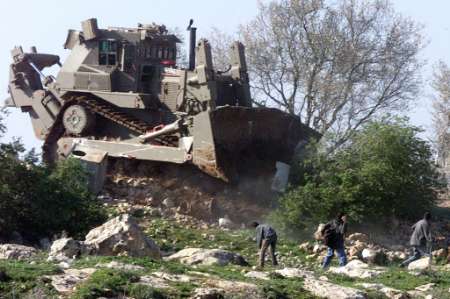
No one single house in the camp has not been occupied. I entered in some houses, the destruction is total. They destroyed everythings in the houses, electric machine, sofas, wardrobes, and it looks for me that they use to enjoy the kitchen, they use to mix the sugar with rice with every things. All the materials of the kitchen specially which made by glass they use to enjoy destroying it. Its not only the houses even the streets, by bulldozer they destroy it, in each corner that i pass i find something destroyed.

One building of three flours was completely destroyed. They begin to destroy it by bulldozer, then they left it. It was already not usable at all but they decided that was not enough... so they finish it by bomb. Seventy people used to live there, now they are homeless. Why ? Because this building included the house of one of the fighters of the camp.

One family told me what's happened to them: they were arrested in one room in their house, one of the soldier who was occupying their house came to the room where they were enclosed and asked them "you don't want to cook, we know that it's Ramadan and you are fasting", so the women say: "ya i want make something for the kids at least, they ate nothing and they are not fasting even", so she went to the kitchen, she prepared some food, she brought it for every body. When they were up to start to eat, one of the soldiers arrived, he took the food plate by plate and he throw each one in the flour in front of the people who were fasting, in front of the kids who needed it.
Finally the invasion finished, the result is two martyrs, 49 prisoners, 70 injured.

Delegation of the European Parliament’s Committee of Development to the Palestinian Territories

DEVE, 21/09/07. The delegation is deeply shocked by the unprecedented humanitarian crisis it witnessed in the Palestinian Territories. It urges the European Union to take immediate action to stop the collective punishment against the Palestinian people inflicted by the Israeli authorities which deprives them from building a viable economy, impedes the delivery of humanitarian assistance and the implementation of development aid projects. The delegation warns against the risk and unpredictable consequences of the current crisis, if the occupation does not end.

The Members of the delegation consider that the planned Middle-East Peace conference, to be held in November 2007 in New York, would represent an opportunity for achieving peace between Israelis and Palestinians providing that all relevant stakeholders are actively involved in the conduct of negotiations and in good-faith, resulting in a final agreement according to the UN Resolutions and the Arab initiatives.

In the meantime, it is essential that the Palestinian extremists groups stop any military action against the Israeli population. Israel has to remove the existing closure and check points, ensuring the freedom of movement for people and goods and refrain from any military actions against the Palestinian population.

The delegation visited agricultural projects, the Shifa hospital, the Director of the Coastal Municipalities Water Utility for the Palestinian National Authority. They also met with the Minister of Planning, the Mayor of Gaza, The Mayor of Hebron, several human rights activists, representatives of the civil society, businessmen, the Commissioner General of the United Nations Relief and Works Agency (UNRWA), and the United Nations Office for the Coordination of Humanitarian Affairs (OCHA).

It heard dramatic testimonies regarding the food security situation, the problems regarding water resources and energy supplies. Other important points raised were the Palestinians struggle for the right to basic education and health services, accompanied by a complete disruption of the economic life and suspension of development projects.

The constant deterioration of the situation in the Palestinian Territories pre-empts the conduct of a normal development policy and results in the high dependency on emergency aid. The delegation takes the view that in order to resume a sustainable economic activity, the removal of the political obstacles, and in particular the existing closures are essential.

The delegation considers the humanitarian crisis in Gaza to be of the highest urgency, and in this respect shares the views expressed by UNRWA; IMF and the World Bank Report. The economic, social and cultural life is disrupted. As the area is closed and goods can not be imported or exported, this brings the economy to collapse. The unemployment rate has risen sharply (currently around 70 %), most factories and shops are closed, and many families are unable to pay for basic commodities, even bread. The disposal of household waste is very intermittent giving further concern to the health of the population of the Gaza Strip. The water system is polluted which is a risk to babies and to all people. The NGOs denounced the suspension of development projects due to the closures, and the lack of construction materials. The scarce resources diminish the quality of medical care. The Gaza Strip and Hebron resemble ghost cities.

Deep concern was expressed about Israel’s decision to interrupt the provision of essential services, such as electricity and fuel to the Gaza Strip.

The delegation became very aware that the chance to have a lasting and just peace in the area through negotiations and agreements which will put an end to the military occupation and bring to the coexistence of two states in reciprocal security and defined borders can only be realised if the obstacles which makes daily life impossible for Palestinians (notably the construction of walls, the increasing number of settlements and the daily intrusion of the military in the West Bank), be removed now.


Mr Thijs Berman (PES, NL) Chair of the Delegation; Mr Ryszard Czarnecki (UEN, PL), Ms Margrete Auken (GREENS/EFA, DK), Ms Luisa Morgantini (Vice President of the European Parliament GUE/NGL, IT); Mr Kyriacos Triantaphyllides (GUE/NGL, CY), Chair of the EP delegation for relations with the Palestinian Legislative Council.