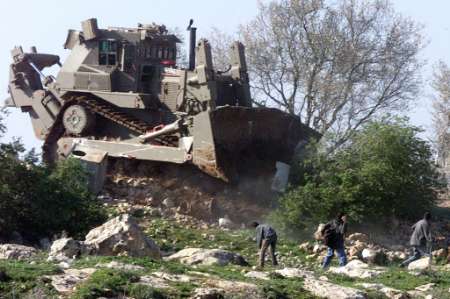
Marco Ansaldo, la Repubblica, 22.08.07. GERUSALEMME - Al buio da giorni. Con le provviste in frigo ormai scadute, e il latte per i bambini andato a male. Ma da oggi la corrente elettrica ritorna. A Gaza l´hanno chiamata «la guerra della luce». Per alcune notti ha lasciato un milione e mezzo di persone a brancolare nelle tenebre, con il ritorno dei lumi a petrolio nelle case e le strade illuminate da riverberi sempre più fiochi.
Ma ieri l´Unione europea ha deciso di cedere nel braccio di ferro che la opponeva ad Hamas, il movimento leader della Striscia, scegliendo di riprendere le forniture di gasolio per la centrale elettrica locale. Marcia indietro, dunque. Anche se il sospetto che una parte delle entrate provenienti dal pagamento delle bollette finisca nelle tasche di Hamas rimane. A Gerusalemme un portavoce della Commissione europea ha annunciato che l´erogazione ripartirà «in maniera provvisoria». Bruxelles vuole infatti attendere i risultati dei controlli contabili, per capire dove finiscono i soldi raccolti nella Striscia governata dal giugno scorso con la forza dal movimento islamico che ha cacciato le forze palestinesi fedeli al presidente Abu Mazen.
Hamas si dice soddisfatta del provvedimento. «La Ue - ha dichiarato il suo portavoce Fawzi Barhum - ha capito adesso che non abbiamo nessuna colpa». E il primo ministro Ismail Haniyeh ha detto di accogliere «con piacere una commissione di inchiesta indipendente, per accertare che Hamas non è coinvolta in affari riguardanti l´energia elettrica». Ma è soprattutto la gente a tirare un respiro di sollievo. Da domenica scorsa in tutta la Striscia il black-out era pressochè totale. C´era chi, come nei negozi, poteva far funzionare i generatori privati per impedire il deperimento degli alimenti. Il resto della popolazione doveva però far ricorso a torce con le pile, lampade a gas e a petrolio.
Il tutto nell´ennesima giornata di sangue, con duri scontri fra le milizie palestinesi e l´esercito israeliano. A Beit Hanun una cannonata sparata dai militari dello Stato ebraico, e finita fuori bersaglio, ha ucciso due bambini. Secondo un portavoce delle Forze armate il colpo d´artiglieria era stato esploso contro un´unità di miliziani, forse della Jihad islamica, che avevano appena lanciato razzi Qassam sulla città israeliana di Sderot, situata poco oltre il confine. «Chiunque si trovi nei pressi di uomini armati - ha detto il militare rispondendo alla domanda perché fossero rimasti uccisi degli innocenti - è in pericolo». La cannonata ha quindi centrato per errore il gruppo di bambini intenti a giocare. A morire sono stati due cugini: Abed Ashur di 12 anni e Fadil Mansour di 10. I giornalisti hanno potuto vedere all´ospedale di Jabaliya i loro corpi, sventrati dai proiettili d´artiglieria.
Uno degli ordigni lanciati dalla Striscia aveva centrato un asilo di Sderot, città dove la tensione psicologica di una popolazione da anni sottoposta agli attacchi dal cielo è messa a durissima prova. Per fortuna l´edificio, in questa stagione di vacanze estive, era vuoto, e nello scoppio è rimasta lievemente ferita solo una donna che abita vicino. Un secondo razzo era caduto sulla strada nazionale, esplodendo poco lontano da un distributore di carburante e sfiorando quindi una strage.
Nei giorni scorsi le autorità di Sderot non sono riuscite a convincere il governo a rafforzare la protezione esterna delle scuole, ora che l´anno scolastico ha inizio. Molti genitori hanno espresso una profonda preoccupazione in previsione di lasciare i propri figli in aree per loro non difese a sufficienza. «Prima o poi questi razzi uccideranno qualcuno - denuncia il sindaco - è esattamente questo lo scopo per cui ci vengono tirati addosso».
All´interno della Striscia, mentre si trovavano a soli 600 metri dalla rete metallica che delimita la frontiera, ieri mattina in un raid aereo erano stati uccisi altri tre miliziani della Jihad Islamica, dopo i tre eliminati lunedì mentre erano a bordo di un´auto. Per l´esercito, in tutti e due i casi, gli uomini erano armati con fucili di precisione e «si preparavano a colpire obiettivi israeliani».
venerdì 24 agosto 2007


Public opinion poll gives Abbas slight popularity over Haniyeh
Jerusalem - Ma'an - 22.08.07. The results of a public opinion poll conducted by the Jerusalem Media & Communications Center have been revealed:
* If elections were to happen today, 20.6% would vote for President Abbas while 18.8% would vote for Ismaeel Hanieh
* As part of the final status solution, 93.5% oppose giving Israel any jurisdiction over the area of al-Aqsa Mosque and 81.9% oppose allowing Israel to keep the major settlement blocs in the West Bank, while 67.2% oppose declaring parts of East Jerusalem as the capital of the Palestinian state
* 68.5% support the return of all refugees to their original homeland
* Dialogue between the Palestinian factions is the most preferred solution to end the current internal crisis
--------------------------------------------
In the first public opinion poll conducted by the Jerusalem Media and Communications Center (JMCC) following Hamas' control over the Gaza Strip, results show that a majority of the Palestinian public (46.7%) generally believes that the situation in the Gaza Strip worsened following Hamas' takeover of the Gaza Strip, compared with a ratio of 27.1% who think that the situation has improved.
On the other hand, more people (35.4%) think that the situation in the West Bank improved after the formation of Fayyad's government, compared with 27.9% who think the situation worsened after the formation of Fayyad's government.
Many of the respondents in the Gaza Strip (43.6%) said their feeling of security since Hamas' control has improved when compared with the past, compared with 31.5% who believe the opposite.
In general, the ratio of those who blame Hamas for the internal fighting in Gaza is higher (43.5%) than those who blame the Fatah movement for the internal fighting (28.4%), while some 17.5% blame both Fatah and Hamas.
A large number of respondents (38.3%) agreed that "signs of chaos" and "absence of the rule of the law" decreased during the new government of Fayyad, compared with 23.0% who think that "security chaos" has increased. The remaining ratio (34.4%) believes they have not noticed any change in the security conditions under the new government of Fayyad.
When asked a specific and direct question comparing the performance of the Fayyad government in the West Bank and the discharged government of Haniyeh in the Gaza Strip, 46.5% said that the performance of Fayyad's government is better, and only 24.4% said the performance of Fayyad's government is worse, than Haniyeh's government, while 22.8% don't see any difference between the two governments.
A notable majority of the respondents (67.9%) do not expect the replication of Gaza's internal fighting in the West Bank and, in the same manner, a large number of respondents (79.6%) do not expect to see Hamas take control the West Bank as they have in the Gaza Strip.
On the public assessment of Hamas strength in the West Bank, a majority (77.2%) said the strength of Hamas in Gaza is greater than in the West Bank while only 5.1% saw the opposite. Some 12.3% said Hamas' strength in the West Bank is the same as it is in the Gaza Strip.
With regards to the detailed solutions on ending the current split between the West Bank and the Gaza Strip, 27.9% believe that dialogue between the factions is the solution, while 26.1% believe that the solution lies in returning to the National Unity Government. Some 23.5% view that the solution lies in conducting early elections. Only 16.9% believe that the solution lies in dissolving Haniyeh's government and having Fayyad's government assume control over Gaza.
With regard to the expectations of the public over a potential agreement, 46.8% expect the return to the formation of a National Unity Government, compared with 43.8%, who don't expect this to happen.
President Mahmoud Abbas still enjoys the largest chance of winning the presidential elections if they happened today. A ratio of 20.6% said they would vote for President Abbas, while 18.8% said they would vote for Ismail Haniyeh, and 16.6% said they would vote for Marwan al-Barghouthi.
It is noted that Abbas has made slight gains in popularity in Gaza (23.9%), over than the West Bank (18.7%), while there is a major gap between the popularity of Haniyeh in the Gaza Strip (26.1%) and in the West Bank (14.5%). Generally speaking, there is a slight improvement in the confidence in Abbas (18.3%), compared with 12.4% last March and 13.0% in June 2006.
There is a slight decrease in confidence in Hanieh (16.2%), compared with 19.5% last March and 18.2% in June 2006. With regard to trust in the factions, Hamas suffered a setback in popular trust (21.6%) compared with 25.2% last March and 28.9% in June 2006. On the other hand, the Fatah Movement gained popular trust (34.4%) compared with 31.4% last March and 33.7% in June 2006.
At the level of the general Palestinian public position regarding external political negotiations, half of the respondents support the idea of reaching a Declaration of Principles and the other half rejects this idea.
Regarding exchange of land with Israel in the context of final-status negotiations, a notable majority (61.4%) opposes the idea, while some 38% support the idea. In a more clear referendum, an overwhelming majority of the Palestinian respondents (81.9%) oppose allowing Israel to keep control over settlements in the West Bank in return for Israeli land in the Negev, while only 17.4% agree to this.
The most salient political position was over the issue of the Palestinian refugees' cause, as a notable majority (68.5%) said the resolution of this issue is "through the return of the refugees to their homes", while a ratio of 12.8% said that the solution lies in the return of the refugees to a future Palestinian state. Some 6.7% support a solution based on compensation.
* If elections were to happen today, 20.6% would vote for President Abbas while 18.8% would vote for Ismaeel Hanieh
* As part of the final status solution, 93.5% oppose giving Israel any jurisdiction over the area of al-Aqsa Mosque and 81.9% oppose allowing Israel to keep the major settlement blocs in the West Bank, while 67.2% oppose declaring parts of East Jerusalem as the capital of the Palestinian state
* 68.5% support the return of all refugees to their original homeland
* Dialogue between the Palestinian factions is the most preferred solution to end the current internal crisis
--------------------------------------------
In the first public opinion poll conducted by the Jerusalem Media and Communications Center (JMCC) following Hamas' control over the Gaza Strip, results show that a majority of the Palestinian public (46.7%) generally believes that the situation in the Gaza Strip worsened following Hamas' takeover of the Gaza Strip, compared with a ratio of 27.1% who think that the situation has improved.
On the other hand, more people (35.4%) think that the situation in the West Bank improved after the formation of Fayyad's government, compared with 27.9% who think the situation worsened after the formation of Fayyad's government.
Many of the respondents in the Gaza Strip (43.6%) said their feeling of security since Hamas' control has improved when compared with the past, compared with 31.5% who believe the opposite.
In general, the ratio of those who blame Hamas for the internal fighting in Gaza is higher (43.5%) than those who blame the Fatah movement for the internal fighting (28.4%), while some 17.5% blame both Fatah and Hamas.
A large number of respondents (38.3%) agreed that "signs of chaos" and "absence of the rule of the law" decreased during the new government of Fayyad, compared with 23.0% who think that "security chaos" has increased. The remaining ratio (34.4%) believes they have not noticed any change in the security conditions under the new government of Fayyad.
When asked a specific and direct question comparing the performance of the Fayyad government in the West Bank and the discharged government of Haniyeh in the Gaza Strip, 46.5% said that the performance of Fayyad's government is better, and only 24.4% said the performance of Fayyad's government is worse, than Haniyeh's government, while 22.8% don't see any difference between the two governments.
A notable majority of the respondents (67.9%) do not expect the replication of Gaza's internal fighting in the West Bank and, in the same manner, a large number of respondents (79.6%) do not expect to see Hamas take control the West Bank as they have in the Gaza Strip.
On the public assessment of Hamas strength in the West Bank, a majority (77.2%) said the strength of Hamas in Gaza is greater than in the West Bank while only 5.1% saw the opposite. Some 12.3% said Hamas' strength in the West Bank is the same as it is in the Gaza Strip.
With regards to the detailed solutions on ending the current split between the West Bank and the Gaza Strip, 27.9% believe that dialogue between the factions is the solution, while 26.1% believe that the solution lies in returning to the National Unity Government. Some 23.5% view that the solution lies in conducting early elections. Only 16.9% believe that the solution lies in dissolving Haniyeh's government and having Fayyad's government assume control over Gaza.
With regard to the expectations of the public over a potential agreement, 46.8% expect the return to the formation of a National Unity Government, compared with 43.8%, who don't expect this to happen.
President Mahmoud Abbas still enjoys the largest chance of winning the presidential elections if they happened today. A ratio of 20.6% said they would vote for President Abbas, while 18.8% said they would vote for Ismail Haniyeh, and 16.6% said they would vote for Marwan al-Barghouthi.
It is noted that Abbas has made slight gains in popularity in Gaza (23.9%), over than the West Bank (18.7%), while there is a major gap between the popularity of Haniyeh in the Gaza Strip (26.1%) and in the West Bank (14.5%). Generally speaking, there is a slight improvement in the confidence in Abbas (18.3%), compared with 12.4% last March and 13.0% in June 2006.
There is a slight decrease in confidence in Hanieh (16.2%), compared with 19.5% last March and 18.2% in June 2006. With regard to trust in the factions, Hamas suffered a setback in popular trust (21.6%) compared with 25.2% last March and 28.9% in June 2006. On the other hand, the Fatah Movement gained popular trust (34.4%) compared with 31.4% last March and 33.7% in June 2006.
At the level of the general Palestinian public position regarding external political negotiations, half of the respondents support the idea of reaching a Declaration of Principles and the other half rejects this idea.
Regarding exchange of land with Israel in the context of final-status negotiations, a notable majority (61.4%) opposes the idea, while some 38% support the idea. In a more clear referendum, an overwhelming majority of the Palestinian respondents (81.9%) oppose allowing Israel to keep control over settlements in the West Bank in return for Israeli land in the Negev, while only 17.4% agree to this.
The most salient political position was over the issue of the Palestinian refugees' cause, as a notable majority (68.5%) said the resolution of this issue is "through the return of the refugees to their homes", while a ratio of 12.8% said that the solution lies in the return of the refugees to a future Palestinian state. Some 6.7% support a solution based on compensation.
giovedì 23 agosto 2007
Israel Told to Ease Palestinian Movement
JERUSALEM -- Israel must provide more freedom of movement in the West Bank and open crossings into Gaza to avoid driving even more Palestinians into poverty after Hamas seized the coastal strip two months ago, the United Nations Mideast envoy said Wednesday.
Israel's decision to shut Gaza's borders to all but humanitarian aid in the wake of Hamas' takeover is threatening an already badly damaged economy _ and "this shows every sign of getting worse," Michael Williams said in an interview with The Associated Press and two other media outlets.
"We do not see how that can be changed short of opening additional crossing points, particularly Karni," Williams said, referring to Gaza's main cargo crossing with Israel.Earlier this month, the U.N. warned that Gaza soon will become entirely dependent on foreign aid and face "disastrous consequences" if the Hamas-run territory remains sealed off. A Palestinian business group warned that at least 120,000 more Gazans could lose their jobs.
President Mahmoud Abbas set up a moderate government in the West Bank after Hamas took control of Gaza. Hamas has charged that Abbas' government, made up of pro-Western officials of the Fatah movement, does not want the crossings opened because such a move would help the Islamic group hold on to power in Gaza.
Diplomats and other officials in contact with the Abbas government privately confirm that this is the case. However, Fatah officials deny it, aware that saying so publicly could open it to charges of colluding with Israel.
Williams praised Israel's recent release of Palestinian prisoners and transfer of millions of dollars in frozen tax funds to Abbas' government. But Williams said he is "concerned that we haven't seen further steps," and urged Israel to release more prisoners and dismantle illegal settlement outposts in the West Bank.
"An elementary constituent of economic development is freedom of movement, and to a very considerable extent that does not exist in the West Bank," he said.
Williams also said he was concerned by an increase in Israeli killings of militants in Gaza in recent days, as well as by reports of human rights violations by Gaza's new Hamas rulers.
Williams began his tenure as U.N. special coordinator for the Middle East in May. He said he will be leaving the job in a few weeks, however, to assume the position of Mideast envoy for British Prime Minister Gordon Brown.
Toward a Realistic Peace
Rudolph Giuliani, Foreign Affairs, September/October 2007. The election of Hamas in the Palestinian-controlled territories is a case in point. The problem there is not the lack of statehood but corrupt and unaccountable governance. The Palestinian people need decent governance first, as a prerequisite for statehood. Too much emphasis has been placed on brokering negotiations between the Israelis and the Palestinians -- negotiations that bring up the same issues again and again. It is not in the interest of the United States, at a time when it is being threatened by Islamist terrorists, to assist the creation of another state that will support terrorism. Palestinian statehood will have to be earned through sustained good governance, a clear commitment to fighting terrorism, and a willingness to live in peace with Israel. America's commitment to Israel's security is a permanent feature of our foreign policy.
The next president must champion human rights and speak out when they are violated. America should continue to use its influence to bring attention to individual abuses and use a full range of inducements and pressures to try to end them. Securing the rights of men, women, and children everywhere should be a core commitment of any country that counts itself as part of the civilized world. Whether with friends, allies, or adversaries, democracy will always be an issue in our relations and part of the conversation. And so the better a country's record on good governance, human rights, and democratic development, the better its relations with the United States will be. Those countries that want our help in moving toward these ideals will have it.
The next president must champion human rights and speak out when they are violated. America should continue to use its influence to bring attention to individual abuses and use a full range of inducements and pressures to try to end them. Securing the rights of men, women, and children everywhere should be a core commitment of any country that counts itself as part of the civilized world. Whether with friends, allies, or adversaries, democracy will always be an issue in our relations and part of the conversation. And so the better a country's record on good governance, human rights, and democratic development, the better its relations with the United States will be. Those countries that want our help in moving toward these ideals will have it.
LATEST GAZA SITUATION REPORT 15-23 AUGUST
SUMMARY POINTS from http://www.ochaopt.org/documents/Gaza_Aug23.pdf
1. In the last 72 hours, 12 Palestinians have been killed by the Israeli Defence Forces (IDF) in the Gaza Strip, including two children.2. Fuel supplies resumed on 22 August to the Gaza Power Station for the first time since 15 August. However, power cuts are still expected due to a continuing lack of capacity.
3. Continuing strikes by the Gaza city municipality have led to thousands of tons of solid waste piling up on street corners, posing public health concerns to those living in surrounding areas.
4. Karni, Gaza’s principal crossing point, remains closed. Basic humanitarian supplies from the private sector and humanitarian agencies are entering through Sufa and Kerem Shalom.
5. All Gazan exports have been blocked since mid-June. Raw materials essential for the Gaza businesses and economy have not been allowed to enter Gaza, preventing production of basic supplies. For example, more than 350,000 UNRWA textbooks cannot be printed because Gaza printing shops lack the requesite raw materials.
6. Paltrade reports that as of 14 August, the direct and indirect potential losses from the closures have reached an estimated at $8 million for the furniture sector, $15 million for garments and textiles and $3 million for processed food. The agriculture sector has estimated export losses at $16 million. 85% of manufacturing businesses have now temporarily shut down, with over 35,000 workers laid off. An additional 35,000 workers have been laid from other sectors including construction, trade and the service sector.
For more information please contact Juliette Touma, 054-81-555-46, toumaj@un.org
United Nations Office for the
Coordination of Humanitarian Affairs (OCHA)
Mac House
P.O.Box 38712
Jerusalem
Tel:++ 972-2-5829962/5853
Fax:++972-2-5825841
email:ochaopt@un.org
www.ochaopt.org
Now.. what ! Back to the electricity problem!
Heba from Gaza, 19/07/07. Back to the electricity problem! A year ago almost in October we had the major electricity power plant in Gaza shelled by F16. Then we suffered living with scheduled electricity for about 4 months. We used to have it for 8 hrs and then not have it for another 8 hrs. Our life was on hold. Bathing the kid, house chores, university assignments, exams studying, watching any TV at all and all other things that you can imagine were scheduled. I used to feel bitter and sad about the lack of electricity. I did not even have the “power” to feel angry. Of course this electricity problem started immediately before Ramdan , the month in which we fast all day and then have our meal by sunset . So we used to eat at the light of candles, how romantic!!. A year later and almost before Ramdan (what a coincidence), the problem arises again because the European Union will not fund the fuel for the major and only Gaza power plant. Mr. Abbas government says that it is the fault of Hamas and the EU says it’s temporary. This time it is not even scheduled as last year. Yesterday we had it for only 4 hrs in the 24 hrs, when I was at work. So again, collective punishment is imposed on Gazans because of political agendas. People are paying the price. My husband drove aimlessly in dark, gloomy, and full of smelly waste streets last night. It almost felt gothic to me. What can we say to the world and our leaders other than have mercy on us; the ill, the elderly and those, who like myself, feel that Gaza has become difficult to cope with.
The law of the land
Laila, 17/08/07. I've been following the situation closely back home. The past few months have really gotten me down-maybe its journalist fatigue.
I get tired having to explain the "situation back home" every time someone finds out I'm from Gaza and have recently been there. This might sound odd for someone with such a public internet persona. But with many people I've come in contact with, I have to start from scratch... forget about ID cards and border crossings and a non-functional, non-sovereign authority split between two still-occupied territories divided by borders and air and water they don't control.
I suppose part of it is realizing my existence is at stake somehow in all of this. I have to renew my Palestinian "passport" soon (I and have that in quotations because the "passport" is, as stated in the first page, issued pursuant to the sham that is Oslo), but I can't go back to Gaza. I have no where to go to, no where to return to. At least not now. Permanence is transient. Transience is permanent.
I've taken to doing some senseless things lately. Trying to clear my mind, regain some perspective. I watched a little bit of "Escape from Alcatrez" the other day. Funny, but it looked like paradise compared to Gaza now. I also just finished reading Ben White's "Brief Encounters with Che Guevera", a collection of short stories, many of them about Haiti and US involvement there. Naturally, I thought of our situation. I thought-can it get any more f****** up than t his? No really, I'm serious, can it?
I'm not sure what it will take anymore for people to realize the absurdity of it all. I mean, sanctioning an occupied people for God's sake? Demanding an end to "violence" by those occupied people all while the US shells out another $30 billion in military aid to the world's third strongest army?
And I'm not talking about the US only here. I'm talking about our very own Arab governments who, from day one, bowed in submission to US commands to freeze financial transactions to Hamas. Yes, the world, including the Arab world, has been complicit in the destruction of a society.
And now we have Abbas the degenerate thinking he's actually running the show in the West Bank; suddenly the money starts coming in, some prisoners scheduled for release anyway are released, leaving thousands of others languishing; and Abbas and his cronies are the new "moderates"; was it worth it? A few weeks ago a friend working with a respected human rights organization asked Saeb Erekat whether there had been any talks or negotiations with Israel regarding re-opening Rafah Crossing. Plain and simple, he answered no. If only he'd exert so much effort in all his negotiations.\
Amazing how just a few years ago Sharon flew to Washington to convince Bush Abbas was not a partner for peace.
And now there are calls for early elections that will exclude parties who "don't obey the law". And what law might that be, exactly?
I get tired having to explain the "situation back home" every time someone finds out I'm from Gaza and have recently been there. This might sound odd for someone with such a public internet persona. But with many people I've come in contact with, I have to start from scratch... forget about ID cards and border crossings and a non-functional, non-sovereign authority split between two still-occupied territories divided by borders and air and water they don't control.
I suppose part of it is realizing my existence is at stake somehow in all of this. I have to renew my Palestinian "passport" soon (I and have that in quotations because the "passport" is, as stated in the first page, issued pursuant to the sham that is Oslo), but I can't go back to Gaza. I have no where to go to, no where to return to. At least not now. Permanence is transient. Transience is permanent.
I've taken to doing some senseless things lately. Trying to clear my mind, regain some perspective. I watched a little bit of "Escape from Alcatrez" the other day. Funny, but it looked like paradise compared to Gaza now. I also just finished reading Ben White's "Brief Encounters with Che Guevera", a collection of short stories, many of them about Haiti and US involvement there. Naturally, I thought of our situation. I thought-can it get any more f****** up than t his? No really, I'm serious, can it?
I'm not sure what it will take anymore for people to realize the absurdity of it all. I mean, sanctioning an occupied people for God's sake? Demanding an end to "violence" by those occupied people all while the US shells out another $30 billion in military aid to the world's third strongest army?
And I'm not talking about the US only here. I'm talking about our very own Arab governments who, from day one, bowed in submission to US commands to freeze financial transactions to Hamas. Yes, the world, including the Arab world, has been complicit in the destruction of a society.
And now we have Abbas the degenerate thinking he's actually running the show in the West Bank; suddenly the money starts coming in, some prisoners scheduled for release anyway are released, leaving thousands of others languishing; and Abbas and his cronies are the new "moderates"; was it worth it? A few weeks ago a friend working with a respected human rights organization asked Saeb Erekat whether there had been any talks or negotiations with Israel regarding re-opening Rafah Crossing. Plain and simple, he answered no. If only he'd exert so much effort in all his negotiations.\
Amazing how just a few years ago Sharon flew to Washington to convince Bush Abbas was not a partner for peace.
And now there are calls for early elections that will exclude parties who "don't obey the law". And what law might that be, exactly?
Olive Harvest 2007: You Are Needed More Than Ever!
Join Us in Palestine for the 2007 Olive Harvest Campaign! Palestinian
farmers and agricultural organizations, in coordination with the
International Solidarity Movement, the International Women's Peace
Service, and the Christian Peacemaker Team announce the 2007 Olive
Harvest Campaign. The campaign will begin on October 16th, after the
end of Ramadan, and will continue for six to eight weeks, depending on
the size of the harvest.

The Israeli government continues to seize Palestinian land throughout
the West Bank to expand settlements and build its illegal annexation
barrier. As this goes on, Palestinian communities continue to resist
Israel's attempts to cement its control of the West Bank and imprison
Palestinians behind walls and fences.

The Olive Harvest is an annual affirmation of Palestinians'
historical, spiritual and economic connection to their land, and a
rejection of Israeli efforts to seize it. Palestinians are the
indigenous people of this land who have farmed olives here for
thousands of years. The annual harvest is a symbol of life for
Palestinian communities.

Agricultural productivity over the last seven years has decreased
dramatically because of closures and sieges, which prohibit access to
farms and markets. Israel's barrier and increased settler attacks on
farmers and their families in the fields have further diminished
Palestinians' ability to earn a living. Over half a million olive and
fruit trees have been destroyed since September 2000. Palestinian
agriculture is being destroyed by the policies of the Israeli
government and the rights of Palestinians to their land and to a
livelihood are being denied.

International and Israeli volunteers join Palestinians each year to
harvest olives, in spite of efforts by Israeli settlers, soldiers and
bulldozers to destroy this vital piece of Palestinian life.

How It Works

The Olive Harvest Campaign provides a wonderful opportunity to spend
time with Palestinian families in their olive groves and homes. The
presence of internationals during harvest time has proven in the past
to help limit and decrease the severity of attacks. Last year (2006)
was the first year since the beginning of the intifada that a farmer
was not murdered while trying to harvest his olives. One farmer was
severely beaten, and in that instance, no internationals or Israelis
were present. Your presence makes all the difference in reducing the
levels of violence Palestinians experience while standing up for their
rights.

After a two-day training session, volunteers for the Olive Harvest
Campaign will stay in Palestinian homes or international apartments in
West Bank communities and accompany Palestinian families to their
olive groves to serve as witnesses to document and expose attacks by
settlers -- supported by the Israeli Army -- on farmers and their
families.

In addition to olive harvest, volunteers will have the opportunity to
join Palestinians in nonviolent protests throughout the West Bank
against the construction of the annexation barrier, settlements and
settlement roads.

This 2007 Olive Harvest Campaign is part of the ongoing work of the
International Solidarity Movement, a Palestinian-led movement
comprising of Palestinian, Israeli and international activists working
to raise awareness about the struggle for Palestinian freedom and an
end to the occupation. ISM uses nonviolent, direct-action methods of
resistance to confront and challenge the Israeli persecution of
Palestinians. With your help and participation, we will expose the
injustice of the Israeli occupation and send a message to the world
that the occupation must end and the wall must fall!

For more information on preparation, travel and arrival in Palestine,
please see the ISM Palestine website, www.palsolidarity.org/main/join/.
ISM support groups located around the world can help answer your
questions about the movement and Olive Harvest Campaign. Many will
provide training sessions. For information on how to contact local ISM
support groups worldwide, please also see the ISM website.


--~--~---------~--~----~------------~-------~--~----~
Please consider a financial donation to help continue the important work of the ISM. You may donate securely online at our website: http://www.palsolidarity.org/main/donations

For more information, visit the ISM website at http://www.palsolidarity.org
PLEASE FORWARD THIS UPDATE WIDELY
martedì 7 agosto 2007
A visit to the jungle
Akiva Eldar, Haaretz, 7/08/07. Last week the prime minister congratulated Ariel College for being elevated by the Judea and Samaria Council of Higher Education to university status. According to all maps, including those of our American friends, the land on which the new university sits is supposed to be an inalienable part of the new Palestinian state. Olmert, like most Israelis, has become accustomed over the past 40 years to living in a world of double meanings. Throughout history, Israeli governments have extended one hand "to peace with the Arabs" while the other hand lays further claim to the occupied territories. In order to maintain the industry of contradictions between what is said and what is done, legal experts constructed a splendid system of overpasses for the politicians. These allow the de facto annexation of Palestinian land, without the need to annex Palestinian residents.
The Council for Higher Education in Judea and Samaria is one of these inventions. It is meant to enable the establishment and development of an Israeli academic institution outside the sovereign territory of the State of Israel. On the one hand the Ministry of Education recognizes the degrees the council grants and the educational programs it approves. On the other hand, the education minister declared recently that the council's decision to upgrade the college is not valid.
The collapse of the Heftsiba construction company sheds light - more precisely, casts a heavy shadow - on the method that enables Israel to talk of peace while continuing to settle the territories. The system of planning and construction regulations was created in line with the requirements of dubious Jewish land salesmen, real estate companies owned by the settlers' leadership, and Palestinian front men who are ready to sell their homeland for a money. The petition to the High Court of Justice filed by the residents of the village of Bil'in and Peace Now stopped the construction in Matityahu East, a new neighborhood in the settlement of Modi'in Illit. The case brought to the fore a terrible phenomenon, in which the State Prosecutor's Office, the local authority and the Civil Administration cooperated - some of them actively and others by turning a blind eye - with a well-oiled system that stole and "laundered" Palestinian properties. Several dozen meters away, inside Israeli territory, no contractor would have gotten away with building hundreds of apartments without the necessary blueprints, building permits, and a basic examination of land ownership documents.
The politicians' mixed signals are complemented by the double standards of law enforcement that enable the settlers, the true rulers of the territories, to make talk of "a political settlement" appear ridiculous.
[All this] reminds us of Ehud Barak's cute metaphor, that Israel is a "villa in a jungle."
The Council for Higher Education in Judea and Samaria is one of these inventions. It is meant to enable the establishment and development of an Israeli academic institution outside the sovereign territory of the State of Israel. On the one hand the Ministry of Education recognizes the degrees the council grants and the educational programs it approves. On the other hand, the education minister declared recently that the council's decision to upgrade the college is not valid.
The collapse of the Heftsiba construction company sheds light - more precisely, casts a heavy shadow - on the method that enables Israel to talk of peace while continuing to settle the territories. The system of planning and construction regulations was created in line with the requirements of dubious Jewish land salesmen, real estate companies owned by the settlers' leadership, and Palestinian front men who are ready to sell their homeland for a money. The petition to the High Court of Justice filed by the residents of the village of Bil'in and Peace Now stopped the construction in Matityahu East, a new neighborhood in the settlement of Modi'in Illit. The case brought to the fore a terrible phenomenon, in which the State Prosecutor's Office, the local authority and the Civil Administration cooperated - some of them actively and others by turning a blind eye - with a well-oiled system that stole and "laundered" Palestinian properties. Several dozen meters away, inside Israeli territory, no contractor would have gotten away with building hundreds of apartments without the necessary blueprints, building permits, and a basic examination of land ownership documents.
The politicians' mixed signals are complemented by the double standards of law enforcement that enable the settlers, the true rulers of the territories, to make talk of "a political settlement" appear ridiculous.
[All this] reminds us of Ehud Barak's cute metaphor, that Israel is a "villa in a jungle."
Gaby Lasky Ta’ayush. Defending Human Rights in Palestine
Sonia Nettnin, Media Monitors Network, 5/08/07. Israeli Human Rights Attorney Gaby Lasky spoke about the challenges Palestinians face under Israeli occupation and Israeli settler violence. Lasky is the former secretary general of Israeli Peace Now and a former lieutenant of the Israeli Defense Forces. Now she represents Israelis, Palestinians and internationals involved in non-violent resistance to Israeli occupation in Israeli courts. She spoke on behalf of an Arab-Jewish grassroots organization called Ta’ayush (in Arabic, means “life in common”), to raise money for their legal fund. Ta’ayush works to eliminate racism and segregation through the creation of an Arab-Jewish partnership.
"How are settlements created? Settlers decide they want to expand the existing settlement, so they set up a tent or a house and a generator …and then it becomes an outpost office settlement. Even though the Israeli Army and the Israeli Government knows it is illegal, the army sends soldiers to care for the settlers. Then the Israeli Government paves roads, connects the settlers to electricity and installs telephone lines to them. Settlers do not install wires, cables, lines, and pylons all by themselves: they have Israel’s continued support for these colonies. “The settlers bring the army with them wherever they go, even if the army and the government understand the settlements are illegal. These outposts are made not only to conquer more land, to create a path for all Jewish-built territories in the Occupied Territories so that even if some government decides to end the occupation it will be very difficult. It will be very difficult to create a viable, Palestinian state because there will be so many settlements that have annexed Palestinian land. Israel has not made the necessary legal activities to make the Geneva Convention part of Israel’s legal system."
OPT: Concern for Gaza patients who cannot go abroad for treatment
JERUSALEM, 2 July 2007 (IRIN) - Many Palestinian patients in the Gaza Strip have been unable to access health care and advanced medical treatment since 9 June, when the Rafah crossing to Egypt was closed.
The medical infrastructure in Gaza is not able to provide certain services to its residents, including many types of surgery, and the Palestinian ministry of health refers patients to hospitals in countries such as Egypt and Israel.
According to the World Health Organization (WHO), in 2003 some 7,844 cases were referred abroad, of which 62.5 percent were sent to Egypt for treatment via Rafah. Now, this option no longer exists.
"The WHO is concerned about access for patients who need to travel for treatment," said Mahmoud Daher from the WHO in Gaza.
WHO estimates that between 300-400 patients a month need to travel through Rafah for medical care.
Dr Fawzi Nabulssi, from the Intensive Care Unit at Gaza's main Shifa Hospital, said five patients, all in a critical condition, await transport to Egypt.
Erez crossing
Israel has allowed some patients to travel through Erez crossing to receive treatment in Israeli hospitals and West Bank medical centres, at a rate of about 15 a day.
However, travelling through Erez requires Israeli issued permits, a problem for some as they are deemed "security risks".
"Right now, if someone is security restricted, access to advanced medical care may be off limits all together," said a medical official, who is not authorised to speak to the press.
Waiting to travel
Yousef Abed, a 24-year-old fire-fighter, was one of the over 500 people injured in the clashes between the rival Hamas and Fatah factions in Gaza 9-14 June.
He has tried, and failed, to travel to Ramallah, in the West Bank, for treatment for the gunshot wounds which injured his jaw and knee.
"I went to Erez, after the incidents ended here. While we were [at the crossing], clashes took place between the Israelis and militants from Hamas," Abed said from his bed in Shifa hospital.
Similarly, Hekmet Baker, 22, was targeted by militants for his alleged political affiliations. He suffered severe damage to his liver and kidney.
"I am dying here and I'm forgotten," he said.
His brother continues to press hospital officials to secure a transfer for him to a hospital outside Gaza where he can receive treatment.
Food aid
While, food aid continues to arrive in Gaza, residents still face hardships.
The UN’s World Food Program (WFP) said that although the situation had improved, daily basic consumption needs have not been met.
"The WFP remains extremely concerned about the stock of basic commodities in Gaza, and we continue to closely monitor the situation," said Kirstie Campbell, a spokeswoman for the agency.
Also, as Palestinians in Gaza remain unable to export their goods due to the border closures, people's purchasing power has diminished. Over 85 percent of the population lives below a poverty line set at US$2.41 a day.
This affects their ability to buy basic supplies such as drinking water, fuel and soap.
Cash transfer
On 1 July Palestinian officials confirmed they had received about US$117 million from Israel, out of an estimated US$600 million in withheld tax revenues Israel refused to transfer when Hamas was part of the Palestinian Authority government.
Israel's cabinet authorised the move, after Palestinian President Mahmoud Abbas set up an emergency government based in the West Bank, without Hamas members.
Palestinian observers said a fair portion of the monies would go towards the salaries of civil servants, who have not received regular payments in over a year.
The medical infrastructure in Gaza is not able to provide certain services to its residents, including many types of surgery, and the Palestinian ministry of health refers patients to hospitals in countries such as Egypt and Israel.
According to the World Health Organization (WHO), in 2003 some 7,844 cases were referred abroad, of which 62.5 percent were sent to Egypt for treatment via Rafah. Now, this option no longer exists.
"The WHO is concerned about access for patients who need to travel for treatment," said Mahmoud Daher from the WHO in Gaza.
WHO estimates that between 300-400 patients a month need to travel through Rafah for medical care.
Dr Fawzi Nabulssi, from the Intensive Care Unit at Gaza's main Shifa Hospital, said five patients, all in a critical condition, await transport to Egypt.

Erez crossing
Israel has allowed some patients to travel through Erez crossing to receive treatment in Israeli hospitals and West Bank medical centres, at a rate of about 15 a day.
However, travelling through Erez requires Israeli issued permits, a problem for some as they are deemed "security risks".
"Right now, if someone is security restricted, access to advanced medical care may be off limits all together," said a medical official, who is not authorised to speak to the press.
Waiting to travel
Yousef Abed, a 24-year-old fire-fighter, was one of the over 500 people injured in the clashes between the rival Hamas and Fatah factions in Gaza 9-14 June.
"I went to Erez, after the incidents ended here. While we were [at the crossing], clashes took place between the Israelis and militants from Hamas," Abed said from his bed in Shifa hospital.
Similarly, Hekmet Baker, 22, was targeted by militants for his alleged political affiliations. He suffered severe damage to his liver and kidney.
"I am dying here and I'm forgotten," he said.
His brother continues to press hospital officials to secure a transfer for him to a hospital outside Gaza where he can receive treatment.
Food aid
While, food aid continues to arrive in Gaza, residents still face hardships.
The UN’s World Food Program (WFP) said that although the situation had improved, daily basic consumption needs have not been met.
"The WFP remains extremely concerned about the stock of basic commodities in Gaza, and we continue to closely monitor the situation," said Kirstie Campbell, a spokeswoman for the agency.
Also, as Palestinians in Gaza remain unable to export their goods due to the border closures, people's purchasing power has diminished. Over 85 percent of the population lives below a poverty line set at US$2.41 a day.
This affects their ability to buy basic supplies such as drinking water, fuel and soap.
Cash transfer
On 1 July Palestinian officials confirmed they had received about US$117 million from Israel, out of an estimated US$600 million in withheld tax revenues Israel refused to transfer when Hamas was part of the Palestinian Authority government.
Israel's cabinet authorised the move, after Palestinian President Mahmoud Abbas set up an emergency government based in the West Bank, without Hamas members.
Palestinian observers said a fair portion of the monies would go towards the salaries of civil servants, who have not received regular payments in over a year.
Israel's Jewish problem in Tehran
Jonathan Cook, The Electronic Intifada, 6 August 2007. There is an interesting problem with selling the "Iran as Nazi Germany" line. If Ahmadinejad really is Hitler, ready to commit genocide against Israel's Jews as soon as he can get his hands on a nuclear weapon, why are some 25,000 Jews living peacefully in Iran and more than reluctant to leave despite repeated enticements from Israel and American Jews?
What is the basis for Israel's dire forecasts -- the ideological scaffolding being erected, presumably, to justify an attack on Iran? Helpfully, as US President George W. Bush defended his Iraq policies last month, he reminded us yet again of the menace Iran supposedly poses: it is "threatening to wipe Israel off the map."
This myth has been endlessly recycled since a translating error was made of a speech Ahmadinejad delivered nearly two years ago. Farsi experts have verified that the Iranian president, far from threatening to destroy Israel, was quoting from an earlier speech by the late Ayatollah Khomeini in which he reassured supporters of the Palestinians that "the Zionist regime in Jerusalem" would "vanish from the page of time."
He was not threatening to exterminate Jews or even Israel. He was comparing Israel's occupation of the Palestinians with other illegitimate systems of rule whose time had passed, including the Shahs who once ruled Iran, apartheid South Africa and the Soviet empire. Nonetheless, this erroneous translation has survived and prospered because Israel and its supporters have exploited it for their own crude propaganda purposes.
In the meantime, the 25,000-strong Iranian Jewish community is the largest in the Middle East outside Israel and traces its roots back 3,000 years. As one of several non-Muslim minorities in Iran, Jews there suffer discrimination, but they are certainly no worse off than the one million Palestinian citizens of Israel -- and far better off than Palestinians under Israeli occupation in the West Bank and Gaza.
Iranian Jews have little influence on decision-making and are not allowed to hold senior posts in the army or bureaucracy. But they enjoy many freedoms. They have an elected representative in parliament, they practice their religion openly in synagogues, their charities are funded by the Jewish diaspora, and they can travel freely, including to Israel. In Tehran there are six kosher butchers and about 30 synagogues. Ahmadinejad's office recently made a donation to a Jewish hospital in Tehran.
As Ciamak Moresadegh, an Iranian Jewish leader, observed: "If you think Judaism and Zionism are one, it is like thinking Islam and the Taliban are the same, and they are not." Iran's leaders denounce Zionism, which they blame for fueling discrimination against the Palestinians, but they have also repeatedly avowed that they have no problem with Jews, Judaism or even the state of Israel. Ahmadinejad, caricatured as a merchant of genocide, has in fact called for "regime change" -- and then only in the sense that he believes a referendum should be held of all inhabitants of Israel and the occupied territories, including refugees from war, on the nature of the government.
Despite the absence of any threat to Iran's Jews, the Israeli media recently reported that the Israeli government has been trying to find new ways to entice Iranian Jews to Israel. The Ma'ariv newspaper pointed out that previous schemes had found few takers. There was, noted the report, "a lack of desire on the part of thousands of Iranian Jews to leave." According to the New York-based Forward newspaper, a campaign to convince Iranian Jews to emigrate to Israel caused only 152 out of these 25,000 Jews to leave Iran between October 2005 and September 2006, and most of them were said to have emigrated for economic reasons, not political ones.
To step up these efforts -- and presumably to avoid the embarrassing incongruence of claiming an imminent second Holocaust while thousands of Jews live happily in Tehran -- Israel is now backing a move by Jewish donors to guarantee every Iranian Jewish family $60,000 to settle in Israel, in addition to a host of existing financial incentives that are offered to Jewish immigrants, including loans and cheap mortgages.
The announcement was met with scorn by the Society of Iranian Jews, which issued a statement that their national identity was not for sale. "The identity of Iranian Jews is not tradable for any amount of money. Iranian Jews are among the most ancient Iranians. Iran's Jews love their Iranian identity and their culture, so threats and this immature political enticement will not achieve their aim of wiping out the identity of Iranian Jews."
However, this financial gesture may not only be unwelcome but self-fulfilling too, if past experience is the yardstick. Israel introduced a similar scheme a few years ago, when Argentina's economy plunged into deep recession, broadcasting an offer of $20,000 to every Jew who settled in Israel. Months later the Israeli media reported a rise in anti-Semitic attacks in Argentina, only adding to the pressure on Jews there to leave. Of course, there was no mention of a possible causal connection between the attacks and Israel's generous offer to Jews to abandon their homeland as other Argentinians sank into poverty.
But if financial enticements -- and a possible popular backlash -- fail to move Iranian Jews, there is good reason to fear that Israel may resort to other, more dubious ways of encouraging them to emigrate. That is certainly a path Israel has chosen before with other communities of Arab Jews, whom it has regarded either as a pool of potential spies and agents provocateurs to be used when needed or as "human dust," in the words of Israel's first prime minister, David Ben Gurion, to be recruited to Israel's "demographic battle" against the Palestinians.
Israel went to greater lengths to ensure the exit of the Arab world's largest Jewish population, in Iraq. In 1950 a series of bombs targeted on Jews in Baghdad forced a rapid exodus of some 130,000 Iraqi Jews to Israel, convinced that Arab extremists were behind the attacks. Only later did it emerge that the bombs had been planted by members of the Zionist underground, supported by the Israeli government.
More important than the welfare of Iranian Jewish families, it seems, is the value of Iranian Jews as a propaganda tool in Israel's battle to persuade the world that coexistence with the Muslim world is impossible. For those who want to engineer a clash of civilizations, the 3,000-year-old Jewish legacy in Iran is not something to be treasured, only another obstacle to war.
Jonathan Cook, a journalist based in Nazareth, Israel, is the author of Blood and Religion: The Unmasking of the Jewish and Democratic State (Pluto Press, 2006). His website is www.jkcook.net.
What is the basis for Israel's dire forecasts -- the ideological scaffolding being erected, presumably, to justify an attack on Iran? Helpfully, as US President George W. Bush defended his Iraq policies last month, he reminded us yet again of the menace Iran supposedly poses: it is "threatening to wipe Israel off the map."
This myth has been endlessly recycled since a translating error was made of a speech Ahmadinejad delivered nearly two years ago. Farsi experts have verified that the Iranian president, far from threatening to destroy Israel, was quoting from an earlier speech by the late Ayatollah Khomeini in which he reassured supporters of the Palestinians that "the Zionist regime in Jerusalem" would "vanish from the page of time."
He was not threatening to exterminate Jews or even Israel. He was comparing Israel's occupation of the Palestinians with other illegitimate systems of rule whose time had passed, including the Shahs who once ruled Iran, apartheid South Africa and the Soviet empire. Nonetheless, this erroneous translation has survived and prospered because Israel and its supporters have exploited it for their own crude propaganda purposes.
In the meantime, the 25,000-strong Iranian Jewish community is the largest in the Middle East outside Israel and traces its roots back 3,000 years. As one of several non-Muslim minorities in Iran, Jews there suffer discrimination, but they are certainly no worse off than the one million Palestinian citizens of Israel -- and far better off than Palestinians under Israeli occupation in the West Bank and Gaza.
Iranian Jews have little influence on decision-making and are not allowed to hold senior posts in the army or bureaucracy. But they enjoy many freedoms. They have an elected representative in parliament, they practice their religion openly in synagogues, their charities are funded by the Jewish diaspora, and they can travel freely, including to Israel. In Tehran there are six kosher butchers and about 30 synagogues. Ahmadinejad's office recently made a donation to a Jewish hospital in Tehran.
As Ciamak Moresadegh, an Iranian Jewish leader, observed: "If you think Judaism and Zionism are one, it is like thinking Islam and the Taliban are the same, and they are not." Iran's leaders denounce Zionism, which they blame for fueling discrimination against the Palestinians, but they have also repeatedly avowed that they have no problem with Jews, Judaism or even the state of Israel. Ahmadinejad, caricatured as a merchant of genocide, has in fact called for "regime change" -- and then only in the sense that he believes a referendum should be held of all inhabitants of Israel and the occupied territories, including refugees from war, on the nature of the government.
Despite the absence of any threat to Iran's Jews, the Israeli media recently reported that the Israeli government has been trying to find new ways to entice Iranian Jews to Israel. The Ma'ariv newspaper pointed out that previous schemes had found few takers. There was, noted the report, "a lack of desire on the part of thousands of Iranian Jews to leave." According to the New York-based Forward newspaper, a campaign to convince Iranian Jews to emigrate to Israel caused only 152 out of these 25,000 Jews to leave Iran between October 2005 and September 2006, and most of them were said to have emigrated for economic reasons, not political ones.
To step up these efforts -- and presumably to avoid the embarrassing incongruence of claiming an imminent second Holocaust while thousands of Jews live happily in Tehran -- Israel is now backing a move by Jewish donors to guarantee every Iranian Jewish family $60,000 to settle in Israel, in addition to a host of existing financial incentives that are offered to Jewish immigrants, including loans and cheap mortgages.
The announcement was met with scorn by the Society of Iranian Jews, which issued a statement that their national identity was not for sale. "The identity of Iranian Jews is not tradable for any amount of money. Iranian Jews are among the most ancient Iranians. Iran's Jews love their Iranian identity and their culture, so threats and this immature political enticement will not achieve their aim of wiping out the identity of Iranian Jews."
However, this financial gesture may not only be unwelcome but self-fulfilling too, if past experience is the yardstick. Israel introduced a similar scheme a few years ago, when Argentina's economy plunged into deep recession, broadcasting an offer of $20,000 to every Jew who settled in Israel. Months later the Israeli media reported a rise in anti-Semitic attacks in Argentina, only adding to the pressure on Jews there to leave. Of course, there was no mention of a possible causal connection between the attacks and Israel's generous offer to Jews to abandon their homeland as other Argentinians sank into poverty.
But if financial enticements -- and a possible popular backlash -- fail to move Iranian Jews, there is good reason to fear that Israel may resort to other, more dubious ways of encouraging them to emigrate. That is certainly a path Israel has chosen before with other communities of Arab Jews, whom it has regarded either as a pool of potential spies and agents provocateurs to be used when needed or as "human dust," in the words of Israel's first prime minister, David Ben Gurion, to be recruited to Israel's "demographic battle" against the Palestinians.
Israel went to greater lengths to ensure the exit of the Arab world's largest Jewish population, in Iraq. In 1950 a series of bombs targeted on Jews in Baghdad forced a rapid exodus of some 130,000 Iraqi Jews to Israel, convinced that Arab extremists were behind the attacks. Only later did it emerge that the bombs had been planted by members of the Zionist underground, supported by the Israeli government.
More important than the welfare of Iranian Jewish families, it seems, is the value of Iranian Jews as a propaganda tool in Israel's battle to persuade the world that coexistence with the Muslim world is impossible. For those who want to engineer a clash of civilizations, the 3,000-year-old Jewish legacy in Iran is not something to be treasured, only another obstacle to war.
Jonathan Cook, a journalist based in Nazareth, Israel, is the author of Blood and Religion: The Unmasking of the Jewish and Democratic State (Pluto Press, 2006). His website is www.jkcook.net.
Assedio alla Chiesa?
Arrigo Levi, La Stampa, 7/08/07. Ritengo giusto invitare Don Pierino a riflettere sulle cose che ha detto, e poi ritrattato e corretto, a proposito della «lobby ebraico-radical chic» che, a suo dire, vorrebbe danneggiare o addirittura «svenare» la Chiesa di Roma. In qualche modo, sia la sua smentita, che alcune delle cose dette da suoi ammiratori per scusarlo, sono il classico «peggio il tacòn del buso».
Purtroppo non serve spiegare la frase malaugurata con le parole: «Se l’ho detto mi è sfuggito. Intendevo dire loggia massonica-radical chic». Caro Don Gelmini, come ci insegnavano a scuola, «voce dal sen fuggita più richiamar non vale». Non basta proprio dire: «Chiedo scusa agli ebrei, ho molta stima e considerazione per loro».
Grazie, ma non ne abbiamo bisogno. Non vedo perché Lei non dovrebbe stimarci, né più né meno dei non ebrei. E poi agli ebrei, non so perché, le dichiarazioni di particolare stima danno un certo brivido. Comunque, quel che è detto è detto. E mi pare che in un caso come questo - accetti il consiglio di un Suo estimatore - si imponga un bell’esame di coscienza, magari un ritiro dedicato a una riflessione profonda su una idea tanto antica e diffusa quanto ignobile, che evidentemente, povero Don Gelmini, Lei aveva dentro di sé, nel più profondo della coscienza.
Quanto a definire la frase di Don Gelmini, come ha detto l’onorevole Ronchi, «una gaffe», significa non capire affatto la gravità di ciò che è stato detto: quella frase non era una gaffe, ma un reato bello e buono, definito dalla legge «istigazione all’odio razziale».
Purtroppo non serve spiegare la frase malaugurata con le parole: «Se l’ho detto mi è sfuggito. Intendevo dire loggia massonica-radical chic». Caro Don Gelmini, come ci insegnavano a scuola, «voce dal sen fuggita più richiamar non vale». Non basta proprio dire: «Chiedo scusa agli ebrei, ho molta stima e considerazione per loro».
Grazie, ma non ne abbiamo bisogno. Non vedo perché Lei non dovrebbe stimarci, né più né meno dei non ebrei. E poi agli ebrei, non so perché, le dichiarazioni di particolare stima danno un certo brivido. Comunque, quel che è detto è detto. E mi pare che in un caso come questo - accetti il consiglio di un Suo estimatore - si imponga un bell’esame di coscienza, magari un ritiro dedicato a una riflessione profonda su una idea tanto antica e diffusa quanto ignobile, che evidentemente, povero Don Gelmini, Lei aveva dentro di sé, nel più profondo della coscienza.
Quanto a definire la frase di Don Gelmini, come ha detto l’onorevole Ronchi, «una gaffe», significa non capire affatto la gravità di ciò che è stato detto: quella frase non era una gaffe, ma un reato bello e buono, definito dalla legge «istigazione all’odio razziale».
lunedì 6 agosto 2007
A Sort of Peace in Gaza
ANDREW LEE BUTTERS / GAZA CITY, TIME, 30/07/07. On Patrol in Shijaiyah, the toughest neighborhood in Gaza City, Lieut. Naim Ashraf Mushtaha, 31, an officer of the Hamas Executive Force, spots a man in civilian clothes carrying an M-16 assault rifle and walking through the street suqs in broad daylight. His officers quickly encircle the suspect and demand that he identify himself and turn over the weapon. The man turns out to be a member of one of the neighborhood's most powerful clans, and he refuses to give up his gun. "What's my name, boys?" he shouts to the gathering crowd of curious onlookers. "Mohassi Abbas!" they shout back. "See, everyone knows who I am," says the gunman. "I don't care who you are," says Mushtaha calmly, without raising his voice or his weapon. "No one is above the law."
The rule of law has returned to Gaza. Just two months ago, this beachfront slice of sand dunes and concrete jungles, home to about 1.5 million Palestinians, was one of the most dangerous places on earth. In June, after a few days of internecine warfare, Hamas, the Palestinian militant group, took control of Gaza from its rival, Fatah. Since then, Gaza has been under siege. Almost all shipments except for basic humanitarian supplies are barred from entering, and almost nothing comes out. The blockade is part of an Israeli and American strategy to isolate Hamas in the hope that Palestinians will turn away from its Islamist leaders, who have never recognized Israel, and toward Fatah, which is willing to restart the peace process. So far, the plan isn't working. With a free hand to govern as it pleases, Hamas is building popular support and military capability that may well outlast the international blockade.
The rule of law has returned to Gaza. Just two months ago, this beachfront slice of sand dunes and concrete jungles, home to about 1.5 million Palestinians, was one of the most dangerous places on earth. In June, after a few days of internecine warfare, Hamas, the Palestinian militant group, took control of Gaza from its rival, Fatah. Since then, Gaza has been under siege. Almost all shipments except for basic humanitarian supplies are barred from entering, and almost nothing comes out. The blockade is part of an Israeli and American strategy to isolate Hamas in the hope that Palestinians will turn away from its Islamist leaders, who have never recognized Israel, and toward Fatah, which is willing to restart the peace process. So far, the plan isn't working. With a free hand to govern as it pleases, Hamas is building popular support and military capability that may well outlast the international blockade.
Security is key to support for Hamas. Within a week of the takeover, crime, drug smuggling, tribal clashes and kidnappings had largely disappeared. According to human-rights groups, the ability of the Executive Force to achieve such a result is an indictment of the corruption and criminal collusion at the top of the Fatah-dominated security services that once controlled Gaza. "For the last year and a half, there has been an orchestrated escalation of chaos by some Banana Republic officers to show that Hamas does not have control of Gaza," said Raji Sourani, director of the Palestinian Center for Human Rights. "Gaza became like Somalia, Afghanistan and Iraq. Thugs and gangsters were ruling, and some were supported and protected by our own security forces."
There have been isolated cases of civil rights abuses by the Executive Force since the takeover. But Hamas hasn't set up Shari'a courts. Without any help from the regular police, prosecutors and judges--all of whom have been barred from returning to work by the Palestinian government--Hamas is slowly trying to train itself in the administration of Palestinian law. Mushtaha and his officers spend most of their time delivering subpoenas and telling the families of wanted men to turn the suspects in. In Gazan neighborhoods, everyone knows everyone else, and there's no place to hide: crooks certainly can't flee to Israel.
With peace on the streets, civil society is returning to Gaza. On Friday night in downtown Gaza City, the streets are clogged with motorcades taking newlyweds and their families to seaside banquet halls. Just one thing is missing: celebratory gunfire. Hamas has banned partying with firearms. But there has been no cultural crackdown since Hamas took over. Gaza has long been more religious and conservative than the rest of Palestinian society--alcohol disappeared from public view here long ago. But secular women who walk the streets of Gaza City without head scarves or veils say they were more likely to be harassed by criminals in the old Gaza than by religious conservatives today. Rumors that Hamas is ordering barbers not to shave beards are just that. I got mine shaved off by Hossein Hussuna, the barber of Hamas leader Ismail Haniya, who told me that most of Haniya's eight sons are clean shaven.
Only if business owners like my barber succeed will normality return to Gaza. Mohammed Telbani owns the largest factory in Gaza, making cookies and ice cream. But he can't get his raw materials and packaging through the Israeli embargo, and he can't send his finished products to the West Bank, where distributors have started buying cookies from Lebanon instead. "I've worked on creating that market for 30 years, and now it's gone," Telbani said. Gaza's beaches may be packed and its streets safe, but its factories are shut, and its stores have almost no customers. The economic damage caused by the siege is immense, with unemployment at around 44%; about 80% of the population receives food aid from U.N. agencies. Nasser el-Helou, a hotel owner and a spokesman for the Chamber of Commerce, said the Gazan economy would collapse within weeks if the siege continues.
Yet Gazan business owners like Telbani and el-Helou--practical, apolitical men--are unanimous in their criticism of Israel rather than Hamas for economic problems. "If we are free, we should control our own borders," said el-Helou. "But we do not, so the full responsibility is on the Israeli side." And business leaders point to a paradox of the embargo; it is destroying the only class of Palestinians who looked favorably on Israel. Most of those in commerce speak Hebrew and have--or used to have--Israeli clients, partners and friends. They had once looked forward to the day when there would be no trade barriers between an independent Palestine and an Israel with which it was at peace. "The majority of Gazans do not like Israel," said Amassi Ghazi, the chairman of a company that imports building materials. "Until now, only the private sector had good relations with Israel. So please open the border before all Gaza will be enemies of Israel."
Some Gazans take being Israel's enemies seriously. At midnight, at what used to be the parade ground for the Palestinian coastal police, a couple of dozen men are practicing small-arms drills. They are in the Izzedine al-Qassam Brigade, the military wing of Hamas, and ready to bolt at a moment's notice if they get a warning that Israeli warplanes are overhead. But since Fatah was driven out of Gaza, said Abu Ahmed, the commander of the unit, there have been fewer collaborators spying on Hamas for Israel, and Israeli strikes have hence dwindled. Qassam Brigade soldiers have been able to operate with relative impunity. Later Abu Ahmed takes me to a Qassam Brigade position a couple of hundred yards from the Erez crossing into Israel. Soon an Israeli surveillance drone starts buzzing overhead, and we leave quickly, back over the sand dunes into Gaza City. On the streets patrolled by Mushtaha and his men, all may seem peaceful. But at night, the war between Hamas and Israel continues.
Usa, bilancio difesa record: mezzo trilione di dollari. Più della somma delle spese militari del resto dei paesi del mondo
l'unità.it, 6/0(/07. La Camera dei rappresentanti degli Stati Uniti ha approvato un finanziamento imponente per la difesa del Paese per il 2008: 459,6 miliardi di dollari che non riguardano però le operazioni militari in Iraq e in Afghanistan, finanziate attraverso un disegno di legge ad hoc per altri 141,7 miliardi di dollari.
Una cifra impressionante. Per rendersi idea di quanto lo sia basta rapportarla come ha fatto William D. Hartung, professore al World Policy Institute a New York. La cifra è più alta della somma delle spese militari del resto dei paesi del mondo. Di più, la sola spesa per la guerra in Afghanistan e Iraq (141,7 miliardi di dollari) è più alta della somma delle spese militari di Russia e Cina, che insieme spendono molto meno di dieci volte del budget di difesa Usa. I 460 miliardi sono 120 volte di più di quanto il governo americano spende per il surriscaldamento globale e sono più alti della somma del Prodotto interno lordo delle 47 nazioni sub-sahariane. (vedi http://www.counterpunch.org/hossein04162007.html).
In più la spesa totale il Sipri (Stockholm international peace resource institute) ha calcolato che nel 2005 le spese militari globali hanno raggiunto i 1000 miliardi di dollari. Il bugdet americano è dunque pari al 48 per cento.
Di ogni dollaro speso dal governo americano, 58 centesimi sono destinati alla difesa. Il budget militare viene infatti finanziato in gran parte dalla riduzione delle spese sociali: 141 programmi di spesa sono stati chiusi o drasticamente ridotti a cominciare dal "housing assistance" che è stato ridotto del 25 per cento.
Secondo Robert Higgs, dell'Independent Institute poi c'è da considerare che le spese reali sono quasi il doppio del budget ufficiale perché sono escluse tra le altre le spese per la ricerca nucleare, le pensioni dei militari, le armi comprate per gli Stati alleati, gli interessi per le spese degli anni passati.
Da considerare poi che il presidente Geoge W. Bush aveva chiesto una cifra superiore di 3,5 miliardi.
Beneficiari di questi finanziamenti sono soprattutto le aziende produttrici di armi. A cominciare dalla Lockheed Martin, Boeing, Northrop Grumman e General Dynamics. Le azioni di queste aziende hanno triplicato il loro valore dall'inizio della guerra in Iraq, non accennano a rallentare e stanno per toccare il livello massimo di sempre. Anche grazie al taglio delle tasse graziosamente elargito da Bush.
Oltre ai grandi "contractors" ci sono poi i "sub-contractors". In Iraq operano almeno 100 mila piccole aziende americane del settore.
Il disegno di legge prevede anche 23 miliardi di dollari per migliorare l'assistenza sanitaria dei membri dell'esercito e per programmi di ricerca medici e altri 2,2 per finanziare l'aumento degli stipendi del 3,5 per cento.
I deputati hanno anche deciso di distogliere 139 milioni di dollari dalla cifra prevista dall'amministrazione Bush, circa 883 milioni di dollari, per lo scudo antimissile nell'Europa dell'Est. La Camera ha fatto sapere che questo taglio ha l'obiettivo di impedire la costruzione di un sistema di intercettazione missilistico in Polonia che ha scatenato polemiche con la Russia. Mosca ritiene che il progetto sia solo una mossa per tenerla sotto scacco e non uno strumento per dissuadere gli "Stati canaglia" dal lanciare attacchi missilistici.
Il provvedimento, che sarà esaminato a settembre dal Senato, servirà anche a fornire all'esercito altri 7000 uomini e altri 5000 ai Marines per una spesa di sei miliardi di dollari.
Fino a oggi gli Usa hanno speso oltre 600 miliardi di dollari sui fronti di guerra in Afghanistan e Iraq.
Iscriviti a:
Post (Atom)