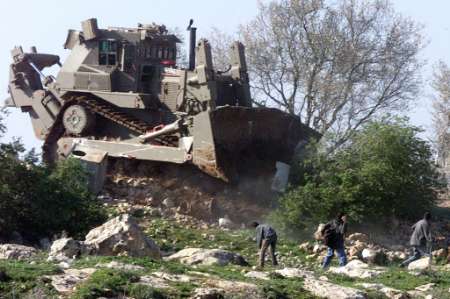
The suffering from the stand-off in fractured Palestine is a disgrace, says Saleh Al-Naami, Al-Ahram Weekly, 2-8/08/07. Raji Al-Sourani, a lawyer and director of the Palestinian Centre for Human Rights, one of the largest and most important human rights organisations in Palestine, believes that President Abu Mazen holds a large degree of responsibility for the suffering people are enduring due to the conflict between the two governments. Al-Sourani told the Weekly he disapproved of Abu Mazen and the Fayyad government issuing decisions merely to undermine the Haniyeh government. "Why did the Fayyad government order its police not to report to their units and threaten those undertaking their duties with loss of pay? They are destroying the judiciary," said Al-Sourani. He pointed to the positive results produced by Hamas's control over the Gaza Strip. "As a man of law and one in charge of a human rights organisation that has taken on the responsibility of dealing with the lack of security, I am certain that the security situation in the Gaza Strip has not been better than it is now," Al-Sourani asserted.
lunedì 6 agosto 2007


Mimicking Oslo
Khalid Amayreh. Occupied East Jerusalem, August 5, 2007. uruknet.info. According to some Fatah insiders, the Israeli-sought accords, which might take the form of a new declaration of principles, will include the following features.
First, the creation of a Palestinian state on unspecific parts of the West Bank with temporary borders. Such a state would have "authority" (not sovereignty) over 95% of Palestinians. (Notice the authority would be over the people not the land).
Second, such a state would have "territorial continuity" as much as possible, and in case such continuity proves impossible, Israel will see to it that travel movement between Palestinian towns and population centers is unhindered.
Third, the core issues, including Jerusalem, the refugees and Jewish settlements, will be discussed at a later (unspecified ) stage."
And to induce the Palestinians to accept the proposed roadmap, the upcoming regional conference will offer the PA a package of generous economic inducements, including billions of dollars from the donor countries.
The Israelis and the Americans must be hoping that with a combination of fanfare, artificially-induced euphoria and especially financial incentives, the Abbas leadership will enthusiastically embrace the final chance for peace.
Then Abbas would be asked to call for general elections at least in the West Bank where he would make sure, by whatever means necessary, that Fatah would be the winner.
This scenario, a poor mimicry of the Oslo agreement, is very real and is being secretly discussed between Israel and the Ramallah leadership.
However, as the original Oslo Agreement was doomed, because of its inherent flaws and vagueness, the present secret talks will also lead nowhere since Israel refuses to take a strategic decision to give up the spoils of the 1967 war and deal positively with Palestinian demands for a just settlement of the Palestinian refugee crisis pursuant UN resolution 149.
Finally, it is imperative to remember that Mahmoud Abbas is not Yasser Arafat.
Hence, it is more than possible that Abbas, by going too far in giving concessions to Israel at the expense of Palestinian rights, would be placing his own political, even physical, life in jeopardy.
First, the creation of a Palestinian state on unspecific parts of the West Bank with temporary borders. Such a state would have "authority" (not sovereignty) over 95% of Palestinians. (Notice the authority would be over the people not the land).
Second, such a state would have "territorial continuity" as much as possible, and in case such continuity proves impossible, Israel will see to it that travel movement between Palestinian towns and population centers is unhindered.
Third, the core issues, including Jerusalem, the refugees and Jewish settlements, will be discussed at a later (unspecified ) stage."
And to induce the Palestinians to accept the proposed roadmap, the upcoming regional conference will offer the PA a package of generous economic inducements, including billions of dollars from the donor countries.
The Israelis and the Americans must be hoping that with a combination of fanfare, artificially-induced euphoria and especially financial incentives, the Abbas leadership will enthusiastically embrace the final chance for peace.
Then Abbas would be asked to call for general elections at least in the West Bank where he would make sure, by whatever means necessary, that Fatah would be the winner.
This scenario, a poor mimicry of the Oslo agreement, is very real and is being secretly discussed between Israel and the Ramallah leadership.
However, as the original Oslo Agreement was doomed, because of its inherent flaws and vagueness, the present secret talks will also lead nowhere since Israel refuses to take a strategic decision to give up the spoils of the 1967 war and deal positively with Palestinian demands for a just settlement of the Palestinian refugee crisis pursuant UN resolution 149.
Finally, it is imperative to remember that Mahmoud Abbas is not Yasser Arafat.
Hence, it is more than possible that Abbas, by going too far in giving concessions to Israel at the expense of Palestinian rights, would be placing his own political, even physical, life in jeopardy.
Award-winning film-maker's death divides UK and Israel
Eric Silver in Jerusalem, The Independent. 6/08/07. Britain and Israel face a diplomatic and legal showdown this week over the death of James Miller, an award-winning British film-maker who was shot by Israel soldiers while working on a documentary in the Gaza Strip more than four years ago.
Israel has failed to respond to an ultimatum issued by Lord Goldsmith, the former attorney general, to his opposite number, Meni Mazuz, on 26 June to launch a criminal investigation within six weeks against the officer suspected of firing the fatal shot. The deadline expires tomorrow.
Tel Aviv is refusing to be stampeded. In a previous case - that of a British student, Tom Hurndall, killed by an Israeli sniper in 2003 - it eventually yielded to British pressure and court martialled the soldier concerned. He was sentenced to eight years in prison for manslaughter.
The army's first instinct, as shown in both cases, is to protect its soldiers. A military spokesman said that "a cameraman who knowingly enters a combat zone, especially at night, endangers himself."
Moshe Cohen, a spokesman for Israel's Justice Ministry, said in a written statement yesterday that an earlier British request had been thoroughly checked and a decision to close the Miller case had been reported to London. "Now that the British authorities have decided once more to approach us, the matter will be attended to.... A response will be provided in an acceptable fashion, as soon as possible, in accordance with the timetables of the Israeli authorities."
Mr Miller's death was captured on video and was included in the film Death in Gaza, released by HBO in 2004, which went on to win three Emmys. Mr Miller had gone to the troubled region to film children on both sides of the conflict, but he was killed on his last day in Gaza before he could film the other side of the story.
In April, 2006, a London jury at St Pancras coroner's court returned a verdict of unlawful killing and said that Mr Miller, 34, had been "murdered". The Israeli army had dropped the case for want, it said, of enough evidence to prove guilt beyond reasonable doubt.
The coroner, Dr Scott Reid, wrote to Lord Goldsmith inviting him to "consider starting criminal proceedings in the UK against members of the Israel Defence Forces (IDF) for an offence of willful killing".
The only soldier who has been named, though only by rank and surname, is Lieutenant Heib, who commanded the armoured vehicle from which the fatal shots were fired.
To try him in Britain, Lord Goldsmith's successor, Baroness Scotland, would have to seek his extradition, which Israel would be expected to resist.
Mr Miller's family accused Israel of "an abject failure to uphold the fundamental and unequivocal standards of international humanitarian and human rights law". They are suing the Israeli government in the Tel-Aviv magistrates' court for compensation.
His wife, Sophy, said after the military investigation was closed: "The truth will come out and we hope the Israeli judicial system will mete out justice. This investigation does not serve the IDF, decent Israeli citizens, us his family, and above all James."
Their Israeli lawyer, Michael Sfard, said yesterday: "The family demands justice, both criminal and civil. They deserve that the man who shot their loved one for no reason whatsoever should be indicted and get what he deserves. As he left a widow and two children, they deserve to be compensated by the State of Israel. This is something the political and military echelons have promised time and again, but they have not fulfilled their promise so far."
Mr Miller was filming near Rafah in the southern Gaza Strip with Saira Shah, who was named television reporter of the year in 2002 for Beneath the Veil and Unholy War, documentaries the two had shot for Channel 4 in her native Afghan istan. Mr Miller, who doubled as cameraman and director, had earlier won an Emmy and a Royal Television Society award for films on Serbian massacres in Kosovo. He was an experienced war photographer, having covered conflicts in Lebanon, Sudan and Algeria for a news agency.
Death in Gaza shows the two journalists leaving the home of a Palestinian family in the turbulent Rafah refugee camp at night, carrying a white flag. They were accompanied by a local crew from Associated Press Television News (APTN).
In an investigative report in October 2003, the journalist John Sweeney wrote: "They had walked about 20 metres from the veranda when the first shot rang out. The team froze. For 13 seconds, there is silence broken only by Saira's cry: 'We are British journalists.' Then comes the second shot, which killed James. He was shot in the front of his neck. The bullet was Israeli issue, fired, according to a forensic expert, from less than 200 metres away. Immediately after the shooting, the IDF said that James had been shot in the back during crossfire. It later retracted the assertion about where in his body he was shot, but until today it has maintained that he was shot during crossfire. There was no crossfire on the APTN tape."
Israeli and British forensic studies produced conflicting results. The Israelis said that acoustic tests on the video tape indicated that there were six shots. The second hit Mr Miller. Not all the shots, the Israelis said, came from the same source. So they could not prove beyond reasonable doubt that the fatal shot came from Lieutenant Heib's gun. Similar tests by Scotland Yard concluded that the first three shots came from a single source, the Israeli armoured car.
In an interview, distributed to promote the Death in Gaza DVD, Ms Shah admitted that they were worried about filming in Gaza, particularly Rafah. She accused Israeli soldiers of lack of respect for human life.
Key events
* 2 MAY 2003
The British cameraman James Miller, 34, is shot dead by an Israeli soldier.
* MARCH 2005
Israel says it will not prosecute soldiers involved in Mr Miller's death.
* APRIL 2005
Israeli military judge clears soldiers of any wrongdoing.
* APRIL 2006
British inquest reaches verdict of "unlawful shooting with intention of killing Mr Miller".
* MAY 2006
Lord Goldsmith, then attorney general, flies to Israel to assess grounds for a prosecution in UK.
* JULY 2006
Metropolitan Police and CPS decide to investigate.
* JUNE 2007
Lord Goldsmith gives his Israeli counterpart six weeks to launch a criminal investigation against the officer suspected of firing the fatal shot.
Three other killings of innocents by the Israeli army
30 SEPTEMBER 2000
Mohammed al-Durrah, 12, a Palestinian schoolboy, was shot four times by Israeli soldiers and died in his father's arms. The scene was captured by a French cameraman and became one of the most powerful and enduring symbols of the conflict.
16 MARCH 2003
US peace activist Rachel Corrie, 23, was crushed to death by an Israeli Army bulldozer razing a Palestinian home. She was wearing a fluorescent jacket that identified her as an activist. The Israeli government claimed her death was an accident.
11 April 2003
British photography student Tom Hurndall, 22, was shot by an Israeli sniper while he was trying to rescue Palestinian children from Israeli gunfire. He was left comatose and died in Britain nine months later from his wounds.
Operazione Colomba. Ordinaria violenza terroristica
19 luglio, un caldo pazzesco. Torniamo dalle colline dopo tre ore con le pecore. Arriviamo a casa e cerchiamo di recuperare il sonno perso durante la notte: troppo caldo, troppe zanzare, troppi cani che abbaiano.
In villaggio c’è una comitiva di bambini di un campo estivo, cittadini di Hebron in visita alla campagna. Alle 12 i bambini vanno sulla strada principale in fila indiana e salgono su due pullmann. Ma i responsabili vengono bloccati da una jeep di soldati che passava di lì.
Vogliono controllare i permessi ed i veicoli, perché possono essere pericolosi… (per i coloni insediati illegalmente nella zona).
Noi corriamo sul posto e capiamo che i soldati (ventenni) avevano trovato su ogni pullman una seconda targa, gialla.
Qui ci sono due tipi di targhe: gialla per gli israeliani e per girare in Israele, verde per i palestinesi. I bus avevano targhe verdi avanti e sul retro, e due targhe gialle nel bagagliaio. Gli autisti hanno spiegato che per una compagnia di trasporti è normale, per poter viaggiare sia in Israele che in Palestina al bisogno. I soldati dicono di non essere competenti e di dover chiamare la polizia. Il leader del gruppo protesta, sa che la polizia non arriverà prima di un’ora, perché sa che quei soldati non chiameranno la polizia, ma il loro comandante, e sarà lui ..forse ..che chiamerà la polizia.
La cosa mi è sembrata subito molto paradossale: solo un mese fa gli stessi soldati semplici fermavano le automobili, controllavano le targhe comunicando via radio con l’ufficio, e decidevano se lasciarle andare o se strappare la targa... per vari motivi. Quindi l’esercito è più che competente in materia di targhe, se vuole.
Oramai erano passati più di quaranta minuti, la polizia non era ancora arrivata sulla strada. Quando sono i coloni a chiamare la polizia, arriva dopo 15 minuti… Gli 80 bambini stavano letteralmente cocendo dentro le lamiere dei pullman, fermi sotto il sole di mezzogiorno a più di 35 gradi. Noi continuiamo a chiedere ai soldati di portare acqua ai bambini. La basa militare più vicina è a soli 10 minuti. E’ loro dovere fornire acqua a chiunque venga detenuto temporaneamente.
Dopo un’ora è arrivata la polizia ma ancora niente acqua. Non volevano più nemmeno parlare con me, allora ho iniziato a fissarli negli occhi. Sono rimasta cinque minuti appiccicata al finestrino della loro jeep. La polizia intanto stava disquisendo con arroganza con gli autisti. Gli avrebbero fatto una multa per sosta vietata lungo la strada (entrambi i pullman erano fuori dalle righe perché il bordo strada è largo tre metri). Gli autisti hanno protestato: non sono stati loro a voler rimanere un’ora a bordo strada, sono stati costretti dall’esercito. No way.
Multa di 500€. Abbiamo chiamato i giornalisti ma quelli italiani non rispondevano. Ha risposto Amira Hass, era molto interessata, sta facendo una ricerca su come la polizia applichi multe molto più salate ai palestinesi rispetto agli israeliani.
Operazione Colomba. CorpoNonviolento di Pace. Associazione Comunità Giovanni XXIII
operazione.colomba@apg23.org - Tel./Fax 0541.29005 - sito: www.operazionecolomba.it
La Palestine maintenant
Naomi Hazan. Depuis beaucoup trop longtemps, on traite l’Autorité palestinienne comme un acteur étatique, alors qu’en réalité, elle n’a aucun statut en tant qu’Etat souverain et n’en a aucune des capacités. Jusqu’au mois dernier, les gouvernements palestiniens successifs, dotés d’une certaine légitimité intérieure que leur ont accordée les urnes, ont été chargés de multiples responsabilités, mais sans se voir offrir aucune autorité officielle. Cette anomalie, quasiment sans précédent dans l’Histoire, a de plus été compliquée par la division de fait entre la Cisjordanie et Gaza. Le gouvernement renégat du Hamas contrôle Gaza, le gouvernement du Fatah contrôle l’Autorité palestinienne ... et le gouvernement israélien, directement ou indirectement, contrôle l’avenir politique des deux.
Israël a réussi, pour son malheur, à donner l’illusion d’une responsabilité de l’Autorité palestinienne sans créer les conditions qui permettent de développer les outils nécessaires pour que cette responsabilité soit réelle. La politique de séparation entre Palestiniens et Israéliens, sans transfert officiel de compétences, politique adoptée par Ariel Sharon et appliquée sur le terrain par Olmert, ne peut plus prétendre à ne serait-ce qu’un atome d’effet de sécurité ni de stabilité.
Israël a réussi, pour son malheur, à donner l’illusion d’une responsabilité de l’Autorité palestinienne sans créer les conditions qui permettent de développer les outils nécessaires pour que cette responsabilité soit réelle. La politique de séparation entre Palestiniens et Israéliens, sans transfert officiel de compétences, politique adoptée par Ariel Sharon et appliquée sur le terrain par Olmert, ne peut plus prétendre à ne serait-ce qu’un atome d’effet de sécurité ni de stabilité.
Comme l’a montré l’expérience du désengagement de Gaza, un retrait territorial, quand il n’est pas accompagné d’accords politiques, crée un vide du pouvoir qui nourrit l’anarchie et encourage l’extrémisme. Israël ne peut pas revenir sur l’erreur faite à Gaza, mais il peut faire en sorte de ne pas répéter la même erreur.
L’écrasante majorité des Israéliens qui comprennent qu’il n’est pas tenable de continuer à dominer les territoires conquis en 1967, mais qui, en même temps, craignent de remettre le pouvoir aux Palestiniens, se trouvent à la croisée des chemins. Chaque jour qui passe sans qu’existe au-delà de la ligne Verte un autre Etat souverain signifie qu’Israël est responsable de ce qui s’y passe, même quand les événements ne sont pas de son fait. S’il souhaite se soulager de ce fardeau et regagner sa légitimité internationale, il doit être prêt à abandonner le contrôle et renoncer à toute revendication en termes de souveraineté.
La question de la souveraineté n’est donc pas seulement centrale dans le cadre d’un accord israélo-palestinien : elle constitue en réalité une mesure vitale dans sa direction.
Toute tentative de faire traîner les négociations autour de mesures provisoires de sécurité, ou d’éviter la question de la souveraineté, constitue une recette sûre pour que les choses se détériorent encore davantage, avec cette fois des conséquences lourdes sur le plan régional. Le temps, qui conforte les extrémismes, ne joue en faveur d’aucune des parties du conflit.
La propension à la mode (mais totalement erronée) dans certains milieux de classer l’Autorité palestinienne dans la catégorie des Etats ratés procède elle aussi d’une courte vue. La faiblesse institutionnelle de l’infrastructure administrative palestinienne, systématiquement affaiblie à la fois par Israël et par la mauvaise gestion et les conflits internes palestiniens, ne constitue aucunement une preuve de son incapacité à constituer un Etat. Car comment peut-on qualifier une Autorité palestinienne enchaînée d’Etat raté si elle n’a jamais été un Etat ?
Le problème que pose cette anomalie fondamentale continuera à suivre à la trace tout effort de faire advenir une fin du conflit, à moins de s’y confronter sérieusement. La souveraineté palestinienne doit être la prochaine phase, et non la dernière, du processus de réconciliation. Sans elle, aucun sentiment de sécurité, pour aucune des deux communautés, ne pourra être assuré. Il se peut que les négociations sur les frontières définitives entre Israël et la Palestine, et avec elles, sur toutes les immenses questions relatives à un règlement définitif, ne résolvent pas tous les problèmes liés à l’autorité, la légitimité, la responsabilité et le contrôle qui pour le moment sont la plaie de ce conflit. Mais ce qui est de plus en plus clair, c’est que sans une Palestine indépendante à côté d’Israël, aucune de ces questions ne pourra être traitée, et encore moins résolue.
------------------------------------------------------------------------
mis en ligne le dimanche 5 août 2007
par Naomi Hazan
la souveraineté de la Palestine : un préalable dans les négociations et non un aboutissement, selon Naomi Hazan, qui fait d’ailleurs remarquer : « comment peut-on qualifier une Autorité palestinienne enchaînée d’Etat raté si elle n’a jamais été un Etat ? »
Jerusalem Post, 26 juillet Diffusé par l’édition du 2 août de Common Ground News Service www.commongroundnews.org Traduction : Gérard pour La Paix Maintenant
Naomi Hazan est professeur de science politique à l’Université Hébraïque de Jérusalem et dirige le département Société et Politique au Collège académique de Tel-Aviv - Jaffo. Ancienne vice-présidente (Meretz) de la Knesset, elle est signataire des Accords de Genève
_______________________________________________
Inscription/Désinscription :
http://www.lapaixmaintenant.org/liste

Site web de La Paix Maintenant (France) :
http://www.lapaixmaintenant.org/

Contacter/Adhérer à La Paix Maintenant :
http://www.lapaixmaintenant.org/contacts

Shalom Arshav Israel : http://www.peacenow.org.il

Adresse : PO Box 29828, Tel Aviv, Israel

Telephone  : +972 3 566 32 91, +972 3 566 06 48
Fax : +972 3 566 32 86
A CPTer's Day in At-Tuwani
Peggy Gish, Christian Peacemaker Teams, 28/07/07. Even before the sun appears over the hills to the east of At-Tuwani, in the South Hebron Hills, the village is waking up to the sounds of roosters and donkeys, and of sheep and goats being milked.
As I get up from my sleeping pad on the roof adjoining the small one-room house with tiny attached kitchen and toilet structures, shared by members of Christian Peacemaker Teams (CPT) and Operation Dove (OD), our neighbor from the stone house next door is already up and
at work.
By 6:45am, we grab our hats, cameras, water bottles, and go to accompany shepherds in two valleys just below the Ma'on (Israeli) Settlement and the Havot Ma'on outpost. In one valley, two or three boys ages 8-14 play around together while their sheep graze on dried grassesamong the thistles. In the Humra and Khoruba valleys we sit on rocks with Palestinian men in the hot sun and chat as their sheep graze nearby. We are on land that they are reclaiming after Israeli settlers had prevented them from being on it several years ago.
By mid-morning the summer heat intensifies and the shepherds take their flocks to nearby cisterns for water and back to their pens. We go back to our house in the village and use the mid day for meetings, writing reports, cleaning chores, hauling up water from the village well from the valley below.
On other days a village leader may ask CPTers to monitor a "flying" Israeli military checkpoint by the road or to take video cameras and document Israeli settlers planting trees or farming
Palestinian land near a settler outpost, but today is "quiet." Next week a summer camp begins for the children at the school and we will monitor their walking in from neighboring villages.
At 4:00pm, the hottest part of the day is over and some shepherds graze their sheep again. This time we only go to the valley to accompany the shepherd boys. Whoever stays back makes supper for the team, using a gas burner on top of a bottled gas canister to cook. Electricity from the village generator is usually on for about four hours every evening.
Some evenings a neighbor family will invite the team to share a meal. This evening a family invited us to their home for a "party" celebrating the father's passing his driving test and getting his license. When the family played taped music the children and some of the adults had fun dancing in a circle in the middle of the room.
Here after a hard day of work, the people of Tuwani have fun and, for awhile, forget their troubles.
We finish our work or personal chores before climbing onto the roof for the night. Tonight there is a nice breeze blowing making it pleasant as I lie on my mat and look up at the stars. I give
thanks for the day and for the privilege of sharing it with these strong and beautiful people.
As I get up from my sleeping pad on the roof adjoining the small one-room house with tiny attached kitchen and toilet structures, shared by members of Christian Peacemaker Teams (CPT) and Operation Dove (OD), our neighbor from the stone house next door is already up and
at work.
By 6:45am, we grab our hats, cameras, water bottles, and go to accompany shepherds in two valleys just below the Ma'on (Israeli) Settlement and the Havot Ma'on outpost. In one valley, two or three boys ages 8-14 play around together while their sheep graze on dried grassesamong the thistles. In the Humra and Khoruba valleys we sit on rocks with Palestinian men in the hot sun and chat as their sheep graze nearby. We are on land that they are reclaiming after Israeli settlers had prevented them from being on it several years ago.
By mid-morning the summer heat intensifies and the shepherds take their flocks to nearby cisterns for water and back to their pens. We go back to our house in the village and use the mid day for meetings, writing reports, cleaning chores, hauling up water from the village well from the valley below.
On other days a village leader may ask CPTers to monitor a "flying" Israeli military checkpoint by the road or to take video cameras and document Israeli settlers planting trees or farming
Palestinian land near a settler outpost, but today is "quiet." Next week a summer camp begins for the children at the school and we will monitor their walking in from neighboring villages.
At 4:00pm, the hottest part of the day is over and some shepherds graze their sheep again. This time we only go to the valley to accompany the shepherd boys. Whoever stays back makes supper for the team, using a gas burner on top of a bottled gas canister to cook. Electricity from the village generator is usually on for about four hours every evening.
Some evenings a neighbor family will invite the team to share a meal. This evening a family invited us to their home for a "party" celebrating the father's passing his driving test and getting his license. When the family played taped music the children and some of the adults had fun dancing in a circle in the middle of the room.
Here after a hard day of work, the people of Tuwani have fun and, for awhile, forget their troubles.
We finish our work or personal chores before climbing onto the roof for the night. Tonight there is a nice breeze blowing making it pleasant as I lie on my mat and look up at the stars. I give
thanks for the day and for the privilege of sharing it with these strong and beautiful people.
Getting Israelis, Palestinians on the Same Page
Joanna Chen, Newsweek, Aug. 13, 2007 issue. Together with Dan Bar-On, a social psychologist at Ben Gurion University in southern Israel, Sami Adwan now codirects the Peace Research Institute in the Middle East (PRIME). Since 2002 the group has produced three booklets for use in Palestinian and Israeli high schools that force each side to confront a contradictory vision of history. Each page is divided into three: the Palestinian and Israeli narratives and a third section left blank for the pupil to fill in. "The idea is not to legitimize or accept the other's narrative but to recognize it," Adwan says. "The [historical] dates may be the same, but the interpretation of each side is very different."
«Anche da confini certi nascerà la pace» Intervista ad Abraham B. Yehoshua
Umberto De Giovannangeli, l'Unità, 5/08/07. [estratti] «La pace potrà dispiegarsi solo quando tutti noi, israeliani e palestinesi, avremo compreso l’essenza di questo conflitto, nel quale a scontrarsi non sono il Bene e il Male, la Ragione e il Torto, Bios e Thanatos ma due ragioni, due diritti egualmente fondati». «La pace, dunque, è anche l’ammissione da parte nostra che la nascita di Israele si fonda su un atto vissuto da un altro popolo come un sopruso». «Definire i confini ci impone di ripensare noi stessi, rivisitare la storia di Israele e tornare agli ideali originari del sionismo, per i quali l’essenza dello Stato di Israele non si incentrava nelle sue dimensioni territoriali né in un afflato messianico, bensì nella capacità di fare d’Israele un Paese normale. Lei mi chiedeva cos’è per me la pace? La risposta è semplice e al tempo stesso terribilmente difficile da realizzare: la pace è la conquista della normalità. E quando ci sarà la pace e il quadro normale dello Stato d’Israele consentirà il riconoscimento definitivo del consesso dei popolo, e in particolare dei popoli dell’area in cui ci troviamo, ci renderemo conto che "normalità" non è una parola spregevole ma, al contrario, l’ingresso in una epoca nuova e ricca di possibilità, in cui il popolo ebraico potrà modellare il proprio destino, produrre una propria cultura completa. Si dimostrerà il modo migliore per essere altri e diversi, unici e particolari - come lo è ogni popolo - senza preoccuparci di perdere l’identità». «Resto convinto - che occorra estendere il nostro orizzonte fino comprendere la Siria. A Olmert dico: metti alla prova Bashar Assad. Aprire a Damasco significherebbe anche provare a spezzare la pericolosissima alleanza fra la Siria e l’Iran».«Non si tratta di firmare assegni in bianco a Bashar Assad ma di esplorare con maggiore attenzione l’opzione siriana, verificando tutti quei punti che sono sul tavolo da decenni: un Golan smilitarizzato e aperto alle due popolazioni potrebbe essere la soluzione che metterebbe fine al conflitto israelo-siriano. Di una cosa resto convinto: Israele non ha speranza a lungo termine se non trova un accordo con gli arabi».
domenica 5 agosto 2007
Arriva Condi, dollari e consigli
Michele Giorgio, il manifesto, 3/08/07. Il segretario di stato Usa a Ramallah da Abu Mazen, con 80 milioni di dollari per rifare le forze di sicurezza (quelle che si erano sciolte davanti ad Hamas a Gaza) e avviare le pratiche dello stato provvisorio. Con una sorpresa: una città palestinese nuova di zecca Dopo aver dispensato aiuti militari per miliardi di dollari ai paesi arabi alleati, Condoleezza Rice non ha mancato di portare un regalo anche al presidente palestinese Abu Mazen e al governo ad interim di Salam Fayyad. Al termine dei colloqui avuti ieri a Ramallah, il segretario di stato Usa ha firmato un accordo con cui Washington si impegna a stanziare 80 milioni dollari «per consentire all'Anp di riformare i propri servizi di sicurezza». Decine di milioni di dollari erano stati messi a disposizione anche lo scorso anno - lo rivelò l'agenzia reuters - ma dove siano finiti lo sa soltanto l'ex uomo forte di Fatah ed ex consigliere per la sicurezza nazionale Mohammed Dahlan (dimissionario), che era stato incaricato di riorganizzare e rafforzare quei servizi segreti e i reparti speciali che si sono sciolti come neve al sole durante i combattimenti con la milizia di Hamas, lo scorso giugno a Gaza.
I nuovi finanziamenti serviranno a «garantire la sicurezza» nei Territori palestinesi, ha detto il segretario di stato, ovvero a mettere fine all'Intifada, a smantellare le cosiddette «infrastrutture del terrore» e, in definitiva, a garantire la sicurezza di Israele e ad accrescere la conflittualità interna palestinese. Un fine molto diverso da quello che hanno in mente i palestinesi di Cisgiordania e Gaza che per sicurezza intendono la loro sicurezza e, quindi, la fine dei raid delle forze di occupazione israeliane [...]
La disponibilità di Abu Mazen potrebbe rappresentare un primo passo verso l'accettazione dello stato palestinese «provvisorio» teorizzato da Israele e Stati uniti. Nei disegni di Olmert la «dichiarazione» dovrebbe delineare i contorni dello stato di Palestina, senza però affrontare le questioni più spinose - i confini definitivi, lo status di Gerusalemme, l'utilizzo delle risorse naturali nei Territori occupati (acqua), la sorte dei rifugiati - che verrebbero rinviate a un momento successivo.
Israele inoltre vuole che l'incontro sul Medio Oriente che gli Usa intendono organizzare per il prossimo autunno diventi un tavolo di trattativa arabo-israeliano e non tanto israelo-palestinese (il ministro degli esteri Tzipi Livni ieri ha esortato di nuovo gli arabi a partecipare). Per ammorbire ulteriomente Abu Mazen sarebbe pronta un'altra proposta: la costruzione di una nuova città palestinese in Cisgiordania. L'idea è di Washington ma piace a Olmert, ha riferito il sito israeliano Debka. Il nuovo nucleo urbano sorgerebbe tra Nablus e Ramallah. In una prima fase ospiterebbe 30-40 mila palestinesi e in dieci anni arriverà a 70 mila abitanti. Il progetto dovrebbe creare migliaia di posti di lavoro in Cisgiordania e, di conseguenza, migliorare l'immagine di Abu Mazen. Il fine del progetto potrebbe però essere quello di assorbire decine di migliaia di profughi palestinesi sparsi nel mondo arabo, che verrebbero indirizzati in Cisgiordania in cambio della rinuncia al diritto al ritorno ai loro centri abitati originari, ora in territorio israeliano.
Intanto ieri un palestinese 17enne, Mohammed Orieb, è stato ucciso in circostanze poco chiare al posto di blocco israeliano di Bir Zeit (Ramallah). Per il portavoce militare aveva cercato di assalire un soldato, la famiglia però nega questa versione.
I nuovi finanziamenti serviranno a «garantire la sicurezza» nei Territori palestinesi, ha detto il segretario di stato, ovvero a mettere fine all'Intifada, a smantellare le cosiddette «infrastrutture del terrore» e, in definitiva, a garantire la sicurezza di Israele e ad accrescere la conflittualità interna palestinese. Un fine molto diverso da quello che hanno in mente i palestinesi di Cisgiordania e Gaza che per sicurezza intendono la loro sicurezza e, quindi, la fine dei raid delle forze di occupazione israeliane [...]
La disponibilità di Abu Mazen potrebbe rappresentare un primo passo verso l'accettazione dello stato palestinese «provvisorio» teorizzato da Israele e Stati uniti. Nei disegni di Olmert la «dichiarazione» dovrebbe delineare i contorni dello stato di Palestina, senza però affrontare le questioni più spinose - i confini definitivi, lo status di Gerusalemme, l'utilizzo delle risorse naturali nei Territori occupati (acqua), la sorte dei rifugiati - che verrebbero rinviate a un momento successivo.
Israele inoltre vuole che l'incontro sul Medio Oriente che gli Usa intendono organizzare per il prossimo autunno diventi un tavolo di trattativa arabo-israeliano e non tanto israelo-palestinese (il ministro degli esteri Tzipi Livni ieri ha esortato di nuovo gli arabi a partecipare). Per ammorbire ulteriomente Abu Mazen sarebbe pronta un'altra proposta: la costruzione di una nuova città palestinese in Cisgiordania. L'idea è di Washington ma piace a Olmert, ha riferito il sito israeliano Debka. Il nuovo nucleo urbano sorgerebbe tra Nablus e Ramallah. In una prima fase ospiterebbe 30-40 mila palestinesi e in dieci anni arriverà a 70 mila abitanti. Il progetto dovrebbe creare migliaia di posti di lavoro in Cisgiordania e, di conseguenza, migliorare l'immagine di Abu Mazen. Il fine del progetto potrebbe però essere quello di assorbire decine di migliaia di profughi palestinesi sparsi nel mondo arabo, che verrebbero indirizzati in Cisgiordania in cambio della rinuncia al diritto al ritorno ai loro centri abitati originari, ora in territorio israeliano.
Intanto ieri un palestinese 17enne, Mohammed Orieb, è stato ucciso in circostanze poco chiare al posto di blocco israeliano di Bir Zeit (Ramallah). Per il portavoce militare aveva cercato di assalire un soldato, la famiglia però nega questa versione.
Amnesty International. Palestinian villagers' homes under threat
Amnesty International. The Israeli army is threatening to destroy the homes of Palestinian villagers in the Jordan Valley region of the West Bank. The villagers are facing increasing pressures as the army restricts their movement and their access to water.
In Humsa and Hadidiya, two hamlets in the north-east of the West Bank, the Israeli army is increasing its efforts to force more than 100 villagers, most of them children, out of the area.
The inhabitants of Hadidiya were forced to move from Hadidiya to Humsa, about one kilometre away, last April, after the Israeli army threatened to destroy their homes and animal pens. They are now, once again, being threatened with the destruction of their homes and further displacement, as on 29 May 2007 the Israeli army issued another order for them to leave the area "with immediate effect".
Since then, they live in fear that the army's bulldozers may come at any time and destroy their tents, shacks and animal pens. In the meantime they continue to be harassed by Israeli forces. They are denied access to water and their movements are increasingly restricted by military checkpoints and blockades that prevent them from using the main roads in the area.
The Israeli army has declared most of the Jordan Valley a "closed military area" from which the local Palestinian population is barred. However, Israeli settlements -- established in violation of international law -- continue to expand and Israeli settlers are allowed to move freely and use vast quantities of water.
While in Humsa and Hadidiya every single home is slated for destruction and the Palestinian villagers have to bring water for their basic needs from 20 kilometres away, Israeli settlements only a few hundreds of meters away, have well-watered gardens and swimming pools.
In a visit to the area in July 2007, an Amnesty International researcher witnessed the extremely difficult conditions in which the Palestinian villagers are forced to live, with no running water or electricity and no longer able to cultivate their land because they have no water to irrigate their crops. By contrast, in the Israeli settlements nearby sprinklers were wastefully watering the fields in the afternoon sun.
Every third Israeli child is living in poverty
Stanley K. Sheinbuam and Danny Goldberg, American for Peace Now, Iit’s easy to forget that Israel is a country made of people, 6.3 million of them. And if you take your eye off the war-and-peace lens and look at the Israelis themselves, some disturbing images emerge:
>> The Jewish state is home to some 738,000 poor children and teenagers.
>> One in five Israelis lives below the poverty line—that’s 1.63 million poor Israelis.
>> A majority of Israel’s Arabs—52 percent—live below the poverty line.
Israel has long ceased to be the egalitarian country it was at its founding 59 years ago. In fact, the gap between rich and poor is wider in Israel than in any developed country, except the United States.
And the numbers are growing.
>> According to a poll by the Israel Medical Association, more than a quarter of Israelis cannot afford comprehensive health care.
>> Since 2001, the social budget for children has been cut by some $800 million. The National Insurance
Institute has warned that further cuts could increase the number of poor children.
Most of us don’t think about Israel in these terms—we’re so concerned about the threats to Israel’s security and about its place in the world.
Yet these poverty figures are entwined with the issues of war and peace. The nearly 4,000 rockets Hezbollah fired at northern Israel last summer killed 43 Israeli civilians, wounded more than 4,400 and drove a million people into shelters. The rocket barrages destroyed or damaged at least 6,000 Israeli homes and businesses—causing $1.1 billion worth of damage. And the total cost of the war, including military spending and lost GDP has been estimated at $4.8 billion.
With reconstruction making a large demand on its treasury and putting pressure on its economy, and with a $9 billion military budget that is 8.9 percent of its GDP—the United States, by contrast, spends only 3.2 percent of its GDP on the military. It may come as a shock to learn that Israel has spent more than $14 billion on West Bank settlements.
That staggering figure covers only construction and infrastructure costs over the past four decades, according to a report by the Israeli Research Institute for Economic and Social Affairs, an independent body. The report also determined that the Israeli government contributes twice as much proportionally to the municipal budgets of settlements as it does to municipal budgets inside Israel.
These figures do not even include extra spending on settlers for education, social services, tax benefits and military protection. Additionally, many of these settlements are illegal outposts that Israel’s government said it will dismantle.
This burden on the Israeli taxpayer and the country’s poor will be the lasting legacy of Israel’s settlement movement—a folly that Shalom Achshav, Israel’s Peace Now movement, has opposed since it was founded in 1978.
Issues of war and peace are often reduced to zero-sum questions of guns or butter. In the case of Israel’s settlements, Israel today would have a stronger military, a stronger social safety net, and stronger communities in the Galilee and Negev if those billions had not been diverted to settlement-building.
In the first claim of its kind by settlers facing eviction, the residents of the unsanctioned illegal West Bank outpost Hersha have asked Israel’s High Court of Justice to order the state to compensate them if they are evicted from their homes. Despite being in violation of Israeli law, construction there has received state aid for the past 10 years, according to Haaretz. The outpost has received some $425,000 for infrastructure, for day-care and community centers, and to begin construction of some 25 housing units, the newspaper reported.
It was Shalom Achshav that stopped the madness that is Hersha, by petitioning the High Court, asking that the outpost be demolished.
And how much will Israelis pay to compensate the residents of illegal outposts? The 2005 disengagement from sanctioned settlements in Gaza (and four remote West Bank settlements) in 2005 cost Israel around $2 billion dollars. That’s more than $200,000 per settler, based upon 9,000 people being affected.
Peace Now supports settler compensation as fair treatment, just as it opposes illegal outposts like Hersha and settlements like Modi’in Illit, where a Peace Now petition to the High Court of Justice froze the illegal construction of 3,000 settler housing units.
If the Israeli government needs to be forced to dismantle more illegal outposts, Peace Now will continue to use the legal tools available. We now know that those settlements and outposts were not all constructed on state-owned land, as their proponents have long argued. Following a Freedom of Information Act lawsuit, Peace Now research based on Israel government records revealed that one third (32.4 percent) of the Jewish settlements’ land in the West Bank is private Palestinian property. And the data confirm assertions Peace Now
made earlier that the vast majority of the settlements and outposts (131 out of 162) are either partially or completely on privately owned land.
Every third Israeli child is living in poverty.
This picture was provided by Israel’s National Insurance Institute. As are these:>> The Jewish state is home to some 738,000 poor children and teenagers.
>> One in five Israelis lives below the poverty line—that’s 1.63 million poor Israelis.
>> A majority of Israel’s Arabs—52 percent—live below the poverty line.
Israel has long ceased to be the egalitarian country it was at its founding 59 years ago. In fact, the gap between rich and poor is wider in Israel than in any developed country, except the United States.
And the numbers are growing.
>> According to a poll by the Israel Medical Association, more than a quarter of Israelis cannot afford comprehensive health care.
>> Since 2001, the social budget for children has been cut by some $800 million. The National Insurance
Institute has warned that further cuts could increase the number of poor children.
Most of us don’t think about Israel in these terms—we’re so concerned about the threats to Israel’s security and about its place in the world.
Yet these poverty figures are entwined with the issues of war and peace. The nearly 4,000 rockets Hezbollah fired at northern Israel last summer killed 43 Israeli civilians, wounded more than 4,400 and drove a million people into shelters. The rocket barrages destroyed or damaged at least 6,000 Israeli homes and businesses—causing $1.1 billion worth of damage. And the total cost of the war, including military spending and lost GDP has been estimated at $4.8 billion.
With reconstruction making a large demand on its treasury and putting pressure on its economy, and with a $9 billion military budget that is 8.9 percent of its GDP—the United States, by contrast, spends only 3.2 percent of its GDP on the military. It may come as a shock to learn that Israel has spent more than $14 billion on West Bank settlements.
That staggering figure covers only construction and infrastructure costs over the past four decades, according to a report by the Israeli Research Institute for Economic and Social Affairs, an independent body. The report also determined that the Israeli government contributes twice as much proportionally to the municipal budgets of settlements as it does to municipal budgets inside Israel.
These figures do not even include extra spending on settlers for education, social services, tax benefits and military protection. Additionally, many of these settlements are illegal outposts that Israel’s government said it will dismantle.
This burden on the Israeli taxpayer and the country’s poor will be the lasting legacy of Israel’s settlement movement—a folly that Shalom Achshav, Israel’s Peace Now movement, has opposed since it was founded in 1978.
Issues of war and peace are often reduced to zero-sum questions of guns or butter. In the case of Israel’s settlements, Israel today would have a stronger military, a stronger social safety net, and stronger communities in the Galilee and Negev if those billions had not been diverted to settlement-building.
In the first claim of its kind by settlers facing eviction, the residents of the unsanctioned illegal West Bank outpost Hersha have asked Israel’s High Court of Justice to order the state to compensate them if they are evicted from their homes. Despite being in violation of Israeli law, construction there has received state aid for the past 10 years, according to Haaretz. The outpost has received some $425,000 for infrastructure, for day-care and community centers, and to begin construction of some 25 housing units, the newspaper reported.
It was Shalom Achshav that stopped the madness that is Hersha, by petitioning the High Court, asking that the outpost be demolished.
And how much will Israelis pay to compensate the residents of illegal outposts? The 2005 disengagement from sanctioned settlements in Gaza (and four remote West Bank settlements) in 2005 cost Israel around $2 billion dollars. That’s more than $200,000 per settler, based upon 9,000 people being affected.
Peace Now supports settler compensation as fair treatment, just as it opposes illegal outposts like Hersha and settlements like Modi’in Illit, where a Peace Now petition to the High Court of Justice froze the illegal construction of 3,000 settler housing units.
If the Israeli government needs to be forced to dismantle more illegal outposts, Peace Now will continue to use the legal tools available. We now know that those settlements and outposts were not all constructed on state-owned land, as their proponents have long argued. Following a Freedom of Information Act lawsuit, Peace Now research based on Israel government records revealed that one third (32.4 percent) of the Jewish settlements’ land in the West Bank is private Palestinian property. And the data confirm assertions Peace Now
made earlier that the vast majority of the settlements and outposts (131 out of 162) are either partially or completely on privately owned land.
Gaza evacuees do not wish to be assimilated. The never-ending evacuation
Haaretz Editorial, 5/08/07. The evacuees of Gush Katif, who are having a hard time putting their lives back together, cannot be envied. Their situation is similar to that of middle-aged new immigrants, although they are not confronted by a language barrier and each has received some $500,000 in compensation. The main difficulty in absorbing them stems from the fact that they left behind an economic paradise, which was subsidized by the state, and most lack the professional skills needed for a free-market economy. In this, they are different from the Russian immigrants who were successfully absorbed in Israel.
Why are the evacuees unable to rebuild the businesses they left behind in Gush Katif, where they acquired their professional knowledge and experience? The first reason is that their businesses were not profitable even in Gush Katif. The second reason is they no longer enjoy cheap Palestinian labor, nearly free water, free land, subsidized electricity and tremendous tax benefits. The Gush Katif evacuees' lobby in the Knesset is trying to acquire even more compensation, each time for something else. It is very likely that this lobby will succeed, considering settlers' lobby victories of the past.
A new campaign related to the Gush Katif evacuees has recently begun: In addition to the demand for full pension benefits starting at age 46, they want more compensation for every child born in Gush Katif. In early July, a plan was presented to establish a new community called Mirsham in the Lachish region, for some of the Kfar Darom evacuees. Another new community, Givat Hazan, is intended to settle some of the residents of Neveh Dekalim. This is because of the evacuees' insistence that they not be absorbed into other communities in the area where permits have already been issued for the construction of thousands of new homes. Unfortunately, the evacuees do not wish to be assimilated, not even in communities with other evacuees. Each group selects several dozen families for its own dream community - built at the state's expense.
Why are the evacuees unable to rebuild the businesses they left behind in Gush Katif, where they acquired their professional knowledge and experience? The first reason is that their businesses were not profitable even in Gush Katif. The second reason is they no longer enjoy cheap Palestinian labor, nearly free water, free land, subsidized electricity and tremendous tax benefits. The Gush Katif evacuees' lobby in the Knesset is trying to acquire even more compensation, each time for something else. It is very likely that this lobby will succeed, considering settlers' lobby victories of the past.
A new campaign related to the Gush Katif evacuees has recently begun: In addition to the demand for full pension benefits starting at age 46, they want more compensation for every child born in Gush Katif. In early July, a plan was presented to establish a new community called Mirsham in the Lachish region, for some of the Kfar Darom evacuees. Another new community, Givat Hazan, is intended to settle some of the residents of Neveh Dekalim. This is because of the evacuees' insistence that they not be absorbed into other communities in the area where permits have already been issued for the construction of thousands of new homes. Unfortunately, the evacuees do not wish to be assimilated, not even in communities with other evacuees. Each group selects several dozen families for its own dream community - built at the state's expense.
Palestinian shepherds have water tank, tractor confiscated
Amira Hass, Haaretz, 5/08/07. The Civil Administration confiscated a tractor and a water tank belonging to Palestinian shepherds living in the northern Jordan Valley. This was the only readily available water source for the approximately 60 members of the Basharat and Bani-Oudeh families and their 1,500 heads of sheep and goats. The Civil Administration is reportedly prepared to return the equipment if its owners agree to leave the area and pay transport costs. The shepherds have been living for decades in the area of Hadidiya, east of Beka’ot, on lands owned by their home villages of Tamun and Tubas. After the 1967 War, Israel declared large areas in the northern Jordan Valley closed military zones. Palestinians have been evacuated from these areas four times, including from privately owned lands. At the end of 2006, the High Court of Justice rejected a request from the residents to rezone their land as residential, even though the settlement of Ro’i is located a kilometer away. The High Court ordered the Palestinians to move to an area recommended by the Civil Administration in Area B, under Palestinian administrative control, which the residents rejected as unsuitable for farming and grazing. In April, the Civil Administration destroyed their corrals, and they moved to an area south of Hadidiya. In May, the residents were warned that their presence in the area would be considered illegal.
[Stop the Wall, 9/0//07. Since 1977, the Zionist settlement Ro’i has been expanding on Al Hadidiye’s land in the area. The expulsion orders are aimed at granting the settlement 20,000 dunums of the Palestinian Bedouins’ fertile lands in the northern Jordan Valley for colonization. Ro’i settlement is prospering on the ruins of yet another Palestinian community and their land. Signs publicly announce houses to be for rent and Zionist organizations such as the “Jordan Valley Development Fund” collect tax-free money for the ethnic cleansing of the Valley from its inhabitants. Companies such as Carmel Agrexco are selling the Zionist produce from the Jordan Valley – the fruits of the ethnic cleansing of the Palestinian people. ]
[Stop the Wall, 9/0//07. Since 1977, the Zionist settlement Ro’i has been expanding on Al Hadidiye’s land in the area. The expulsion orders are aimed at granting the settlement 20,000 dunums of the Palestinian Bedouins’ fertile lands in the northern Jordan Valley for colonization. Ro’i settlement is prospering on the ruins of yet another Palestinian community and their land. Signs publicly announce houses to be for rent and Zionist organizations such as the “Jordan Valley Development Fund” collect tax-free money for the ethnic cleansing of the Valley from its inhabitants. Companies such as Carmel Agrexco are selling the Zionist produce from the Jordan Valley – the fruits of the ethnic cleansing of the Palestinian people. ]
Jenin by night
Gideon Levi, Haaretz, 4/08/07. "The people here are confused," Zbeidi's uncle, Jamal, says. "To go with [Palestinian Authority Chairman] Abu Mazen is to go with America, and to go with Hamas is to go with religion. Both are bad." [...]
It is close to 11 o'clock. A small and mysterious ball of fire suddenly shoots across the sky, from west to east. "We are their training field," the sheikh says wearily. When a momentary silence falls, our hosts identify the strange whirring noise we hear. Good evening, remotely piloted vehicle (RPV). From now until first light, the whirring will accompany us nonstop, whispering, distant - and very threatening. If a pistol appears in Act I, there will be a murder in the final act. If the RPV appears early on, everyone here knows, there will be an IDF operation later [...]
The first telephone report comes at 12:40 A.M. A convoy is advancing from the Nazareth road. Out of the north shall come evil this night. We go on eating under the RPV skies, watching jeeps with glittering headlights approach. To be on the safe side, the lights on the roof are turned off. Jamal calls his son, who is still in the street, and tells him to come home.
The IDF is in town.
A chorus of chickens squawking suddenly jolts me out of my imaginary calm, like a soundtrack for the approaching drama. Maybe they know something I don't? Watermelon is served. The jeeps are getting closer. I urge my hosts to go downstairs.
At 1:30 A.M. we decided to go to sleep; I fall asleep instantly. I hoped to wake up in the morning. Fifty-five minutes later the "white night" of the Jenin camp has ended. Jamal wakes us with whispers. The IDF is outside. The suggestion made by Miki, the photographer, to sleep in our clothes, was smart: We leap out of bed fully dressed. There is a huge noise outside. The Hummers and the bulldozer that traditionally precedes the jeeps, checking for booby-traps, are next to the window.
Often gunshot and explosive devices greet the uninvited guests, but tonight things are quiet. Jenin camp welcomes the forces. The chugging of the bulldozer fills me with dread.
We get out of bed and whisper, so the soldiers outside won't hear, and move toward the staircase, the only protected space in the building. But the convoy is right outside. What will happen now? How many residents have been killed when they made a wrong move next to soldiers with light trigger fingers? The whole family is by now sitting hunched over on the stairs, stunned with sleeplessness, used to the Hummer drill.
My thoughts wander outside. What do the soldiers in these steel contraptions know about the fear they are sowing nightly, among thousands of people, including children and infants? Young and brainwashed, do they ever think about this? And what do most Israelis know about the terror raids and those living in their shadows? Why does the army have to come here and create all this disturbance? To remind people who the lord of the land is?
The whole camp awakens like this, every night. But no one dares peek out the window or turn on a light. No one talks, no one moves. They sit bent over on the stairs, eyes red from lack of sleep. I almost faint from fright. The ringing of a phone suddenly cuts through the stillness: Zakariya Zbeidi is calling from the Muqata to ask how we are. A bit later Jamal whispers that the convoy has moved away and we can go back to sleep. I try to relax. Finally I drift off. Soon it will be 3:30 A.M. Forty minutes of restless sleep and they are back. This time I play dead and don't move from the bed. The Hummers and the bulldozer drive back and forth, for some reason. What are they looking for here?
It is close to 11 o'clock. A small and mysterious ball of fire suddenly shoots across the sky, from west to east. "We are their training field," the sheikh says wearily. When a momentary silence falls, our hosts identify the strange whirring noise we hear. Good evening, remotely piloted vehicle (RPV). From now until first light, the whirring will accompany us nonstop, whispering, distant - and very threatening. If a pistol appears in Act I, there will be a murder in the final act. If the RPV appears early on, everyone here knows, there will be an IDF operation later [...]
The first telephone report comes at 12:40 A.M. A convoy is advancing from the Nazareth road. Out of the north shall come evil this night. We go on eating under the RPV skies, watching jeeps with glittering headlights approach. To be on the safe side, the lights on the roof are turned off. Jamal calls his son, who is still in the street, and tells him to come home.
The IDF is in town.
A chorus of chickens squawking suddenly jolts me out of my imaginary calm, like a soundtrack for the approaching drama. Maybe they know something I don't? Watermelon is served. The jeeps are getting closer. I urge my hosts to go downstairs.
At 1:30 A.M. we decided to go to sleep; I fall asleep instantly. I hoped to wake up in the morning. Fifty-five minutes later the "white night" of the Jenin camp has ended. Jamal wakes us with whispers. The IDF is outside. The suggestion made by Miki, the photographer, to sleep in our clothes, was smart: We leap out of bed fully dressed. There is a huge noise outside. The Hummers and the bulldozer that traditionally precedes the jeeps, checking for booby-traps, are next to the window.
Often gunshot and explosive devices greet the uninvited guests, but tonight things are quiet. Jenin camp welcomes the forces. The chugging of the bulldozer fills me with dread.
We get out of bed and whisper, so the soldiers outside won't hear, and move toward the staircase, the only protected space in the building. But the convoy is right outside. What will happen now? How many residents have been killed when they made a wrong move next to soldiers with light trigger fingers? The whole family is by now sitting hunched over on the stairs, stunned with sleeplessness, used to the Hummer drill.
My thoughts wander outside. What do the soldiers in these steel contraptions know about the fear they are sowing nightly, among thousands of people, including children and infants? Young and brainwashed, do they ever think about this? And what do most Israelis know about the terror raids and those living in their shadows? Why does the army have to come here and create all this disturbance? To remind people who the lord of the land is?
The whole camp awakens like this, every night. But no one dares peek out the window or turn on a light. No one talks, no one moves. They sit bent over on the stairs, eyes red from lack of sleep. I almost faint from fright. The ringing of a phone suddenly cuts through the stillness: Zakariya Zbeidi is calling from the Muqata to ask how we are. A bit later Jamal whispers that the convoy has moved away and we can go back to sleep. I try to relax. Finally I drift off. Soon it will be 3:30 A.M. Forty minutes of restless sleep and they are back. This time I play dead and don't move from the bed. The Hummers and the bulldozer drive back and forth, for some reason. What are they looking for here?
Industry in Gaza Strip near collapse
Harvey Morris in Gaza City, Financial Times, 3/08/07. Israeli restrictions on the flow of goods and raw materials in and out of the Gaza Strip since Hamas seized power there in June have forced the closure of most of the territory’s manufacturing sector, say local businessmen.
Four out of five factories have ceased operations, forcing producers to lay off at least 30,000 workers – on whom they say a third of Gazans depend for their livelihoods.
“Factories are going bankrupt daily but it is never announced,” says Amr Hamad, director of the Palestinian Federation of Industries. “Businessmen just turn off their mobiles and can’t be found.”
Shelves are emptying and the price of staples is rising as increasing numbers of Gazans are thrown out of work. The local private sector, identified by international mediators as the well-spring of Palestinian economic recovery and thereby hopes for peace, meanwhile faces terminal decline.
The meltdown of a manufacturing sector already struggling with years of restrictions and border closures began as soon as Hamas took control of Gaza in mid-June after ousting forces loyal to Mahmoud Abbas, the Palestinian Authority’s Fatah president.
Israel closed cargo crossings and banned the transfer of shipments bound for Gaza-based companies.
Gaza, the West Bank and Israel all belong to one “customs envelope”. Since mid-June, however, goods bound for companies with a Gaza designator in their value-added tax registration number have been automatically rejected by the Israeli customs computer.
As a result, tons of foreign goods remain stranded at Israel’s Ashdod port, with Gazan importers facing storage charges. Other essential supplies previously cleared for shipment from Israel and the West Bank were also halted.
Israel subsequently loosened the restrictions to allow entry of medical supplies and food. The ban on Gaza’s imports of raw materials has frozen domestic production in most sectors, including food processing.
The Israeli restrictions came into force after Hamas ousted Mr Abbas’s security personnel from positions on the Gaza side of the crossings. Israeli authorities refused to co-ordinate with Gaza’s new rulers, whom they regard as terrorists.
Local businessmen, however, say it is Gazan industry and those who rely on it for jobs and supplies that are suffering, rather than the politicians and militiamen who now run the territory of 1.4m.
Many believe the Israeli restrictions have as much to do with crushing Hamas as with ensuring the security of Israel’s border.
“Israel’s working assumption is that choking Gaza’s economy and closing its borders to the passage of people will achieve the political objectives it wants,” says a report by Gisha [Deleting Gaza Economy from the Map] , an Israeli charity that campaigns for greater freedom of movement for Palestinians.
“This policy is destroying the business sector, creating a new welfare regime in Gaza, and turning growing numbers of Gaza residents into dependants on international welfare agencies and religious charities.”
Local businessmen say that, in addition to the Israeli restrictions, they are caught in the middle of the political struggle between Hamas in Gaza and Mr Abbas’s West Bank regime.
Hamam Rayes, who runs the TransOrient medical supplier in Gaza City, has escaped the worst of the import ban, although shipments have been delayed and his costs have soared.
“But the problem is less getting [medical] goods than deciding who pays for them – Hamas or Abbas,” he says. “Also, the West Bank government has told us not to pay taxes to Hamas. But if you want to do business with a local hospital, Hamas demands you have your tax up-to-date, so you have to do it.”
One consequence of the import-export freeze is near collapse of the textile sector that normally sells 90 per cent of output to the Israeli market. “About $10m [€7.3m, £5m] of finished garments are waiting to be shipped,” says Mr Hamad.
Some 400 containers of furniture, a Gazan specialty, are also stranded. Food processors have stopped work for lack of any one of 33 raw materials – ranging from cacao to carbon dioxide – needed for production.
About 5,000 monthly salary-earners are still in work but most daily industrial wage-earners have been laid off. In Gaza, a wage might feed up to 10 dependants.
Copyright The Financial Times Limited 2007
Iscriviti a:
Post (Atom)