sabato 4 agosto 2007

Rapporto sulle violenze israeliane ai danni dei palestinesi: 33 cittadini uccisi e 300 arrestati. Proseguono le confisce di terre e le distruzioni.

infopal. Ramallah. 2/08/07. L'organizzazione "Solidarietà internazionale per i Diritti umani" di Nablus ha rivelato che nel mese di luglio Israele ha ucciso 33 cittadini palestinesi e ne ha arrestati più di 300. E' quanto emerge nel rapporto mensile sulle violazioni israeliane.

Il rapporto - di cui Infopal ha ricevuto una copia - è stato stilato dall'avv. Ahmed Tobasi e denuncia l'uccisione di 33 palestinesi dall'inizio di luglio. Tra questi, 9 sono morti a seguito di operazioni di assassinio mirato.

Una delle vittime è un minorenne.

27 erano cittadini della Striscia di Gaza, mentre 6 risiedevano in Cisgiordania.

Organizzazioni per la Difesa dei diritti umani sottolineano come questi dati indichino un'escalation da parte delle forze di occupazione isreliane nell'aggressione contro la popolazione palestinese e l'utilizzo di metodi illegali - assassinii extragiudiziali e mirati contro. Infatti, 9 su 33 sono stati uccisi in questo modo.
Inoltre, emerge che durante le operazioni militari Israele utilizza tutti i tipi di armi.

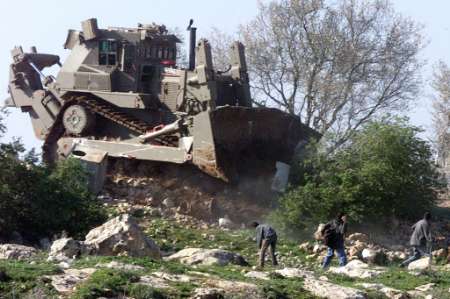
Il rapporto aggiunge che a luglio l'esercito di Israele ha distrutto 6 case - di cui 3 a Gerusalemme - e arrestato 300 cittadini; i coloni hanno bruciato 2.250 olivi. Le forze di occupazione hanno confiscato 30.000 m² di terra nell'area di Hebron per ampliare l'insediamento di Aetna.

Avanza anche la giudaizzazione di Gerusalemme e l'espulsione dei suoi legittimi abitanti. Barriere e checkpoints vengono eretti continuamente nella West Bank e proseguono le aggressioni da parte dei coloni nei confronti dei cittadini e delle terre palestinesi.
A luglio, le autorità israeliane hanno rilasciato 256 prigionieri come gesto di "buona volontà" nei confronti del presidente dell'Anp, Mahmoud Abbas, tuttavia, l'esercito ha aumentato le operazioni di arresto nelle città, nei villaggi e nei campi profughi palestinesi. Il numero dei sequestri in un singolo mese, dunque, ha superato quello dei cittadini scarcerati.

Hamas orders television program off air

John Smith - IMEMC & agencies. 3/08/07. The Hamas movement on Tuesday ordered a Gaza television station to halt its broadcasting of a political affairs program, a move that has incurred the anger of the Gaza union of Journalists. The weekly program “Red Line” is broadcast by Palestine Television, a station that recently moved to an alternative broadcast site after Hamas established control over its main facility several weeks ago. The Deputy Minister of Information in Gaza, Hassan Abu Hasheesh, stated that the ban was not implemented because of the content of the program, but because the station “ignored the government in Gaza to which it must report.” The station has refused to acknowledge the authority of Hamas in the Gaza Strip.

Chairman of the Palestinian Journalists’ syndicate Tawfiq Abu Khoussa characterized the action as a serious “suppression of press and media freedoms.”

Water Crisis Looms over Palestinians as Israel Withholds Water Resources

Palestinian National Initiative, Ramallah, 30-07-07. Parliamentarian and Palestinian National Initiative leader Dr. Mustafa Barghouthi today warned of the severe water crisis that is threatening to unfold in the Bethlehem and Jenin districts as a direct result of Israel‘s withholding of water resources.

Dr. Barghouthi pointed out that Israel is currently withholding 800 mcm of the 963 mcm of water resources produced in the West Bank each year, a fact exacerbating already-dire inequalities in access to natural resources, which see Palestinians allowed to consume just 50 mcm per capita per year compared to 2,400 mcm for each Israel‘s 475,000 illegal settlers in the West Bank.

He added that Bethlehem city, including its refugee camps, and Silt-a-Daher village in the Jenin district were being particularly badly affected.

Dr. Barghouthi urged the Palestinian government to take immediate action to address this issue, saying that it has shown little capability in doing so until now.

Such water shortages are common as a result of Israel‘s confiscation and control over Palestinian resources, which leave Israel responsible for ensuring that Palestinian communities have access to adequate, good quality water partly via its government-owned corporation, the Mekorot Water Company. Since the start of the Intifada in September 2000, Mekorot has been reducing water supplies to many Palestinian communities and in some cases, has completely stopped supply.

The Palestinian Hydrology Group cites a decrease in supply, particularly during critical summer months as one of the primary problems related to the Mekorot Water Company and Israeli control over resources. [1]

This shortage of water affects every function that water plays in human life, such as drinking, bathing, cleaning, watering crops, and providing water for livestock, with obvious, severe implications for the humanitarian and economic situation in Palestine.

Notes

[1] Palestinian Hydrology Group. 2004. Water for Life: Israeli Assault on Palestinian Water, Sanitation and Hygiene During the Intifada. http://www.phg.org/waterforlife/waterforlife.html.

Barghouthi: Israel wishes for normalization with Arab countries before acknowledging the Palestinian

Ameen Abu Warda - IMEMC News, 3/08/07. Legislator Mustafa Barghouthi, secretary-general of the Palestinian National Initiative, has stated that Israeli seeks normalization with other Arab countries before finding a solution to the Palestinian cause, a desire that conceals a wish to ignore and even liquidate the desire of the Palestinian people.

barghouti.jpg

Dr. Barghouthi commented on the US foreign minister Condoleezza Rice’s visit to the area, arguing that that Israel seeks to exploit the meeting to normalize relations with other Arab countries and to dissolve the Palestinian cause.

Dr. Barghouthi stated that Olmert hopes the U.S. will exert its efforts to guarantee the collusion of Saudi Arabia and other Arab Gulf States in the continued occupation of the Palestinian territories, arguing that Israel will use the opportunity to illegally appropriate more Palestinian-owned land.

In addition to this, Dr. Barghouthi argued that the real purpose of the proposed negotiations was to circumvent the Arab Peace Initiative, stating that any real and just solution must concentrate on identifying the timeframe in which the occupation would end and an independent Palestinian state could be established.

Translated by - Nisreen Qumsieh

Gazawis Don't Float


Andrew Lee Butters , TIME, 2/08/07. Wat would you do if you lived on a sandy slice of the Mediterranean shoreline that was under an international siege that made it next to impossible to have a normal productive life? Well, If you're like many Gazawis*, you'd hit the beach.

Every evening, the beaches of Gaza are packed with people. On Thursday, the crowds last well into the night, since for those lucky enough to have a job, Friday is their only day off. And yet it doesn't take long to realize that something's not right, and I'm not talking about the floating garbage, the occasional whiff of sewage, or the Israeli spy drone shining in the distance like a lost planet. Gazawis aren't very good swimmers.

Crowds of young men wading in the surf treated me like a visiting Olympian because I wore goggles and could sustain freestyle strokes for more than 5 minutes. And when I swam a couple yards underwater without coming up for air, they were even more impressed. "Do it again!" they shouted.

Swimming classes are turning out to be the most popular activity at a United Nations program this summer for 182,000 Gazawi children. (The UN is making a big point of calling this "Summer Games" rather than summer camps, because for Palestinian kids, a camp is either as an urban ghetto for refugees or a place where fanatics hit you with a stick.) Sixty thousand children signed up for swim classes, far more than the program could handle. Between the years of war, crime, fighting, and the general lack of instructors or resources for kids, perhaps it shouldn't have been surprising to me that almost none of them had ever been swimming before. Though Gaza's future, and the future of these children, still looks bleak, at least it's now safe enough at the beach that all they have to worry about is floating.

* Comment Posted by Jewdy of Jasper August 3, 2007:

"In the English language , I believe we call the citizens of that sandy Strip "Gazans". What is your point? Your usage sounds decidedly odd. Does Time refer to Italianos instead of Italians?"

venerdì 3 agosto 2007

A Gaza, le Hamas fait main basse sur les mosquées


REUTERS/IBRAHEEM ABU MUSTAFA
Un membre des forces armées du Hamas monte la garde, jeudi 2 août, dans le camp de réfugiés de Jabaliya, dans la bande de Gaza.


Benjamin Barthe Gaza Envoyé Spécial, Le Monde, 3/08/07. Debout sur le perron de son magasin, dans le centre-ville de Gaza, l'homme hésite à parler, implore de ne pas publier son prénom puis, finalement, entame son récit. C'était dans la nuit du 14 au 15 juin, alors que les ultimes défenseurs de la présidence palestinienne prenaient la fuite et que le Mouvement de la résistance islamique (Hamas) achevait, à la stupéfaction générale, sa conquête de la bande de Gaza. "Vers 3 heures du matin, des miliciens masqués ont fait irruption dans l'immeuble de ma famille", raconte-t-il. Son clan, les Abou Chakhla, est célèbre à Gaza pour avoir bâti la mosquée Al-Amin, l'un des rares lieux de culte estampillés Fatah, dressée juste en face de la résidence du président Mahmoud Abbas. "Ils ont demandé les clés (de la mosquée) sur un ton qui ne souffrait aucune discussion, ajoute-t-il. Nous nous sommes exécutés."


Le lendemain, la mosquée Al-Amin arborait au sommet de son minaret le drapeau vert de ses nouveaux maîtres. Aujourd'hui, l'endroit où M. Abbas aimait à se rendre est tapissé de posters à la gloire des islamistes. Chaque vendredi, jour de la grande prière hebdomadaire, ses haut-parleurs diffusent une bonne parole en forme de propagande anti-Fatah.

Cette dérive touche l'ensemble du mince territoire palestinien. De même qu'ils n'ont pas perdu une minute pour collecter les armes de leurs adversaires, les miliciens du Hamas ont rapidement investi les lieux de prière où ils n'étaient pas encore implantés. Dans le centre de Gaza, Al-Katiba, la mosquée officielle du régime, est passée sous leur coupe. "Il n'y a plus moyen d'entendre un prêche normal le vendredi, soupire Hazem Qandil, un fonctionnaire du ministère de l'intérieur. Où que tu ailles, l'imam traite les dirigeants de Ramallah de malfaiteurs et de putschistes. Désormais, je me débrouille pour arriver à la fin du prêche afin de n'assister qu'à la prière proprement dite."

L'entrisme du Hamas dans les mosquées n'est pas un phénomène nouveau. A l'époque où ses militants n'étaient pas encore engagés dans la "résistance", l'armée israélienne, désireuse de contrer l'influence de l'OLP, leur avait permis de construire des dizaines d'édifices religieux. L'Autorité palestinienne, mise en place à partir de 1994, n'a jamais réussi à placer sous tutelle la totalité de ces lieux de culte. Après sa victoire électorale en janvier 2006, le Hamas nomma ses hommes au sein du ministère des Waqfs, chargé de la gestion des mosquées et débuta une purge silencieuse.

plein texte


mercoledì 1 agosto 2007

Riyadh gives talks with Israel cautious welcome

Mark Tran and agencies, Guardian, 1/08/07. Earlier this week, the US announced massive arms sales to the region as part of its latest diplomatic push, with Saudi Arabia and other Gulf states set to receive $20bn (£10bn) worth of weapons, while Israel is being offered $30bn.

Ms Rice, who is now in Israel, was expected to press Mr Olmert to respond to Saudi overtures by making more concessions to the Palestinian president, Mahmoud Abbas, whose Fatah faction still controls the West Bank.

Israeli officials said Mr Olmert was prepared to discuss borders and other core issues in "general terms" that could lead to an "agreement of principles" for establishing a Palestinian state.

But Mr Olmert has not agreed to fully fledged negotiations over the three main final status issues - borders, the status of Jerusalem and Palestinian refugees - as proposed by Mr Abbas. Israeli officials said any commitment now could raise expectations and lead to further violence if talks broke down.


Gaza a tutto gas: grazie all'inviato di pace Blair finirà agli israeliani tutto il petrolio palestinese

Michele Giorgio. il manifesto. 31/07/07. Quasi pronto l'accordo tra Olmert, Anp e British gas: ad Ashqelon il greggio della Striscia. Tel Aviv pagherà poco e potrà chiudere i rubinetti quando vorrà. Blair che anni fa seguì con attenzione la firma dell'accordo tra Anp e BG, ora non ha mosso un dito per suggerire cambiamenti che consentano ai palestinesi di incassare di più dal gas di Gaza. Presto il governo di Ehud Olmert, la BG e l'esecutivo del premier Salam Fayyad, firmeranno un accordo che di fatto metterà a disposizione di Israele energia a basso costo e, soprattutto, la possibilità di bloccare i fondi palestinesi, così come già fa nel caso delle entrate derivanti da dazi doganali e dall'Iva che raccoglie alle frontiere per conto dell'Anp. La BG infatti indirizzerà il piccolo gasdotto verso Ashqelon e Ashdod, rendendo così Israele l'unico acquirente del gas palestinese. Gaza sarà evitata e con essa il movimento islamico Hamas che la controlla dal 15 giugno. Ed è ovvio che, dovessero esplodere in futuro nuove rivolte palestinesi o incrinarsi i rapporti con Abu Mazen, Israele avrà la facoltà di sospendere subito il pagamento della bolletta del gas ricevuto dai palestinesi. Nel frattempo indiscrezioni di stampa riferiscono che dietro l'accordo si nascondano personaggi dalla fama non proprio limpida, come l'ex consigliere economico della presidenza dell'Anp, Mohammed Rashid (amico dell'ex «uomo forte» di Gaza Mohammed Dahlan) e Yossi Maimanm, un ex agente del Mossad ora a capo della compagnia israeliana che riceverà e distribuirà il gas palestinese.

Tony Blair, in qualità di nuovo inviato del Quartetto per il Medio Oriente (Usa, Russia, Onu e Ue) ha cominciato a lavorare ad un piano «economico di pace», informava un paio di giorni fa il quotidiano Maariv di Tel Aviv. L'ex premier britannico avrebbe in mente un incontro tra 100 uomini d'affari israeliani e palestinesi per dare vita ad una «imprenditoria di pace». Si tratta di un'idea che, dicono, piace al premier israeliano Olmert. Difficile dire quanto al presidente dell'Anp Abu Mazen. Tuttavia è poca cosa e sarebbe stato molto meglio affrontare subito il tema dello sviluppo e della «liberazione» dell'economia palestinese, strangolata dall'occupazione militare. Delle riserve di gas naturale di Gaza, ad esempio. Una ricchezza che potrebbe garantire ad una delle aree palestinesi più povere, diverse centinaia di posti di lavoro e salari per i prossimi anni.
Ma l'inviato del Quartetto ha un'idea ben diversa dello sfruttamento dei giacimenti del gas di Gaza - che vede coinvolta la BG (British Gas) Group - che non va nella direzione di garantire i diritti del popolo in possesso di questa eccezionale risorsa. Blair che anni fa seguì con attenzione la firma dell'accordo tra Anp e BG, ora non ha mosso un dito per suggerire cambiamenti che consentano ai palestinesi di incassare di più dal gas di Gaza. Presto il governo di Ehud Olmert, la BG e l'esecutivo del premier Salam Fayyad, firmeranno un accordo che di fatto metterà a disposizione di Israele energia a basso costo e, soprattutto, la possibilità di bloccare i fondi palestinesi, così come già fa nel caso delle entrate derivanti da dazi doganali e dall'Iva che raccoglie alle frontiere per conto dell'Anp. La BG infatti indirizzerà il piccolo gasdotto verso Ashqelon e Ashdod, rendendo così Israele l'unico acquirente del gas palestinese. Gaza sarà evitata e con essa il movimento islamico Hamas che la controlla dal 15 giugno. Ed è ovvio che, dovessero esplodere in futuro nuove rivolte palestinesi o incrinarsi i rapporti con Abu Mazen, Israele avrà la facoltà di sospendere subito il pagamento della bolletta del gas ricevuto dai palestinesi.
Il giacimento marino di Gaza - quasi 300 miliardi di metri cubi - fu scoperto dalla BG Group all'inizio degli anni 90. Israele scattò subito in piedi e affermò che si estendeva anche alle sue acque regionali e quindi chiese la sua «parte». Gli studi internazionali invece provarono che il giacimento era interamente in acque palestinesi. Un colpo allo stomaco di Tel Aviv che la BG attenuò offrendo di destinare il gas a Israele e in minima parte alla centrale elettrica di Gaza. La BG però rifiutò l'offerta israeliana di 53 centesimi di dollaro per barile di petrolio equivalente - un prezzo minimo se si tiene presente quello che è attualmente il costo del greggio e del gas sul mercato mondiale - e minacciò di vendere il gas agli egiziani. Tony Blair intervenne per bloccare le intenzione della BG e per rimettere tutto «in ordine». Divenuto inviato del Quartetto, Blair non muove un dito per consentire ai palestinesi di trarre maggior beneficio dall'unica risorsa energetica sulla quale possono contare.
Interrotti i colloqui con gli egiziani, lo scorso aprile la BG ha accettato la seconda offerta di Israele: 77 centesimi di dollaro. Lo Stato ebraico importerà 1,6 milioni di metri cubici l'anno per 15 anni del gas palestinese che raggiungerà i depositi israeliani ad Ashdod attraverso un condotto marino.
Per Israele è un accordo eccezionalmente buono. Il gas palestinese soddisferà il 10% del suo fabbisogno energetico ad un prezzo inferiore del 50% di quello che avrebbero dovuto pagare, ad esempio, per il gas del vicino Egitto. Del valore complessivo del gas, 4 miliardi di dollari, l'Anp invece vedrà solo le briciole: secondo alcune stime, appena 100 milioni di dollari l'anno in royalty per la sua quota nel progetto. Soldi che peraltro finiranno in un conto bancario internazionale e non direttamente nelle casse dell'Anp, mentre alcuni esperti palestinesi avevano suggerito la creazione di un fondo di sviluppo per progetti infrastrutturali in Cisgiordania e Gaza.
Nel frattempo indiscrezioni di stampa riferiscono che dietro l'accordo si nascondano personaggi dalla fama non proprio limpida, come l'ex consigliere economico della presidenza dell'Anp, Mohammed Rashid (amico dell'ex «uomo forte» di Gaza Mohammed Dahlan) e Yossi Maimanm, un ex agente del Mossad ora a capo della compagnia israeliana che riceverà e distribuirà il gas palestinese.

Gazapalooza Summer '07

Andrew Lee Butters/Gaza City, TIME, 31/07/07. I've been in Gaza since Thursday reporting on my own without Hamas. For the first time in years, civil society is returning to Gaza thanks to the security provided by the 5,000 members of the Hamas Executive Force, a paramilitary unit that has taken over the policing the 1.4 million people of Gaza. Less than two months ago, Gaza was one of the most dangerous places in the world. But within a week after the Hamas takeover, the crime, the violence, the tribal clashes, the kidnappings and murders by in large ended. This is surely one of the world's most impressive law enforcement achievements, and the fact that it was done so quickly with so few people is a testament to the corruption and collusion that was endemic among the 70,000 or so members of the Palestinian security forces in Gaza who were financed by America and mostly loyal to Fatah. The new security in Gaza partly explains why there were so many journalists on this tour. After the kidnapping of BBC correspondent Alan Johnston, Gaza was a no-go area for us. Now Alan is free and a banner hangs in front of the main press building in Gaza city: "No more threat to our foreign visitors and guests -- Hamas." There is a new sheriff in Gaza.

PA%20Parliament.jpg
The Media is the Message at the Palestinian Parliament

Ever since Hamas kicked the Fatah-dominated Palestinian Authority out of Gaza in June, Fatah -- with American encouragement -- has been hitting the airways with tales of Hamas ruthlessness, extremism and totalitarianism in the Strip. So Hamas hit back with a field trip for the foreign press designed to show the world what life in Gaza under Hamas is really like. And if yesterday's events were any guide, lemme tell ya, it's a lark!

First off, we went straight to the home of Hamas leader Ismail Haniyeh. In contrast to Fatah leaders and their gangsta-fabulous lifestyles, Hanniya and his family still actually live in the 'hood -- in this case Beach Camp, a poor district in Gaza City for refugees from the '48 war. Still, it all got a little thick when Haniyeh himself appeared on the terrace above the journalist throng. I half-expected him to throw roses or start singing: "Don't cry for me Argentina! The truth is I never left you."

The%20House%20that%20Haniyeh%20Built.jpg
The House that Haniyeh Built

Next stop, we looked at some of the houses and buildings belonging to the Palestinian Authority and to Fatah leaders, which were supposedly looted by Hamas, according to Fatah. I personally can attest that the bathrooms in the official Palestinian guesthouse were in perfect working condition. Noticeably absent on this Gaza version of MTV Cribs was a tour of Fatah security chief Mohammed Dahlan's lair. In the days just after the Gazan civil war, angry locals visited the homes of those Fatah heavies accused of murder and torture, and apparently the mobs weren't as nice about using the proper facilities as I was.

I've seen some tough things in the Middle East, but nothing has quite burned my retina like the sight of a hundred journalists bum-rushing the jail cells at Gaza City security headquarters to ask killers, thieves and child molesters what it's like to be in a Hamas-run prison. Talk about Felliniesque. Anyway, I'm just as bad as my colleagues -- I went one floor up and talked to a man convicted of killing a money changer who said the difference between the Palestinian Authority and Hamas was like night and day. Now they've got better food, family visits, and an end to verbal abuse. "Hamas people know God, and they respect our humanity," he said.
Prison.jpg

What, you don't trust a convicted murderer? Well how about a a Catholic priest. There are about 4,000 Christians in Gaza (of whom about 200 are Catholic) and according to Father Manuel Musallam of the Holy Family Church, they have little to fear from Hamas. "As Palestinians, we Christians live with Muslims, and we suffer with Muslims," he said. "We did not suffer from them. Hamas defends Christians as well as Muslims. We are not talking about a fanatical institution."

Priest.jpg

Anyway, you get the point. But as heavy-handed as the Hamas PR was, it pretty much checks out. I've been in Gaza since Thursday reporting on my own without Hamas. For the first time in years, civil society is returning to Gaza thanks to the security provided by the 5,000 members of the Hamas Executive Force, a paramilitary unit that has taken over the policing the 1.4 million people of Gaza. Less than two months ago, Gaza was one of the most dangerous places in the world. But within a week after the Hamas takeover, the crime, the violence, the tribal clashes, the kidnappings and murders by in large ended. This is surely one of the world's most impressive law enforcement achievements, and the fact that it was done so quickly with so few people is a testament to the corruption and collusion that was endemic among the 70,000 or so members of the Palestinian security forces in Gaza who were financed by America and mostly loyal to Fatah.

The new security in Gaza partly explains why there were so many journalists on this tour. After the kidnapping of BBC correspondent Alan Johnston, Gaza was a no-go area for us. Now Alan is free and a banner hangs in front of the main press building in Gaza city: "No more threat to our foreign visitors and guests -- Hamas." There is a new sheriff in Gaza.

--Andrew Lee Butters/Gaza City

UN proposal regarding the Gaza Strip causes a storm

Bethlehem – Ma'an – 1/08/07. A draft proposed by Qatar and Indonesia to the United Nation Security Council caused a storm of debate between the delegation from Qatar, the Arabic member of the council and the representative of the Palestinian Authority.

According to the London-based newspaper, Asharq Al-Awsat (Middle East), the proposal concerned the humanitarian situation in the Gaza Strip.

Riad Mansour, the Palestinian representative, described the differences as procedural, saying that the debate ensued "because the draft was prepared without our knowledge."

Mansour told Asharq Al-Awsat that statements such as made in the Qatari-Indonesian draft are subject to consultation between council members, but that the Qatari delegation had not conferred with the Palestinian delegation on the issue.

"We were surprised by the behaviour of the Qatari delegation," Mansour said.

According to the London-based newspaper, Mansour hinted that the draft interfered in Palestinian internal affairs. Qatar denied having any negative intentions.

The representative for Qatar, Nasser Abdul Aziz, told Asharq Al-Awsat that "we don't have any political agenda; all that we are concerned about is to aid the Palestinians. We behave in accordance with national and humanitarian requirements."

Aziz expressed his astonishment as to the Palestinian representative's position who, he claimed, "Called on the council members to oppose the proposal and asked them not to do anything regarding the humanitarian situation in the Gaza Strip."

The Qatari representative added that the draft was voted down "because the United States opposed it."

The Qatari draft concentrated on the humanitarian situation in the Gaza Strip and did not use the phrase 'the occupied lands'. It expresses regret in regard to the situation in Gaza. In another paragraph of the draft, it calls on a quick solution to the issue of the stranded Palestinians at the Rafah Crossing on the Egypt-Gaza border.

A third point stresses the necessity of the guarantee for the arrival of humanitarian aid to the strip; electricity, fuel and water. The draft's last paragraph calls on the international community to resume emergency aid to the Gaza Strip.

Deposed Hamas government investigating attacks on press freedom

Gaza - Ma'an – 31/07/07. The deposed Hamas government said Tuesday that it is taking action against members of their security forces who blocked the delivery of the major Palestinian newspapers to the Gaza Strip.

Abu Hashish, Undersecretary in the deposed ministry of information said that the government does not condone the actions of the Executive Forces in this case. He stressed that individual commanders in the Executive Forces, not the government, were responsible, and that his ministry is working to sanction the perpetrators.

The Executive Forces met widespread condemnation for preventing deliveries of Al Ayyam, Al Quds, and Al Hayyat Al Jadeedah newspapers in the Strip Monday, allegedly because they printed defamatory articles about Hamas. There were also reports that Executive Forces troops stormed news paper offices in Gaza.

Holocaust survivor says new $20 Israeli government allowance is "absurd"

Intenational Herald Tribune. 31/07/07. Israelis cite the Nazi genocide as one of the symbolic reasons why the Jewish state must exist. But survivors say that while the memory of the Holocaust has been institutionalized and venerated, they themselves have been neglected. Many survivors were outraged. "The government doesn't understand the significance of the Holocaust and what horrors the survivors went through. If they did, they wouldn't propose this absurd and insulting plan." "For 42 years I received nothing from the state. This grant has arrived too late for thousands of survivors. Time is working against us". "I think we should take all the Holocaust survivors, excuse me if this is shocking, and put them on a train to the airport and fly them to Germany. In Germany, where all this great horror occurred, they relate to survivors as people who need to be taken care of".

Critics maintain that more of the nearly $80 billion (€59 billion) in reparations Israel has received in compensation from Germany should have gone to the survivors. A large percentage of the reparations, which were paid beginning in the 1950s as Israelis struggled to build their fledgling state, went to the military and for infrastructure.

full text

martedì 31 luglio 2007

A Warning to Tony

Uri Avnery's Column, gush-shalom, 28/07/07. Everybody knows that there is only one way to strengthen Abu Mazen: immediately to start rapid and practical negotiations for the establishment of the State of Palestine in all the occupied territories, with its capital in East Jerusalem. Not more discussions about abstract ideas, as proposed by Olmert, not another plan (No. 1001), not a "peace process" that will lead to "new political horizons", and certainly not another hollow fantasy of that grand master of sanctimonious hypocrisy, President Shimon Peres.

THE NEXT scene of the play, for which all the actors are now learning their lines, is the "international meeting" this autumn, according to the screenplay by President Bush. Condoleezza will chair, and it is doubtful whether Tony, the new actor, will be allowed to take part. The playwrights are still deliberating.

If all the world is a stage, as Shakespeare wrote, and all the men and women merely players who have their exits and their entrances, that is true even more for Israel and Palestine. Sharon exited and Olmert entered, Wolfensohn exited and Blair entered, and everything is, as Sakespeare wrote in another play, "words, words, words."

Wolfensohn can view the next parts of the play with philosophical detachment. We, who are involved, cannot afford that, because our comedy is really a tragedy.

full text

"Caro Occidente smetti di salvare l'Africa"

L'accusa di uno scrittore americano-nigeriano che vive tra Lagos e gli Usa Nel mirino star, ong e mobilitazioni studentesche: "Basta umanitarismo sexy - Uzodinma Iweala, la Repubblica.it, 31/07/07. Perché i media parlano spesso dell'indipendenza "concessa agli Stati dell'Africa dai dominatori coloniali", dimenticando le lotte e il sangue sparso dagli africani per conquistarla? Come mai l'impegno per l'Africa di Bono o Angelina Jolie sono oggetto di smisurate attenzioni, mentre l'opera di africani come Nwankwo Kanu o Dikembe Mutombo è praticamente ignorata? E come si spiega che in Sudan le esibizioni da cow boy di un diplomatico Usa di medio livello ricevano più attenzione degli sforzi di numerosi Paesi dell'Unione africana, che hanno inviato aiuti alimentari e truppe, e si sono impegnati in negoziati estenuanti nel tentativo di raggiungere un accordo tra le parti coinvolte in questa crisi? Il mese scorso, il Vertice degli 8 Paesi industrializzati si è incontrato in Germania con un gruppo di celebrità per discutere, tra l'altro, su come salvare l'Africa. Io mi auguro che prima del prossimo incontro di quest'organizzazione ci si renda conto di una cosa: l'Africa non vuol essere salvata. Ciò che l'Africa chiede al mondo è il riconoscimento della sua capacità di avviare una crescita senza precedenti, sulla base di un vero e leale partenariato con gli altri membri della comunità globale.

Inside Gaza: An Arms Dealer's Tale

As U.S. plans to sell arms to Saudi Arabia make waves in the Middle East, NEWSWEEK’s Kevin Peraino visits a Gaza arms dealer.
WEB-EXCLUSIVE COMMENTARY
By Kevin Peraino
Newsweek
Updated: 5:37 p.m. ET July 30, 2007

July 30, 2007 - It is not a fact that he particularly likes to advertise, but, if pressed, Abdel Hamid Bahar will acknowledge that his business is at its best when people are dying. Last Sunday I went to see the black-market arms dealer at his home, a squat, dilapidated structure made of cinderblocks and tin sheeting, in the central Gaza village of Moghraga. We sat on pink plastic chairs in the shade, next to a slightly sickly garden with a couple of banana plants and a slender olive tree. The weapons merchant's business varies widely, of course, depending on how much fighting is going on. Last summer, when Gaza was at war with Israel after the kidnapping of Gilad Schalit, Bahar was pulling in almost $3,000 per month, more than most Gazans earn in a year. How is business now, I asked, with Hamas in power and the streets relatively calm? "Zero," the gun dealer complained, without bothering to hide his frustration.

Bahar nodded to one of his sons, who had been leaning against a cinderblock wall and watching us without saying anything. The lanky young man disappeared for a moment inside the house, and then returned carrying a new-looking semiautomatic rifle, slick with resin and grease. For my notes, I asked for the kid's name and age. The arms dealer frowned. "I don't know how old he is," he said, a little disdainfully. "I have 13 children. I don't even know all their names." He paused for a second, and then added: "All my children, the girls and the boys, know how to use guns." He took the rifle, a Chinese-manufactured Kalashnikov, and slid out the clip. "This is well made," he told me. "Seventeen-hundred dollars each. If you need 50, I'll bring them to you. While you're drinking tea, I can get you 100. I am the No. 1 for weapons in Gaza."

The arms dealer has a rangy, mangy look to him. His head is almost entirely shaved, but he wears a long, scraggly black beard over his gaunt features, which makes him resemble a Palestinian Abraham Lincoln. A net of thick veins bulges from his sinewy forearms. He smiles every now and then, but the desired effect is lost when he reveals a mouthful of yellowed and rotting teeth. He chain-smokes cigarettes from a pack of Royals stashed in his left breast pocket, and keeps a 70-year-old, German-made 9 mm pistol tucked into the waistband of his jeans. (He refers to it as a "Hitler.") The arms dealer is 43 years old, and has been selling guns for the past two, since just before Hamas won the territory's legislative elections.

Bahar grew up in Gaza's Bourej refugee camp, and eventually moved to Moghraga, a poor farming village of about 5,000. He married when he was 16 and got a job as a construction worker with his father in Israel for a while. Later he earned a living as a taxi driver and auto mechanic. During the first intifada he fought against Israel as a militant in the Tanzim, the Fatah-affiliated militia. Still, despite his youthful loyalties, it is bad business for an arms dealer to be taking sides; he says he now sells to both Hamas and Fatah. One of his kids had scrawled the word HAMAS in black spray paint on the side of the house. "I started my business in order to feed my children," he told me. As the rivalry between Hamas and Fatah intensified last spring, "all the factions began to buy weapons."

I had come to see Bahar because arms sales were the talk of the Middle East over the weekend. On Friday the Bush administration said it would like to sell Saudi Arabia and its regional allies billions of dollars worth of sophisticated weaponry. Washington has also promised Israel –which, in a sign of its concern about Iran possibly obtaining nuclear weapons, has dropped its traditional objections to U.S. arms sales to Saudi Arabia—another $30.4 billion in weaponry. Secretary of State Condoleezza Rice and Defense Secretary Robert Gates were set to tour the region this week to help work out the details of the proposal. Israel also promised to allow 1,000 M-16s to pass from Jordan to Palestinian Authority security forces in the West Bank—an effort to prop up the Palestinian president, Mahmoud Abbas.

Against that backdrop, it seemed like a good idea to visit one of the trade's real-world practitioners. In the news stories about American support for proxies in the region, the recipients of such weaponry are usually described as "moderate," while their antagonists are inevitably "radical." Those are cartoon descriptions, of course, and are often carelessly applied. In the four years since I've been working in the Middle East, I've met plenty of radical American proxies, and just as many moderate "radicals." The labels "Islamist" and "secular" don't reveal all that much about character either, although they're slightly better than "terrorist" and "stooge." If I were forced to divide and classify the Gazans I meet, I'd say they tend to be better described as hawks and doves, and there are both of those in all camps. Bahar, the arms dealer, is one of the former by trade.

The frustrating, inconvenient thing about all this is that, when you meet the people up close, it is often the hawks who seem the most shrewd and competent, at least tactically. They sometimes appear a little paranoid, but in the unforgiving Middle East they are also often the most determined survivors, the ones you would want on your side in a street fight. At one point while we talked the other day, Bahar jumped up out of his chair in one quick movement and darted over to his garden. He tore a branch off his olive tree, and then stuffed the whole thing into his mouth—wood, leaves and all. He chewed it and swallowed hard. "I can eat the grass and the trees, but I will never hold the white flag," he said. "There are many here like me who are ready to eat anything." Sanctions against Hamas won't work, he argued. He told me that he considered Abbas feckless and weak, too unwilling to resist the Israeli occupation. "We will never return to Abu Mazen," he added, using the president's nickname. "Israel and America are so foolish." There was some obvious theater in the tree-eating bit, but it was effective all the same. I tried to imagine Abbas—the quiet former schoolteacher—jumping up and eating a tree, but the image would not come.

About halfway through our conversation, my translator, Hassan, pointed out a faint buzzing sound in the air overhead—an Israeli drone. Bahar shrugged. "Before you hear the noise of the plane, I hear it," he said. "I'm sensitive to it." After drinking cups of thick, sweet coffee, Hassan and I eventually got up to leave and walked back to the car. On my way out I noticed that Bahar's front yard was almost entirely scorched. A few lonely blades of grass shot up through the large black stains covering the turf like oil spots. I asked the arms dealer what had happened to his yard. "I burned it," he told me. "So I can see the snakes." He said it without the slightest hint of irony.

URL: http://www.msnbc.msn.com/id/20042003/site/newsweek/?from=rss