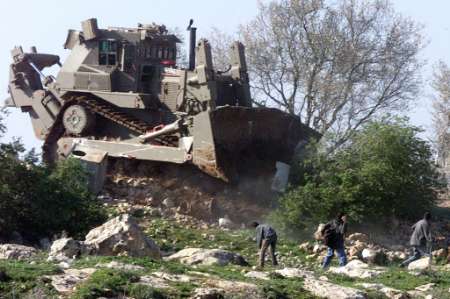
Michele Giorgio. il manifesto. 27/07/07. L'aviazione israeliana continua a colpire per esasperare la tensione nella Striscia: uccisi tre militanti della Jihad islamica e uno di Hamas. Un giovane che avrebbe tentato d'accoltellare un soldato ammazzato a manganellate ad un check point nei pressi di Betlemme. Mohammed Dahlan non è più un membro dell'Autorità nazionale palestinese (Anp). Si è dimesso ieri dall'incarico di consigliere per la sicurezza, che di fatto non occupava più dal 18 giugno, da quando era stato travolto dalle critiche per il crollo di Fatah, in appena cinque giorni di combattimenti con il movimento islamico Hamas, che ora controlla completamente Gaza. Dahlan, a quanto pare, ha rassegnato le sue dimissioni su richiesta della commissione d'inchiesta sui fatti di Gaza, anche se l'ex «uomo forte» di Fatah ha motivato con «precarie condizioni salute» la sua decisione. «A causa della mia lunga assenza e di problemi di salute, spero che accettiate la fine della mia missione. Resterò sempre un soldato fedele al vostro seguito», ha scritto al presidente Abu Mazen. Le sue parole però non devono ingannare. In realtà Dahlan non esce di scena, ma compie solo una ritirata strategica e in ogni caso le sue dimissioni non bastano a ridare ai vertici dell'Anp una immagine di pulizia e correttezza dopo anni di abusi di potere e corruzione. Non sono sufficienti a far cicatrizzare la ferita dell'umiliazione pesantissima subita da Fatah e dalle forze di sicurezza da lui pagate, addestrate e armate (con fondi esteri) che si sono sciolte come neve al sole ai primi accenni di attacco da parte delle milizie di Hamas.
I mezzi d'informazione internazionali ieri hanno rilanciato con enfasi la notizia delle dimissioni dell'ex uomo forte di Fatah. Ma i palestinesi non si fanno illusioni. Sanno che americani, britannici e israeliani vedono in Dahlan il successore «ideale» di Abu Mazen alla guida di una Anp chiamata ad issare la bandiera palestinese su uno staterello di pochi chilometri quadrati. George Bush peraltro preme, vuole un accordo tra israeliani e palestinesi prima della fine del suo mandato, come ha riferito due giorni fa lo stesso Abu Mazen, in un'intervista al quotidiano israeliano Maariv. Osservando la situazione sul terreno i palestinesi da qui a un anno non potranno che ottenere lo Stato con i confini provvisori - senza Gerusalemme capitale e senza sovranità - che il premier israeliano Olmert di fatto ha descritto nella proposta di «accordo di principio» che ha formulato l'altro ieri.
Dahlan è scaltro, sa che ora deve farsi da parte, in modo da poter rientrare in scena al momento opportuno. Nemico giurato di Hamas, era stato nominato il 18 marzo consigliere per la sicurezza nazionale, nonostante le proteste del movimento islamico, e aveva immediatamente presentato un piano di riorganizzazione dei servizi di sicurezza per dare potere solo alle forze fedeli ad Abu Mazen, trascurando le responsabilità in materia di sicurezza che lo Statuto dell'Anp assegna al ministero dell'interno. La formazione del governo di unità nazionale Fatah-Hamas, non lo aveva convinto a cessare le sue attività di erosione del potere di Hamas. Un'azione continua, provocatoria, svolta assieme ai suoi stretti collaboratori - Rashid Abu Shbak e Samir Mashrawi - che alla fine, nonostante le armi e i fondi ricevuti, non ha impedito al movimento islamico di sbaragliare in pochi giorni e con il minimo sforzo migliaia di agenti delle forze di sicurezza.
Già all'inizio dell'Intifada Dahlan aveva dato le dimissioni, per poi tornare in pista nel momento più critico, quello della rioccupazione israeliana delle aree autonome palestinesi in Cisgiordania nel 2002, per mediare la «salvezza» di Yasser Arafat e di quel poco che rimaneva dell'Anp. Una manovra che non esiterà a ripetere in futuro.
Sale nel frattempo il numero dei militanti palestinesi eliminati da Israele con le cosiddette «uccisioni mirate». Ieri altri tre palestinesi sono stati uccisi dai missili lanciati da un aereo che ha centrato l'auto a bordo della quale viaggiava Omar Karim, delle Brigate al Quds (Jihad). Sharif Breissi, delle Brigate Ezzedin Qassam (Hamas), invece è stato colpito e ucciso dal fuoco di un carro armato israeliano durante una incursione di reparti corazzati a Rafah.
Un giovane palestinese è stato ammazzato in circostanze da chiarire nei pressi di Betlemme. Secondo i militari il ragazzo - che fonti palestinesi descrivono come mentalmente disabile - ha provato ad accoltellare un soldato a un posto di blocco. Fonti palestinesi invece non parlano di alcun tentativo di accoltellamento. A quel punto un commilitone del presunto aggredito sarebbe intervenuto, colpendo ripetutamente alla testa con un manganello il giovane, morto poco dopo - dopo essere stato soccorso da medici palestinesi - per le ferite riportate.
http://www.ilmanifesto.it/Quotidiano-archivio/27-Luglio-2007/art30.html
sabato 28 luglio 2007


venerdì 27 luglio 2007
Anthology of bigotry
Jonathan Cook in Nazareth, Al-Ahram Weekly, 26-1/07/07. Israel's parliament last week approved by an overwhelming majority the first reading of a bill to ensure that much of the country's inhabited land remains accessible to Jewish citizens only -- a move described by one leading local newspaper as turning Israel into a "racist Jewish state". The private member's bill, called the Jewish National Fund Law, has received cross-party support. The first reading was approved by 64 legislators, with 16 -- most of them Arab MKs -- opposed. Supporters ranged from former premiere Binyamin Netanyahu, leader of the Likud Party, to Ami Ayalon, a recent challenger to head the Labour Party.
The legislation is designed to nullify the threat posed by a Supreme Court judgment, reached in 2000, that potentially opens the door to thousands of Arab families leaving the tightly controlled areas assigned to them and choosing where they live. Currently Arab citizens, who comprise a fifth of the population, are barred from buying homes in most of the country.
The move is the latest in a series of battles since Israel's establishment in 1948 to ensure exclusive Jewish control of land through an international Zionist organisation known as the Jewish National Fund (JNF). By the time of Israel's founding, the JNF had bought about six per cent of historic Palestine for Jewish settlement. Rather than demanding that these territories be handed over by the JNF, the new state authorities assigned the organisation a special, quasi- governmental status. The JNF was also given a significant share of the lands and property confiscated from hundreds of thousands of Palestinians expelled during the 1948 War.
Today, the state has nationalised 80 per cent of land inside Israel, and the JNF holds another 13 per cent. Neither sells land to private owners on the grounds that it is being held in trust for worldwide Jewry. Instead, they offer long-term leases on the land in their possession.
The JNF has far more power than the division of land suggests, however: its 13 per cent share is reported to include some 70 per cent of the country's inhabited land; it effectively controls a government body known as the Israel Lands Authority that manages the 93 per cent of land owned by the state and the JNF; and it dominates committees set up to vet applicants to hundreds of rural communities.
Because the JNF charter forbids it from selling or leasing land to non-Jews, this arrangement has allowed the JNF to discriminate against Arab citizens on behalf of the government. The JNF's control of the Israel Lands Authority and the vetting committees has ensured that Arab citizens are excluded from most of the 93 per cent of nationalised land.
Instead they have been restricted to the three per cent of Israel on which Arab communities already exist or which is privately owned by Arab citizens, though even much of this land falls under the jurisdiction of Jewish regional councils that refuse to allow Arab families to build on it. Dozens of other Arab communities are classified as illegal because the state refuses to recognise them, even though they predate Israel's establishment.
OPT-ISRAEL: Gaza 'almost completely' aid-dependent
JERUSALEM, 27 July 2007 (IRIN) - "There is no doubt, Gaza is becoming aid-dependent," said Liz Sime from CARE International, in light of the continued closure of all crossing points, except for basic food commodities and humanitarian aid. "We are working to prevent a humanitarian crisis," said Shlomo Dror, from Israel's Ministry of Defense. "But if the Palestinians have complaints, they should put pressure on Hamas". Sime was echoing statements by John Ging, the Gaza chief of the UN Agency for Palestinian Refugees (UNRWA), which is the largest aid provider in the strip. "We expect that Gaza will become a near totally aid-dependent society, a society of people robbed of the possibility of self-sufficiency and the dignity of work," he said at a press conference organised with Gaza business leaders.
With the borders shut, raw materials cannot get in and finished goods cannot be exported. Factories in the Gaza Strip are folding like dominos and unemployment is soaring.
"People hate having to ask for assistance. People want work," said Sime. "They want aid in the form of job-creation programmes." Such programmes may remain a pipedream if the borders stay shut.
While basic food supplies continue to make it into Gaza, WFP said prices of some commodities were rising, while farmers and fishermen could not export their goods, creating losses in those industries as well.
In addition, Israel's Channel 10 recently reported that Palestinian importers had alleged that goods arrive spoiled, partly because of the long waiting time at the crossing.
"I am not saying the situation in Gaza is good," said Shlomo Dror, from Israel's Ministry of Defense, but he was "not convinced" the economy would irreversibly collapse.
"We are working to prevent a humanitarian crisis. But if the Palestinians have complaints, they should put pressure on Hamas."
"People hate having to ask for assistance. People want work," said Sime. "They want aid in the form of job-creation programmes." Such programmes may remain a pipedream if the borders stay shut.
While basic food supplies continue to make it into Gaza, WFP said prices of some commodities were rising, while farmers and fishermen could not export their goods, creating losses in those industries as well.
In addition, Israel's Channel 10 recently reported that Palestinian importers had alleged that goods arrive spoiled, partly because of the long waiting time at the crossing.
"I am not saying the situation in Gaza is good," said Shlomo Dror, from Israel's Ministry of Defense, but he was "not convinced" the economy would irreversibly collapse.
"We are working to prevent a humanitarian crisis. But if the Palestinians have complaints, they should put pressure on Hamas."
ISRAEL-OPT: Three years after ICJ barrier ruling, access to land still a problem
QALQILYA, 26 July 2007 (IRIN) - Three years ago, in July 2004, the International Court of Justice (ICJ) in the Hague issued an advisory opinion, which, by a vote of 14 to one, declared the barrier illegal, and expressed particular concern that parts of it were being built within the occupied Palestinian territory.
In the Qalqilya district of the northern West Bank, many Palestinians were separated from their agricultural land and livelihood, because the barrier did not always follow the internationally recognised ‘green line’ between Israel and the Palestinian area.
Others found themselves divided from the rest of the West Bank. Overall, about 15 villages remain in the ‘seam zone’ between the serpentine path of the barrier and the border. According to the UN Office for the Coordination of Humanitarian Affairs (OCHA), 50,000 Palestinians will be located in that zone when the barrier is complete.
The ICJ observed that these pockets were created for the benefit of Israeli settlements, which it declared were also illegal under international humanitarian law.
In the Qalqilya district of the northern West Bank, many Palestinians were separated from their agricultural land and livelihood, because the barrier did not always follow the internationally recognised ‘green line’ between Israel and the Palestinian area.
Others found themselves divided from the rest of the West Bank. Overall, about 15 villages remain in the ‘seam zone’ between the serpentine path of the barrier and the border. According to the UN Office for the Coordination of Humanitarian Affairs (OCHA), 50,000 Palestinians will be located in that zone when the barrier is complete.
The ICJ observed that these pockets were created for the benefit of Israeli settlements, which it declared were also illegal under international humanitarian law.
MIDEAST: Dubious EU Support to U.S. Challenged
David Cronin, Inter Press Service. BRUSSELS, Jul 25 (IPS) - The European Union's foreign policy supremo Javier Solana this week declared himself "fully behind" the call for an international conference on the Middle East made recently by U.S. President George W. Bush. But is it time for the EU to cease being guided on the Israeli-Palestinian question by the United States, which as the main supplier of weapons to the Israeli military is partisan by definition?
Nathalie Tocci from the Centre for European Policy Studies in Brussels contends that the EU is "working on the margins of U.S.-dictated policies" in the Middle East and that this has proven counterproductive.
The influence of Washington in shaping Europe's stance has been especially marked in the Union's refusal to deal directly with Hamas. Even though that party won a democratic election in 2006, the EU has refused to have direct contacts with its representatives, as Hamas has been placed on the official lists of proscribed organisations in both Brussels and Washington.
Some EU governments -- such as France and Ireland -- are known to have queried if it is wise to shun Hamas completely. Yet the Union's ban on direct contacts has so far remained intact.
The EU has stated that Hamas must fulfil three conditions if dialogue is to take place: that it recognises Israel; accepts previously signed peace accords; and that it renounces violence.
According to Tocci, these criteria -- with the exception of renouncing violence -- are "legally dubious".
"The conditionality on Israel's recognition has no legal grounding in so far as only states and not political parties can recognise other states," she said.
Other commentators have noted how Hamas' participation in Palestinian Authority elections is tantamount to an acceptance of the 1993 Oslo accords, that led to the authority's foundation.
Nathalie Tocci from the Centre for European Policy Studies in Brussels contends that the EU is "working on the margins of U.S.-dictated policies" in the Middle East and that this has proven counterproductive.
The influence of Washington in shaping Europe's stance has been especially marked in the Union's refusal to deal directly with Hamas. Even though that party won a democratic election in 2006, the EU has refused to have direct contacts with its representatives, as Hamas has been placed on the official lists of proscribed organisations in both Brussels and Washington.
Some EU governments -- such as France and Ireland -- are known to have queried if it is wise to shun Hamas completely. Yet the Union's ban on direct contacts has so far remained intact.
The EU has stated that Hamas must fulfil three conditions if dialogue is to take place: that it recognises Israel; accepts previously signed peace accords; and that it renounces violence.
According to Tocci, these criteria -- with the exception of renouncing violence -- are "legally dubious".
"The conditionality on Israel's recognition has no legal grounding in so far as only states and not political parties can recognise other states," she said.
Other commentators have noted how Hamas' participation in Palestinian Authority elections is tantamount to an acceptance of the 1993 Oslo accords, that led to the authority's foundation.
At-Tuwani Update 07-07-11 to 07-07-24
Chistian Peacemaker Teams. Every day the team accompanied Palestinian shepherds in fields near Israeli settlements and settler outposts. The team accompanied shepherds from At-Tuwani and Mufakara in Khoruba valley near the Hill 833 settler outpost. They also accompanied shepherds from the village of Tuba. The team monitored several temporary Israeli military checkpoints on the Palestinian road leading from At-Tuwani north to Yatta. On team during this period were members of Operation Dove (the Doves) and CPTers Diane Janzen, Sarah Scruggs, Matthew Chandler, and Peggy Gish.
Wednesday 11 July
Friday 13 July
Saturday 14 July
Sunday 15 July
Monday 16 July
Wednesday 18 July
Thursday 19 July
In the afternoon, Gish, Chandler, Janzen and Scruggs joined residents of At-Tuwani in a meeting with consulate staff from Australia, Ireland, Norway, and Portugal at the school in At-Tuwani.
Friday, 20 July
Saturday, 21 July
Sunday, 22 July
Monday, 23 July
Tuesday, 24 July
http://groups.yahoo.com/group/cpthebron/message/963
Wednesday 11 July
CPTers Chandler and Janzen monitored a temporary checkpoint on Road 317 in the late afternoon. The soldiers briefly stopped a Palestinian from At-Tuwani who later told Janzen the soldiers had yelled at him to run towards them, but he just kept walking. When he got to the jeep, the soldiers asked him why he didn't run and he told them he had already walked 2km. When the soldiers saw the CPTers coming down the hill one said, "Here come the sons of bitches."
Friday 13 July
Chandler and Gish walked to Tuba in the morning. About 10am, a settler security guard and the Israeli army arrived in the area and told the Tuba shepherds they were on Ma'on land. The soldiers said the shepherds were allowed to be on the farmed land lower in the valley, but not up on the hillside. After several minutes of arguing, some of the Palestinians started to leave the area and the soldiers left with the settler security guard.
Saturday 14 July
In Tuba, the settler security guard and the army came again and told the Palestinians they were on Ma'on land. When Chandler and Gish arrived, Palestinians were telling the soldiers the whole valley was theirs and the Israeli military's civil administration, called the District Coordinating Office (DCO), confirmed it two weeks before. The soldiers threatened to arrest one of the teenage boys. A Palestinian asked Chandler to call the DCO. The DCO finally promised to send someone after a call from an Israeli peace activist.
Two more army jeeps, a police jeep, and two border police jeeps arrived and an hour later, the DCO. All of the Israeli forces congregated to speak to the DCO captain. Afterwards, the police returned the IDs to the two Palestinian men and said the valley in question was in fact open to the Palestinians for grazing, but not for farming. One Palestinian told him that was false and said he wanted to speak to the DCO directly.
The DCO captain came and explained the entire valley did indeed belong to the people of Tuba, and they could use it freely. However, he insisted the Palestinians coordinate with the DCO whenever they want to work the land. One Palestinians told him there was no point to coordinating because the DCO never comes when they do.
Sunday 15 July
Janzen and Scruggs visited a family in the village of Magheer el Abeed. The father of the family told the CPTers that at 10am, a truck drove toward him, his sons, and their sheep. A settler emerged from the truck and pointed a gun at them. The Palestinians then descended into the valley and the settler drove away.
Monday 16 July
Janzen and Scruggs went to observe a temporary checkpoint on Road 317, where the police had stopped a car coming from Yatta and were blocking the passage of other vehicles. One of the police officers asked for Scruggs' ID. After she gave him her passport, he told her if she didn't stop taking photos and leave in two minutes she would be arrested. Scruggs moved to the other side of Road 317 and Janzen arrived. About 10 minutes later, the Israeli police moved their vehicle to allow other vehicles to pass. After another 15 minutes, police returned the IDs to the Palestinians and drove away.
Wednesday 18 July
While accompanying shepherds in Khoruba valley, Janzen and Scruggs observed a Palestinian woman walking with her children in the valley toward At-Tuwani. A settler came down from the wooden house in Hill 833 and sat above the road the family was going to walk on. The Palestinians moved to the opposite side of the valley and continued on their way.
Thursday 19 July
In the afternoon, Gish, Chandler, Janzen and Scruggs joined residents of At-Tuwani in a meeting with consulate staff from Australia, Ireland, Norway, and Portugal at the school in At-Tuwani.
At 4:45pm, a plain truck entered At-Tuwani from Hill 833 and drove to a Palestinian home nearby. When Janzen and Chandler arrived, they saw two armed men in the truck: the driver was in civilian clothes, and the passenger in an army uniform. The driver had a still camera and was taking pictures of everyone, but left almost immediately after Janzen and Chandler arrived..
After the truck left, the Palestinians told Chandler and Janzen the men said they were with the DCO, but didn't act like it. They told everyone at the house they had to go inside, and when they did not, the armed men cocked their guns and threatened to start shooting. In the midst of this, they took pictures of the newer construction at the house, saying it was forbidden and would be demolished.
After the incident, one of the Palestinians called the DCO, who said they would come to At-Tuwani. Chandler and Janzen waited at the house until sunset. The DCO never came.
Friday, 20 July
Chandler and Gish responded to a call from a Palestinian regarding settlers from Susya settlement planting on Palestinian land near Qawawis. The CPTers filmed and took pictures of three settlers working in the field and then returned to At-Tuwani.
The same Palestinian man from Susiya called later saying the police and Palestinian landowners had come to the area. When Chandler and a Dove arrived, the police were speaking with the settlers who had been working the land. Up to 20 settlers from the Susya settlement gradually arrived and talked with each other on the side of the road. An army jeep and later two more and two border police jeeps arrived. . .
An hour later, when the DCO officer arrived, he went first to speak with the police and army present. Several settlers argued with them. In the meantime, settlers approached the Palestinians, Chandler and the Dove. The border police intervened to try to keep the two groups separate. Finally, the DCO spoke with one of the Palestinian landowners and told him they had to investigate the matter further to decided who owned the plot of land. Then they declared the area a closed military zone.
Saturday, 21 July
A group of seventy-five Palestinian children from the Hebron area led by a Palestinian peace activist arrived in At-Tuwani for a solidarity visit. When they walked back to their busses parked on Road 317, an army jeep was there. The soldiers said the driver of one of the busses was suspicious because he had Israeli plates stored in the bus, and Palestinians plates on the bus. The soldiers insisted the group must wait for the police to arrive and showed no regard for the children who were forced to wait in the heat without water
The police arrived after about 45 minutes. The children protested while waiting, chanting and crowding around the army and police, saying, "We want to go," and, "We want water." The police and army responded by shouting at the children to go away. After about 1.5 hours in total, the police gave the driver of one bus a citation for parking illegally on the road. The group then left for a tour of Qawawis.
Sunday, 22 July
Chandler and Gish returned to the same plot of land near Qawawis as the previous Friday to join four other internationals in documenting Israeli settlers working on the Palestinian-owned land. Soldiers tried to stop them from going out into the field where the settlers were working, but they went anyway. After the settlers left, they went out and filmed around the work site, where the tractor sat. When they got back to the road, about fifteen teenage settlers came, took their pictures and taunted them. Another military vehicle and a police also came to the scene. When the Palestinian landowners arrived, the CPTers and internationals stood around them and their car to protect them from the settler youth. The landowners spoke to the police, who told them they would have to go to the Kiryat Arba police station the following morning to file their complaint.
Monday, 23 July
The owners of the land that settlers from Susya had been working the previous evening went to the Kiryat Arba police station as directed, but the police did not allow them in to file their complaint.
A Palestinian came by in the evening and told the team he had just returned from the Israeli High Court case regarding the wall along Road 317. The court ruled the Israeli army must disassemble the wall within two weeks and everyday after that time, if it hasn't been removed, they must pay the Palestinians in villages south of the wall a large sum of money.
Tuesday, 24 July
A Palestinian reported to the team in the late afternoon that the army had started to disassemble the wall along Route 317.
http://groups.yahoo.com/group/cpthebron/message/963
Attempted Return to Nisanit in Northern Gaza
 Eliyahu advocates carpet bombing Gaza
Hillel Fendel and Ezra HaLevi, IsraelNationalNews, 27/07/07 12 Av 5767. The day before the 2nd anniversary of the beginning of the forced expulsion from Gush Katif, which falls on Friday, a bid to rebuild Nisanit, in northern Gaza, is attempted. In 96-degree (Farhrenheit; 36 degrees Centigrade) heat on Thursday afternoon, hundreds of former Gush Katif residents and current-day sympathizers attempted to march towards northern Gaza. They wished to revisit - and ultimately, to rebuild - the site of the northernmost destroyed community, Nisanit. Led by Rabbis Shmuel Eliyahu of Tzfat and Yishai Bar-Hen of the Jewish towns in northern Gaza, as well as MKs Uri Ariel and Aryeh Eldad, the group convened at the Yad Mordechai junction. They started their march outside the kibbutz, one that staved off the Egyptian army for six days in 1948, preventing Egypt from conquering Israel's Mediterranean coastline and coastal plain.
PCHR Condemns the Bloody Clashes between El-Shabeba and Islamic Student Blocs inside El-Najah University in Nablus
PCHR condemns the clashes inside
In light of the bloody clashes at
- Calls for investigating the clashes, especially the firing of weapons, and the circumstances surrounding the fire set to one of the buildings.
- Condemns taking the clashes between Fatah and Hamas to educational institutions; and calls for preserving the security of universities to allow a suitable atmosphere for academic work and education.
- Points with concern to the campaign of arrests by Palestinian security forces against Hamas activists, which led to the detention of dozens, mostly Islamic Bloc activists. The Centre calls for protecting the rights of these prisoners in accordance with the law.
Public Document
**************************************
For more information please call PCHR office in
PCHR, 29 Omer El Mukhtar St., El Remal, PO Box 1328 Gaza, Gaza Strip. E-mail: pchr@pchrgaza.org, Webpage http://www.pchrgaza.org
-----------------------------------
If you got this forwarded and you want to subscribe, send mail to request@pchrgaza.org
and write "subscribe" in the subject line.
---------
To unsubscribe, send mail to request@pchrgaza.org
and write "unsubscribe" in the subject line.
For assistance: info@pchrgaza.org
Is this Ben Gurion or Hell?
Remi Kanazi writing from Occupied Palestine, Live from Palestine, 26/07/07. Anyone who has traveled through Ben Gurion airport in Israel knows that it is a unique experience. For most Israeli Jews, the experience is comforting, a quick and accommodating entry into a nation created and developed for their exclusive benefit. For Palestinian-Americans and many activists working in occupied Palestine it is quite a different experience. Most of these travelers are held for hours and questioned repeatedly, some of whom are stripped naked and in some cases (especially in the last two years) denied entry.
Remi Kanazi is a Palestinian-American poet and writer based in New York City. He is the co-founder of www.PoeticInjustice.net and the editor of the forthcoming anthology of poetry, Poets for Palestine. He can be contacted at remroum@gmail.com.
http://electronicintifada.net/v2/article7125.shtml
see also, one among many cases:
Nadia Hasan - You can't go home again, (they won't let you)
Related LinksBY TOPIC: Banning of internationals and foreign passport-holding Palestinians (25 June 2006 onwards)
As I write from Ramallah, I recall my and my brother's recent experience there. After a sleepless 15-hour trip from New York, we arrived at the airport and went directly to the check-in booth. After waiting in a short line, a friendly woman asked for our passports, but her demeanor immediately soured once she viewed them. We were asked to step aside and after about 15 minutes a woman from airport security told us to follow her into one of the detainment rooms. Given the countless stories of harassment I had heard and read about before my trip, I wasn't so foolish to think that my journey through Ben Gurion would be a walk in the park. I had initially anticipated a four-hour wait, interrogation, and a thorough pat down by Israel's finest.
When we arrived at the first detainment room, several young female security agents asked us where we were going, about our ethnic background and family history, whether we had family in Israel or the occupied territories (and if we would be staying with them), and if "there was anything they should know." We were then taken to another detainment room, where a few other detainees were being held. Over the next three hours, several female security officers came into the detainment room we were being held in to question us, while at other times we were called into other detainment rooms for questioning.
After about four hours, pure exhaustion set in. At this time, we were taken to a large room with metal detectors, an x-ray machine and a coffee machine that looked like it wasn't in use. Still, in a token attempt at friendliness, the security agent offered us a cup of coffee. But the offer was rescinded once he noted the machine was out of service.
About every ten minutes another member of airport security entered the room. After about 30 minutes we were taken into a back room, patted down, and scanned with a hand-held metal detector. After being held for an hour, Sami, who claimed to be a higher up in the military and airport security, entered the room. He had apparently been called in by regular airport security because of certain "red flags" we had raised.
Sami didn't look particularly happy to see us. He started to go through our bags, which had been checked by every member of airport security that had previously entered the room. He had a determined look on his face as he sifted through my brother's book on corporate law and became more agitated when he didn't find whatever holy grail of information he was looking for.
After about 15 minutes Sami looked up at us and told us that "something was missing" -- we were "leaving out part of the story," and he was going to find out just exactly what that was. He was looking for what he called the "truth." So I repeated what we had told the others: we were staying our first two nights in East Jerusalem, we would be traveling to the holy sites (to see where baby Jesus was born), Haifa and Yaffa (the cities our grandparents were dispossessed from in 1948), Nazareth and Bethlehem. We told the truth, but kindly omitted Ramallah, Nablus, Hebron, Jenin, Dheisheh, and any other intended stops in the occupied territories that didn't involve conventional tourism. In all honesty, we had only planned out our first two days in East Jerusalem, which inreasingly annoyed Sami.
Sami put it bluntly: as of the moment we were called in we were considered "terrorists" or people intending to "engage in terrorist activities" because we "lied" to airport security about the intention behind our travel. Sami defined terrorism and terrorist activities as meeting up with the International Solidarity Movement (ISM), working in "terrorist" branches of the Alternative Information Center (AIC), and nonviolently protesting against the Apartheid Wall in the village of Bil'in. He was trying to a strike fear in us that exceeded being denied entry. It had become a matter of whether he was going to tell the US government if we were terrorists or not. He claimed that if he told the US government we were terrorists, it would not only affect us the rest of our lives (i.e., anytime we try to get a job, buy a plane ticket, or apply for a credit card), but it would affect our family, immediate and extended, in a similar fashion. The explanation was clear: nobody would believe two Palestinians males over a respected man in the Israeli military with 40 years of experience. At this point I started to offer up information that may or may have not been considered "terrorist activity," essentially the plans for our trip, which my brother and I were still faintly excited about, plans that didn't seem to bring much joy to Sami.
Sami started to go through our phones, writing down numbers and asking questions about anyone with an Arab, Persian or Jewish name. He was particularly angered when he saw the name of a well-known Jewish activist who has done extensive work in the occupied territories in my brother's phone. Ironically, the number in my brother's phone was actually the number of a paralegal in New York City, not the well-known activist, but Sami wouldn't get off the subject for a solid half hour.
After about 90 minutes of intense bullying, Sami concluded we weren't terrorists. At this point, Sami started to warm up, but not without first telling us what we explicitly weren't supposed to do: no ISM, stay away from AIC activity, and do not engage in anything that we would categorize as nonviolent activism.
By the end of our stay at Ben Gurion, Sami informed us that we were lucky to catch him on a good day. He became extremely open and candid in the last 30 minutes. He said that while he may not agree with everything that he does and he may not agree with the political situation, he's a soldier of the state, and serving its interest is his job. While I appreciated his honesty, this type of rationalization has been used throughout history, justifying war crimes and human rights violations ad infinitum.
As our seven hour journey came to an end, Sami began telling us personal stories. I'm not sure if it was an attempt clear his conscience, but he told us about his diverse group of friends, which included Arabs, and how his life had been saved five times, all by Arabs. It was amazing to see how human and forthcoming some of the "toughest" people in Israel can be while at the same time maintaining the walls of discrimination and oppression, walls that have ultimately been encompassed by a greater wall of rationalization. For us, it was seven hours of hell in Ben Gurion. For a Palestinian here, occupation is a reality every day of the year.
After about 15 minutes Sami looked up at us and told us that "something was missing" -- we were "leaving out part of the story," and he was going to find out just exactly what that was. He was looking for what he called the "truth." So I repeated what we had told the others: we were staying our first two nights in East Jerusalem, we would be traveling to the holy sites (to see where baby Jesus was born), Haifa and Yaffa (the cities our grandparents were dispossessed from in 1948), Nazareth and Bethlehem. We told the truth, but kindly omitted Ramallah, Nablus, Hebron, Jenin, Dheisheh, and any other intended stops in the occupied territories that didn't involve conventional tourism. In all honesty, we had only planned out our first two days in East Jerusalem, which inreasingly annoyed Sami.
Sami put it bluntly: as of the moment we were called in we were considered "terrorists" or people intending to "engage in terrorist activities" because we "lied" to airport security about the intention behind our travel. Sami defined terrorism and terrorist activities as meeting up with the International Solidarity Movement (ISM), working in "terrorist" branches of the Alternative Information Center (AIC), and nonviolently protesting against the Apartheid Wall in the village of Bil'in. He was trying to a strike fear in us that exceeded being denied entry. It had become a matter of whether he was going to tell the US government if we were terrorists or not. He claimed that if he told the US government we were terrorists, it would not only affect us the rest of our lives (i.e., anytime we try to get a job, buy a plane ticket, or apply for a credit card), but it would affect our family, immediate and extended, in a similar fashion. The explanation was clear: nobody would believe two Palestinians males over a respected man in the Israeli military with 40 years of experience. At this point I started to offer up information that may or may have not been considered "terrorist activity," essentially the plans for our trip, which my brother and I were still faintly excited about, plans that didn't seem to bring much joy to Sami.
Sami started to go through our phones, writing down numbers and asking questions about anyone with an Arab, Persian or Jewish name. He was particularly angered when he saw the name of a well-known Jewish activist who has done extensive work in the occupied territories in my brother's phone. Ironically, the number in my brother's phone was actually the number of a paralegal in New York City, not the well-known activist, but Sami wouldn't get off the subject for a solid half hour.
After about 90 minutes of intense bullying, Sami concluded we weren't terrorists. At this point, Sami started to warm up, but not without first telling us what we explicitly weren't supposed to do: no ISM, stay away from AIC activity, and do not engage in anything that we would categorize as nonviolent activism.
By the end of our stay at Ben Gurion, Sami informed us that we were lucky to catch him on a good day. He became extremely open and candid in the last 30 minutes. He said that while he may not agree with everything that he does and he may not agree with the political situation, he's a soldier of the state, and serving its interest is his job. While I appreciated his honesty, this type of rationalization has been used throughout history, justifying war crimes and human rights violations ad infinitum.
As our seven hour journey came to an end, Sami began telling us personal stories. I'm not sure if it was an attempt clear his conscience, but he told us about his diverse group of friends, which included Arabs, and how his life had been saved five times, all by Arabs. It was amazing to see how human and forthcoming some of the "toughest" people in Israel can be while at the same time maintaining the walls of discrimination and oppression, walls that have ultimately been encompassed by a greater wall of rationalization. For us, it was seven hours of hell in Ben Gurion. For a Palestinian here, occupation is a reality every day of the year.
Remi Kanazi is a Palestinian-American poet and writer based in New York City. He is the co-founder of www.PoeticInjustice.net and the editor of the forthcoming anthology of poetry, Poets for Palestine. He can be contacted at remroum@gmail.com.
http://electronicintifada.net/v2/article7125.shtml
see also, one among many cases:
Nadia Hasan - You can't go home again, (they won't let you)
Related Links
giovedì 26 luglio 2007
A former Palestinian minister warns of PA collapse if power struggle continues
Rami Almeghari . IMEMC. 26/07/07. Former Palestinian information minister, Mustafa Barghouti, warned on Thursday of likely collapse of the Palestinian Authority (PA), unless Hamas-Fatah power struggle comes to an end. The former minister revealed that some forces within both Fatah and Hamas had also played a role in thwarting the Mecca deal, the two parties signed in February 8, voicing the belief that such forces have only helped out Israel's plans to further besiege and boycott the unity government, which 'won the support of 96 percent of the Palestinian people'.
Hamas leader claims UK has widened links
Conal Urquhart in Gaza City. The Guardian . 26/07/07. Mr Haniyeh said that Hamas would not change its policy of refusing to recognise Israel and said that the Palestine Liberation Organisation's recognition of Israel 15 years ago had not led to any improvement in the rights of Palestinians. "In return for recognition, the PLO got the opposite of what they wanted. They got the expansion of the settlements, the confiscation of the Jordan valley and the wall. The problem is therefore not one of recognition but something else," he said.
19-25/07/07. PCHR Weekly Report: On Israeli Human Rights Violations in the Occupied Palestinian Territory
Israeli Occupation Forces (IOF) Escalate Attacks on Palestinian Civilians and Property in the Occupied Palestinian Territory (OPT)
· 4 Palestinians were killed by IOF & a 5th Dies of Wounds in the Gaza Strip.
o IOF Commit two failed Extra-judicial executions.
· 11 Palestinian civilians, including 5 children and an elderly, were wounded by IOF gunfire in the West Bank.
o 6 of the Injured were wounded in the weekly Bal’in Demonstration, and 5 were wounded in Ein Beit El-Ma’ Refugee Camp west of Nablus.
· IOF conducted 29 incursions into Palestinian communities in the West Bank and Gaza Strip.
· IOF arrested 38 Palestinian civilians in the West Bank and 35 in the Gaza Strip.
· IOF raze tens of Dunums of agricultural land in the Gaza Strip.
· IOF have continued to impose a total siege on the OPT, and continues to isolate the Gaza Strip from the outside world.
o Severe humanitarian crisis in the Gaza Strip due to the closure.
o 6,000 Palestinians stuck on the Egyptian side of the Gaza Strip border for 6 weeks. The number of travelers who died in Egypt so far is 16.
o IOF positioned at various checkpoints and border crossings in the West Bank arrested 2 Palestinian civilians.
· Israeli settlement activity and attacks by Israeli settlers continue:
o Palestinian house demolished in Asakra village east of Bethlehem.
o Settlers set fire to farms in the West Bank
Public Document
For further information please visit our website (http://www.pchrgaza.org) or contact PCHR’s office in Gaza City, Gaza Strip by email (pchr@pchrgaza.org) or telephone (+972 (0)8 2824776 – 2825893).
Dror Etkes . Border Control /The last legal loophole
Akiva Eldar. Haaretz. 25/07/07. "The reports we issued, as harsh and precise as they may be, did not prompt the state to act. I want to force the state to prepare the settlements and the outposts to pay the price, or to evacuate them and pay a different kind of price. Instead of fighting over a comprehensive change in policy, which will never happen, I'll sue the state over the many cases in which it is breaking the same rules which it claims to obey. I want to take this matter to its bitter end: You say that you're a state with the rule of law, then explain to the court why you are building settlements and outposts on so-and-so's land. I hope that in so doing we'll put the state in the situation it least wants to be in: to have to act to confront the settlers. It's not important how long they've been there. No court can reject a petition relating to the takeover of private land without an occupancy order or an administrative order. Despite the mass of concrete and steel surrounding them and despite the generous assistance they get from the establishment, the settlers know that they are living on borrowed time. Suddenly all of the concrete and steel and support from the establishment hang on a thread. That's why they have to bring the craziest youths to protect every container at all costs. This is the behavior of a society whose entire existence is based on the settlement effort. When this endeavor is in danger, their world collapses. Otherwise it's impossible to have 3,000 people fighting over nine houses. It shows the fragility of the enterprise". Etkes is letting the settlers know that he, too, is willing to risk his life to promote his worldview. To him, dealing with the settlements is a battle against a political culture that is both anti-civil and anti-equality. The future of the state, in his view, depends on whether the rabbis of the Yesha Council of Settlements in Judea and Samaria and the thugs on the hilltops will be compelled to obey the government's decisions or whether they will become the ones to dictate them.
Atfp Welcomes $228 Million Middle East Investment Program
Ramallah West Bank. 25/07/07. The American Task Force on Palestine today welcomed the launch of the Middle East Investment Initiative Program, which will generate $228 million dollars in loans to small and medium-sized Palestinian businesses. Palestinian President Mahmoud Abbas, Palestinian Prime Minister Salam Fayyad, U.S. Under Secretary for Public Affairs Karen Hughes and President of the American Overseas Private Investment Corporation (OPIC) Rob Mosbacher, Jr. today put into motion the plans approved by President George W. Bush to provide investment capital to improve the Palestinian economy and the living standards of Palestinians.
The blog back
Laila. Raising Yousuf. 25/07/07. I'm not sure how to begin after such a long absence. Maybe my apologizing to my readers for leaving you in the blue like that. Maybe by offering that it was a combination of factors- exhaustion, preoccupation (life, work, family…, maybe by saying there is no excuse at all. Sometimes you need a break from it all.
So much has happened since we left Gaza and in such a short period of time. If was mentally exhausting being there, it is even more overwhelming being away. And processing it all.
I was in Gaza during the months of May and part of June shooting a film (ok, two films) with my friend and colleague, one about the tunnels along Rafah’s border, another about the remarkable story of Fida Qishta and her attempt to establish Rafah’s only true recreation center amidst everything that is going on there. It was exhausting-but rewarding-work. We were in traveling to Rafah form Gaza City almost every day, for the entire day, in the middle of internal clashes that gripped the City where we live.
We had planned to leave Gaza around the beginning of June, with tickets booked out of Cairo June 7. My parents were to come along with us for a visit. As is often the case in Gaza, things don’t always go according to plan.

Rafah was open erratically during the month of May, and closed entirely in the week prior to our departure. We received word that the Crossing would open around midnight of June 6. Wonderful, we thought, at least we could make our flight, if only barely.
We spent 14 grueling hours on the crossing, along with thousands of other Palestinians, desperate to either leave or enter the Strip. Busload after busload, entire families and their children and spouses were clinging to the ceilings, crushed inside, or piled on top of the luggage in back. Some fainted. Others erupted in hysterics. Everyone had a reason to. There were mothers separated from their spouses. Students needing to return to college. The ill. The elderly. And those with nothing particularly remarkable to preface their reason for traveling with-it was their right, after all.


In the early hours, there was a chill, and we warmed up with sugary mint tea and bitter coffee. But by noon, the midday sun was fierce over our heads with no place to take shade. And so we waited. And we waited. And every time a bus would heave forward a few inches, our spirits would lift a tiny bit, everyone would cheer…
At one point, hundreds of anxious passengers, each following the advice passed down along the Rafah Crossing grapevine from those who had successfully made the journey across, began to pour across the fence into the Palestinian terminal-throwing their bags over first then climbing across themselves-‘it’s the only way you’ll get through today…in a place where there is no order or sense or logic to why and how this damn place opens, you have to find your own way across”. I thought of the tunnels, how one tunnel lord told us some people pay him $5000 just to get into Gaza via a tunnel when the Crossing is closed.

The Europeans “suspended” their operations as a result of the “chaos” for several hours. They eventually returned, but by the time the crossing closed at 2:30pm, we were left stranded on the Palestinian side of the crossing, with the Egyptian side only metres ahead.
It difficult to put into terms what it means when a territory of 1.4 million people’s only passage to the outside world is foreclosed for the majority of the time, and open for only a few meaningless, infuriatingly slow hours when it is open at all.
We returned to our home in Gaza City exhausted, demoralized, dehumanized. We received word the crossing would open again the next day. We debated whether or not to attempt to cross after the day’s events. We had already missed our flights out of Cairo, and attempting to explain Rafah to distant airline customer service representatives was never a simple task.

A few hours later, we were on the road again. We clung to the hope that at the very least, the crossing might be less crowded the next day. We were sorely mistaken. There was perhaps double the amount of people we saw the day before. This time, the packed buses extended way beyond the crossing. We waited till the afternoon. IT was only then we began to hear –through the taxi drivers-that some skirmish had broken out between Fateh and Hamas in Rafah, that the Fateh-led preventative security building there was surrounded. But we made nothing of it. “Same old cycle”.
Never could we have imagined what would happen in subsequent days.
We waited until the later afternoon. The prospect of our crossing became grimmer with each passing minute, and each bus that didn’t pass. We felt like we were going backwards, not moving forwards. Demoralized, my father decided he wanted to go back to Gaza City – “let’s just wait until next week, maybe it will be less crowded. We already missed our flight.” “No, wait, let me try one more thing” I suggested, remembering the advice of one passenger the days before-“you have to find your own way across”.
I had refused to give in to rule of the jungle the day before. But today, I realized if I didn’t do something quick, we would never get out.
We talked to a taxi driver we had met the day before-a sly, strong headed type you don’t want to get into an argument with, from the Abu Eid family in Rafah. He owned a beat up peugot that had seen better days. He mentioned he knew a way around the crossing-a path reserved for vehicles belonging to the security forces. Desperate, I asked if there was any chance he could take us through that way.
There were no guarantees we would be allowed through, but he could try. And so in a last ditch effort, he drove us to a security gate. We were met with staunch refusals , and “are you crazy-what will they do to us if we let you through!”…we pleaded with them, told them how we had waited 14 hours the day before. But still no pity.
Then, an empty bus on its way back from the crossing drove through. Our driver negotiated with him. He too refused, until he heard our story, saw Yousuf, and finally said “what the heck, come on, I’ll see what I can do…”. And so we crossed, albeit backwards. We drove into the Palestinian side of the crossing, passports already stamped from the day before. An officer saw us, remembered us from the previous day, and let us through hurriedly. As we were getting ready to depart, a European monitor greeted me. “Hello, how was your day?”. How was my day? Is this guy for real?
“Difficult. The crossing is very difficult.”
“Oh but at least, it’s better than yesterday, at least people are crossing.” It was then I realized these monitors were completely detached from the reality beyond the few square metres they…well…monitored in the sanitary confines of the terminal, and back again, 1 kilometre, to their headquarters in Kerem Shalom.
And so by evening, we were in Cairo. And slowly, within the coming days, news began to filter through about what was happening in the Gaza we had only just left behind, the Gaza whose gates were closed shut just after we had left it, and whose gates remain shut to over 6000 people, 19 of whom have died so far.


So maybe you can begin to understand what I mean by mentally exhausting, having left a place where I desperately long to be, even in the worst of circumstances, and yet where I would have been stuck against my will, away form Yassine.
My parents are with me. It is a mixed blessing. My grandmother passed away last week, and my mother couldn’t be there to grieve with her family. Some Palestinians with foreign passports have been allowed through Erez into Gaza, but for those with Palestinian Authority passports (which we carry, and which Abbas has decreed null and void unless issued from his new dominion in the West Bank…) there is no alternative other than Rafah. I’ve had so many thoughts about what’s happening. But it’s all been so overwhelming, so unbelievable; that there can be such collusion, both regional and global, so much bullshit, with so little protest…
And of course the icing on the cake is the recent Haaretz report that Palestinian sources said PA Chairman Mahmoud Abbas asked Israel (and Egypt) to keep the crossing closed to prevent the movement of people from Egypt to the Gaza Strip for fear that “thousands of people without supervision” could enter Gaza and strengthen Hamas. Something, not surprisingly, that Erekat and co. deny.
Rafah Crossing has been closed for 45 days now. There are food supply shortages. Electricity shortages. Yet the internal situation remains calm, say family and friends.
When, I wonder, will the global conscience finally awake?
http://a-mother-from-gaza.blogspot.com/2007/07/blog-back.html
So much has happened since we left Gaza and in such a short period of time. If was mentally exhausting being there, it is even more overwhelming being away. And processing it all.
I was in Gaza during the months of May and part of June shooting a film (ok, two films) with my friend and colleague, one about the tunnels along Rafah’s border, another about the remarkable story of Fida Qishta and her attempt to establish Rafah’s only true recreation center amidst everything that is going on there. It was exhausting-but rewarding-work. We were in traveling to Rafah form Gaza City almost every day, for the entire day, in the middle of internal clashes that gripped the City where we live.
We had planned to leave Gaza around the beginning of June, with tickets booked out of Cairo June 7. My parents were to come along with us for a visit. As is often the case in Gaza, things don’t always go according to plan.

Rafah was open erratically during the month of May, and closed entirely in the week prior to our departure. We received word that the Crossing would open around midnight of June 6. Wonderful, we thought, at least we could make our flight, if only barely.
We spent 14 grueling hours on the crossing, along with thousands of other Palestinians, desperate to either leave or enter the Strip. Busload after busload, entire families and their children and spouses were clinging to the ceilings, crushed inside, or piled on top of the luggage in back. Some fainted. Others erupted in hysterics. Everyone had a reason to. There were mothers separated from their spouses. Students needing to return to college. The ill. The elderly. And those with nothing particularly remarkable to preface their reason for traveling with-it was their right, after all.


In the early hours, there was a chill, and we warmed up with sugary mint tea and bitter coffee. But by noon, the midday sun was fierce over our heads with no place to take shade. And so we waited. And we waited. And every time a bus would heave forward a few inches, our spirits would lift a tiny bit, everyone would cheer…
At one point, hundreds of anxious passengers, each following the advice passed down along the Rafah Crossing grapevine from those who had successfully made the journey across, began to pour across the fence into the Palestinian terminal-throwing their bags over first then climbing across themselves-‘it’s the only way you’ll get through today…in a place where there is no order or sense or logic to why and how this damn place opens, you have to find your own way across”. I thought of the tunnels, how one tunnel lord told us some people pay him $5000 just to get into Gaza via a tunnel when the Crossing is closed.

The Europeans “suspended” their operations as a result of the “chaos” for several hours. They eventually returned, but by the time the crossing closed at 2:30pm, we were left stranded on the Palestinian side of the crossing, with the Egyptian side only metres ahead.
It difficult to put into terms what it means when a territory of 1.4 million people’s only passage to the outside world is foreclosed for the majority of the time, and open for only a few meaningless, infuriatingly slow hours when it is open at all.
We returned to our home in Gaza City exhausted, demoralized, dehumanized. We received word the crossing would open again the next day. We debated whether or not to attempt to cross after the day’s events. We had already missed our flights out of Cairo, and attempting to explain Rafah to distant airline customer service representatives was never a simple task.

A few hours later, we were on the road again. We clung to the hope that at the very least, the crossing might be less crowded the next day. We were sorely mistaken. There was perhaps double the amount of people we saw the day before. This time, the packed buses extended way beyond the crossing. We waited till the afternoon. IT was only then we began to hear –through the taxi drivers-that some skirmish had broken out between Fateh and Hamas in Rafah, that the Fateh-led preventative security building there was surrounded. But we made nothing of it. “Same old cycle”.
Never could we have imagined what would happen in subsequent days.
We waited until the later afternoon. The prospect of our crossing became grimmer with each passing minute, and each bus that didn’t pass. We felt like we were going backwards, not moving forwards. Demoralized, my father decided he wanted to go back to Gaza City – “let’s just wait until next week, maybe it will be less crowded. We already missed our flight.” “No, wait, let me try one more thing” I suggested, remembering the advice of one passenger the days before-“you have to find your own way across”.
I had refused to give in to rule of the jungle the day before. But today, I realized if I didn’t do something quick, we would never get out.
We talked to a taxi driver we had met the day before-a sly, strong headed type you don’t want to get into an argument with, from the Abu Eid family in Rafah. He owned a beat up peugot that had seen better days. He mentioned he knew a way around the crossing-a path reserved for vehicles belonging to the security forces. Desperate, I asked if there was any chance he could take us through that way.
There were no guarantees we would be allowed through, but he could try. And so in a last ditch effort, he drove us to a security gate. We were met with staunch refusals , and “are you crazy-what will they do to us if we let you through!”…we pleaded with them, told them how we had waited 14 hours the day before. But still no pity.
Then, an empty bus on its way back from the crossing drove through. Our driver negotiated with him. He too refused, until he heard our story, saw Yousuf, and finally said “what the heck, come on, I’ll see what I can do…”. And so we crossed, albeit backwards. We drove into the Palestinian side of the crossing, passports already stamped from the day before. An officer saw us, remembered us from the previous day, and let us through hurriedly. As we were getting ready to depart, a European monitor greeted me. “Hello, how was your day?”. How was my day? Is this guy for real?
“Difficult. The crossing is very difficult.”
“Oh but at least, it’s better than yesterday, at least people are crossing.” It was then I realized these monitors were completely detached from the reality beyond the few square metres they…well…monitored in the sanitary confines of the terminal, and back again, 1 kilometre, to their headquarters in Kerem Shalom.
And so by evening, we were in Cairo. And slowly, within the coming days, news began to filter through about what was happening in the Gaza we had only just left behind, the Gaza whose gates were closed shut just after we had left it, and whose gates remain shut to over 6000 people, 19 of whom have died so far.


So maybe you can begin to understand what I mean by mentally exhausting, having left a place where I desperately long to be, even in the worst of circumstances, and yet where I would have been stuck against my will, away form Yassine.
My parents are with me. It is a mixed blessing. My grandmother passed away last week, and my mother couldn’t be there to grieve with her family. Some Palestinians with foreign passports have been allowed through Erez into Gaza, but for those with Palestinian Authority passports (which we carry, and which Abbas has decreed null and void unless issued from his new dominion in the West Bank…) there is no alternative other than Rafah. I’ve had so many thoughts about what’s happening. But it’s all been so overwhelming, so unbelievable; that there can be such collusion, both regional and global, so much bullshit, with so little protest…
And of course the icing on the cake is the recent Haaretz report that Palestinian sources said PA Chairman Mahmoud Abbas asked Israel (and Egypt) to keep the crossing closed to prevent the movement of people from Egypt to the Gaza Strip for fear that “thousands of people without supervision” could enter Gaza and strengthen Hamas. Something, not surprisingly, that Erekat and co. deny.
Rafah Crossing has been closed for 45 days now. There are food supply shortages. Electricity shortages. Yet the internal situation remains calm, say family and friends.
When, I wonder, will the global conscience finally awake?
http://a-mother-from-gaza.blogspot.com/2007/07/blog-back.html
Iscriviti a:
Post (Atom)