venerdì 18 aprile 2008


martedì 25 marzo 2008
The PA Dissolution Discourse
Although the Palestinian presidency has now deemed this as speculation, there are those who have gone further, such as Dr. Ali Jarbawi, who advocate the PA being dismantled completely.
If the two-state solution is ostensibly suffering by preserving the PA, what are the alternatives? Would it not be perceived as admitting defeat? Faced with these questions, advocates of dissolution believe that for a defeat to be incurred there has to be a battle preceding it and as Israel presides over everything, the belief that such a conflict exists is a naive misconception. Under this paradigm, the PA would officially present the “keys” of the West Bank to Israel and the UN, absolving them of responsibility and accepting their occupied status.
At this juncture, the dissolution theory should be seriously contemplated as an alternative to a stagnant peace process.
lunedì 24 marzo 2008
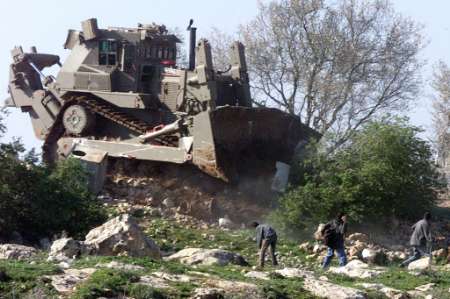
Palestine-Israel, Fourth year of Friday demonstrations in the joint struggle in Bil'in against the separation fence and occupation
Le Fatah et le Hamas, rivaux palestiniens, s'engagent à renouer le dialogue
Le plan proposé par le Yémen tient en sept points et prévoit notamment la tenue d'élections anticipées dans les territoires palestiniens, la reprise du dialogue sur la base des accords antérieurs - particulièrement ceux de La Mecque du 8 février 2007 qui avait conduit à la formation d'un gouvernement d'union nationale - et enfin à l'unification des forces de sécurité sous le contrôle de l'Autorité palestinienne en vertu des accords du Caire en 2005.
Or, pour la présidence palestinienne, "la reprise du dialogue doit permettre de mettre en place la proposition yéménite afin qu'elle soit appliquée. Nous ne voulons pas de discussions sur différents articles car cela ne mènerait à rien", précise un communiqué. Tandis que pour le Hamas, il ne s'agit que d'un cadre de pourparlers afin de trouver un accord qui satisfasse les deux parties.
Hamas: No free calm with the Zionist entity
Ezzedeen Al Qassam Brigades, 23.3.08. Dr, Khalil Al Haiya, the leader in the Islamic Resistance Movement Hamas, revealed that his movement would not accept any mediation or initiative for calm with the Zionist occupation if it diminish the rights of the Palestinian people, stressing that the Palestinian people will not recognize the Zionist.
He added in a festival was organized by the feminist branch in the movement in Gaza City, that Hamas is more insistence on the Palestinian rights, especially in the fourth anniversary to martyrdom of Sheik Ahmed Yassin.
He said: "Hamas after the death of Sheikh became more resolve, and its public popularity increased, especially in light of the siege imposed by the Zionist entity on the Gaza Strip.
He continued that Hamas is on the path of the leaders Yassin and his friends, no matter how enormous sacrifices, and the use of inducements to change the approach of Hamas and the resistance against the Zionist entity.
In the end of the festival, Dr. Khalil stressed that no free calm will be with the Zionist entity in the next coming time.
With friends like these
A state that imposes a siege that is almost unprecedented in the world today in terms of its cruelty, that adopts an official policy of assassination, is embraced by the family of nations, if we are to judge by the words of the many statesmen who cross our doorstep.
A true friend of Israel, one that is sincerely concerned for its fate, is only that friend who dares to express sharp criticism of its policy of occupation, which poses the most serious risk to its future, and who also takes practical steps to end it. Most of the "friendly" statesmen do not understand this.
Being right - all the way to the abyss
The maxim "it is better to be smart than right" has never been more urgent and vital for Israel, especially when it wants to maintain the distinction between itself and its enemy and not become associated with its methods. Our most pressing need is not another battlefield "accomplishment" or PR "triumph," but a swift exit from the cycle of bloodshed in a cease-fire or some reasonable arrangement that will at least suspend the slide toward chaos.
Rabbinic fatwas
martedì 18 marzo 2008
It never rains but it pours
Ezzedeen Al-Qassam Brigades. 17.3.08 Zionists are fearing huge operations inside the Zionist entity from the West Bank | ||
| | ||
| | ||
| Zionist security sources expressed a high level of fear and a deep concern that the Palestinian resistance, in particular the military wing of the Islamic Resistance Movement "Hamas", Ezzedeen Al Qassam Brigades, will direct a strong blow to the Zionist military institution in the coming weeks. The sources claimed that the "Hamas" is trying with all its power to strengthen its presence in all areas of the occupied West Bank, despite the ongoing detention campaigns against the movement by the Zionist occupation forces and Abbas gangs. The sources warned that the past year has witnessed "115% growing" in smuggling explosives to the West Bank. A Zionist site called "Al Shuhra'a" said that the Zionist security sources said "Hamas scattered all over the West Bank, and not only in the city of Hebron as some people think, and Hamas is trying all the time to take military action against the Zionist occupation forces, but they concentrate on hitting the eternal front in the occupation". The sources claimed that the decline in the activity of Hamas cells in the West Bank to arrest campaigns carried out by the occupation army, which would enable them to prevent the implementation of many of the operations, but the Al Quds operation destroyed this theory. The occupation authorities have arrested several hundreds of Palestinians in the West Bank since the beginning of this year according to statistics of the organizations concerned with the affairs of Palestinian prisoners. The Zionist sources Referred that a silent battle is going all the time in the West Bank, where the Zionist army invaded the Palestinian civilians houses, each night 100 to 140 civilians are being arrested. The sources claimed that "The calm that we see now in the West Bank is deceptive quit, because within the Palestinian cities there all the time an temptations to carry out operations against the Zionist targets." | ||
The PA's hollow protests
There is no lack of opportunities.
There are hundreds of concrete barriers blocking exits to villages. The PA could send a bulldozer to remove one of them every day. Senior officials could come along: Mahmoud Abbas or someone from his bureau, heads of security organizations, members of the PLO central committee, senior Fatah representatives, ministers and directors general. There are roads that are forbidden to Palestinian cars. PA officials and West Bank residents could form a long convoy of cars and drive on these roads. Many Israelis would be happy to join them. Building and development are banned in Area C. The Palestinian planning office could order the appropriate Palestinian ministries to put up electricity lines, to prepare the infrastructure to connect villages to the water carrier, to dig cisterns to collect rainwater, to build schools, clinics and houses. Maybe even dig wells. All of the things that the Israeli occupation authorities forbid to do on 60 percent of the West Bank. Here, too, there will be no small number of Israelis opposed to the occupation who will join up.
The Civil Administration will come and destroy it all. Then build it again.
The senior officials accompanying the work will be arrested. Even better. Should only the residents of Bil'in be arrested for their unarmed struggle against the occupation?
The condemnations heard from the PA camp are for internal purposes only. It is a way of telling the Palestinian public that its representatives are in the same boat as the weak population that suffers under occupation, just as the armed struggle is intended to show the Palestinian public which organization really knows how to exact revenge. The PA's condemnations prove how ridiculous and impotent they truly are. They signal to both Israel and the Palestinians that it does not matter how many new settlement homes will be erected, a Palestinian partner will always take his place at the "peace process" show.
Negotiations and armed struggle are not the only means of fighting the occupation. The question of why the Palestinians have not adopted Mahatma Gandhi's nonviolent resistance should be addressed to PA leaders - not the millions of Palestinians who every day wage an unarmed struggle against the sophisticated and advanced methods of oppression.
The protests would sound completely different if the protesters were to organize a calculated public revolt against Israel's tactics of annexation.
There is no lack of opportunities.
There are hundreds of concrete barriers blocking exits to villages. The PA could send a bulldozer to remove one of them every day. Senior officials could come along: Mahmoud Abbas or someone from his bureau, heads of security organizations, members of the PLO central committee, senior Fatah representatives, ministers and directors general.
There are roads that are forbidden to Palestinian cars. PA officials and West Bank residents could form a long convoy of cars and drive on these roads. Many Israelis would be happy to join them.
Building and development are banned in Area C. The Palestinian planning office could order the appropriate Palestinian ministries to put up electricity lines, to prepare the infrastructure to connect villages to the water carrier, to dig cisterns to collect rainwater, to build schools, clinics and houses. Maybe even dig wells. All of the things that the Israeli occupation authorities forbid to do on 60 percent of the West Bank. Here, too, there will be no small number of Israelis opposed to the occupation who will join up.
The Civil Administration will come and destroy it all. Then build it again.
The senior officials accompanying the work will be arrested. Even better. Should only the residents of Bil'in be arrested for their unarmed struggle against the occupation?
It is possible to come up with hundreds of other measures of this kind, which could replace the official Palestinian governmental plan, and force the leadership away from their "make-believe state," and bring them back to battle for liberation. True, these measures alone cannot end the colonization, but they have the potential to end the status quo that is so convenient for Israel: expanding settlements, endless negotiations, protests and shootings. There is a potential here to change the alienated relations between the people and their representatives, to create a new type of Palestinian diplomacy.
But it is also true that such a vision has no chance. The present PA and PLO leadership has grown accustomed to living as a nomenclature. They are confusing the interests of their own people with their relatively comfortable ceremonial status; a status that is their reward for being willing to participate in a spectacle of respectability scripted by the Americans and Europeans for the benefit of Israel
lunedì 25 febbraio 2008
Fallita la 'catena umana' di Hamas
Quotidiano Net Esteri, 25.2.07. Il movimento islamico contava su una mobilitazione massiccia: la modesta partecipazione popolare ha messo in evidenza l'incapacita' del movimento islamico nell'organizzare una lotta di massa pacifica. Hamas, ha spiegato ad Apcom l'analista palestinese Issam Nassar, aveva compreso in parte le potenzialita' di una massiccia partecipazione di massa ma, ha aggiunto, "nell'organizzare oggi la catena umana e' stato ambiguo nelle parole d'ordine, avrebbe dovuto spiegare alla gente l'impatto positivo che la lotta pacifica avrebbe avuto sull'opinione pubblica internazionale e invece ha parlato di sacrificio e resistenza". "Cosi' molti temendo di essere mandati allo sbaraglio hanno preferito rimanere a casa". Una occasione perduta anche se i dirigenti di Hamas annunciano che in futuro i palestinesi non esiteranno a forzare i valichi con Israele per mettere fine all'isolamento politico ed economico di Gaza. Il movimento islamico, abbagliato dall'ideale della lotta armata, appare incapace di proporre alla popolazione di Gaza un modello alternativo al martirio e alla violenza come percorso per raggiungere l'indipendenza.
Eppure la lotta pacifica palestinese e' un'arma che i comandi militari israeliani temono molto, come ha scritto per il sito del quotidiano Haaretz l'analista Bradley Burston. "Nel vasto arsenale israeliano di tecnologia e armamenti non c'e' nulla che puo' contrastarlo efficacemente (il pacifismo, ndr)... ecco perche' per decenni Israele ha fatto del suo meglio per bloccare le espressioni della non-violenza palestinese".
Il pacifismo, spiega Burston, al contrario degli attentati suicidi, dei razzi su Sderot e della violenza migliora l'immagine della lotta palestinese e conquista consensi, non solo all'estero ma anche tra gli israeliani. I palestinesi, aggiunge l'analista pertanto dovrebbero ripetere le battaglie non violente della prima Intifada e sviluppare una pratica di resistenza civile all'occupazione militare.
Invece il movimento islamico abbagliato dall'ideale della lotta armata appare incapace di proporre alla popolazione di Gaza un modello alternativo al martirio e alla violenza come percorso per raggiungere l'indipendenza.
Eppure gli esempi di lotta pacifica non mancano. Nel villaggio di Bilin, a ridosso del muro di separazione costruito da Israele in Cisgiordania, da tre anni a questa parte palestinesi, attivisti internazionali e pacifisti israeliani continuano a tenere ogni venerdi' una manifestazione di protesta contro la confisca delle terre che attira ogni volte molte centinaia di persone (venerdi' scorso erano circa oltre mille) e procura non poco imbarazzo all'esercito israeliano costretto ad far uso della forza per disperdere dimostranti disarmati, sotto l'occhio delle telecamere di tutto il mondo.
mercoledì 30 gennaio 2008
L'espérance déçue des Palestiniens de Gaza, traqués par la police égyptienne à Al-Arich
Michel Bôle-Richard, AL-ARICH (Egypte) ENVOYÉ SPÉCIAL, Le Monde, 30.1.07. "Même dans les boulangeries, on refuse de nous vendre du pain. Les Egyptiens veulent nous étrangler après que les Israéliens ont voulu nous étouffer."La chasse aux Palestiniens a commencé dans les rues du centre d'Al-Arich, cité balnéaire égyptienne. Dans le souk et les rues adjacentes, des forces de police en uniforme et en civil contrôlaient les identités et poursuivaient, lundi 28 janvier, les habitants de la bande de Gaza qui erraient en quête de nourriture et de logement depuis l'ouverture par la force de la frontière, le 23 janvier. Tous ont été embarqués dans des cars et des minibus pour être réexpédiés à la frontière. Difficile d'échapper aux rafles tant la présence policière est importante.
La plupart des magasins ont été fermés sur ordre des autorités afin d'essayer de tarir le flot continu de Palestiniens venus faire leurs emplettes. Les jerrycans sont interdits, et les pompistes sont passibles d'amende s'ils outrepassent les ordres de ne pas servir les Palestiniens.
Même les marchandises ne parviennent plus dans ce cul-de-sac du Sinaï, car elles sont bloquées à Ismaïlia par décision des autorités égyptiennes, afin de tenter de stopper l'exode d'un peuple aspirant à un peu d'oxygène et de denrées dont il est privé par le blocus israélien. Des ordres ont été donnés de ne pas loger ceux qui se retrouvent une nouvelle fois comme des réfugiés. Ils dorment où ils peuvent et tentent d'échapper aux forces de sécurité en se cachant. Certains font état de passages à tabac. "Les habitants nous reprochent d'avoir fait monter les prix et d'avoir provoqué une pénurie, mais nous n'y sommes pour rien, protestent des Palestiniens exaspérés. Nous ne voulons que nous ravitailler. Les commerçants n'ont pas à se plaindre. Ce n'est pas une invasion !"
Al-Arich, porte de l'espoir, est devenue le cimetière des illusions. A l'entrée de la ville, plusieurs milliers de personnes ont trouvé refuge dans une rue, transformée en boulevard de l'attente, et dans deux mosquées, l'une pour les femmes et les enfants et l'autre pour les hommes, toutes deux encombrées de valises.
Il y a là des centaines de malades, d'étudiants, de résidents dans des pays étrangers bloqués dans la bande de Gaza depuis le coup de force du Hamas le 15 juin 2007, et qui ont cru qu'ils allaient pouvoir se faire soigner, poursuivre leurs études ou retrouver les leurs. Pas de tampon de sortie, pas de possibilités de se rendre au Caire. Alors, ils attendent, depuis le 23 janvier, que les autorités égyptiennes fassent un geste. Beaucoup ont des visas en règle, les documents médicaux appropriés, des cartes de séjour de pays étrangers valides. Ne manque qu'un coup de tampon égyptien, ce qui les classe parmi les illégaux. Des malades ont dû être hospitalisés. "Faudra-t-il une révolte, un mort pour que l'on s'inquiète de notre sort", proteste Bassam, rongé par un cancer du pancréas.Finally, a popular uprising in Gaza
If the Gaza government does not want to lose the momentum of the wall's fall, it must not make do with just having its own militants desist from firing Qassams: it must make it clear to other organizations that they are hindering a successful move of resistance.
The second obstacle is the Ramallah government's entrenched refusal to speak with Hamas. These are, after all, two quasi governments whose legality is questionable from the perspective of the Palestinian Authority's basic law. But both represent the same occupied people and the same tract of land subject to an accelerated process of colonization - and that overcomes all legal quibbling. Mahmoud Abbas met with Ehud Olmert without preconditions during the same weekend when Israel imposed the cruelest siege yet on Gaza, but Abbas can't speak to Ismail Haniyeh without the Hamas leader accepting his preconditions?
This boycott contributes to the severance that Israel works so diligently to intensify. The longer the delay in direct talks between the two leaderships over practical ways of lifting the siege of Gaza, the greater the concern that indeed, as Hamas officials argue, the Ramallah government listens to the United States and to Israel - but not to the will of its own people.
Ahmed Youssef, conseiller politique du Hamas: «Ce qui s’est passé à Rafah est le début de la troisième Intifada»
CHRISTOPHE AYAD Envoyé spécial dans la bande de Gaza, libération.fr,30.1.08
Pourquoi ne pas cesser les tirs de roquettes contre Israël ?
Ces roquettes, c’est un prétexte pour Israël. Nous avons cessé les attentats-suicides, nous avons respecté quinze mois de trêve, de mars 2005 à juin 2006 [jusqu’à l’enlèvement du caporal israélien Gilad Shalit], cela ne les a pas empêchés de nous bombarder, de massacrer nos civils. Ces deux dernières années, 4 Israéliens ont été tués par des roquettes artisanales alors que 2000 Palestiniens ont été tués. Qu’est-ce qu’il faut faire ? Tirer des bouquets de fleurs ? Nous tirons des roquettes parce que nous n’avons pas le choix. Donnez-nous des F16 et on bombarderait Tel-Aviv comme eux le font à Gaza !
martedì 29 gennaio 2008
Ending the blockade of Gaza, understandings with Hamas to end the violence, including a ceasefire or a "hudna"
APN Urges Israel and U.S. to Forge Far-Sighted Gaza Strategy; Explore Ceasefire with Hamas
Washington D.C.—Americans for Peace Now (APN) today [25.1.08] issued the following statement regarding the situation in southern Israel, Gaza and on the Gaza-Egypt border:
"In recent days, the world has seen images of Gazans struggling to cope with a lack of fuel and electricity and an acute shortage of other supplies. This week, the world media is flooded with images of huge numbers of Gazans crossing the Egyptian border to purchase basic goods and necessities. Clearly, Israeli efforts to pressure Hamas by clamping down on Gaza, efforts condoned by the U.S., have resulted in increased desperation and misery for the people of Gaza. Wednesday's breach of the Egypt-Gaza border is a tangible consequence of this desperation and a disastrous development for Israel in terms of both security and its image in the world.
"The firing of rockets and mortar rounds from Gaza into Israel must end. APN and its Israeli sister organization, Peace Now, have repeatedly expressed solidarity with the residents of Israeli communities near Gaza who are suffering from such attacks. The government of Israel has the right – indeed, the obligation – to take measures to bring these attacks to a halt, as well as to seek to free its captured soldier Gilad Shalit.
"APN has also consistently held that Israel should avoid actions that constitute collective punishment or cause disproportionate suffering or casualties among civilians. Such actions are fundamentally wrong and ultimately counterproductive. It is equally wrong and counterproductive for the U.S. to condone such actions. The dramatic deterioration in the health and welfare of civilians in Gaza over the past year represents an entirely man-made, and entirely avoidable, humanitarian tragedy. This tragedy must be reversed, not as a concession to Hamas, but because it is the right thing to do, both morally and strategically.
"By now it should be clear that the policy of placing Gaza under siege is succeeding neither in stopping Qassam fire, nor in ousting Hamas. Tactics of this nature have been tried and have failed, repeatedly. Rather than continue down this disastrous path, Israel, with the support and urging of the U.S., should forge a more responsible, constructive, and far-sighted way forward in terms of both its tactics and strategy for Gaza.
"This new way forward should include ending the blockade of Gaza. It should also include urgent diplomatic efforts to address the security challenges associated with Gaza. In particular, Israel should explore the possibility of achieving understandings with Hamas to end the violence, including a ceasefire or a "hudna," either through direct contacts or via third parties, including President Abbas. Such an option has been embraced to various degrees by key Israeli military and security figures, including former national security advisor (to Prime Minister Ariel Sharon) Giora Eiland, former Mossad chief Ephraim Halevy, and former defense minister Shaul Mofaz.
"A ceasefire or hudna cannot be an end unto itself. A ceasefire or hudna is desirable as a means to halt violence and chaos in the immediate term, creating the space to facilitate improvements in the humanitarian situation and the establishment of a political process. In this way, it can allow the sides to avoid the re-emergence of violence in the longer term. Such a process could involve, as appropriate, the major relevant players: Israel, the Palestinian Authority, Hamas, and Egypt. Absent improvements in the humanitarian situation in Gaza and the establishment of a political process, any ceasefire or hudna risks becoming merely an intermission to allow those attacking Israel to re-arm, re-trench, and enhance their military capability for future attacks.
"Similarly, it is vital that order and security be restored along the Egypt-Gaza border. This will require cooperation and coordination, including between Egypt and Israel, whose Camp David treaty governs military operations and deployments in the border area. Absent such coordination and cooperation, or absent accompanying improvements in the humanitarian situation inside Gaza, efforts to address the border situation will likely fail, with predictable results."
Obama: Palestinian refugees can't return
His conversation with reporters and his support for the Israeli position on refugees came on the heels of scurrilous charges that Obama is secretly a Muslim who received a radical Wahhabi education. "I have never practiced Islam. I was raised by my secular mother, and I have been a member of the Christian religion and an active Christian." Obama said that "there is a strong and deep commitment and connection to the Jewish community that should not be questioned."
Yehoshua: "Solo un intervento esterno che imponga la soluzione può salvare la situazione
ISRAEL-OPT: Medical supplies in Gaza running low
 Photo: Wissam Nassar/IRIN  |
| A premature baby in an incubator in Al Shifa hospital, Gaza. Oxfam has warned that continued electricity cuts are threatening the lives of such patients |
Israeli Defence Minister Ehud Barak has said "the policy of the closed crossings to Gaza will continue except for transferring small amounts of fuel and humanitarian equipment," the Israeli Haaretz daily reported.

When the Rafah border was breached, one of the items people bought was medicines, though the amount purchased does not solve the overall problem.
The World Health Organization (WHO) has reported a shortage of at least 88 drugs and 204 essential medical consumables in the Gaza Strip. WHO has called for the lifting of restrictions on medicine imports and patient movements, and said it was concerned by power cuts.
Fuel imports
Israel has begun to let in industrial fuel for Gaza's power plant, and the state prosecutor informed the High Court on 27 January that import levels would be raised to those prior to the increased restrictions implemented in October, but officials in Gaza have warned that this is not enough.
Prior to being declared by Israel a "hostile entity," the Strip imported 2.2 million litres of industrial fuel a week. However, increased winter needs, combined with the fact that in December the plant obtained a third turbine, mean the actual levels required are 3.5 million litres a week, power plant officials said.
Power outages are still being felt in all parts of the enclave, though mostly in the central region.
 Photo: Wissam Nassar/IRIN  |
| Dialysis patients get treatment in Al Shifa hospital, Gaza. Their lives depend on electricity being available |
Also, there remains no commitment that Israel will not cut fuel imports again, if, for example, rocket attacks against Israel increase.
The power cuts are affecting hospitals and health clinics, forcing them to rely on generators for many hours each day.
"We use generators at least six hours every day," Jamal Hawajri from the Union of Health Workers' Committees, a local health non-governmental organisation (NGO) in Gaza city, told IRIN. "This is costing us extra money, while we still can't operate at full capacity and have to cancel elective surgeries."
Protest
On 26 January about 1,500 Israelis - both Arabs and Jews - made their way to the Erez Crossing with Gaza to protest against the blockade, bringing with them several tonnes of food aid, as well as water filters.
At the end of the protest, Shir Shudzik, a 17-year-old girl from Sderot, stood up to express solidarity with the Gazans, while telling the crowd of her life since the rocket attacks began seven years ago. Her aunt and cousin were injured by a projectile from Gaza, but she said she had hope that Jewish-Arab solidarity would bring peace to the civilians on both sides.
IRIN, the humanitarian news and analysis service of the UN Office for the Coordination of Humanitarian Affairs
PCHR Calls for International Resolution over Rafah Crossing Crisis

28.1.08 10:30 GMT. The Palestinian Centre for Human rights (PCHR) is concerned about the continuing state of chaos on the Egyptian-Palestinian border. The Centre believes the current situation does not provide a solution regarding civilians' rights to safe and unhindered travel into and out of the Gaza Strip, especially as Rafah International Crossing Point remains officially closed.
PCHR calls upon all parties involved, including the Israeli Occupation Forces (IOF), and the international community, to resolve the crisis at the Rafah Crossing. The Centre reiterates that a sustainable solution is essential in order to ensure freedom of movement for Palestinian civilians, as well as the safe passage of goods into and out of the Gaza Strip, in accordance with international humanitarian and human rights law.
Hundreds of thousands of Gazans have crossed the border into
However, opening the border between
PCHR reiterates its position that the chaos on the Rafah border during the past week is an inevitable consequence arising from the IOF siege and closure of the entire Gaza Strip. The IOF have deliberately deprived the entire civilian population of the Gaza Strip of their human right to safe movement and unrestricted travel. In addition, the closure has prevented essential goods and medicine reaching the civilian population. PCHR notes that IOF have tightened the closure of the Gaza Strip since June, 2007. Since then, all border crossings into and out of
IOF has also maintained the effective closure of the Beit Hanoun (Erez) Crossing between Gaza and Israel, as well as the commercial crossings of Al-Mentar, Sofa, and Nahal Oz. IOF have sporadically opened these crossings to open, in order to facilitate the passage of some food and medical supplies into Gaza. However, these supplies have consistently failed to meet the needs of the 1.5 million citizens of
As a front-line human rights organization, PCHR is continuing to monitor developments in the Gaza Strip and on the Palestinian/ Egyptian border, which were triggered by the basic needs of the civilian population for food, medicine, and other supplies. PCHR therefore:
- Calls upon the international community to actively participate in finding a just and sustainable solution to this crisis that will ensure the safe and unrestricted movement and travel of the civilian population as well as of imported and exported goods.
- Calls upon IOF to respect International Humanitarian Law, especially the Fourth Geneva Convention, and to facilitate a rapid and just solution regarding freedom of movement for Palestinian civilians through the Rafah Crossing. PCHR calls upon IOF, as the Occupying Power, to completely withdraw from the Gaza Strip, and to hand control of the Rafah Crossing to the Egyptian and Palestinian authorities; or else to openly declare that it is still an Occupying Power in the Gaza Strip. As an Occupying Power, the IOF must fulfill its legal obligation to establish a clear working mechanism, administered by a third party, to ensure the free and safe movement of civilians and goods into and out of the Gaza Strip.
- Calls upon the Egyptian authorities to contribute towards resolving this crisis in line with its historical role in the Palestinian issue, and its moral and legal responsibilities under international humanitarian law. As a High Contracting Party of the Fourth Geneva Convention,
- Calls upon the High Contracting Parties of the Fourth Geneva Convention to fulfill their moral and legal responsibilities to protect Palestinian civilians from collective punishment imposed by IOF; and to work towards ensuring freedom of movement for Palestinian in the OPT, as guaranteed under international human rights law. The Centre calls upon the High Contracting Parties to ensure that any future working mechanisms of the Rafah Crossing conforms with international standards of border crossings, as opposed to the humiliating mechanisms designed and implemented by IOF that are currently violating the right of Palestinian civilians to free and safe movement.
Public Document
**************************************
For more information please call PCHR office in
PCHR, 29 Omer El Mukhtar St., El Remal, PO Box 1328 Gaza, Gaza Strip. E-mail: pchr@pchrgaza.org, Webpage http://www.pchrgaza.org
lunedì 28 gennaio 2008
At the gates of Gaza
Nurit Peled-Elhanan, 26.1.08. These words are dedicated to the heroes of Gaza who have proven once again that no fortified wall can imprison the free spirit of humanity and no form of violence can subdue life.
The appeal to go today to the gates of Gaza at the height of the pogrom being carried out by the thugs of the Occupation army against the residents of the Gaza Strip has terrible echoes of another appeal that was sent out into the air of the impassive world more than a hundred years ago.*

"Arise and go now to the city of slaughter;
Into its courtyard wind your way;
There with your own hand touch, and with the eyes of your head,
Behold on tree, on stone, on fence, on mural clay,
The spattered blood and dried brains of the dead."

What can one think as one stands at the gates of Gaza?

Only this:

"There in the dismal corner, there in the shadowy nook,
Multitudinous eyes will look"

What can we imagine today as we stand at the gates of Gaza, other than

"A babe beside its mother flung,
Its mother speared, the poor chick finding rest
Upon its mother's cold and milkless breast;

And "how a dagger halved an infant's word,
Its ma was heard, its mama never heard.
O, even now its eyes from me demand accounting,"

And what can we say to this infant, who demands from us accounting - we who stand helpless at the gates of Gaza? What will we explain to him and to all the hungry, sick children locked in that terrible ghetto, surrounded by wire fences, what can we say to the babies whose lives have been choked out of them in incubators before they began their lives because the State of the Jews shut off the flow of oxygen? What can we say to all the mothers who are searching for bread for their children in the streets of Gaza and what can we say to ourselves? Only this: sixty years after Auschwitz the State of the Jews is confining people in ghettoes and is killing them with hunger, asphyxiation and disease.

"Brief-weary and forespent, a dark Shekinah
Runs to each nook and cannot find its rest;
Wishes to weep, but weeping does not come;
Would roar; is dumb.
Its head beneath its wing, its wing outspread
Over the shadows of the martyr'd dead,
Its tears in dimness and in silence shed."

Because today, as we stand at the gates of Gaza, we have no voice, we have no words and we have no deeds. There is not a single Yanosh Korchak among us who will go in and protect the children from the fire. There are no Righteous Gentiles who will endanger their lives in order to save the victims of Gaza. We stand forlorn and contemptible in front of the gates of evil, in front of the fences of death, and obey the racist laws that have taken control over our lives, and all of us are helpless.

When Bialik wrote:
" Satan has not yet created Vengeance for the blood of a small child,"
It did not occur to him that the child would be a Palestinian child from
Gaza and his slaughterers would be Jewish soldiers from the Land of
Israel.

And when he wrote:

Let the blood pierce
through the abyss!  Let the blood seep
down into the depths of darkness, and
eat away there, in the dark, and breach
all the rotting foundations of the earth.

He did not imagine that those foundations would be the foundations of the Land of Israel. That the Jewish and Democratic State of Israel that uses the expression "blood on his hands" to justify its refusal to release freedom fighters and peace leaders would submerge us all in the blood of innocent babes up to our necks, up to our nostrils, so that every breath we take sends red bubbles of blood into the air of the Holy Land.

"And I, my heart is dead, no longer is there prayer
on my lips;
All strength is gone, and
hope is no more.
Until when,
How much longer,
Until when?"

* The poems "City of Slaughter" and "On Slaughter" were written by the Jewish poet Haim Nahman Bialik in tribute to the victims of the Kishinev Pogrom in 1903, Russia - trans.